Zeiss SFL review: the 12x50 with tripod adapter, and when the 10x50, 8x50 or 8x40 is the better pick
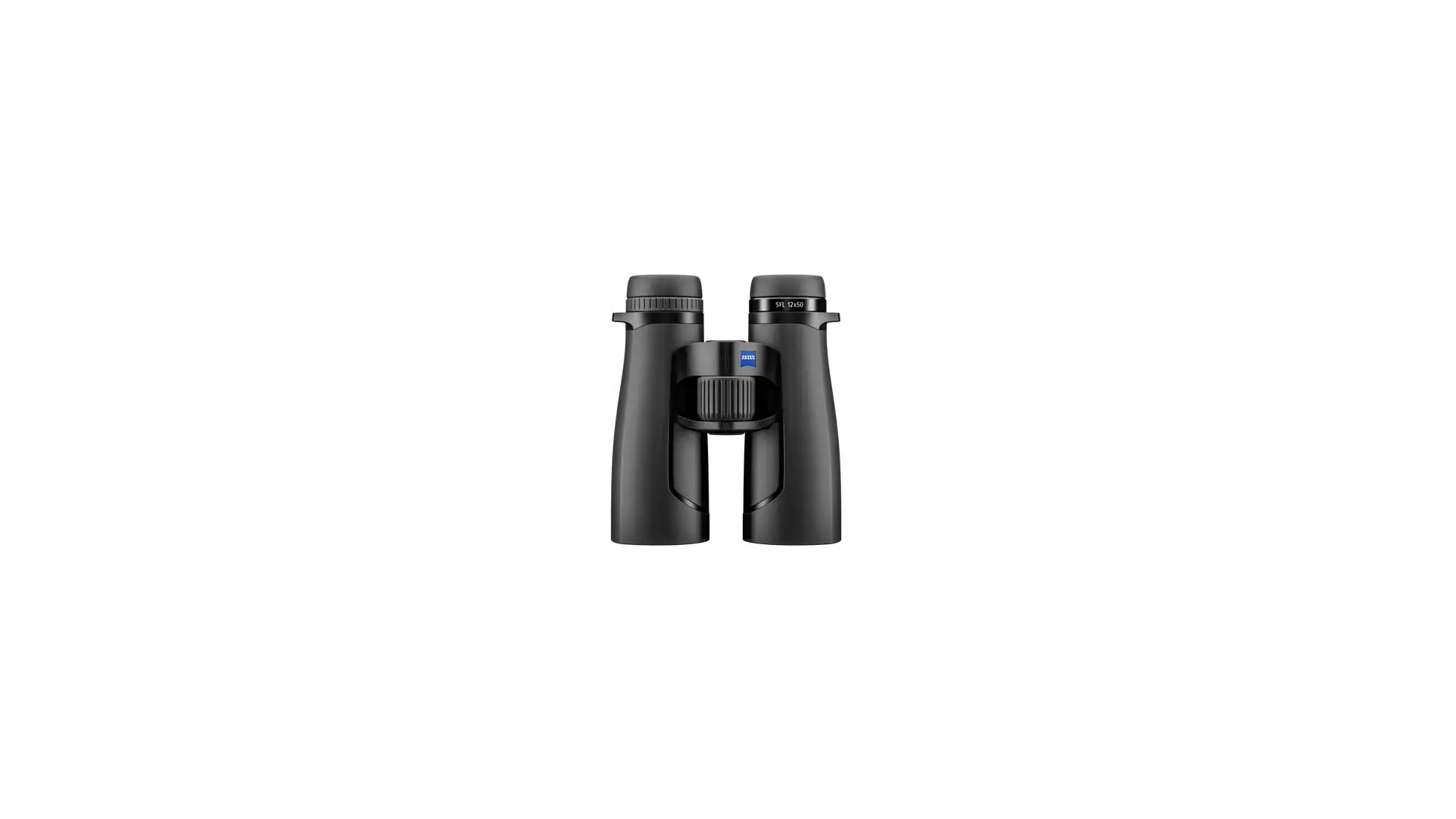
Our verdict: 4.5/5. The Zeiss SFL is a lightweight premium binocular line, and the 12x50 sold with a tripod adapter is the model we review here. Zeiss lists it at 872 g (30.8 oz) and 160 mm long, with 90 % light transmission, a 4.2 mm exit pupil, a 315 ft field of view at 1,000 yards and a focus wheel that needs only 1.4 turns from close focus to infinity. OpticsPlanet shoppers rate it 4.7 out of 5 across 6 reviews, and reviewers single out the clarity and how small it is for a 50 mm binocular. It loses half a point for what to know first: one reviewer reports significant color fringing against snow, the owner record is small, and at 12x you will want the tripod adapter that comes with this listing. For hunting at dawn and dusk the 8x50 or 10x50 may suit you better, and the 8x40 is the light one. Zeiss's other binocular line we review is the Conquest HDX, and our best 12x50 binoculars guide covers value 12x50s.
The 12x50 w/Tripod Adapter listing (part 525025-0000-000) sells for around $2,000. Check price and availability on OpticsPlanet; confirm the current price on the retailer page.
How we reviewed it: a research-based review built from the retailer's listings for four SFL sizes, every owner review those listings show (6 for the 12x50, 2 for the 10x50, 2 for the 8x40, 1 for the 8x50), and Zeiss's own technical data for each size, plus Zeiss's online shop page for the 10x50. The retailer's specification tables for these binoculars list only maker, color, magnification and objective (and the prism on the 8x40), so the optical figures on this page are Zeiss's, printed under the model they belong to. Third-party research leads we could not confirm on Zeiss's site, including awards, launch dates and the prism type of the 50 mm models, were left out. We have not field-tested these binoculars; the score is our editorial opinion and owner ratings are shown attributed to their source. See how we evaluate.
What the SFL line is
Zeiss markets the line as the Victory SFL and says the Victory SFL binoculars are “a perfect addition to the SF family.” Zeiss's technical data page lists seven sizes: 8x30, 10x30, 8x40, 10x40, 8x50, 10x50 and 12x50. OpticsPlanet sells each as its own listing; this page covers four of them. The retailer also lists the SFL 10x40, 10x30 and 8x30, which we have not reviewed.
The idea is weight. In Zeiss's words, “The reduced lens diameter and compact arrangement of thinner lens elements make the Victory SFL models up to 30% lighter than comparable binoculars.” That is Zeiss's own claim, not a measurement of ours, and Zeiss's own online shop page for the 10x50 gives a smaller figure for the 50 mm models: “The SFL 50 binoculars are up to 19% lighter than various other 50 mm binoculars.” Zeiss also credits the line with what it calls the Ultra-High-Definition (UHD) concept, ZEISS T* multicoating, a magnesium housing and a focus wheel in the DoubleLink Bridge that requires “only 1.4 turns from close focus to infinity”. The 1.4 turns figure applies to the line as Zeiss describes it, not to one size.
Why reviewers rate the 12x50: clarity, and a 50 mm that packs small
The 12x50 w/Tripod Adapter listing has 6 reviews and we could read all of them: four are five stars and two are four stars, and all six carry the retailer's Verified Owner tag. Two of the six are from the same reviewer, so they are five voices, not six. The reviews run from January 2026 to September 2026. Four of the five reviewers praise the glass or the clarity. The most recent writes, after a trip to Idaho:
“The clarity is amazing, and that was comparing to a very high end top of line spotting scope.”
Dave (ID), verified owner, via OpticsPlanet
Two reviewers comment on the size. One writes “Compact size for 50mm objective lens.” and lists “Image quality and size.” as the pros. The other found it fits a chest harness made for a smaller binocular:
“They are small enough to fit into my bino harness designed for a 10x42.”
Jared Kimzey (CO), verified owner, via OpticsPlanet
The same reviewer adds that “The tripod adapter included is also very good quality and a nice perk as well.” The tripod adapter is what sets this listing apart: its package contents list the binoculars, a case, a strap, a manual and a tripod adapter. If you want to see what a harness does for a 30 oz binocular, our binocular harness guide covers the options.
The honest catches: color fringing in snow, a tricky eyecup, a small record
Color fringing against snow (12x50). One four-star reviewer, who otherwise writes “Low light performance is great.”, has one complaint:
“Only complaint is significant CA in snow. Very apparent green and purple lines around any object with snow behind it, especially when its sunny out.”
KJonas (PA), verified owner, via OpticsPlanet
A reviewer posting under the same name and state (KJonas, PA) reviewed the 8x50 on its own listing the same day and writes there “CA control is much better in these compared to the 12x50 model.” That is one person's comparison, not a test, but it is the only comparison between two SFL models in the owner record. If you glass snowy country in bright sun, it is worth weighing.
The eyecup. The other four-star reviewer gives one reason for the missing star: “the left eye cup was a bit tricky to get all the way out at first.” One reviewer, one unit.
Price. One reviewer lists “Expensive” as the only con and still writes “Expensive but worth the price.”
A small owner record. The four listings hold 11 reviews between them. The 12x50's 4.7 average comes from 6 reviews by five reviewers, all from 2026; that is a good sign, not proof.
Magnification. This part is our reasoning, not a source: 12x magnifies hand shake as much as it magnifies the animal, which is why the tripod adapter matters on this model. If you will mostly glass handheld, read the 10x50 and 8x50 sections below first. Our guide to binocular numbers explains exit pupil and twilight factor.
Trade-offs, plainly
- 872 g (30.8 oz) on the 12x50 and 10x50 (Zeiss): light for a 50 mm, still heavier than the 640 g 8x40.
- A 4.2 mm exit pupil on the 12x50 against 6.3 mm on the 8x50 and 5.0 mm on the 10x50 (Zeiss): the 12x50 gives up some low-light brightness for reach.
- One 12x50 reviewer reports very apparent green and purple fringing against snow in sun; a review of the 8x50 under the same name finds that model better on this.
- One 10x50 reviewer lists “No locking diopter” as a con.
- Only 11 owner reviews across the four listings, and a single review on the 8x50.
- Zeiss's minimum focus is 1.8 m (5.9 ft) on the 50 mm models against 1.5 m (4.9 ft) on the 8x40, if you watch birds or insects up close.
Which SFL: 12x50, 10x50, 8x50 or 8x40
The four sizes are separate retailer listings with different part numbers, all black. Each column below comes from Zeiss's technical data for that model, plus its own listing's rating and price. Exit pupil is checked by arithmetic (objective divided by magnification); Zeiss's figures round the same way.
| Spec | 12x50 (525025-0000-000) | 10x50 (525024-0000-000) | 8x50 (525023-0000-000) | 8x40 (524023-0000-000) |
|---|---|---|---|---|
| Exit pupil | 4.2 mm | 5.0 mm | 6.3 mm | 5.0 mm |
| Twilight factor | 24.5 | 22.4 | 20.0 | 17.9 |
| Field of view at 1,000 yd | 315 ft | 366 ft | 393 ft | 420 ft |
| Field of view at 1,000 m | 105 m | 122 m | 131 m | 140 m |
| Close focus | 1.8 m (5.9 ft) | 1.8 m (5.9 ft) | 1.8 m (5.9 ft) | 1.5 m (4.9 ft) |
| Eye relief (exit pupil distance) | 18.0 mm | 18.0 mm | 20.0 mm | 18.0 mm |
| Interpupillary distance | 56 to 74 mm | 56 to 74 mm | 56 to 74 mm | 52 to 74 mm |
| Weight | 872 g (30.8 oz) | 872 g (30.8 oz) | 855 g (30.2 oz) | 640 g (22.6 oz) |
| Length / width | 160 / 133 mm | 160 / 133 mm | 160 / 133 mm | 144 / 114 mm |
| Tripod adapter in the listing | Yes (package contents) | Not in package contents | Package contents not read | Not listed |
| OpticsPlanet rating | 4.7/5 from 6 reviews | 4.5/5 from 2 reviews | 4.0/5 from 1 review | 5.0/5 from 2 reviews |
| Price | around $2,000 | around $1,800 | around $1,800 | around $1,700 |
All four share, per Zeiss: 90 % light transmission, a -4.0 to +4.0 dpt diopter range, nitrogen filling, LotuTec, water resistance of 400 mbar and an operating temperature of -20 to +55 °C (-4 to +131 °F). Width is measured at 65 mm interpupillary distance. The retailer's 8x40 listing names a Schmidt-Pechan prism; for the three 50 mm models neither the retailer's tables nor the Zeiss pages we read state the prism type, so we leave it out.
10x50
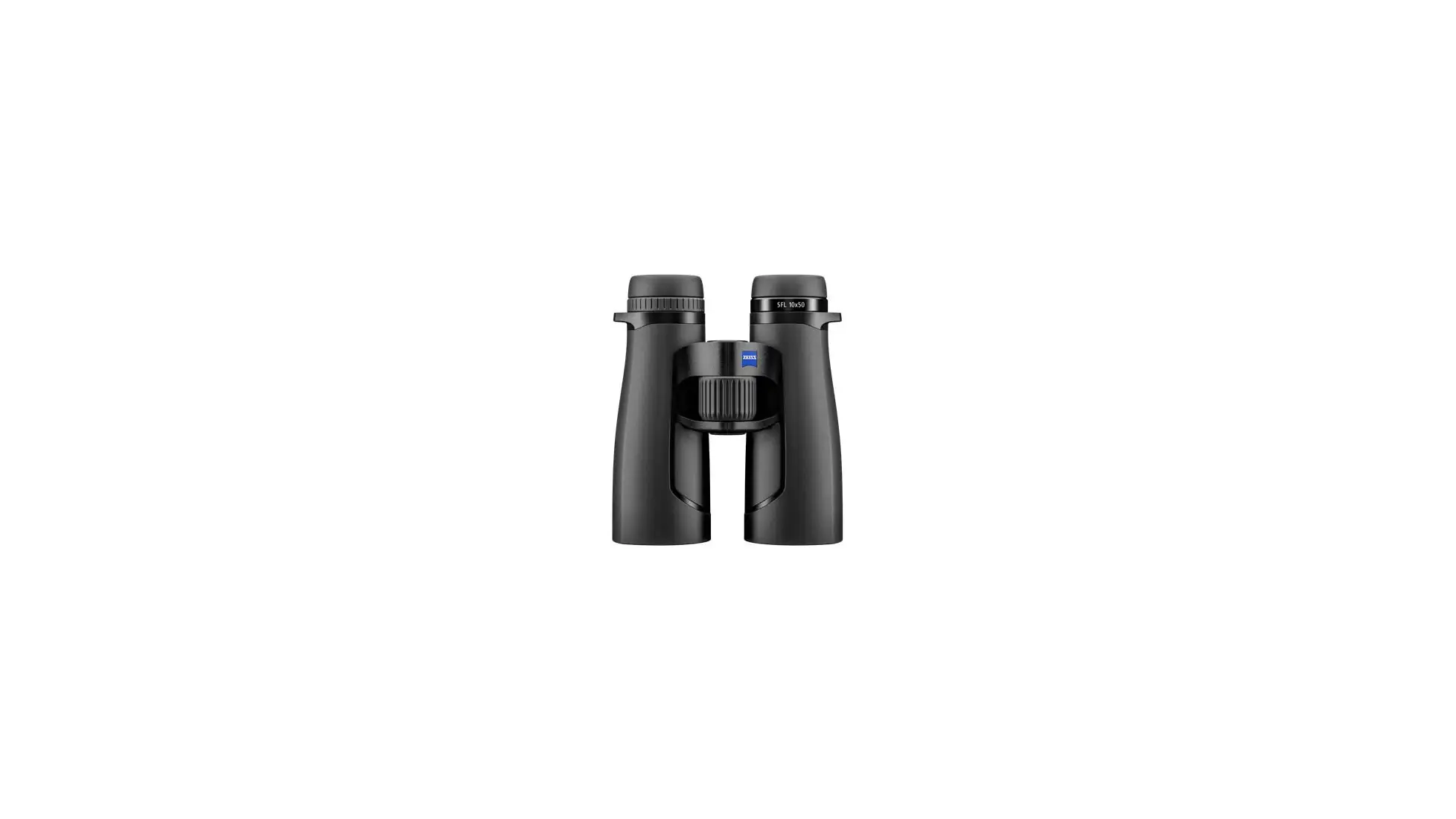
The 10x50 (part 525024-0000-000) shares the 12x50's body figures in Zeiss's data, 872 g and 160 mm, and gives up 2x of magnification for a 5.0 mm exit pupil and a wider 366 ft field of view. Zeiss's technical data page gives its interpupillary distance as 56 to 74 mm; Zeiss's online shop page for this size says 52 to 74 mm, so check the lower figure with Zeiss if your eyes sit close together. Its retailer package contents list the binoculars, a case, a strap and a manual, with no tripod adapter. Zeiss's own online shop page for this size lists “Binocular, Carrying case with strap, Dust protection for eyepiece and lens, Microfiber cloth, User Instructions, Safety information” and names the ZEISS Transferable Limited Lifetime Warranty and Transferable Five-Year No-Fault Policy.
Its owner record is 2 reviews, one five-star and one four-star, from March and April 2026, both Verified Owner. The four-star reviewer, from Wisconsin, calls them “bright, clear and easy to use” and plans to use them for turkey, deer and elk. The five-star reviewer says they had not used them much yet and writes:
“Edge to edge clarity is great, focus wheel and control is great. I wish they had a locking diopter but that's not a deal breaker.”
Andrew (AZ), verified owner, via OpticsPlanet
8x50
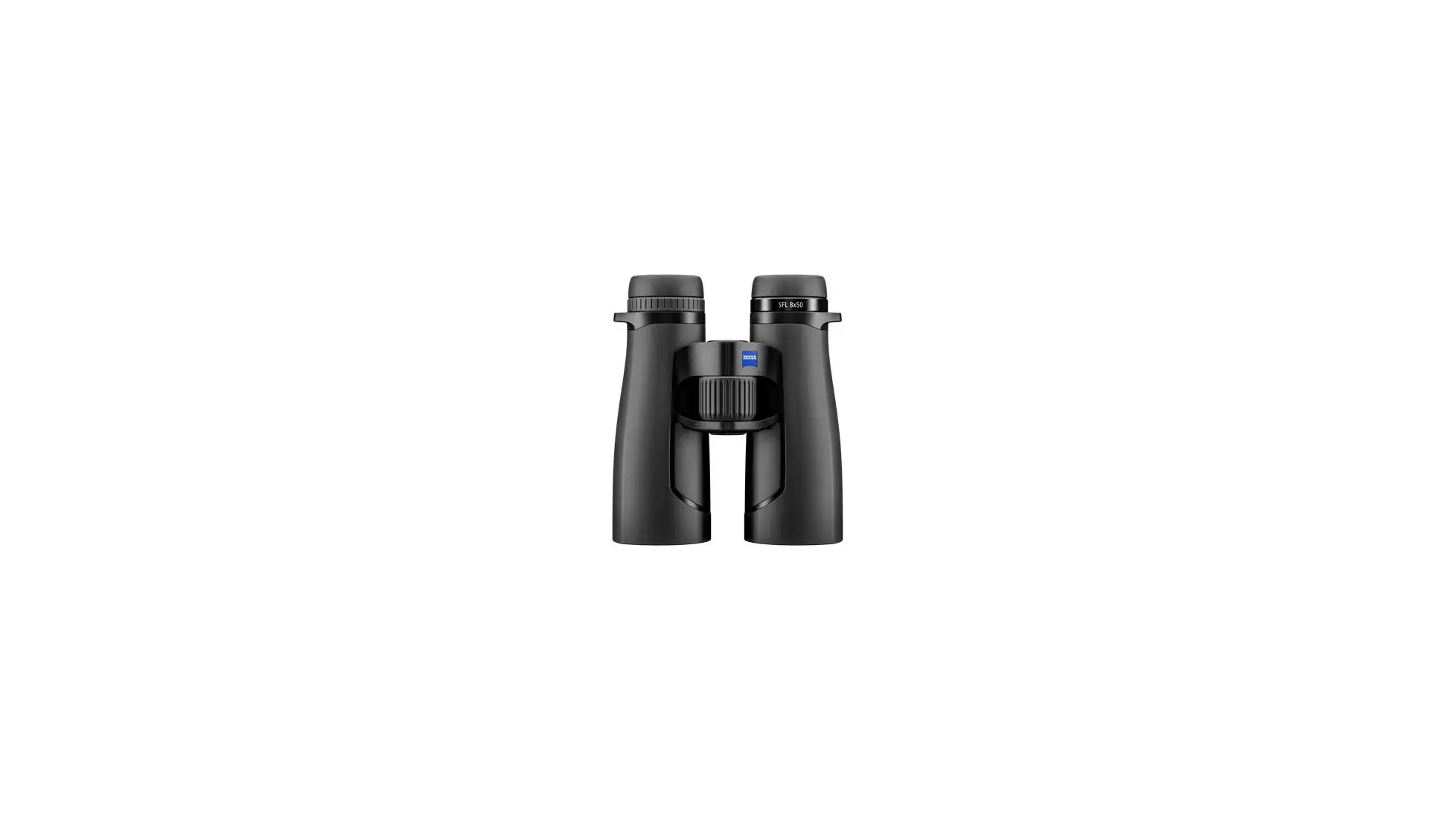
The 8x50 (part 525023-0000-000) has the largest exit pupil Zeiss lists for the line, 6.3 mm (50 / 8 = 6.25), the longest eye relief of these four at 20.0 mm, and a 393 ft field of view, at 855 g (30.2 oz). Our reasoning, not a source: a large exit pupil helps most at first and last light, when your own pupils are wide open. In bright daylight that matters less, and the 8x40 weighs 215 g less by Zeiss's figures.
Its owner record is a single four-star review, posted under the same name and state as the 12x50 review that reports fringing (KJonas, PA). On this model they write “Low light performance is very good.” and, on the snow problem:
“Its still there in snowy conditions but does not obstruct the image quality near as bad.”
KJonas (PA), verified owner, via OpticsPlanet
They list “Mild CA in snowy conditions” as the con and “Hunting , low light, treestand, hand holding” as what it is best used for. One review is one opinion.
8x40
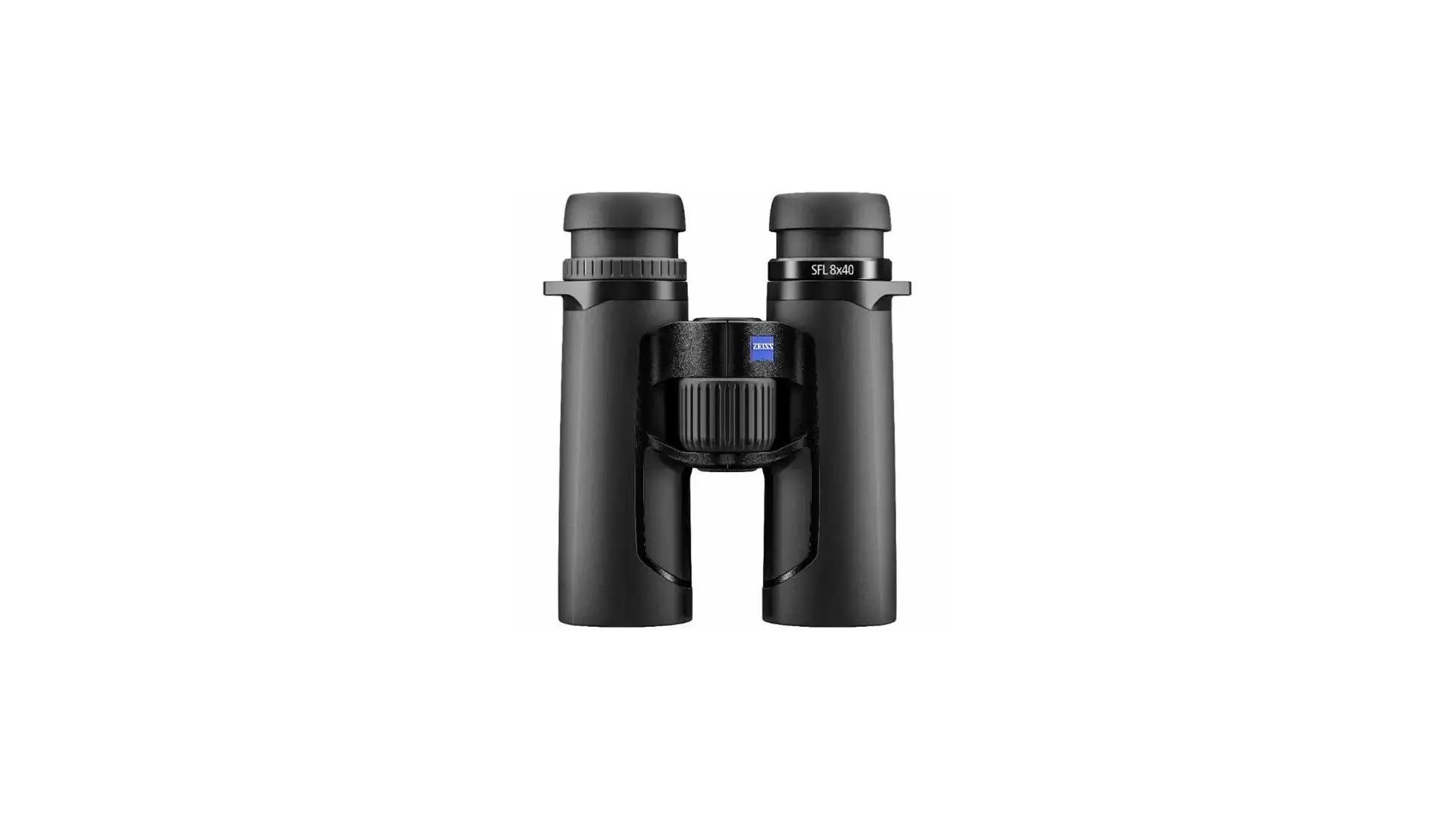
The 8x40 (part 524023-0000-000) is the light one: 640 g (22.6 oz) and 144 mm long per Zeiss, with the widest field of view of these four at 420 ft and the closest focus at 1.5 m (4.9 ft). The retailer sells it as the SFL 8x40 Schmidt-Pechan Prism Binoculars and names a Schmidt-Pechan prism in its specification table.
Its owner record is 2 five-star reviews, from December 2022 and January 2024, so both are well over a year old; one carries the Verified Owner tag. The tagged reviewer chose it for the “exceptional view, ergonomics great focus”. The other comments on the focus wheel:
“The SF or Smart Focus is amazing that you can change focus from near to far and barely have to move the focus thing.”
Sam (AZ), reviewer, via OpticsPlanet
That reviewer also writes “I really like how compact and light they are.” Neither review lists a con.
Key specifications: 12x50 w/Tripod Adapter (part 525025-0000-000)
| Magnification / objective | 12x / 50 mm |
|---|---|
| Part number (this listing) | 525025-0000-000, black, sold with tripod adapter |
| Exit pupil | 4.2 mm (50 / 12 = 4.17) |
| Twilight factor | 24.5 |
| Field of view | 105 m at 1,000 m (315 ft at 1,000 yd) |
| Close focus | 1.8 m (5.9 ft) |
| Eye relief (Zeiss: exit pupil distance) | 18.0 mm |
| Diopter range | -4.0 to +4.0 dpt |
| Interpupillary distance | 56 to 74 mm |
| Light transmission | 90 % |
| Weight | 872 g (30.8 oz) |
| Length / width at 65 mm IPD | 160 mm (6.3 in) / 133 mm (5.2 in) |
| Sealing | Nitrogen filled, water resistance 400 mbar |
| Operating temperature | -20 to +55 °C (-4 to +131 °F) |
| Coatings named by Zeiss | ZEISS T* multicoating, LotuTec |
| Housing | Magnesium (Zeiss) |
| In the box (retailer listing) | Binoculars, case, strap, manual, tripod adapter |
Figures are Zeiss's technical data for the SFL 12x50 unless marked as the retailer listing. Zeiss calls eye relief exit pupil distance. On awards: we found none we could confirm on a primary source, so we claim none.
Should you buy it, and what else to consider
- Buy the 12x50 if you glass long distances and will use a tripod; this listing includes the adapter. Skip it if you glass snowy ground in bright sun and fringing bothers you.
- Buy the 10x50 if you want more reach than 8x for big-game hunting, mostly handheld, with a 5.0 mm exit pupil.
- Buy the 8x50 if dawn and dusk are when you glass; it has the largest exit pupil in the line per Zeiss.
- Buy the 8x40 if you carry it all day or watch birds; it is the lightest and widest of the four.
- Comparing the field? Our best 12x50 binoculars guide covers value 12x50s, our best binoculars for hunting and best binoculars for birding guides cover other sizes, and the Vortex Razor binocular guide covers another premium line. For choosing a size, see how to choose binoculars and 8x42 vs 10x42. For a Zeiss riflescope, see our Zeiss LRP S3 review. For Zeiss's lower-priced line, see our Zeiss Conquest HDX review.
FAQ
Is the Zeiss SFL a good binocular?
The owner record is positive and small. On OpticsPlanet the 12x50 with tripod adapter is rated 4.7 out of 5 across 6 reviews, the 10x50 4.5 across 2, the 8x40 5.0 across 2 and the 8x50 4.0 from a single review. Reviewers praise the clarity, and two 12x50 reviewers how compact it is for a 50 mm binocular. The cautions are color fringing against snow on the 12x50 (one reviewer), an eyecup that was tricky to pull out at first (one reviewer) and no locking diopter (one reviewer). Eleven reviews across four listings is too few to call anything a pattern.
Which Zeiss SFL should I buy: 12x50, 10x50, 8x50 or 8x40?
Our reading of Zeiss's numbers: the 8x40 if weight and field of view come first (640 g and 420 ft at 1,000 yd per Zeiss). The 8x50 for the largest exit pupil in the line, 6.3 mm, at dawn and dusk. The 10x50 as the middle choice for hunters who glass at longer range. The 12x50 if you will put it on a tripod; its retailer listing (part 525025-0000-000) includes a tripod adapter.
Does the Zeiss SFL 12x50 come with a tripod adapter?
The OpticsPlanet listing reviewed here is sold as the 12x50 w/Tripod Adapter (part 525025-0000-000), and its package contents list a tripod adapter alongside the case, strap and manual. One reviewer of that listing writes that the included adapter is very good quality. The 10x50 listing's package contents do not list one.
How heavy is the Zeiss SFL?
Zeiss lists the 12x50 and the 10x50 at 872 g (30.8 oz), the 8x50 at 855 g (30.2 oz) and the 8x40 at 640 g (22.6 oz). The three 50 mm models are 160 mm (6.3 in) long; the 8x40 is 144 mm (5.7 in).
Is the Zeiss SFL waterproof?
Zeiss lists every SFL size as nitrogen filled, with LotuTec coating, water resistance of 400 mbar and an operating temperature of -20 to +55 °C (-4 to +131 °F).
What warranty does the Zeiss SFL have?
Zeiss's own online shop page for the SFL 10x50 names the ZEISS Transferable Limited Lifetime Warranty and Transferable Five-Year No-Fault Policy. We did not read Zeiss's shop pages for the other sizes, so confirm the terms for your size with Zeiss.
More binoculars: best binoculars for hunting · best 12x50 binoculars · best binoculars for birding · best binocular harness · Vortex Ranger HD 3000 review.