Best binoculars for birding in 2026
Our verdict for 2026: the Vortex Diamondback HD 8x42 (around $190) is the best all-round birding binocular here, with the widest field of view on this page and the shortest close focus for warblers a few feet away, the Athlon Neos Gen II HD 8x42 (around $120) is the best true budget choice, and the featherweight Vortex Diamondback HD 10x32 (around $220) is the pick for travel and packable reach. If you wear glasses or want the cleanest colour on the page, the Nikon Monarch M5 8x42 (around $300) is the one to take, with Nikon ED glass and 19.5 mm of eye relief, the most here, in exchange for a narrower field of view and a longer close focus. For a deeper look at the Nikon, including how it stacks up against the step-up Monarch M7, read our full Nikon Monarch M5 8x42 review.
8x42 is the birding standard for its wide, steady view; three of our four picks are 8x42. Prices verified September 30, 2026; confirm current price and availability on the retailer page.
The best birding binocular is the one that matches how and where you watch. For most people that is an 8x42: wide enough to find fast birds, steady in the hand and close-focusing for warblers a few feet away. Below are four picks across glass quality, budget and packability, with honest pros and cons, and a plain note on which one you cannot have right now.
How these picks were made: a research-based roundup comparing published specifications, warranty terms, owner reviews and pricing across reputable retailers. Scores are our editorial opinion, not a hands-on test of every model, and owner ratings are shown attributed to their source. Confirm current price on the retailer page. See how we evaluate.
Quick comparison
| Category | Pick | Spec | Price | |
|---|---|---|---|---|
| Best for eyeglass wearers | Nikon Monarch M5 8x42 | 8x42 · 22.2 oz | around $300 | Check price |
| Best budget | Athlon Neos Gen II HD 8x42 | 8x42 · 21 oz | around $120 | Check price |
| Best ultralight and travel | Vortex Diamondback HD 10x32 | 10x32 · 16 oz | around $220 | Check price |
| Best overall for birding | Vortex Diamondback HD 8x42 | 8x42 · 21.8 oz | around $190 | Check price |
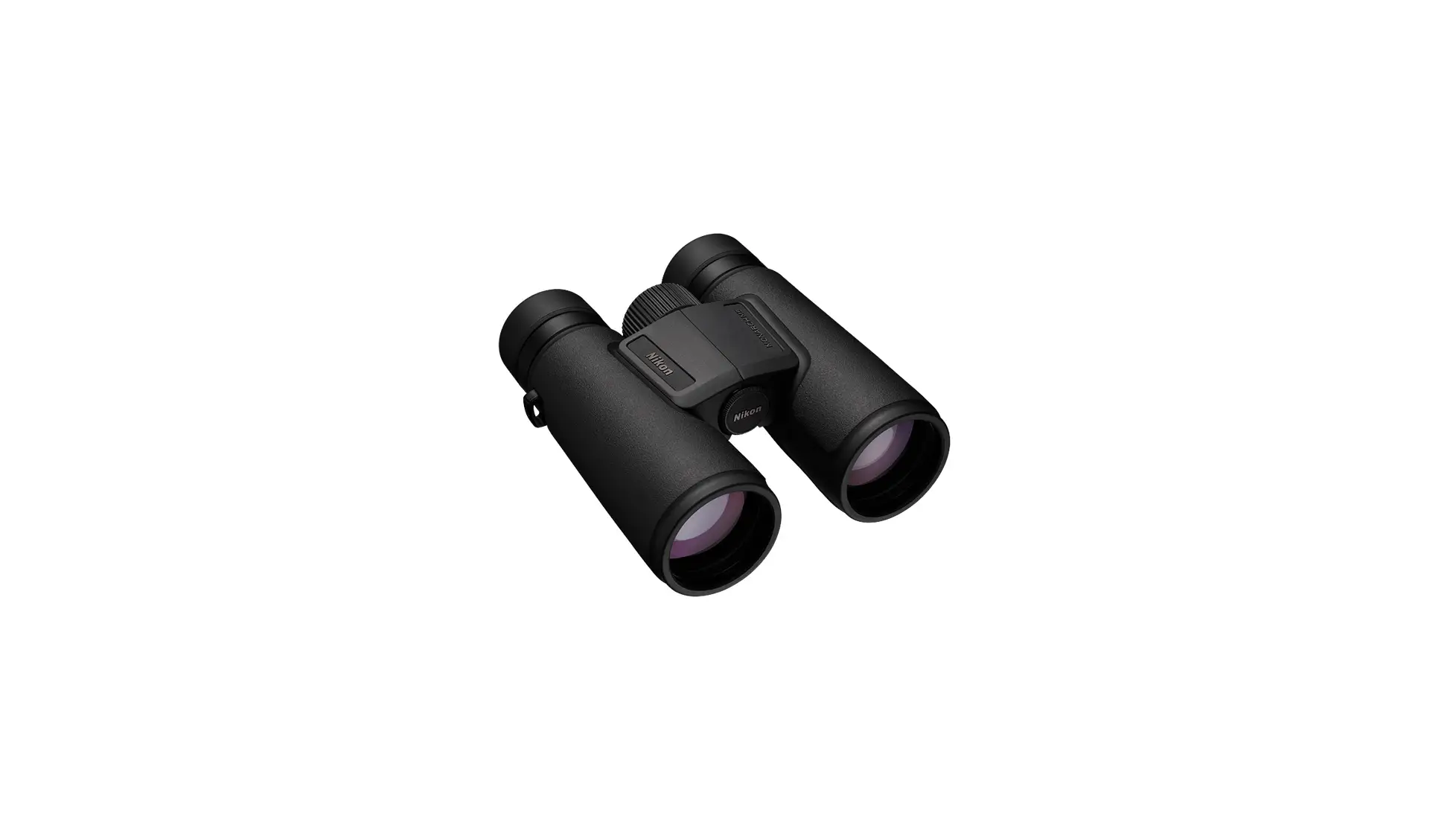
Best for eyeglass wearers: Nikon Monarch M5 8x42
Roof prism · 8x42 · Nikon ED glass · 19.5 mm eye relief
around $300exact price on OpticsPlanet
If glass quality and eyeglass comfort matter most to you, the Monarch M5 is the classic birder upgrade. It uses Nikon renowned ED (extra-low dispersion) glass to cut chromatic aberration and render cleaner, more natural color than most sub-$350 binoculars, with dielectric high-reflective and phase-correction prism coatings for bright, high-contrast images. Its standout number for birders who wear glasses is a generous 19.5 mm of eye relief, the most in this roundup. The honest trade-off is reach-of-view: its 335-foot field of view is narrower than the Vortex Diamondback, and its 8.2-foot close focus is longer, so it is a touch harder to find fast birds and to focus on very near subjects.
Pros
- Nikon ED glass: excellent color fidelity and low chromatic aberration for the price
- Class-leading 19.5 mm eye relief, the most eyeglass-friendly binocular here
- Dielectric and phase-correction prism coatings for bright, high-contrast views
- Nitrogen-purged, waterproof (1 m for 10 minutes) and fogproof; trusted Monarch birding pedigree
Cons
- Narrower 335-foot field of view than the Diamondback 8x42 (393 ft): harder to locate fast, flitting birds
- Longer 8.2-foot close focus is a real drawback for warblers, butterflies and near-feeder viewing
- Pricier than the Vortex for arguably similar real-world clarity (two owners rated the Diamondback its equal side by side)
- Thin review history at this retailer so far
Best for: eyeglass wearers and birders who prioritize color fidelity and glass quality over the widest field of view and closest focus.
Key specifications
| Magnification | 8x |
|---|---|
| Objective lens | 42 mm |
| Prism | Roof, dielectric + phase-corrected |
| Glass | Nikon ED (extra-low dispersion), fully multi-coated |
| Eye relief | 19.5 mm |
| Exit pupil | 5.3 mm |
| Field of view | 335 ft at 1000 yds (6.4 degrees) |
| Close focus | 8.2 ft |
| Weight | 22.2 oz |
| Sealing | Nitrogen-purged; waterproof (1 m/10 min), fogproof |
| Warranty | Nikon limited warranty |
“We previously used our Tasco 10x50mm to watch wildlife on our small lake, from 10 yards to 75 yards, and always had trouble focusing at these short distances. These are excellent short-range binoculars.”
Ken, verified owner via OpticsPlanet
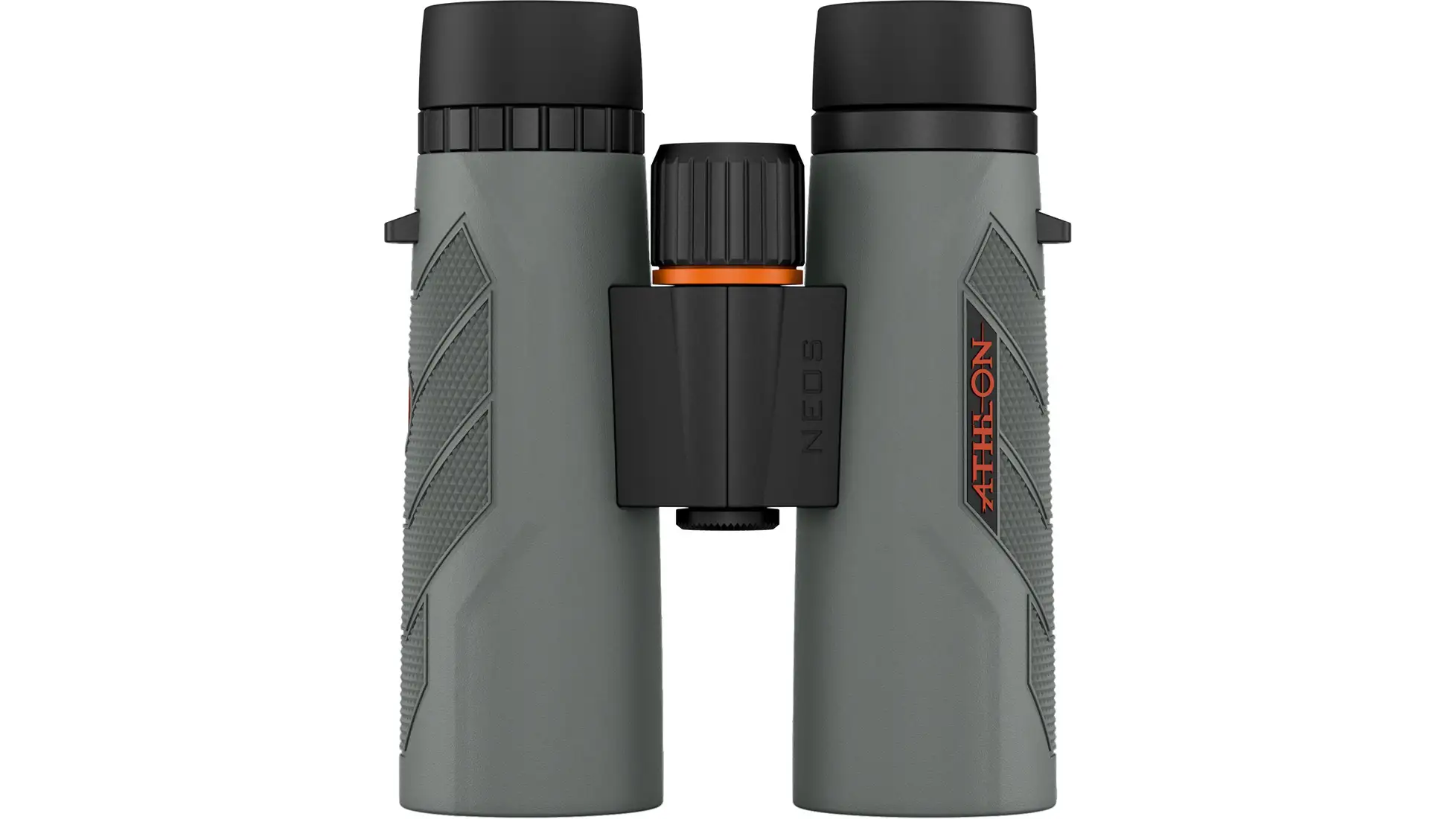
Best budget: Athlon Neos Gen II HD 8x42
Roof prism · 8x42 · HD glass · magnesium · 21 oz
around $120exact price on OpticsPlanet
At the lowest price in this guide, this is the honest budget pick from a brand birders and hunters already trust. The Neos Gen II runs HD glass and BaK4 roof prisms on a magnesium chassis, and at 21 oz it is actually the lightest binocular in this roundup. It carries a wide 367-foot field of view, 17 mm of eye relief for glasses, a locking diopter and a nitrogen-purged, waterproof build, so nothing important is missing at the price. It is not premium glass and the roof-prism eye box can feel fussy to some users, but for a first pair, a loaner or a keep-in-the-car birding binocular it delivers real value.
Pros
- Lowest price here from a credible optics brand (a genuine budget entry, not an inflated discount)
- Lightest binocular in this guide at 21 oz on a magnesium chassis
- Wide 367-foot field of view and 17 mm eye relief for eyeglass wearers
- Locking diopter, nitrogen-purged waterproof build and tripod-adaptable
Cons
- Budget coatings: a step below the Vortex HD and Nikon ED glass in color and low-light snap
- Eye box can be fussy: one of two owners struggled to find a comfortable eye position (a known roof-prism trait)
- Thin review history, so less social proof than the Vortex picks
- Basic included accessories; no chest harness in the box
Best for: budget birders, a first pair, a loaner or an ultralight keep-in-the-pack binocular. Step up to the Diamondback 8x42 for a wider, brighter view and richer color.
Key specifications
| Magnification | 8x |
|---|---|
| Objective lens | 42 mm |
| Prism | Roof, BaK4 |
| Glass | HD, multi-coated |
| Eye relief | 17 mm |
| Exit pupil | 5.25 mm |
| Field of view | 367 ft at 1000 yds (7 degrees) |
| Weight | 21 oz |
| Chassis | Magnesium |
| Sealing | Nitrogen-purged; waterproof, fogproof |
| Features | Locking diopter, twist-up eyecups, tripod adaptable |
| Warranty | Athlon lifetime warranty |
“Wow for 100 bucks, they are extremely tough and the clarity is amazing, I have a pair of Carsons and a pair of the McKenzie Hd Leopoldo both are in 10x42 and I will grab the Athlon 8x42 over the other two I have.”
bubba, verified owner via OpticsPlanet
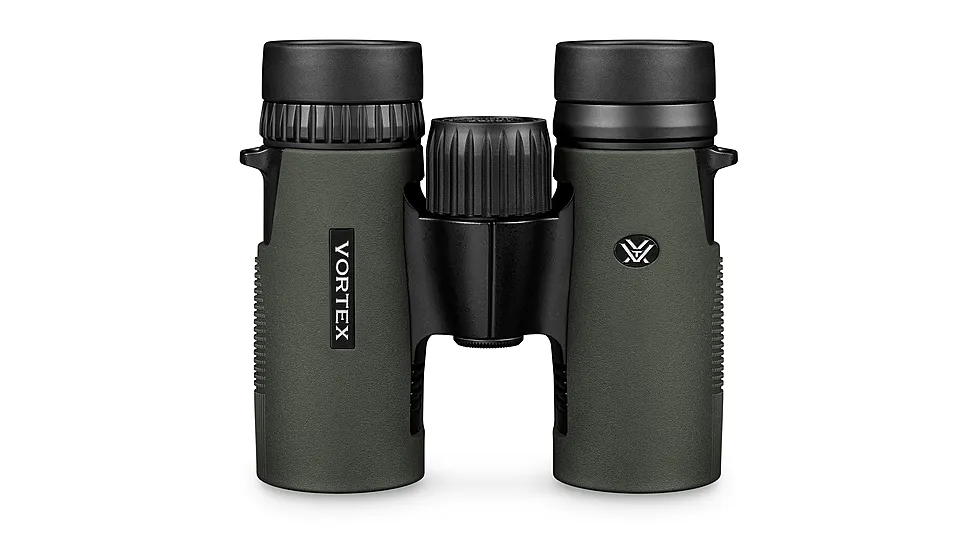
Best ultralight and travel: Vortex Diamondback HD 10x32
Roof prism · 10x32 · HD glass · 16 oz
around $220exact price on OpticsPlanet
When weight and packability matter more than dawn brightness, this is the travel birding pick. At just 16 oz it is roughly a third lighter than the 42 mm picks yet still holds a sturdy, easy-to-steady form, and 10x reach helps with raptors, shorebirds and waterfowl at distance. It shares the Diamondback HD glass with dielectric and phase-corrected prisms and the unconditional VIP warranty. The trade-off is the 32 mm objective and 3.2 mm exit pupil, which are dimmer than a 42 mm in low light, and the tighter 14 mm eye relief that eyeglass wearers should note.
Pros
- Featherweight 16 oz: packs small for travel, hiking and all-day carry
- 10x reach for raptors, waterfowl and distant shorebirds
- HD glass with dielectric and phase-corrected prisms; 340-foot field of view is wide for a 10x
- Unlimited, unconditional lifetime Vortex VIP warranty
Cons
- 32 mm objective and 3.2 mm exit pupil are dimmer at dawn and dusk than a 42 mm binocular
- Tight 14 mm eye relief is marginal for eyeglass wearers
- 10x shows more hand shake than an 8x over long sessions
- 6-foot close focus is a touch longer than the 8x42 Diamondback (5 ft)
Best for: travel, hiking, packable birding and extra reach in good light. Choose the 8x42 instead for dawn/dusk brightness, closest focus or if you wear glasses.
Key specifications
| Magnification | 10x |
|---|---|
| Objective lens | 32 mm |
| Prism | Roof, phase-corrected + dielectric |
| Glass | HD (extra-low dispersion), fully multi-coated |
| Eye relief | 14 mm |
| Exit pupil | 3.2 mm |
| Field of view | 340 ft at 1000 yds (6.5 degrees) |
| Close focus | 6 ft |
| Twilight factor | 17.9 |
| Weight | 16 oz |
| Sealing | Argon-purged; waterproof, fogproof, shockproof |
| Warranty | Vortex VIP: unlimited, unconditional, lifetime |
“Just the right size to take almost everywhere. Not so compact as to be hard to hold steady, not so big that it stays home while I am on the move. With a 3.2 exit pupil it is not bad in low light, and the eye relief is nicely thought out.”
Optics Guy via OpticsPlanet
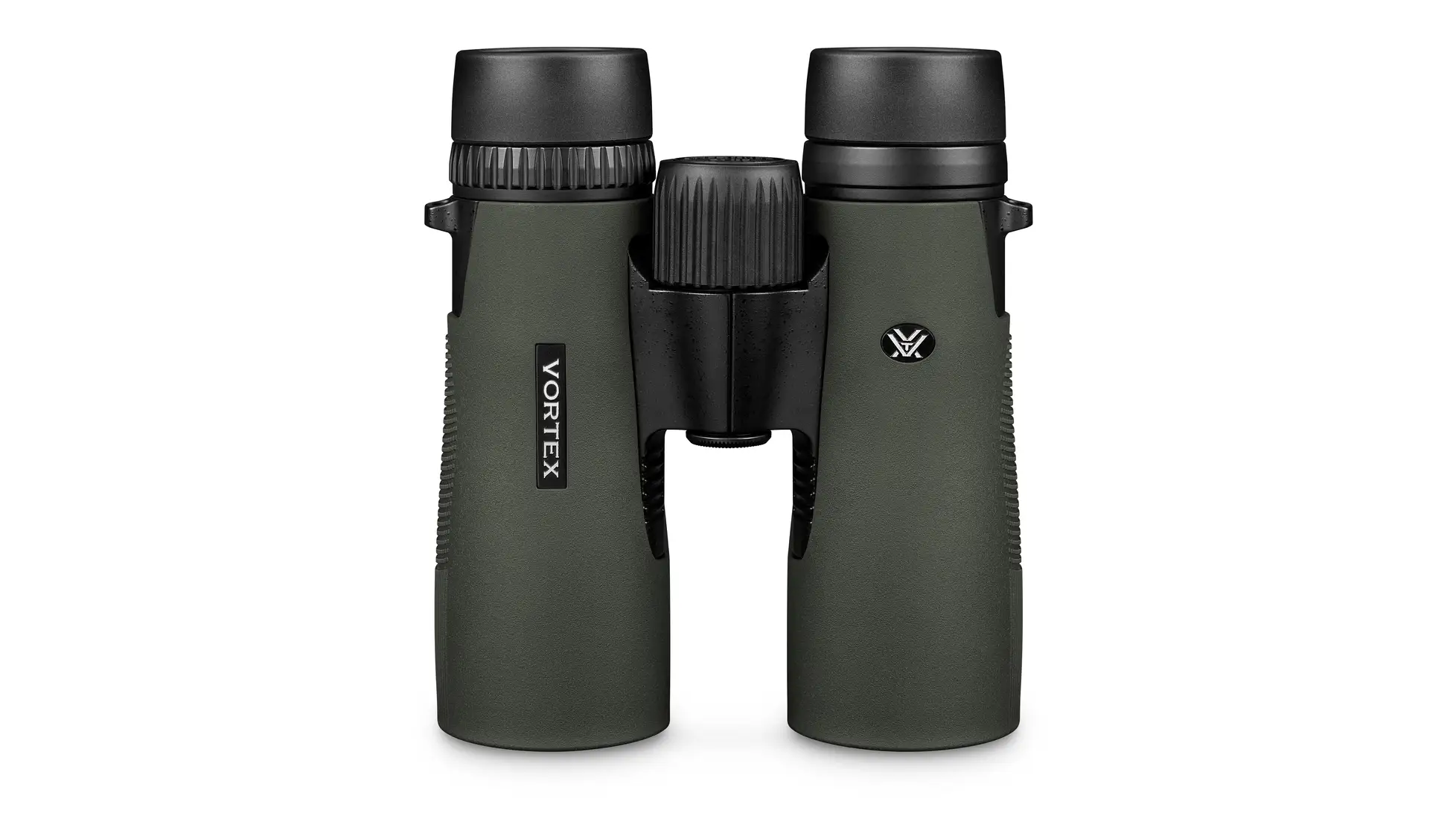
Best overall for birding: Vortex Diamondback HD 8x42
Roof prism · 8x42 · HD glass · 393 ft field of view
around $190exact price on OpticsPlanet
This is the binocular most birders should buy. The 8x magnification gives a steadier handheld image and, at 393 feet at 1000 yards, one of the widest fields of view in its class, which is exactly what you want for finding and tracking small, fast birds in cover. The 5-foot close focus is short enough for warblers, butterflies and feeder birds a few steps away, and the 17 mm of eye relief is comfortable for eyeglass wearers. Optically it runs HD (extra-low dispersion) glass with dielectric and phase-corrected roof prisms for bright, true color, and it ships with the Vortex GlassPak chest harness plus the unlimited, unconditional lifetime VIP warranty. Multiple owners bought it specifically for birding and their families use it daily.
Pros
- Wide 393-foot field of view: easier to locate and follow flitting songbirds than a narrower 10x or a 335-foot glass
- Short 5-foot close focus for warblers, dragonflies and feeder birds up close
- 17 mm eye relief is genuinely eyeglass-friendly
- HD glass with dielectric and phase-corrected prisms: bright, color-accurate views that punch above $200
- Includes the Vortex GlassPak chest harness plus the unlimited, unconditional lifetime Vortex VIP warranty
- 8x is steadier in the hand than 10x or 12x, so the image is calmer over long viewing sessions
Cons
- The included neck strap is basic; one owner wished it unhooked for a shoulder carry (the harness solves this)
- A 42 mm objective gathers less light at true dawn/dusk than a 50 mm, though it is bright for its size
- No locking diopter, so the setting can nudge in a pack
- Not alpha glass: edges soften slightly and harsh backlight can add faint fringing versus $1,000-plus binoculars
Best for: all-round birding from the backyard to the trail, eyeglass wearers, and anyone who wants the steadiest wide-field handheld view. Step up to a 42 mm alpha or the Nikon below if color fidelity is your priority.
Key specifications
| Magnification | 8x |
|---|---|
| Objective lens | 42 mm |
| Prism | Roof, phase-corrected + dielectric |
| Glass | HD (extra-low dispersion), fully multi-coated |
| Eye relief | 17 mm |
| Exit pupil | 5.2 mm |
| Field of view | 393 ft at 1000 yds (7.5 degrees) |
| Close focus | 5 ft |
| Twilight factor | 18.3 |
| Weight | 21.8 oz |
| Sealing | Argon-purged; waterproof, fogproof, shockproof |
| In the box | GlassPak harness + case, comfort neck strap, covers, cloth |
| Warranty | Vortex VIP: unlimited, unconditional, lifetime |
“I bought these binos so my wife has her own pair for birding, and she loves them! They shipped quickly and arrived in great shape. Hard to go wrong with Vortex optics.”
Andrew, verified owner (NY) via OpticsPlanet
How to choose birding binoculars
A few decisions matter more than any single number on the box:
- Magnification: 8x is the birding standard. It gives a wider field of view to find fast birds and a steadier handheld image than 10x or 12x. Reach for 10x only for distant raptors, shorebirds or waterfowl in the open.
- Objective size is a brightness-versus-weight trade-off. A 42 mm objective is the sweet spot for birding; 50 mm is brighter at dawn and dusk but heavier, and a compact 32 mm is packable but dimmer in low light.
- Close focus, because much of birding is close. Around 5 to 6 feet lets you study warblers, feeder birds and butterflies; 8 feet or more forces you to back up.
- Eye relief if you wear glasses. Aim for at least 16 to 17 mm; 14 mm can vignette for spectacle wearers, while the Nikon Monarch M5 leads at 19.5 mm.
- Glass and coatings over headline numbers. HD/ED glass with dielectric, phase-corrected prisms delivers brighter, truer color, which matters for identifying subtle plumage.
- A harness saves your neck. An included or added chest harness carries the weight off your neck on long days; see our best binocular harness picks for options.
FAQ
What magnification is best for birding, 8x or 10x?
8x is the birding standard, which is why our top pick is the Vortex Diamondback HD 8x42. An 8x binocular gives a wider field of view for finding and following fast, small birds, a steadier handheld image, and usually a closer focus for warblers and feeder birds. Choose 10x only if you mostly watch distant raptors, shorebirds or waterfowl in open country and can hold steady or use a support, as with the ultralight Diamondback HD 10x32.
What do the numbers on birding binoculars mean (like 8x42)?
The first number is magnification and the second is the objective lens diameter in millimeters. An 8x42 makes a bird appear 8 times closer through 42 mm front lenses. For birding, 42 mm objectives balance brightness and weight well, while 8x keeps the image wide and steady. A larger objective like 50 mm is brighter at dawn and dusk but heavier; a smaller 32 mm is lighter and more packable but dimmer in low light.
What is the best budget binocular for bird watching?
The Athlon Neos Gen II HD 8x42 is our budget pick and the lowest-priced binocular in this guide: HD glass, a magnesium chassis, 17 mm eye relief and a wide 367-foot field of view from a trusted brand, and at 21 oz it is the lightest binocular in this guide. If you can stretch your budget, the Vortex Diamondback HD 8x42 adds a wider field of view, a shorter 5-foot close focus and an included chest harness, and it is our best overall pick.
Why is close focus important for birding?
Close focus is the shortest distance at which a binocular can sharply focus, and it matters because much of birding happens close: warblers in a nearby bush, feeder birds, butterflies and dragonflies. A 5-foot close focus like the Vortex Diamondback HD 8x42 lets you study near subjects in detail, while a longer 8-foot close focus, as on the Nikon Monarch M5, forces you to step back from the nearest birds.
Are these binoculars good for eyeglass wearers?
Yes. If you wear glasses, look for at least 16 mm of eye relief so you can see the full field of view with your glasses on. The Nikon Monarch M5 8x42 leads here with 19.5 mm, the Vortex Diamondback HD 8x42 and Athlon Neos both offer a comfortable 17 mm, while the compact Diamondback HD 10x32 has a tighter 14 mm that some eyeglass wearers will find marginal.
Want the detail on our top pick? See our full Vortex Diamondback HD 8x42 review.
New to binoculars? Learn what the numbers mean and 8x42 vs 10x42, see every top best 8x42 binocular ranked, or our best compact binoculars for a pocketable pair. Hunters who also birdwatch should read our best binoculars for hunting guide, and if you want a laser built into your glass, see our best rangefinding binoculars.