Best binoculars for hunting in 2026
Our verdict for 2026, by terrain and budget: the Vortex Diamondback HD 10x42 (around $220) is the best hunting binocular for most people, with the full HD coating stack, a light magnesium build and an included chest harness. The SIG Sauer Buckmaster 10x42 (just under $100) is the best true budget pick, and the Vortex Diamondback HD 12x50 (around $280) is the pick for open-country glassing. Above those three the ladder keeps going: the Vortex Viper HD 10x42 (around $410) is the step-up, and the pick if you hunt in glasses; the Vortex Razor HD 10x42 (around $1,000) is the premium pick with thirteen years of owner testimony behind it; and the Nikon Monarch HG 10x42 (around $1,100) tops the page on the higher of the two AllBinos light-transmission figures we cite. Every pick is a 10x42 or a 12x50, the two configurations that cover almost all hunting.
Our six picks carry a combined 189 owner ratings and reviews on OpticsPlanet, and two of them carry the AllBinos transmission figures we cite rather than only their makers' descriptions. Prices verified October 14, 2026; confirm the current price on the retailer page.
One more Diamondback worth knowing about: there is also a Diamondback HD 10x50, which we put beside these two in our 10x42 vs 12x50 comparison.
The best hunting binocular is the one that matches your terrain, your light and your budget. Hunt in brush and cover ground on foot, and you want a binocular light enough for all-day handheld carry; glass open country, a box blind or from a tripod at first and last light, and more magnification and a bigger objective earn their weight. Below are six picks running from just under $100 to the upper end of the sub-alpha class, with honest pros and cons at every rung, and how to choose between them. If you want the 10x42 format itself explained and compared across budgets, see our best 10x42 binoculars guide. For our overall picks and links to every binocular guide we have by use, not only hunting, see the best binoculars guide.
How these picks were made: a research-based roundup comparing published specifications, warranty terms, owner reviews and pricing across reputable retailers. Scores are our editorial opinion, not a hands-on test of every model, and owner ratings are shown attributed to their source. Confirm current price on the retailer page. See how we evaluate.
Quick comparison
| Category | Pick | Spec | Price |
|---|---|---|---|
| Best overall | Vortex Diamondback HD 10x42 | 10x42 · 21.3 oz | around $220 |
| Best budget | SIG Sauer Buckmaster 10x42 | 10x42 · 23.4 oz | around $90 |
| Best for open country | Vortex Diamondback HD 12x50 | 12x50 · 28.9 oz | around $280 |
| Best step-up | Vortex Viper HD 10x42 | 10x42 · 17 mm eye relief | around $410 |
| Best premium | Vortex Razor HD 10x42 | 10x42 · 86.8% measured | around $1,000 |
| Best glass, measured | Nikon Monarch HG 10x42 | 10x42 · 88.3% measured | around $1,100 |
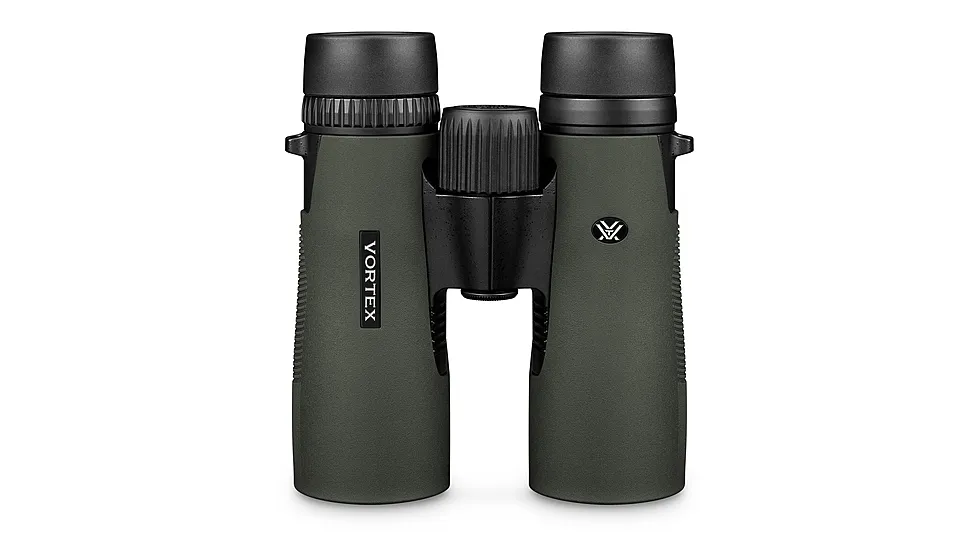
Best overall: Vortex Diamondback HD 10x42
Roof prism · 10x42 · HD glass · phase-corrected + dielectric · 21.3 oz
around $220exact price on OpticsPlanet
This is the 10x42 the rest of this page is measured against, and 10x42 is the gold-standard hunting configuration: 10x reaches across open country while a 42 mm objective keeps the binocular light enough to carry all day. Vortex fits an HD optical system with dielectric, phase-corrected roof prisms on a magnesium chassis at 21.3 oz, argon-purged and waterproof, with ArmorTek on the exposed glass. Two owner observations are worth more than the spec sheet here. One owner who compared it directly against their Nikon ProStaff 3s and 7s found the Vortex slightly brighter than the 7s in a noticeably smaller body, and said that if going hunting they would most likely carry the Diamondbacks because of the smaller size. The same owner noted the lens caps fit snug, which is the exact failure people complain about on cheaper binoculars. The 5 ft close focus is the shortest on this page, so it doubles as a wildlife and birding pair.
Pros
- HD glass with dielectric and phase-corrected prisms, the full coating stack rather than the partial one budget 10x42s ship with
- Light for a full-size 10x42 at 21.3 oz on a magnesium chassis, which is what decides whether it actually comes with you
- An owner comparing it with their Nikon ProStaff 3s and 7s called it slightly brighter than the ProStaff 7s in a smaller body
- A 5 ft close focus, the shortest on this page, so it works for near wildlife as well as long glassing
- Unlimited, unconditional lifetime Vortex VIP warranty that covers damage no matter how it happened or whose fault it was
Cons
- 15 mm eye relief is tight, and this is the one specification to check if you wear thick eyeglasses
- The rubber on the eyecups is stiff, which an owner raised specifically against softer Nikon eyecups
- One owner calls the included harness "pretty much useless" while rating the case and neck strap fine, though other owners list the kit as a plus
- Edge softness and field curvature toward the outer field, because there is no field-flattener lens at this price
Best for: general and western big-game hunting, all-day carry, and doubling as a wildlife and birding pair. Step to the 12x50 below for open-country glassing off a tripod, or take the Buckmaster if the budget is the constraint.
Key specifications
| Magnification | 10x |
|---|---|
| Objective lens | 42 mm |
| Prism | Roof, BAK4, phase-corrected + dielectric |
| Glass | HD, fully multi-coated, ArmorTek exterior lens coating |
| Eye relief | 15 mm |
| Exit pupil | 4.2 mm (42 divided by 10, matches the retailer figure) |
| Field of view | 330 ft at 1000 yds (6.3 degrees) |
| Close focus | 5 ft |
| Twilight factor | 20.5 |
| Weight | 21.3 oz |
| Length | 5.7 in |
| Chassis | Magnesium alloy |
| Sealing | Argon-purged; waterproof, fogproof, shockproof |
| Interpupillary distance | 55 to 73 mm |
| In the box | GlassPak harness + case, neck strap, covers, cloth |
| Warranty | Vortex VIP: unlimited, unconditional, lifetime |
| MPN carded | DB-215 (green). The camo DB-215-OBL is the same binocular in a different finish at a higher price; the OPMOD Wolf Gray edition is discontinued |
“The Vortex Diamondbacks impressed me because they are much smaller than my 7s, slightly smaller than my 3s, but have a slightly brighter picture than my Prostaff 7s... The focus knob is a little smoother and easier to turn on the Vortex and the lens caps fit snug unlike Nikon's that fall off. The Nikon's have more comfortable eye cups... if I was going hunting, I'd most likely carry the Diamondbacks due to the smaller size.”
Jon, verified owner (AR) via OpticsPlanet
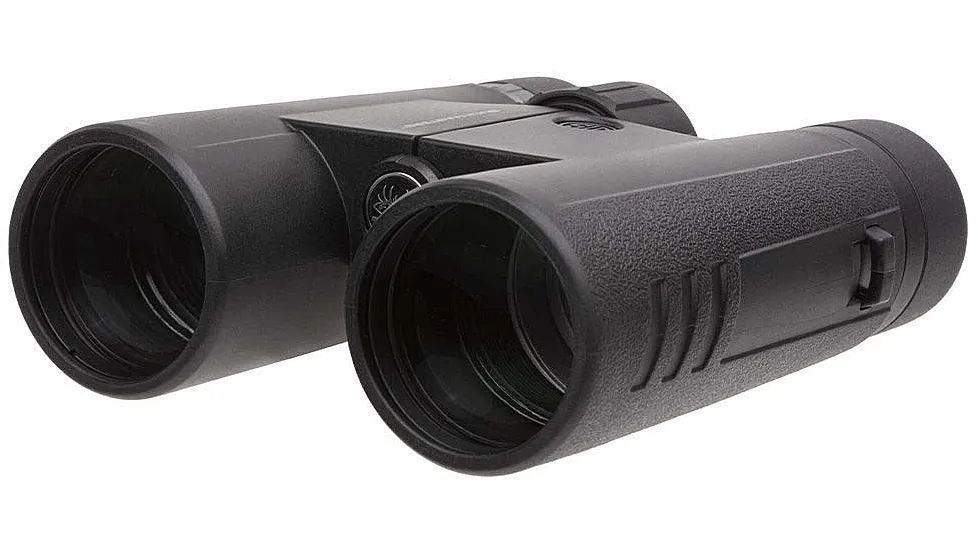
Best budget: SIG Sauer Buckmaster 10x42
Roof prism · 10x42 · BAK4 · IPX-7 waterproof
around $90exact price on OpticsPlanet
If your ceiling is under $100, this is the honest budget pick from a brand hunters already trust. The Buckmaster 10x42 runs fully multi-coated BAK4 roof prisms, carries an IPX-7 waterproof rating, and ships with a chest harness and neck strap, so there is nothing else to buy. SIG backs it with the Infinite Guarantee, an unconditional, fully transferable lifetime warranty. It is not HD glass and it is a little heavier than the Vortex picks, but for a first pair or a truck-and-pack knockaround binocular, owners consistently call the clarity a surprise at the price.
Pros
- Genuine sub-$100 price from a trusted brand: the true budget entry here
- 16 mm eye relief (more than the Diamondback) and an IPX-7 waterproof rating
- Includes a chest harness and neck strap: no separate harness to buy
- SIG Infinite Guarantee: unconditional, fully transferable lifetime coverage
Cons
- Heavier than the magnesium Vortex picks at 23.4 oz on an aluminum chassis
- 8-foot close focus (versus 5 feet on the Diamondback HD): weaker for near viewing
- Fully multi-coated but not HD glass or dielectric prisms, so a step below the Diamondback optically
- A modest review count means less social proof than the Vortex picks, though all are 5-star
Best for: budget hunting and general glassing, and a rugged truck or pack binocular. Step up to the Diamondback HD if you want lighter weight, HD glass, or closer near-focus.
Key specifications
| Magnification | 10x |
|---|---|
| Objective lens | 42 mm |
| Prism | Roof, BAK4 |
| Glass | Fully multi-coated |
| Eye relief | 16 mm |
| Exit pupil | 4.2 mm |
| Close focus | 8 ft |
| Weight | 23.4 oz (1.46 lb) |
| Chassis | Aluminum |
| Sealing | IPX-7 waterproof |
| In the box | Chest harness + neck strap |
| Warranty | SIG Infinite Guarantee: unconditional, transferable |
“After 25 years of being used hard, my Nikons finally gave up. Saw these and thought Sig was known for quality so let's give them a try. I am amazed at the quality and clarity of these binoculars. Great buy.”
john, verified owner (AL) via OpticsPlanet
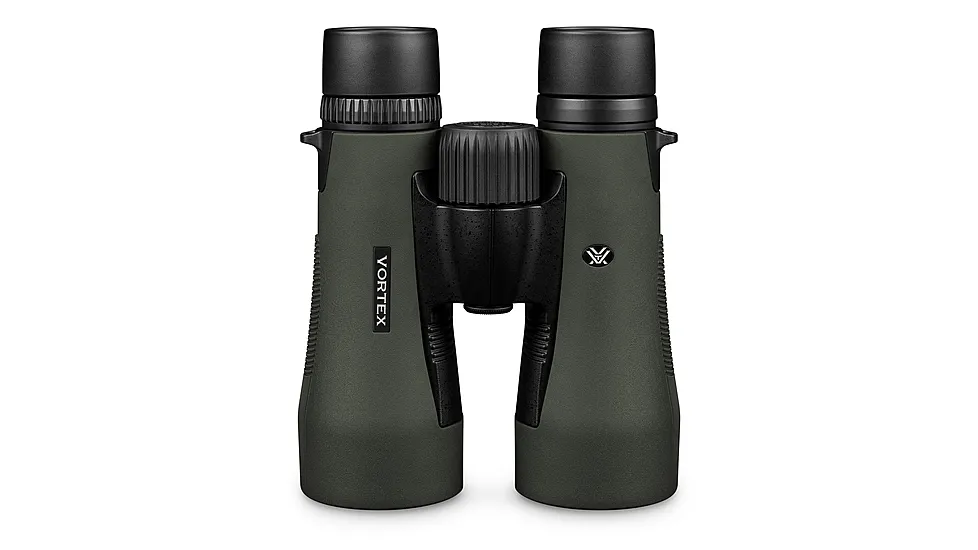
Best for open country: Vortex Diamondback HD 12x50
Roof prism · 12x50 · HD glass · magnesium
around $280exact price on OpticsPlanet
When you glass wide-open country or sit a box blind at first and last light, more magnification and a bigger objective earn their weight. This 12x50 shares the Diamondback HD glass, dielectric and phase-corrected prisms, ArmorTek coating and magnesium chassis, but what the step over a 10x42 buys is reach: 50 divided by 12 gives the same 4.2 mm exit pupil as 42 divided by 10, so the bigger objective carries the extra magnification rather than a brighter low-light image. Owners report spotting bedded deer by moonlight and identifying game deep in cover. It is heavier and best used off a tripod, but for open-country glassing it is the pick.
Pros
- 12x magnification through a 50 mm objective: more reach than a 10x42 at the same 4.2 mm exit pupil
- Same HD glass, dielectric and phase-corrected prisms, ArmorTek and magnesium chassis as the Diamondback HD line
- Tripod-adaptable for steady high-power glassing; owners confirm clear low-light and moonlight spotting
- Includes the GlassPak harness and case; unlimited, unconditional lifetime Vortex VIP warranty
Cons
- Heavy at 28.9 oz: noticeably more than a 10x42, so less ideal for all-day handheld carry
- 12x amplifies hand shake, so it really wants a tripod for steady, extended viewing
- 12x narrows the view to 271 feet at 1000 yards, so fast or close subjects are harder to find and track than with a lower-power binocular
- Tight 14 mm eye relief is marginal for eyeglass wearers
Best for: open-country and western hunting, box-blind glassing, safari-from-vehicle and tripod use. Use the 10x42 instead for all-day handheld carry or fast brush hunting.
Key specifications
| Magnification | 12x |
|---|---|
| Objective lens | 50 mm |
| Prism | Roof, phase-corrected + dielectric |
| Glass | HD (extra-low dispersion), fully multi-coated |
| Eye relief | 14 mm |
| Exit pupil | 4.2 mm |
| Field of view | 271 ft at 1000 yds |
| Close focus | 6 ft |
| Weight | 28.9 oz |
| Chassis | Magnesium alloy |
| Sealing | Argon-purged; waterproof, fogproof, shockproof |
| In the box | GlassPak harness + case, neck strap, covers, cloth |
| Warranty | Vortex VIP: unlimited, unconditional, lifetime |
“Daylight viewing is exceptional, it challenges the higher priced optics in this category. I hunt feral hogs and raccoons under a green light in the dark of night and the 50mm objective lens lets in ample light to see clearly, add to that the 12 power magnification and your viewing experience is greatly enhanced. I'm a fan!”
Maurice, verified owner (TX) via OpticsPlanet
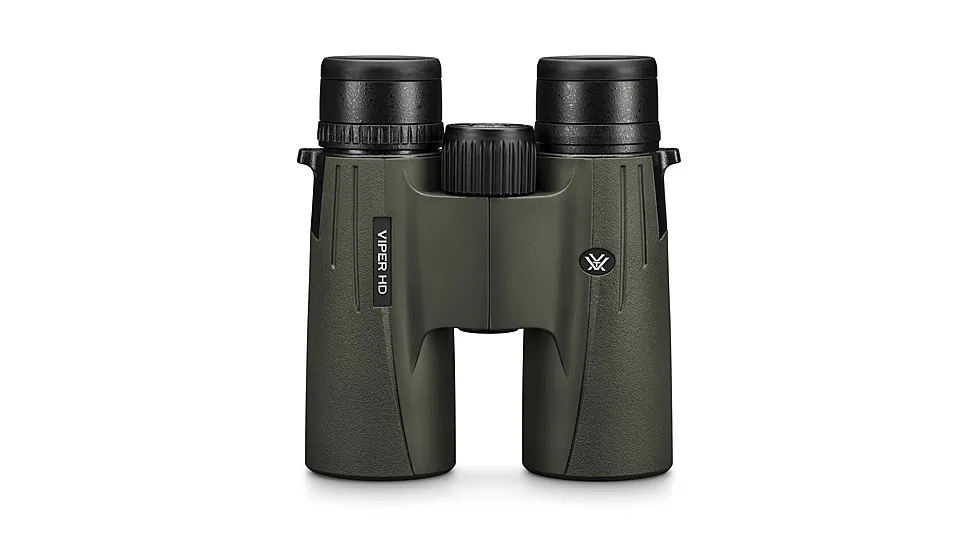
Best step-up: Vortex Viper HD 10x42
Roof prism · 10x42 · HD glass · XR Plus fully multi-coated · locking diopter · 24.9 oz
around $410exact price on OpticsPlanet
This is the rung most hunters actually feel. Against the Diamondback HD it swaps the standard multi-coat for Vortex's premium XR Plus stack on dielectric, phase-corrected prisms, widens the field of view to 341 ft at 1000 yds, and adds a locking diopter so a knock in the truck does not undo your diopter setting. The specification that decides it for a lot of buyers is 17 mm of eye relief, the most generous on this page and the reason it is the pick if you hunt in glasses, where the 14 to 15 mm on the Diamondbacks can vignette. Owners describe it in working terms rather than optical ones: one hunts Montana and rates it for pulling game out of cover, another singles out the fitted moving parts and the locking diopter ring. The line has pedigree too, though it belongs to an earlier generation: the original pre-HD Viper 10x42 took Field & Stream's Best of the Best in 2007, which is line history rather than a verdict on this model.
Pros
- XR Plus fully multi-coated premium glass on dielectric, phase-corrected prisms, a genuine coating tier above the Diamondback HD rather than a marketing name
- 17 mm eye relief is the most eyeglass-friendly figure on this page, and a 341 ft field of view is wider than either Diamondback
- Locking diopter, so the diopter setting survives being carried, stowed and knocked around
- Same unlimited, unconditional lifetime Vortex VIP warranty and included GlassPak harness as the cheaper picks
Cons
- Twice the price of the Diamondback HD 10x42
- At 24.9 oz it is 3.6 oz heavier than the Diamondback HD 10x42, which is felt on an all-day carry
- 6 ft close focus (Vortex) is longer than the Diamondback HD's 5 ft, so it is the weaker of the two for near wildlife
- The 2007 Field & Stream award belongs to the original Viper, not to this HD generation, so it should not be read as a test result for this model
Best for: hunters in eyeglasses, long glassing sessions, and anyone who wants premium coatings without a four-figure price. Stay on the Diamondback HD 10x42 if weight and close focus matter more than coatings.
Key specifications
| Magnification | 10x |
|---|---|
| Objective lens | 42 mm |
| Prism | Roof, dielectric + phase-corrected |
| Glass | HD, XR Plus fully multi-coated, ArmorTek exterior lens coating |
| Eye relief | 17 mm |
| Exit pupil | 4.2 mm (42 divided by 10) |
| Field of view | 341 ft at 1000 yds (6.5 degrees) |
| Close focus | 6 ft |
| Twilight factor | 20.5 |
| Weight | 24.9 oz |
| Diopter | Locking, plus or minus 4 |
| Sealing | Argon-purged; waterproof, fogproof, shockproof |
| Interpupillary distance | 55 to 74 mm |
| In the box | GlassPak harness + case, neck strap, covers |
| Warranty | Vortex VIP: unlimited, unconditional, lifetime |
“We hunt in Montana where great optics are a must. The Vortex Viper HD are awesome for finding game that are hid in cover.”
Donny Stewart, verified owner (MT) via OpticsPlanet
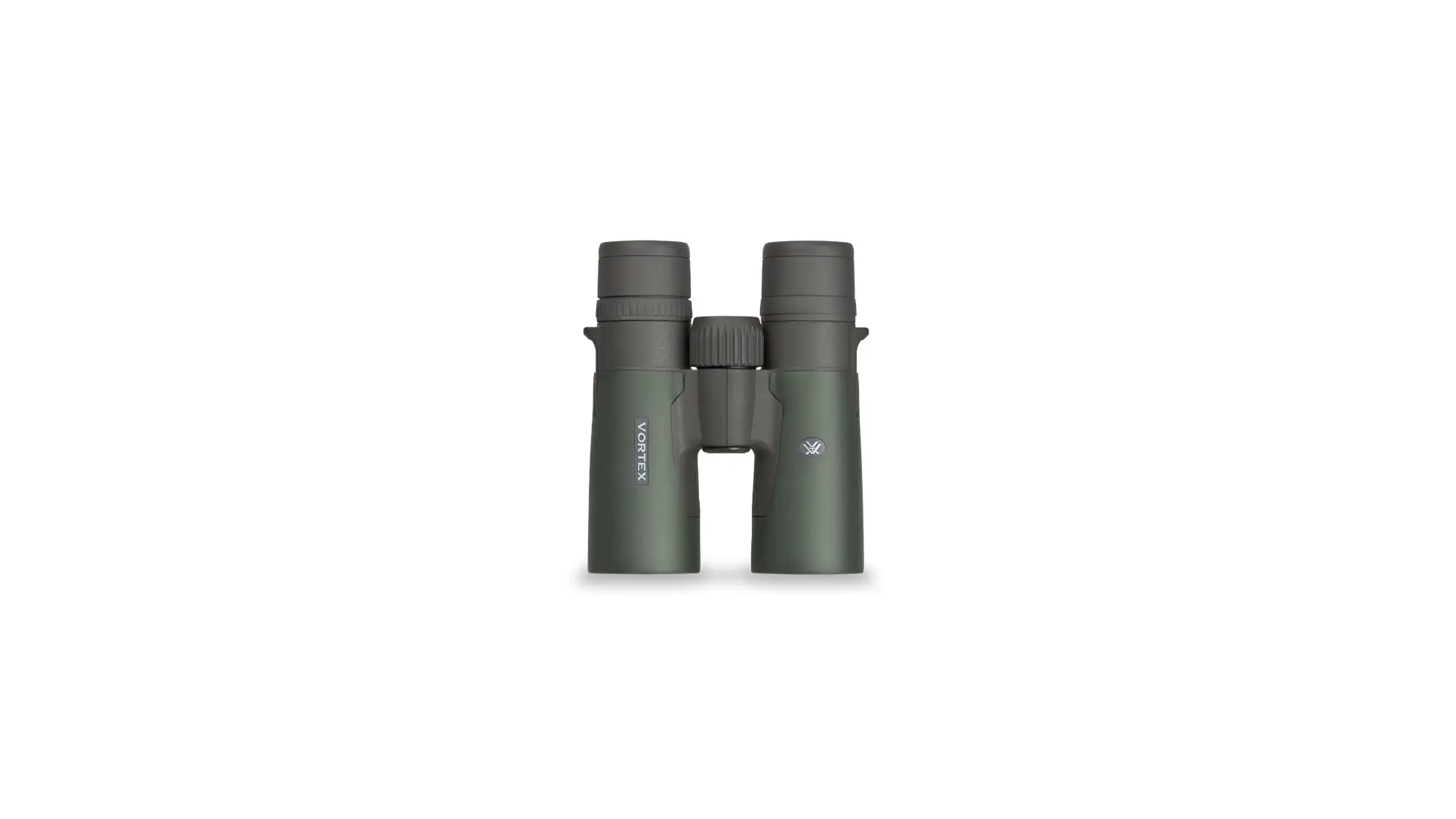
Best premium: Vortex Razor HD 10x42
Roof prism · 10x42 · HD glass · XR Plus coatings · magnesium chassis · 24.8 oz
around $1,000exact price on OpticsPlanet
This is the rung where owner testimony stops being about value for money and starts being about comparisons with alpha glass, and it is also the first pick on this page whose AllBinos laboratory measurement we cite. AllBinos recorded 86.8 percent light transmission and called its astigmatism correction sensational and its central chromatic aberration practically imperceptible. Owners have been comparing it with premium and alpha glass for thirteen years: one ran it beside a Leica Trinovid 8x42 for three days with four other people watching, and the group voted the two equal for brightness and resolution. Another rates it against Meopta HD and Zeiss Conquest HD glass. The honest counterweight is that owners genuinely split on low light, and the split has a physical explanation rather than a mysterious one: a 4.2 mm exit pupil is narrower than a dark-adapted pupil, so at true dawn and dusk an 8x42 in the same line delivers a brighter image. One hunter, who found it only slightly better than a 22-year-old Leupold porro on a whitetail morning, was "very disappointed in the light gathering ability" when they tried it in low light a month later. Read that as the page reads it: superb daylight and twilight glass, not a low-light specialist.
Pros
- Independently measured: AllBinos recorded 86.8 percent transmission, sensational astigmatism correction and practically imperceptible central chromatic aberration
- The deepest owner record here, 21 ratings running from 2013 to 2026, and it holds up: a three-day group comparison against a Leica Trinovid ended in a tie
- A 362 ft field of view and 16.5 mm eye relief, both wider and more generous than the Diamondback HD picks
- One owner reports Vortex repaired a second-hand pair they had abused on a sheep hunt, "no questions asked"
Cons
- Owners split on low-light performance, and two independently rated it below much older or cheaper binoculars at dusk; a 10x42's 4.2 mm exit pupil is one reason any 10x42 trails an 8x42 then, and an 8x42 is the better buy if dawn and dusk are your hours
- Four times the price of the Diamondback HD 10x42; two owners list price as their con and a third calls it not worth the money
- At 24.8 oz it is among the heavier 10x42s here, and the objective covers are reported to leave marks in the rubber armour
Best for: hunters who want alpha-adjacent glass in daylight and twilight without paying alpha prices, and who glass long enough to notice coatings. Choose the Viper HD instead if the budget is the limit, or the Nikon below if measured optical geometry matters more than the owner record.
Key specifications
| Magnification | 10x |
|---|---|
| Objective lens | 42 mm |
| Prism | Roof, BAK4, dielectric + phase-corrected |
| Glass | HD (extra-low dispersion), XR Plus fully multi-coated |
| Eye relief | 16.5 mm |
| Exit pupil | 4.2 mm (42 divided by 10) |
| Field of view | 362 ft at 1000 yds (6.9 degrees) |
| Measured transmission | 86.8 percent (AllBinos independent laboratory measurement, not a manufacturer figure) |
| Close focus | 6 ft |
| Twilight factor | 20.5 |
| Weight | 24.8 oz |
| Chassis | Magnesium, rubber armour, matte finish |
| Sealing | Nitrogen-purged; waterproof, fogproof, shockproof |
| Tripod adaptable | Yes |
| Interpupillary distance | 55 to 75 mm |
| MPN carded | RZB-2102 (green). This is the Razor HD line, not the dearer Razor UHD, which uses Abbe-Koenig prisms in its 42 and 50 mm models |
| Warranty | Vortex VIP: unlimited, unconditional, lifetime |
“I compared the Leica Trinovid 8x42 and the Razor 10x42. Three days with 4 other people looking with me. Daylight... and late twilight. All of us agreed both glasses were very bright and with tremendous resolution... Opinions were split and wandered back and forth as to which was brightest and which had the best resolution. Final vote was that they were equal.”
bladepeek via OpticsPlanet
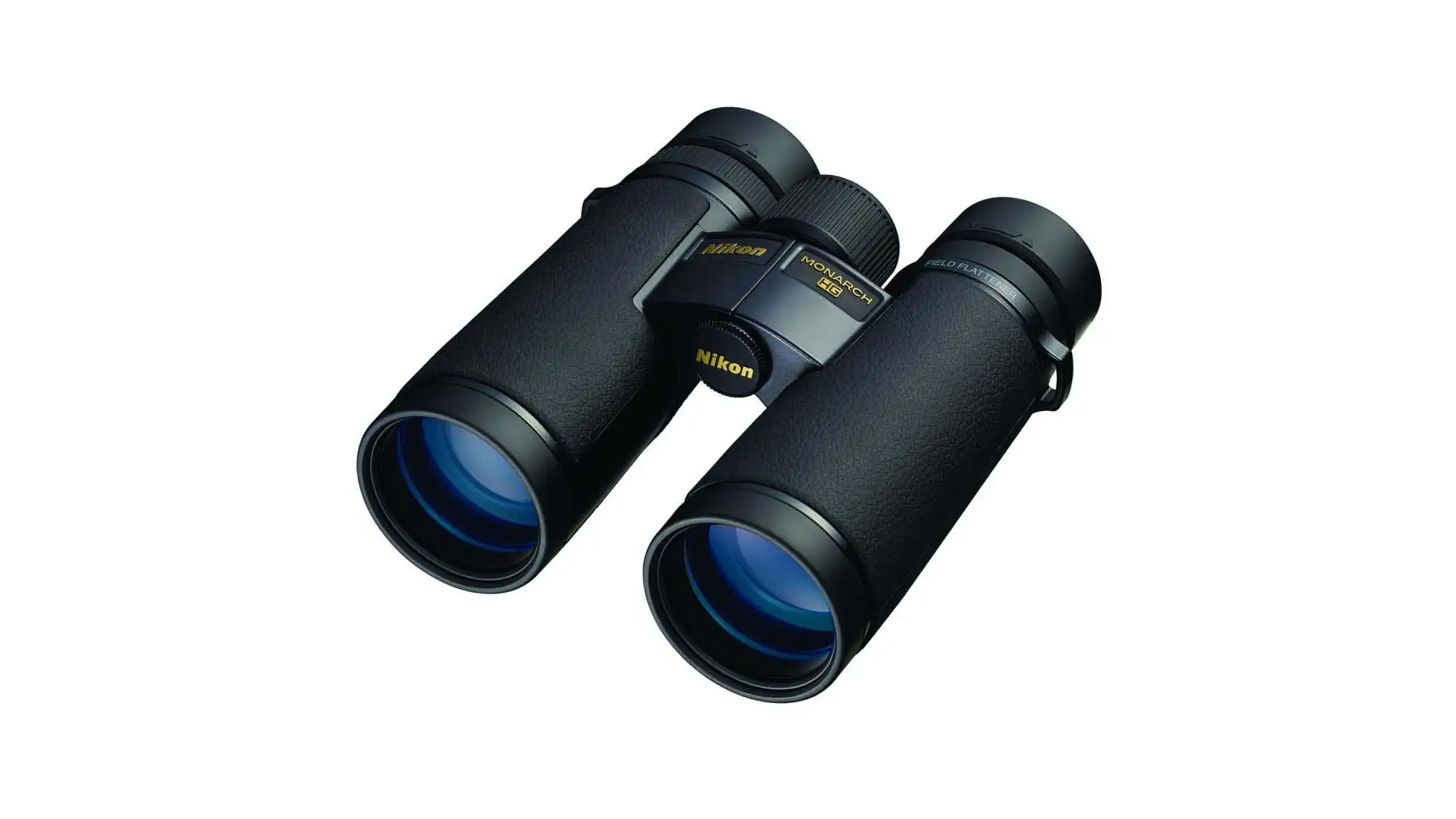
Best glass, measured: Nikon Monarch HG 10x42
Roof prism · 10x42 · ED glass · Field Flattener Lens System · magnesium alloy · 24 oz
around $1,100exact price on OpticsPlanet
This is the top of the ladder, and it earns the position on measurement rather than on reputation. AllBinos put it on a spectrophotometer and recorded 88.3 percent light transmission, the higher of the two measured transmission figures we cite, then scored its distortion a perfect 10 out of 10 with the first curved line pushed out to 92 percent of the field radius and edge blur held off until 84.5 percent of the way to the edge. That is the Field Flattener Lens System showing up in data, which is the rare case of a proprietary-sounding feature being independently confirmed. It is also the honest place to note that Nikon advertises up to 92 percent or higher transmission for this binocular and the laboratory did not reach it. The single owner review is thin, and we say so, but it is unusually useful because they test rather than admire: they read newspaper text at 50 yards for resolution and study a white fence in sun for chromatic aberration, compare against a Minox HG they have owned for twenty years, rate the Nikon a touch brighter, and then add their own caveat, which we keep: perhaps there is better out there, but for the price they are satisfied.
Pros
- At 88.3 percent, the higher of the two measured transmission figures we cite, from a laboratory spectrophotometer rather than a manufacturer estimate
- Measured optical geometry is exceptional: distortion scored a perfect 10 out of 10 and edge blur only begins at 84.5 percent of the way to the field edge, which is the Field Flattener doing what Nikon claims
- ED glass with dielectric and phase-correction prism coatings on a magnesium alloy body, and at 24 oz it is no heavier than the Razor HD despite sitting a class above it
- 17 mm eye relief ties the Viper HD as the most eyeglass-friendly pick here, with a wide 362 ft field of view
Cons
- A single owner rating is the thinnest social proof on this page, so the 5.0 score carries far less weight than the much deeper records behind the Diamondback HD and Razor HD
- The laboratory measured chromatic aberration at only 6.1 out of 10, visible at the edge and a bit higher than medium, as the lab puts it, which is a modest result for a binocular built around ED glass
- Measured transmission comes in below Nikon's own advertised up-to-92-percent figure, so the marketing number should not be the reason you buy it
- The dearest pick here by a wide margin, and its measured advantage over the Razor HD is 1.5 percentage points of transmission
Best for: hunters who want laboratory-measured glass and value optical geometry, flat fields and eye relief over the depth of the owner record. Take the Razor HD instead if thirteen years of owner testimony reassures you more than one laboratory report.
Key specifications
| Magnification | 10x |
|---|---|
| Objective lens | 42 mm |
| Prism | Roof, BAK-4, dielectric + phase-correction coatings |
| Glass | ED (extra-low dispersion), multi-layer coated, Field Flattener Lens System |
| Eye relief | 17 mm |
| Exit pupil | 4.2 mm (42 divided by 10) |
| Field of view | 362 ft at 1000 yds |
| Measured transmission | 88.3 percent (AllBinos independent laboratory measurement). Nikon advertises up to 92 percent or higher, which the laboratory did not reach |
| Close focus | 6.6 ft |
| Weight | 24 oz |
| Length | 5.7 in (Nikon) |
| Chassis | Magnesium alloy, rubber finish |
| Sealing | Waterproof to 16.4 ft for 10 minutes |
| Eyecups | Turn-and-slide |
| Interpupillary distance | 56 to 74 mm |
| MPN carded | 16028 |
“My tests are to read the newspaper at 50 yards (resolution) and look at a white fence on a sunny day (chromatic aberration). I compare the Nikon HG to a pair of Minox HG 10x43 BR that I purchased 20 years ago, pretty close in performance, with the Nikon being just a tad brighter... Perhaps there is better out there but, for the price I am satisfied.”
snaffle, verified owner (CT) via OpticsPlanet
How to choose hunting binoculars
A few decisions matter more than any single number on the box:
- Magnification and objective. 10x42 is the do-everything hunting standard; 12x50 trades weight for more reach, best on a tripod, with about the same 4.2 mm exit pupil. Bigger is not automatically better.
- Weight, because you carry it all day. A magnesium 10x42 around 21 oz rides easier on a long hike than a 29 oz 12x50.
- Glass and coatings over headline specs. HD/ED glass with dielectric, phase-corrected prisms delivers brighter, truer color, which matters most at dawn and dusk.
- Eye relief if you wear glasses. Look for about 16 to 17 mm; 14 to 15 mm can vignette for spectacle wearers.
- Warranty and what is in the box. An unconditional warranty plus an included chest harness (the Vortex GlassPak or SIG strap) is real money saved.
FAQ
What magnification of binoculars is best for hunting?
10x42 is the all-round gold standard for hunting: 10x magnification reaches across open country while the 42 mm objective keeps the binocular light and bright, which is why the Vortex Diamondback HD 10x42 is our top pick. If you mostly glass wide-open terrain or sit a blind at dawn and dusk, step up to a 12x50 like the Diamondback HD 12x50 for more reach, ideally off a tripod.
What do the numbers on binoculars mean?
The first number is magnification and the second is the objective lens diameter in millimeters. A 10x42 makes the subject appear 10 times closer through 42 mm front lenses; a 12x50 gives more reach (12x) at the cost of weight. Its 50 mm objective collects more light, but divided by 12x magnification it gives about the same 4.2 mm exit pupil as a 10x42 (our arithmetic), so the image is not brighter at dusk. Exit pupil, objective divided by magnification, is the number that sets low-light brightness.
What is the best budget binocular for hunting?
For a true sub-$100 budget, the SIG Sauer Buckmaster 10x42 is a trusted-brand pick that includes a harness and an unconditional warranty. If you can stretch your budget, the Vortex Diamondback HD 10x42 adds the full HD coating stack, a lighter magnesium chassis and a much closer 5 ft focus, and it is our best overall pick. Our best budget binoculars guide compares the sub-$100 field in full.
Are hunting binoculars good for bird watching too?
A 10x42 like the Diamondback HD doubles well for general bird watching and wildlife, with excellent color and a 5-foot close focus. Dedicated birders who track small, fast songbirds often prefer an 8x42 instead, because it gives a wider field of view and more eye relief and steadier handheld image. For most hunters who also birdwatch casually, a 10x42 is the versatile choice.
Which hunting binoculars are best at each budget?
This page ranks five 10x42s. The Vortex Diamondback HD 10x42 (under $300) is our best overall and the SIG Sauer Buckmaster 10x42 (under $100) is the pick for the tightest budget. Above them the Vortex Viper HD 10x42 adds premium XR Plus coatings and 17 mm of eye relief, the Vortex Razor HD 10x42 has an independently measured 86.8 percent light transmission, and the Nikon Monarch HG 10x42 measures higher still at 88.3 percent. For more reach rather than better glass, the Diamondback HD 12x50 trades weight for magnification and light.
New to binoculars? Learn what the numbers mean and 8x42 vs 10x42, compare our two Diamondback picks in Diamondback HD 10x42 vs 12x50, or see our best compact binoculars for a pocketable pair and our best rifle scopes guide for the rifle side of the site. Hunting on a tighter budget than the Buckmaster? Our best budget binoculars guide ranks the whole sub-$100 and sub-$200 field and explains which coating cheap binoculars leave out. Prefer an 8x42 all-rounder? See our best 8x42 binoculars and best binoculars for birding, or carry your glass better with our best binocular harness picks. Want a laser built into your glass? See our best rangefinding binoculars. Glass for hours without a tripod? Our best image-stabilized binoculars steady a 12x or 16x view in the hand. Shortlisted a Vortex Razor and cannot tell the HD and UHD lines apart? Our Vortex Razor binoculars guide decodes the prism difference and ranks the four models worth buying.