Vortex Diamondback HD 12x50 review: the open-country reach pick
Our verdict: 4.5/5. The Diamondback HD 12x50 takes the same HD glass, dielectric and phase-corrected prisms and magnesium chassis that make the 10x42 such good value, and trades weight for reach: 12x magnification and a 50 mm objective for wide-open country and low light. It is our best pick for open-country glassing, best used off a tripod. If you carry all day or hunt fast brush, buy the lighter 10x42 instead.
Owners rate it 4.9/5 across 81 reviews on OpticsPlanet. Price verified October 14, 2026; confirm the current price and availability on the retailer page.
How we reviewed it: a research-based review built from retailer specifications, the Diamondback HD line record and the owner-review record. We have not bench-tested this unit ourselves; the score is our editorial opinion, and owner ratings are shown attributed to their source. See how we evaluate.
What it is
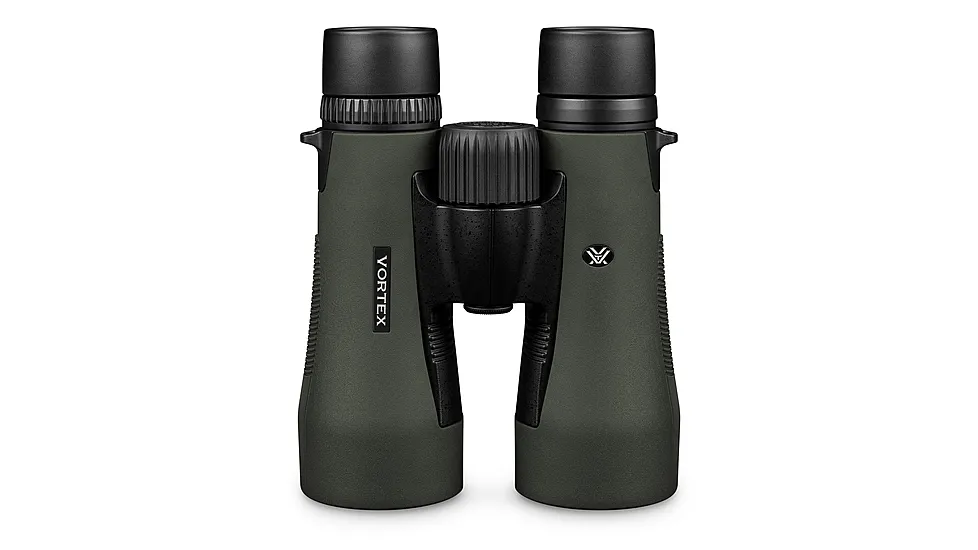
The Diamondback HD 12x50 is the high-power, big-objective member of Vortex's value binocular line. It keeps everything that makes the Diamondback HD glass good, HD (extra-low dispersion) elements, dielectric and phase-corrected roof prisms, ArmorTek coatings and an argon-purged magnesium chassis, and pushes the magnification to 12x through a 50 mm objective. The result is a specialist: more reach and more total light for picking apart distant ridges and timber edges, at the cost of weight and field of view.
Reach: what the 12x50 is for
Against the do-everything 10x42, the 12x50 pulls distant detail noticeably closer, which is exactly what open-country and western hunters want when they glass far hillsides for bedded animals. That extra reach is the whole reason to choose it. The cost is a narrower 271-foot field of view (against 330 ft on the 10x42), so finding and following a moving animal is harder, and the higher magnification amplifies every tremor in your hands.
Low light and brightness (the honest version)
A 50 mm objective sounds like a low-light upgrade, but the honest picture is subtler: the 12x50 has the same 4.2 mm exit pupil as the 10x42, so per-area image brightness is effectively identical. What the bigger objective buys is more total light and reach, which is why owners report clear daylight views that rival pricier glass and the ability to spot game deep in cover. Choose it for reach and resolution, not for a brighter image; for genuinely brighter low light you would want a larger exit pupil, such as an 8x42.
Weight and why it wants a tripod
At 28.9 oz the 12x50 is noticeably heavier than a 21.3 oz 10x42, and combined with 12x magnification that weight is the reason it rewards a tripod. Handheld, the higher power shows more shake and long sessions tire your arms; on a tripod or a pack rest it steadies into a genuinely detailed image. It is tripod-adaptable out of the box and, like the rest of the line, ships with the Vortex GlassPak chest harness for when you do carry it.
Durability and warranty
The magnesium chassis is argon-purged and sealed for waterproof, fogproof, shockproof service, with ArmorTek protecting the exterior glass. It is backed by the Vortex VIP warranty: unlimited and unconditional, repair or replace at no charge, no matter how it happened, whose fault it was, or where you purchased it. That warranty is the same one that anchors the value case across the Diamondback HD line.
What owners say (81 reviews, 4.9/5 on OpticsPlanet)
“Daylight viewing is exceptional, it challenges the higher priced optics in this category. I hunt feral hogs and raccoons under a green light in the dark of night and the 50mm objective lens lets in ample light to see clearly, add to that the 12 power magnification and your viewing experience is greatly enhanced. I’m a fan!”
Maurice, verified owner (TX) via OpticsPlanet
Price
The Diamondback HD 12x50 sells at around $280, which puts high-power HD glass and a magnesium chassis well under the price of the alpha 12x binoculars it is often compared to. Prices move, so confirm the current number on the retailer page before you buy.
Trade-offs, plainly
- Heavy at 28.9 oz: noticeably more than a 10x42, so less ideal for all-day handheld carry.
- 12x amplifies hand shake, so it really wants a tripod for steady, extended viewing.
- Narrower 271-foot field of view makes finding and tracking fast or close subjects harder.
- Tight 14 mm eye relief is marginal for people who wear thick eyeglasses.
Key specifications
| Magnification | 12x |
|---|---|
| Objective lens | 50 mm |
| Prism | Roof, phase-corrected + dielectric |
| Glass | HD (extra-low dispersion), fully multi-coated |
| Eye relief | 14 mm |
| Exit pupil | 4.2 mm |
| Field of view | 271 ft at 1000 yds |
| Close focus | 6 ft |
| Weight | 28.9 oz |
| Chassis | Magnesium alloy |
| Sealing | Argon-purged; waterproof, fogproof, shockproof |
| In the box | GlassPak harness + case, neck strap, covers, cloth |
| Warranty | Vortex VIP: unlimited, unconditional, lifetime |
Should you buy it, and what else to consider
- Buy it for open-country and western hunting, box-blind and low-light glassing off a tripod: our best binoculars for hunting open-country pick.
- Buy the 10x42 instead for all-day handheld carry, hiking, travel and general use: see Diamondback HD 10x42 vs 12x50.
- Step up in glass at the same size with the Vortex Viper HD 12x50: premium XR coatings and a locking diopter for serious low-light glassing.
- New to the specs? Start with what the numbers mean and 8x42 vs 10x42.
FAQ
Is the Vortex Diamondback HD 12x50 a good binocular?
Yes, for its job. It shares the Diamondback HD line HD glass, dielectric and phase-corrected roof prisms and magnesium chassis, and adds 12x magnification and a 50 mm objective for more reach into wide-open country. It rates 4.9/5 across 81 reviews on OpticsPlanet. The trade-offs are real: at 28.9 oz it is heavy and wants a tripod, and its narrower field of view makes it a specialist rather than an all-round pair.
Diamondback HD 12x50 or 10x42: which should I buy?
Buy the 10x42 for almost everyone: it is lighter (21.3 oz), wider and easier to hold all day. Choose the 12x50 only if you glass wide-open country or low light and want the extra reach, ideally off a tripod. Both use the same HD glass and warranty, so it is a choice of reach and weight, not quality. See our full 10x42 vs 12x50 comparison for the details.
Is the 12x50 brighter than a 10x42 in low light?
Not meaningfully. Both share a 4.2 mm exit pupil, so per-area image brightness is effectively the same. The 50 mm objective gathers more total light and the 12x reaches further, which is why owners report picking out game in cover and by moonlight, but you should choose the 12x50 for reach and resolution, not for a brighter image. For a genuinely brighter low-light view you want a larger exit pupil, such as an 8x42 (5.25 mm).
Do you really need a tripod for a 12x50?
For steady, extended glassing, yes. At 12x, hand shake is amplified and the binocular is heavy, so a tripod (it is tripod-adaptable) makes a real difference over a long session. For quick, handheld looks it is usable, but the 10x42 is the better freehand tool. Serious open-country glassers pair the 12x50 with a tripod or a pack rest.
Comparing this against the other 12x50 worth owning? See our best 12x50 binoculars guide.
More binoculars: best binoculars for hunting · 10x42 vs 12x50 · Diamondback HD 10x42 review.