Vortex Diamondback HD 10x42 vs 12x50: how much reach do you need?
Our verdict: these two share the same HD glass, magnesium chassis and lifetime warranty, so the choice is reach versus weight, not quality. On merit the Diamondback HD 10x42 (around $220) suits almost everyone: it is the lighter, wider, do-everything binocular for hunting, hiking and general glassing. Choose the Diamondback HD 12x50 (around $280) if you glass wide-open country or low light and want the extra reach, ideally off a tripod. Neither one is meaningfully brighter than the other, which is the single most common misreading of this pair and is explained below.
Both hold a 4.9/5 average on OpticsPlanet (47 and 81 reviews). Prices verified October 14, 2026; confirm the current price on the retailer page. Both are picks in our best binoculars for hunting guide.
The whole line first, because these two are not all of it
The pair this page compares sits in the middle of a five-model line, and the two models it leaves out answer a different question. Here is the full line with the price of each, read from the retailer product pages themselves rather than a category filter.
| Diamondback HD | Price |
|---|---|
| 10x42, green (DB-215) | around $220 |
| 10x42, Mossy Oak Bottomlands (DB-215-OBL) | around $280 |
| 10x50 (DB-216) | around $230 |
| 12x50 (DB-217) | around $280 |
| 15x56 (DB-218) | around $370 |
What that means in practice: the camo 10x42 is the same binocular as the green in a different finish, so pick the finish you want and nothing optical changes. The two models this page does not compare are the ones to read about if low light is your real question: the 10x50 has the brightest exit pupil in the line and the most eye relief, and the 15x56 buys reach at the cost of brightness. Both are covered below.
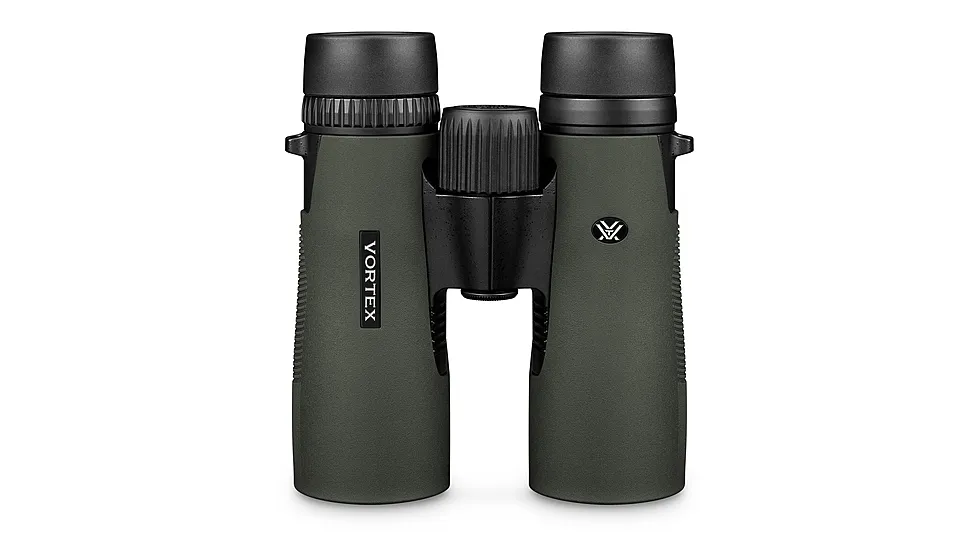
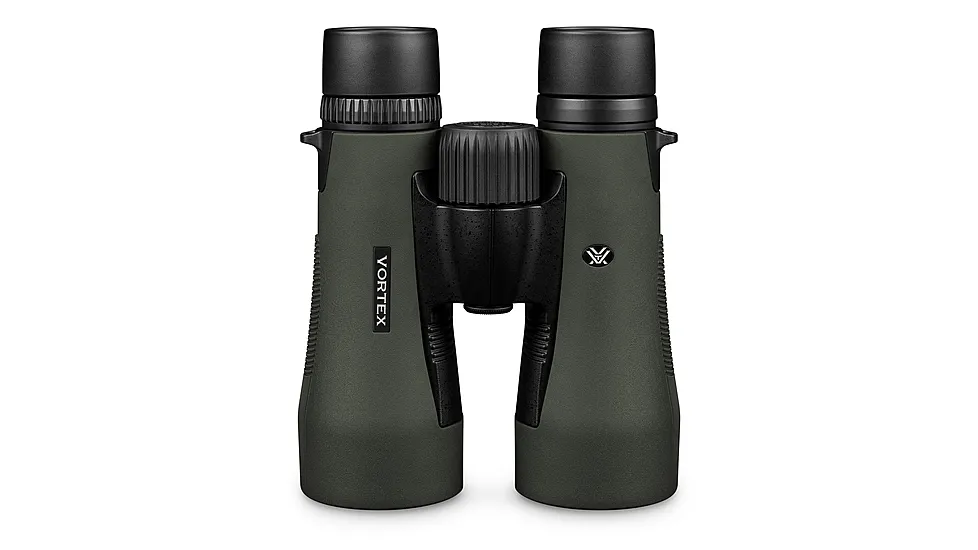
How this comparison was made: a research-based, spec-by-spec comparison from retailer specifications, warranty terms and owner feedback. We have not bench-tested these two side by side; scores and verdicts are our editorial opinion, and owner ratings are shown attributed to their source. See how we evaluate.
Side-by-side specifications
| Diamondback HD 10x42 | Diamondback HD 12x50 | |
|---|---|---|
| Street price | around $220 | around $280 |
| Owner rating | 4.9/5, 47 reviews on OpticsPlanet | 4.9/5, 81 reviews on OpticsPlanet |
| Magnification | 10x | 12x |
| Objective | 42 mm | 50 mm |
| Exit pupil | 4.2 mm | 4.2 mm |
| Field of view | 330 ft at 1000 yds | 271 ft at 1000 yds |
| Eye relief | 15 mm | 14 mm |
| Close focus | 5 ft | 6 ft |
| Weight | 21.3 oz | 28.9 oz |
| Glass | HD, phase-corrected + dielectric roof prism | HD, phase-corrected + dielectric roof prism |
| Chassis | Magnesium | Magnesium |
| Sealing | Argon; waterproof, fogproof, shockproof | Argon; waterproof, fogproof, shockproof |
| In the box | GlassPak harness + case, straps, covers | GlassPak harness + case, straps, covers |
| Warranty | Vortex VIP: unlimited, unconditional, lifetime | Vortex VIP: unlimited, unconditional, lifetime |
| Check 10x42 price | Check 12x50 price |
Reach and magnification
The core difference is 10x versus 12x. The 12x50 pulls distant detail noticeably closer, which is the point for open-country and western glassing where you pick apart far ridges and timber edges. The trade-off is a narrower field of view (271 ft versus 330 ft at 1000 yards), so it is harder to find and follow a moving animal, and 12x amplifies hand shake. The 10x42 is the more versatile magnification for most terrain and the easier binocular to use handheld.
Low light and brightness (the honest version)
Both binoculars have the same 4.2 mm exit pupil, so per-area image brightness is effectively identical: the 12x50 is not meaningfully brighter than the 10x42, despite the bigger objective. What the 50 mm objective buys is more total light and reach, which is why owners report identifying game deep in cover and even by moonlight, but choose the 12x50 for reach and resolution, not for a brighter view. The arithmetic is worth doing yourself, because it is the part most comparisons of this pair get backwards: divide the objective by the magnification and 42 over 10 gives 4.2 mm while 50 over 12 gives 4.17 mm. A bigger front lens carrying a bigger magnification cancels itself out.
The Diamondback HD that answers this question better than either of them
Run that same division across the rest of the line and one model separates from the others. The Diamondback HD 10x50 (around $230) keeps the 10x magnification most people want and puts a 50 mm objective in front of it, which gives a 5.0 mm exit pupil, close to what a dark-adapted eye can actually use. It is the only one of the four that is genuinely brighter at dusk rather than just longer-reaching, and it carries the most eye relief in the line at 17 mm, which directly answers the complaint eyeglass wearers make about the 12x50's tight 14 mm. Its 315-foot field of view is wider than the 12x50's 271 feet, too.
| 10x42 | 10x50 | 12x50 | |
|---|---|---|---|
| Exit pupil (objective divided by power) | 4.2 mm | 5.0 mm | 4.2 mm |
| Eye relief | 15 mm | 17 mm | 14 mm |
| Field of view at 1000 yds | 330 ft | 315 ft | 271 ft |
| Weight | 21.3 oz | 30.0 oz | 28.9 oz |
| Reach | 10x | 10x | 12x |
The honest cost is weight: at 30.0 oz the 10x50 is the heaviest of the three, heavier even than the 12x50, so it is a tripod, vehicle or sitting binocular rather than an all-day neck carry, and it does not reach as far as a 12x. Buyers with a narrow interpupillary distance should also note that the 50 mm barrels will not close as far as the 42 mm ones. It is our best overall pick in the best binoculars for astronomy guide, where the 5 mm exit pupil matters most, and we mention it here because the question this page is usually asked to settle, more reach or more light, has a third answer inside the same product line.
For completeness, the line goes one step further to the Diamondback HD 15x56 (around $370). More power again, but the arithmetic turns against you: 56 over 15 is a 3.7 mm exit pupil, dimmer than any of the three above, with a 230-foot field of view and 34.8 oz on the scale. That is a dedicated tripod glass for picking apart distant country, not a step up from a 12x50 for general use. We compare it in our best binoculars for long distance guide.
Specifications in this section are from Vortex's own product pages for each model. Exit pupil is not published in those tables and is derived here by dividing the objective diameter by the magnification.
Weight and handling
The 10x42 weighs 21.3 oz and rides easily on a chest harness all day; the 12x50 is 28.9 oz, noticeably heavier on a long hike and around the neck. Combined with the higher magnification, that weight is why the 12x50 really wants a tripod or a pack rest for steady, extended glassing, while the 10x42 is comfortable freehand. Both are tripod-adaptable and both ship with the Vortex GlassPak chest harness.
What is identical
Everything that determines optical quality and durability is shared: HD (extra-low dispersion) glass, dielectric and phase-corrected roof prisms, a magnesium chassis, argon purging (waterproof, fogproof, shockproof), the included GlassPak harness and the unlimited, unconditional Vortex VIP lifetime warranty. You are not buying better glass by going to the 12x50, only more magnification and objective.
Which one should you buy?
- Most hunters and general use: Diamondback HD 10x42. Lighter, wider, easier, and our best overall value binocular.
- Open-country and western glassing: Diamondback HD 12x50, for the extra reach.
- Box-blind and low-light spotting off a tripod: Diamondback HD 12x50.
- All-day handheld carry, hiking and travel: Diamondback HD 10x42.
- Bird watching and general wildlife: Diamondback HD 10x42, for the wider field and 5-foot close focus.
- Maximum low-light brightness: neither of these two, because they share a 4.2 mm exit pupil. The Diamondback HD 10x50 gives 5.0 mm.
- Eyeglass wearers: not the 12x50 and its 14 mm. The 10x42 gives 15 mm and the 10x50 gives 17 mm.
- Stargazing: the 10x50, for the 5 mm exit pupil and the wide field.
Neither one fits? Where to look next
| If you want | Why | Where to look next |
|---|---|---|
| Stargazing | Neither of these two is the brightest option; the 10x50 is our top pick in the astronomy roundup, where exit pupil matters most. | Astronomy binocular picks |
| Even more reach than 12x | Past the 12x50 the line moves to a dedicated tripod glass for picking apart distant country. | Long distance binocular picks |
| 12x without a tripod | 12x amplifies hand shake and really wants a tripod or a rest; if you will not carry one, look at stabilized binoculars. | Image stabilized binocular picks |
| Bird watching | For birds the 10x42 wins on its wider field and close focus; compare it with other birding binoculars. | Birding binocular picks |
| More hunting binoculars to compare | Most hunters land on the 10x42 here; see the wider field of hunting binoculars. | Hunting binocular picks |
FAQ
Diamondback HD 10x42 or 12x50: which should I buy?
On merit the 10x42 suits almost everyone: at 21.3 oz with a wide 330-foot field of view it is the do-everything hunting and general binocular, easy to hold all day and pack. Choose the 12x50 (28.9 oz) if you glass wide-open country or sit a blind at first and last light and want more reach, ideally off a tripod. Same HD glass and warranty, so the choice is reach and weight, not quality.
Is the 12x50 actually brighter than the 10x42 in low light?
Not meaningfully, and this surprises people. Both share a 4.2 mm exit pupil (42 divided by 10, and 50 divided by 12, are almost identical), so per-area image brightness is effectively the same. The 12x50 gathers more total light through the bigger objective and reaches further, which is why owners report spotting game deep in cover, but you should choose it for reach and resolution, not for a brighter view.
Which Diamondback HD is genuinely brightest in low light?
The 10x50, and it is the model this comparison usually leaves out. Divide the objective by the magnification and the line separates cleanly: the 10x42 and the 12x50 both land on 4.2 mm, the 15x56 is dimmer still at 3.7 mm, and the 10x50 gives 5.0 mm, which is close to what a dark-adapted eye can use. It also carries the most eye relief in the line at 17 mm and a 315-foot field of view, wider than the 12x50, for 30.0 oz. It is our best overall pick for astronomy for exactly that reason.
Do I need a tripod for the 12x50?
For steady, extended glassing, yes. At 12x, hand shake is noticeably amplified and the binocular is heavier, so a tripod (both are tripod-adaptable) makes a real difference over long sessions. The 10x42 is comfortable handheld all day; the 12x50 rewards a tripod or a pack rest.
Which is better for bird watching or general use?
The 10x42, easily. Its wider field of view makes it far easier to find and track birds and moving subjects, it is lighter for all-day carry, and its 5-foot close focus is excellent for nearby wildlife. The 12x50 narrower 271-foot field and weight make it a specialist open-country and low-light glass, not a general-purpose pair.
See both in context in our best binoculars for hunting and best binoculars for astronomy guides, or read the full reviews of the Diamondback HD 10x42 and the Diamondback HD 12x50. New to the specs? Learn what the numbers mean and 8x42 vs 10x42.