The best binoculars for a safari
Quick answer: take 8x42. Game drives mean a vibrating vehicle, midday heat shimmer and short sightings, and 8x handles all three better than 10x while giving you a wider view to find what the guide just pointed at. On merit the Vortex Diamondback HD 8x42 (around $190) is the pick for most people: HD glass, a 393 foot field of view, 21.8 ounces and a lifetime warranty. The alternatives are still worth knowing: the Nikon Monarch M7 8x42 (around $490) with the widest view in its series at 435 feet, the Athlon Neos Gen II HD 8x42 at around $120 for a second pair, the Diamondback HD 10x32 at 16 ounces if flight weight rules, and the premium Leupold BX-5 Santiam HD 8x42 (around $1,050) if you are buying glass for the trip of a lifetime.
Why 8x, and why 42 mm
Safari viewing is not the same problem as glassing a hillside. You are usually in a vehicle whose engine is running, the sighting lasts as long as the animal allows, and much of the day is hot enough that the air itself shimmers above the ground. Magnification multiplies every one of those problems: 10x doubles the visible effect of your hand shake compared with 5x, and it magnifies heat haze just as faithfully as it magnifies a lion. The wider field of an 8x is the other half of the argument, because most sightings start with someone else saying "left of the dead tree" and you have a few seconds to find it.
The 42 mm objective is about light rather than reach. Game is most active at dawn and dusk, which is exactly when a small objective runs out of exit pupil, and 42 mm with 8x gives a 5.25 mm exit pupil, comfortably matched to most eyes in low light. The cost is bulk: roughly 21 to 22 ounces around your neck for a full day. That is the trade this page is really about, and the two ways out of it are a harness or a 32 mm body.
How we chose: these are research-based picks, not a field test. We have not been on safari, and we do not print testimonials we cannot source. What we can verify is optics, prices and owner records, so that is what this page uses. Every product here already has a full write-up on this site. See how we evaluate.
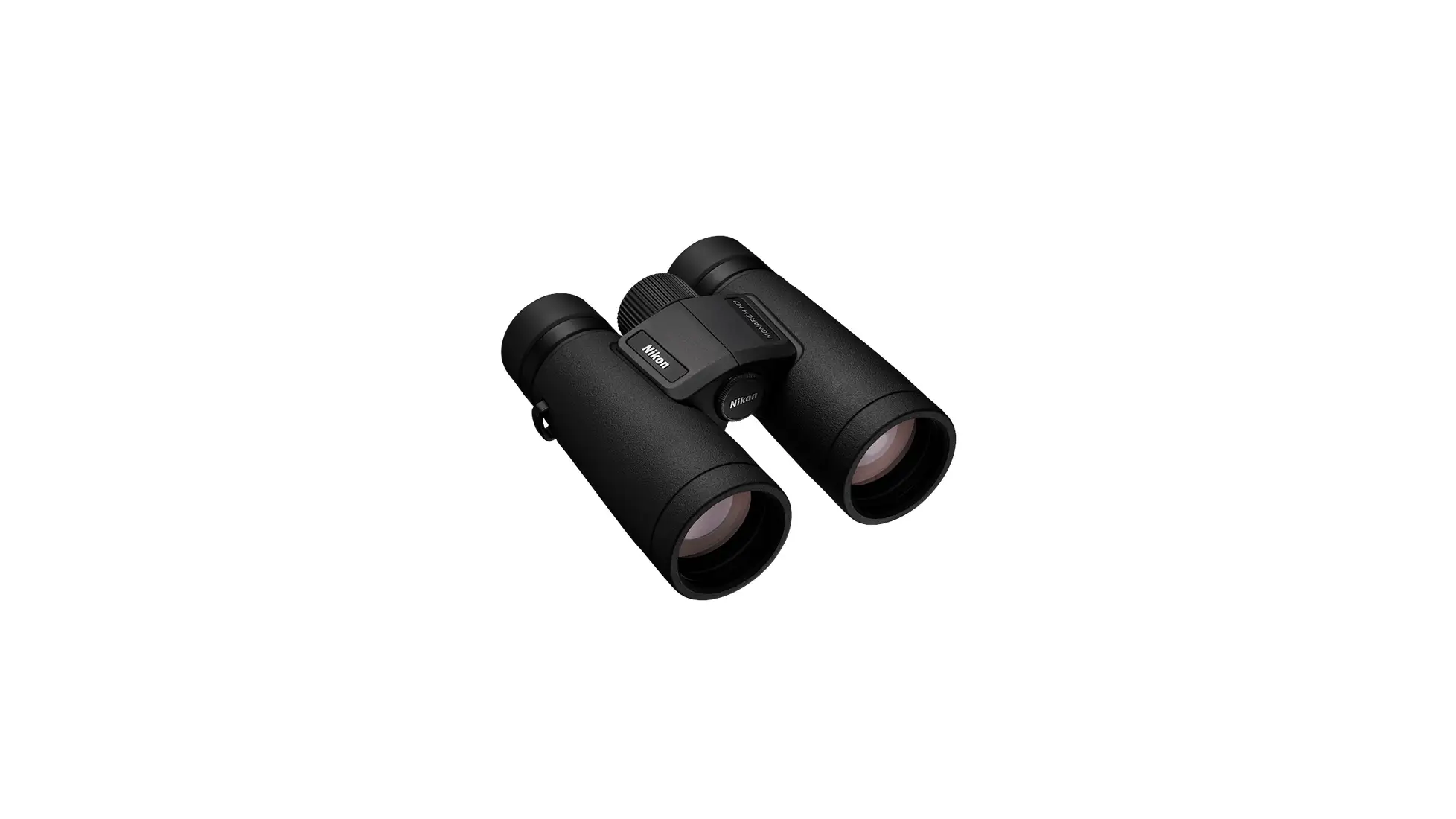
Best glass if the budget allows: Nikon Monarch M7 8x42
around $490 5.0/5, 3 reviews on OpticsPlanet
435 ft field of view at 1000 yds, widest in the Monarch series · 17.1 mm eye relief · 8.2 ft close focus
The upgrade that is actually worth the money if you will keep using it at home. Nikon ED glass with dielectric, phase-corrected coatings, a locking diopter so a jostled vehicle cannot knock your setting, an oil and water repellent lens coating for dust and fingerprints, and the widest field in the Monarch series at 435 feet. Two honest caveats: its owner record here is only three reviews, glowing but thin, and its 8.2 foot close focus is well behind the Diamondback's 5 feet if insects and birds in camp interest you. It is the 8x42 we would hand a first-time safari-goer who wants the Nikon name and the locking diopter rather than the Diamondback's wider field. A discounted demo unit used to sit alongside it on the same listing; it was gone at our August 15, 2026 check, so do not go shopping for it.
Full write-up: Nikon Monarch M7 8x42.
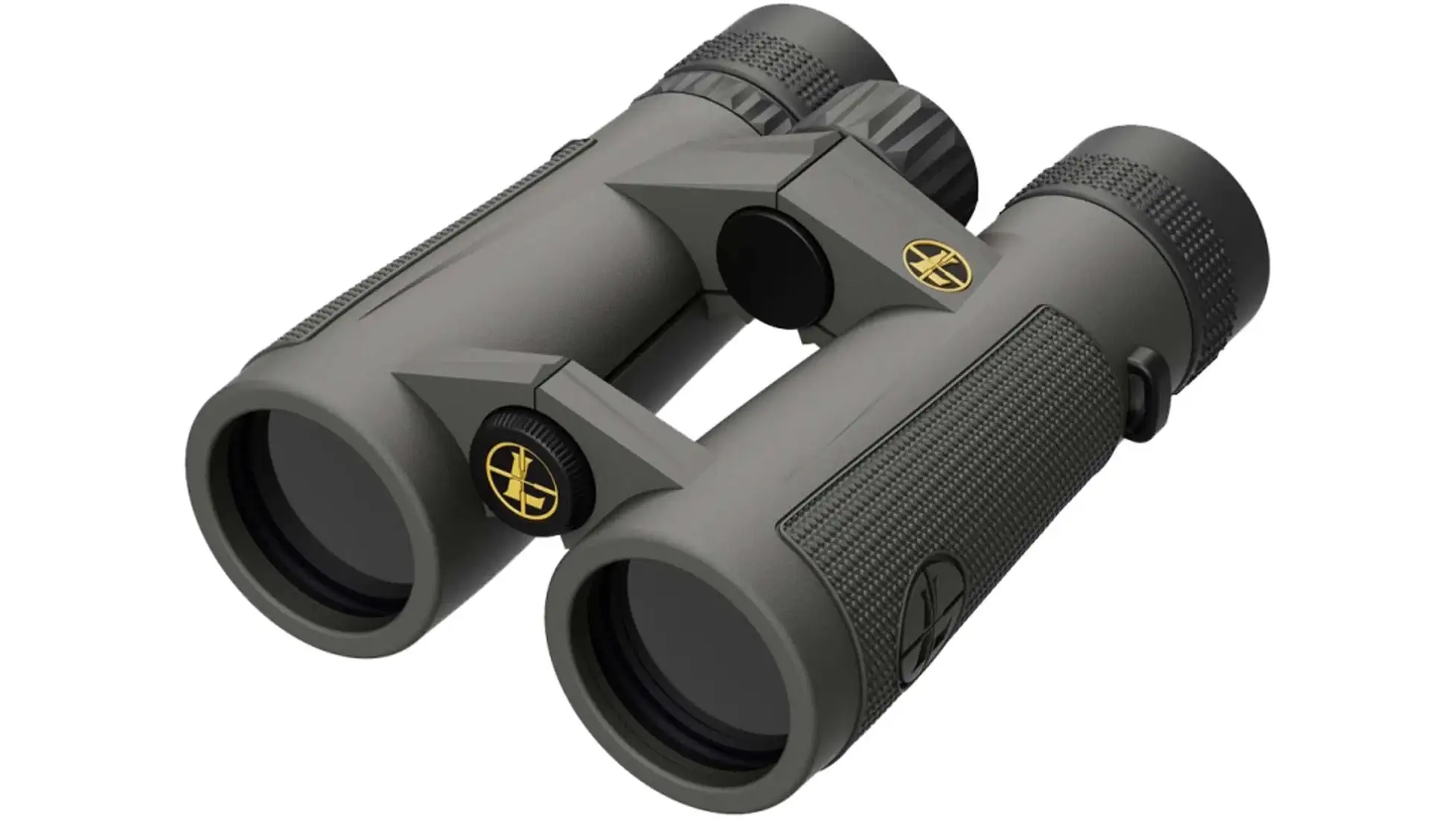
Best premium glass: Leupold BX-5 Santiam HD 8x42
around $1,050 5.0/5, 5 reviews on OpticsPlanet
377 ft field of view at 1000 yds · 18.5 mm eye relief · 5 ft close focus · 23.6 oz · 58 to 78 mm IPD
Full write-up: Leupold BX-5 Santiam HD 8x42.
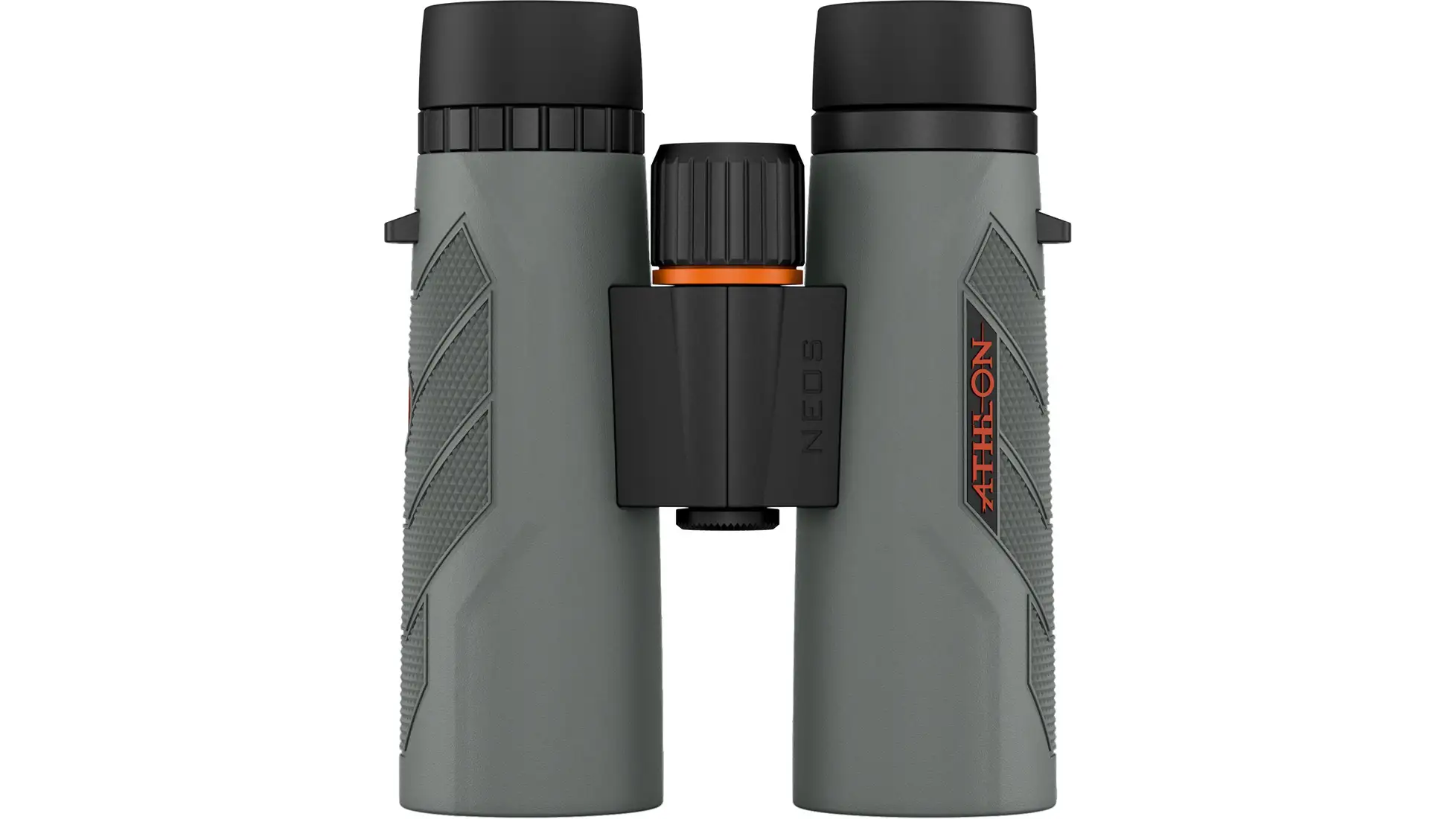
Best budget: Athlon Neos Gen II HD 8x42
around $120 4.0/5, but from only 2 reviews on OpticsPlanet, a very thin record
HD glass, BaK4 roof prisms, magnesium chassis · about 21 oz
Here because two decent pairs beat one excellent pair when you are travelling as a couple, and because nobody should hand one of the expensive pairs above to a child in a moving vehicle. HD glass and BaK4 roof prisms on a magnesium chassis at around 21 ounces, for around $120. Be clear-eyed about it: with only two reviews on the retailer site this has the thinnest record on the page, and at this price the glass will not match the Diamondback in the first and last half hour of light. As a second pair or a first pair for an occasional user, it is the sensible spend.
Full write-up: Athlon Neos Gen II HD 8x42.
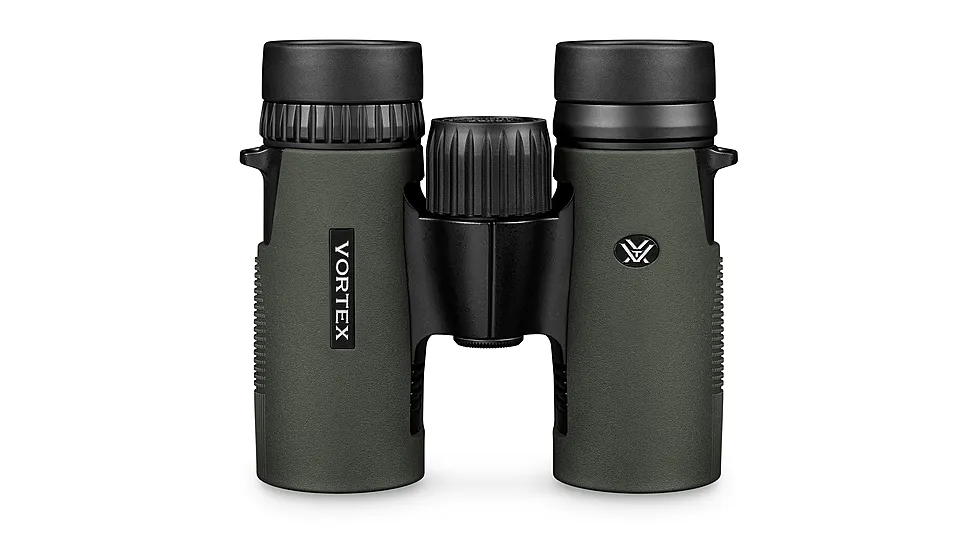
Best for travel weight: Vortex Diamondback HD 10x32
around $220 4.9/5, 17 reviews on OpticsPlanet
16 oz · 4.4 in · 3.2 mm exit pupil · 6 ft close focus
The answer when weight and cabin baggage decide the argument. Same HD glass and dielectric, phase-corrected prisms as its 42 mm sibling in a 16 ounce, 4.4 inch body, with a 6 foot close focus and the same lifetime warranty. Two trade-offs to accept knowingly: a 3.2 mm exit pupil is noticeably dimmer than 42 mm glass at dawn and dusk, and this is a 10x, so heat shimmer and vehicle vibration hit it harder. Brace against the roll bar or a bean bag and it is a superb travel pair.
Full write-up: Vortex Diamondback HD 10x32.
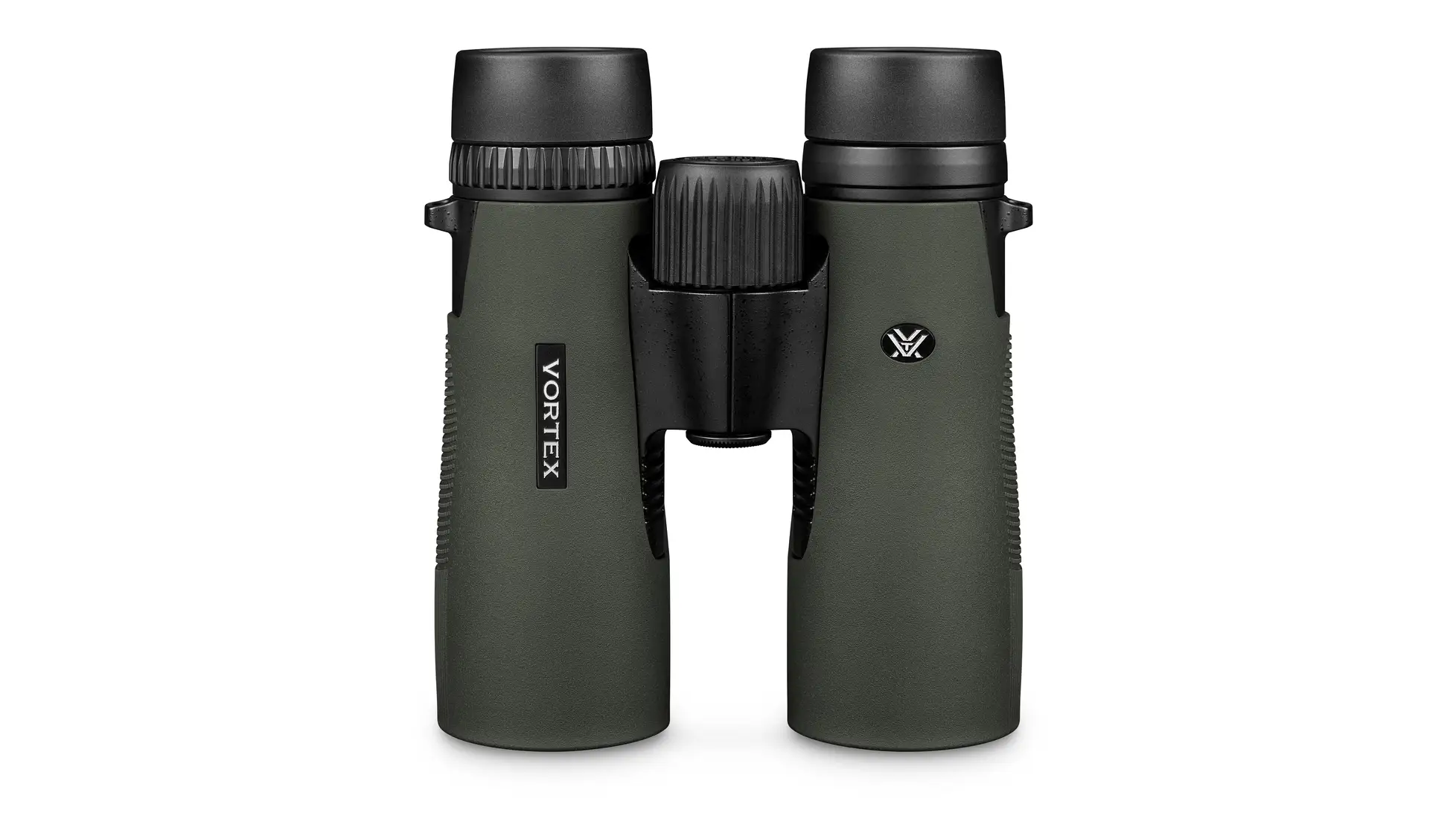
Best for most people: Vortex Diamondback HD 8x42
around $190 4.9/5, 20 reviews on OpticsPlanet
393 ft field of view at 1000 yds · 17 mm eye relief · 5 ft close focus · 21.8 oz
The default recommendation. HD (extra-low dispersion) glass with dielectric, phase-corrected roof prisms gives you sharp, true-colour images for a fraction of alpha money, the 393 foot field of view is generous for finding animals fast, and 17 mm of eye relief works with sunglasses on, which matters more on a game drive than most spec sheets admit. Close focus of 5 feet means the dung beetle at your feet is as usable a subject as the elephant. It is fully waterproof and fogproof, and the Vortex VIP warranty is unconditional and transferable. At 21.8 ounces, wear it on a harness rather than a strap.
Full write-up: Vortex Diamondback HD 8x42.
If you are buying premium glass for the trip
This page has argued the middle of the market, and we stand by that for most readers. But a safari is an expensive trip, plenty of people budget for glass to match it, and until August 2026 this page had nothing to say to them, which is its own kind of unhelpful. So here is the honest premium answer, now researched in full rather than named in passing.
The Leupold BX-5 Santiam HD 8x42 (around $1,050) is the one we would point at, for a reason specific to this page rather than to prestige: it is an 8x42, which is the configuration the whole argument above is built on, so you are buying better glass in the right shape rather than trading the shape away for a badge. It carries Leupold's lifetime guarantee and a 5.0/5 owner average from five reviews, and that small number is worth more than it looks: three of those five owners compared it in person against a Vortex Razor HD, a Nikon HG or a Swarovski SLC before buying, and one of them bought the Razor HD alongside it, tested both over a couple of thousand yards in every light he could find, and sent the Vortex back. What they praise is the same thing every time, and it is the thing that matters at dawn and dusk on a game drive: low-light resolution.
Three notes to keep this honest, because the money does not buy everything. Its field of view is 377 feet at 1000 yards, which is narrower than the far cheaper Diamondback HD this page has spent a thousand words recommending for its width, so the premium buys glass rather than the page's own headline virtue. At 23.6 ounces it is the heaviest binocular here. And Leupold specifies a minimum interpupillary distance of 58 mm, which the most-helpful owner review independently flags as the one real complaint, so if you have a narrow face, measure before you buy. The obvious Vortex alternative at this level, the Razor HD 10x42, costs more again. Above this sits genuine alpha glass from Swarovski, Zeiss and Leica, which is a different conversation and not one we can have with verified retail data.
The best travel binoculars for safari
If the deciding factor is flight weight and cabin space rather than the last minute of dusk performance, the travel answer is a 32 mm body. The Vortex Diamondback HD 10x32 above is the pick here: it keeps the same HD glass and dielectric, phase-corrected prisms as the 42 mm safari binoculars but drops to 16 ounces and 4.4 inches, so it disappears into a daypack and does not fight you on a long day of drives. You accept two things knowingly for that: a 3.2 mm exit pupil that is dimmer than 42 mm glass at dawn and dusk, and, because it is a 10x, more sensitivity to heat shimmer and vehicle vibration, so brace it against a bean bag or the roll bar. If you would rather keep 8x steadiness in a small body, or want to see the full compact field, our best compact binoculars guide has smaller 8x pocket options, including an 8x28. What we would not take on an African safari is a 25 mm pocket pair as your only binocular: it is genuinely compromised in exactly the low light when the game is moving.
Packing and use notes that actually matter
- Wear a harness, not a strap. Twenty-two ounces on a neck strap for eight hours is its own kind of punishment, and a harness keeps the binocular from swinging into the vehicle frame. See best binocular harness.
- Plan for dust, not rain. Sealed, nitrogen or argon purged bodies keep grit out of the optical path. Carry a blower and a microfibre cloth, and never dry-wipe a dusty lens.
- Set your diopter before you go, and prefer a locking one. A vehicle knocks dials constantly.
- Brace, do not free-hand, at 10x. A bean bag on the roll bar or a rolled jacket on the window rail is worth more than any coating.
- Bring your own pair each. Sharing costs you the sighting; sightings are the trip.
- Vehicle glassing at higher power? Image stabilisation is the tool that makes 12x or 16x usable from a running engine: see best image stabilized binoculars.
FAQ
What magnification is best for a safari, 8x or 10x?
8x is the safer choice for most people. Game viewing happens from a moving or idling vehicle, often in the middle of the day when heat shimmer rises off the ground, and both of those punish magnification: 10x amplifies your hand shake and the shimmer alike. 8x also gives you a wider field of view, which is what you actually need to find an animal someone else has just pointed at, and a larger exit pupil for the low light at dawn and dusk when game is most active. Take 10x only if you are steady, or pair it with something to brace against.
What size binoculars should you take on safari?
A 42 mm objective is the standard answer: bright enough at dawn and dusk, still light enough to wear all day. Our main picks weigh about 21 to 22 ounces. If flight weight or neck comfort matters more than the last bit of low-light performance, a 32 mm body such as the Diamondback HD 10x32 drops to 16 ounces and 4.4 inches while keeping HD glass. Below that, 25 mm pocket binoculars are genuinely compromised at dusk, which is exactly when you will want them.
Do you need waterproof binoculars for a safari?
Sealing matters more for dust than for rain. Game drives raise fine dust constantly, and a nitrogen or argon purged, O-ring sealed body keeps that dust and any humidity out of the optical path, while also preventing internal fogging when you move between air-conditioned vehicles and hot air. Every pick on this page is fully waterproof and fogproof for that reason. Take a lens cloth and a blower, and resist wiping grit off a dry lens.
Should you share a pair or bring your own?
Bring your own. Sightings are short and shared binoculars spend their time being handed across a vehicle rather than being used, and every handover costs you the animal. Two modest pairs beat one excellent pair for a couple, which is part of why the sub-$150 Athlon and the sub-$250 Diamondback matter here. A harness rather than a neck strap is the other quality-of-life upgrade for a full day of drives.
Are expensive binoculars worth it for one trip?
Only if you will use them again. The honest split is that the jump from a sub-$150 pair to a sub-$250 pair buys you a real improvement in sharpness and low-light performance, while the jump from there to the Nikon Monarch M7 buys refinement: a wider field, better coatings and better colour. Above that, a premium 8x42 such as the Leupold BX-5 Santiam HD costs more again, and the gain is smaller each time per dollar. For a single trip the middle of that range is the sweet spot. If you already birdwatch or hunt at home, the Nikon Monarch M7 is the pair you will keep using afterwards, and the Leupold is the one you would buy if this is the trip you have been saving for.
What are the best travel binoculars for safari?
For flight weight and cabin space, a 32 mm body is the travel answer, and the Vortex Diamondback HD 10x32 is our pick: it keeps HD glass and phase-corrected prisms but drops to 16 ounces and 4.4 inches, so it packs small and wears light all day. The trade is a dimmer 3.2 mm exit pupil at dawn and dusk and more sensitivity to shimmer at 10x, so brace it. If you want 8x steadiness in a small body instead, see our best compact binoculars guide. Avoid a 25 mm pocket pair as your only binocular, since it is weakest in exactly the low light when game is active.
What binoculars are best for an African safari specifically?
The same rules hold across African safari destinations, from the Serengeti to Kruger and the Okavango: an 8x42 for its wide field, steady image and low-light exit pupil is the all-round choice, with a 32 mm body if you are counting travel grams. African game drives raise a lot of dust, so a sealed, nitrogen or argon purged body matters more than waterproofing, and dawn and dusk drives are when a 42 mm objective earns its bulk. Our top overall pick, the Vortex Diamondback HD 8x42, covers all of that under a lifetime warranty; bring your own pair each rather than sharing, because sightings are short.
Prices verified September 30, 2026, re-verified on the product pages the day this page was written. Prices move, so confirm the current figure on the retailer page before you buy.
More: best 8x42 binoculars · best compact binoculars · best binoculars for birding · 8x42 vs 10x42 · what binocular numbers mean.