The best prism scopes
Quick answer: the Primary Arms SLx 3x MicroPrism (around $350) is the prism scope most AR owners should buy. It weighs 7.95 ounces, which is red dot territory, adjusts in fine 0.25 MOA clicks, has the longest eye relief here at 2.7 to 3 inches and holds the highest owner rating of the five, 4.7 out of 5. If you want the most sight for the least money, the Burris AR-332 is around $170 with by far the deepest owner record, 294 reviews. For 5x reach without the weight, the Vortex Spitfire HD Gen II 5x is 10.8 ounces. Two warnings that apply to this whole category: the eye box is tight on every one of them, and reticles that arrive canted are a real, repeated complaint, so check yours the day it lands.
Why a prism, and who it is for
A prism scope folds a fixed magnification into a package barely longer than a red dot by bending the light path through a glass prism instead of a stack of relay lenses. The important consequence is the reticle: it is etched into the glass, so it is still there when the battery dies, and it does not smear for shooters with astigmatism the way a projected dot does. That last point is the reason this category exists for a lot of buyers, and it is why our astigmatism guide sends people here. The price you pay is a tight eye box: your head has to be in the right place, every time.
| Model | Mag | Weight | Eye relief | Click | FOV at 100 yd | Price |
|---|---|---|---|---|---|---|
| Primary Arms SLx 3x MicroPrism | 3x | 7.95 oz | 2.7 to 3 in | 0.25 MOA | 38 ft | around $350 |
| Burris AR-332 | 3x | 14.2 oz | 2.5 in | 0.5 MOA | 32 ft | around $170 |
| Vortex Spitfire HD Gen II 3x | 3x | 9.3 oz | 2.6 in | 1 MOA | 37.9 ft | around $350 |
| Vortex Spitfire HD Gen II 5x | 5x | 10.8 oz | 2.7 in | 1 MOA | 23.3 ft | around $400 |
| Primary Arms SLx 5x36 Gen III | 5x | 18.4 oz | 2.5 to 3 in | 0.333 MOA | 18.8 ft | around $340 |
Specifications from the retailer product pages. Prices verified September 30, 2026; confirm the current price and availability on the retailer page before ordering.
Best overall: Primary Arms SLx 3x MicroPrism
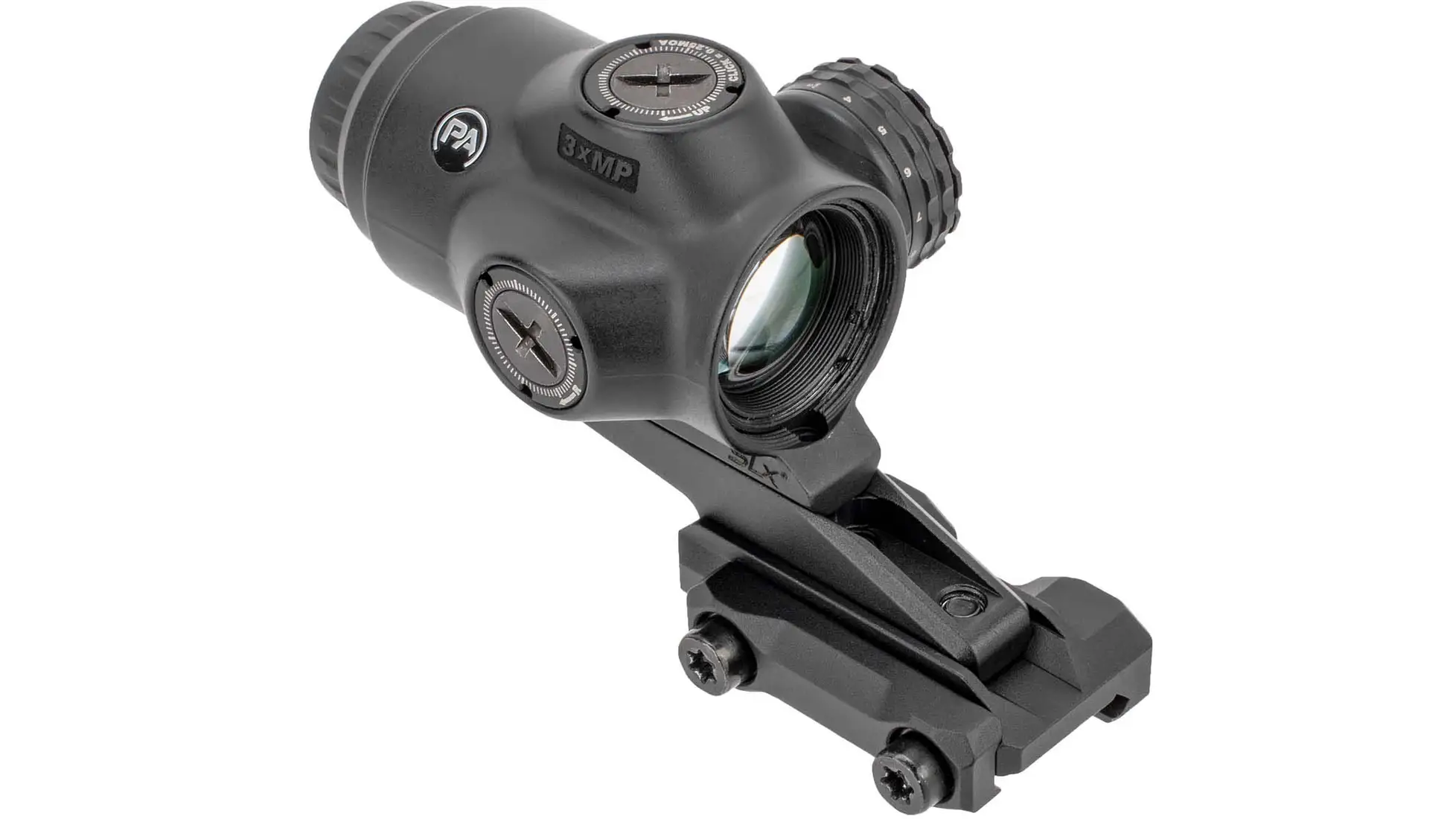
around $350 4.7/5, 131 reviews on OpticsPlanet
This is the one that makes the fewest compromises. At 7.95 ounces it weighs less than many enclosed red dots, it is under three inches long, and it still gives you a 3x etched ACSS Raptor reticle with holdovers for 5.56 and .308. The details are better than its rivals here on every axis that matters day to day: 0.25 MOA clicks for precise zeroing, 2.7 to 3 inches of eye relief and a 38 foot field of view at 100 yards. Primary Arms lists a 7.4 mm exit pupil; the Burris AR-332's larger objective gives it the bigger one, about 10.7 mm by arithmetic, so eye relief is where this sight earns its forgiving feel. It is waterproof, shockproof and fogproof, runs a CR2032 and clamps to a Picatinny rail.
The honest catch is zeroing range. Two separate owners, including the review the retailer flags as most helpful negative, report running out of elevation adjustment: one tested his on two different AR-15s and still could not centre the zero on either. That is a bad-unit story rather than a design story, but it is a reason to bore sight it early and keep the box. A third owner calls the eye box unforgiving, which is the category tax. And if you want a ballistic reticle you can read at distance, one owner is blunt that at 3x he could not use the BDC and would rather have an LPVO.
Our photo shows a green illuminated variant. The ranked model above is the red illuminated one, and every variant the retailer lists, red or green, 5.56/.308 or 7.62/300BO, is the same around $350. Full write-up: our Primary Arms SLx 3x MicroPrism review.
Best value: Burris AR-332
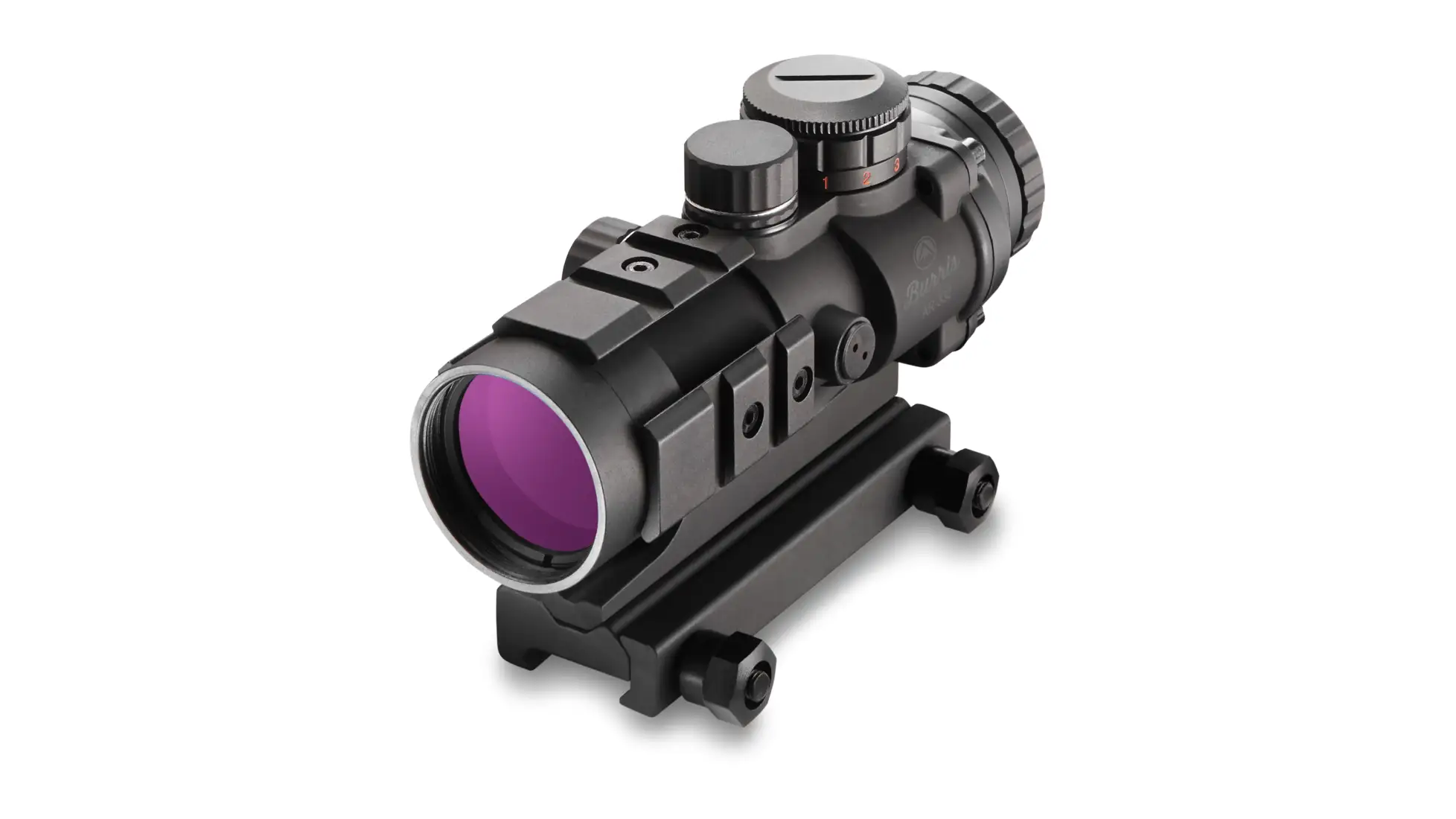
around $170 4.6/5, 294 reviews on OpticsPlanet
Half the price of everything else here, and with a review record more than twice as deep as the rest of this page combined. The AR-332 is a fixed 3x32 with an etched Ballistic CQ reticle, and it is the only sight here offering both red and green illumination across ten settings, which matters if red washes out for you against foliage. Adjustments are 0.5 MOA, the mount is integrated Picatinny, and the box includes a sunshade and flip-up lens covers that you would otherwise buy separately. It is a retailer exclusive, listed under MPN 300208.
Read the low-rated reviews before you buy, because they cluster around one failure: a reticle that arrives canted. Several owners describe mounting it and finding the reticle tilted, and a separate owner found the illumination knob frozen out of the box. Others report it failing to hold zero. Two practical consequences. First, check the reticle against a level immediately. Second, and this is the part that costs people money, do not mail off the rebate UPC until you have: one verified owner was left unable to return a defective unit because the barcode was already gone. It is also the heaviest 3x here at 14.2 ounces, and at 5.29 inches it eats rail. Full write-up: our Burris AR-332 review.
Best 5x for the weight: Vortex Spitfire HD Gen II 5x
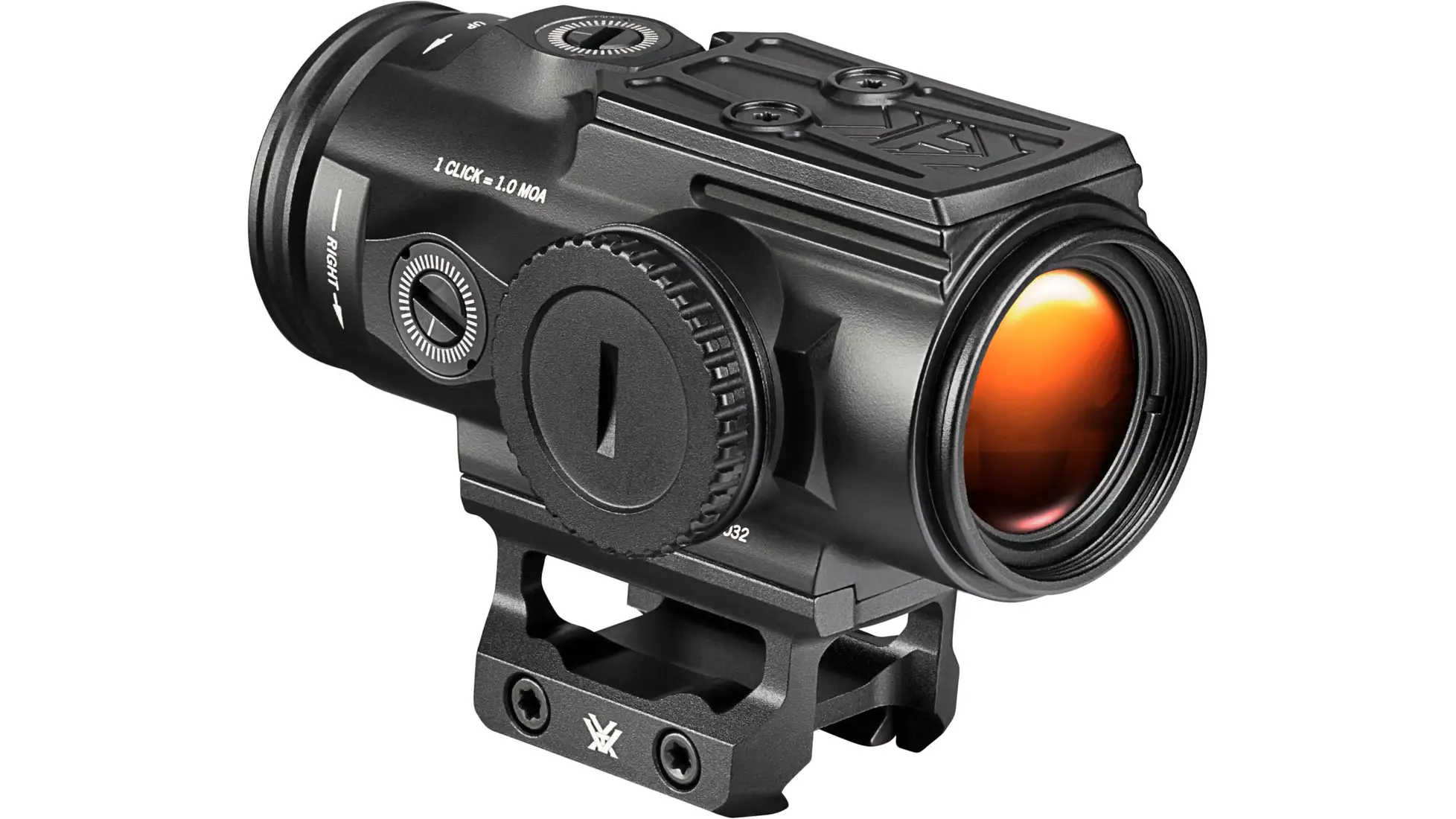
around $400 4.3/5, 36 reviews on OpticsPlanet
If the reason you are shopping is that a plain red dot leaves you guessing past 100 yards, this is the light way to fix it. At 10.8 ounces it carries 5x for a little over half the weight of the Primary Arms 5x36, with a 25 mm objective, an etched AR-BDC4 reticle, twelve brightness settings and an enclosed emitter. The most useful endorsement in its record comes from an owner who ran a 1-6x LPVO with an offset dot, realised he lived at 4 to 6x anyway, and swapped to this for the weight and footprint saving.
Three things to know. The supplied mount is a problem on an AR: a verified owner on a Daniel Defense DDM4 V7 found it put his eye right over the charging handle, uncomfortable and gassy, and solved it with a cantilever riser that moved the sight roughly two inches back. Adjustments are coarse 1 MOA clicks, and one owner finds the illumination buttons too easy to knock. Field of view drops to 23.3 feet at 100 yards, which is the honest cost of 5x. Full write-up: our Vortex Spitfire HD Gen II 5x review.
Compact 3x alternative: Vortex Spitfire HD Gen II 3x
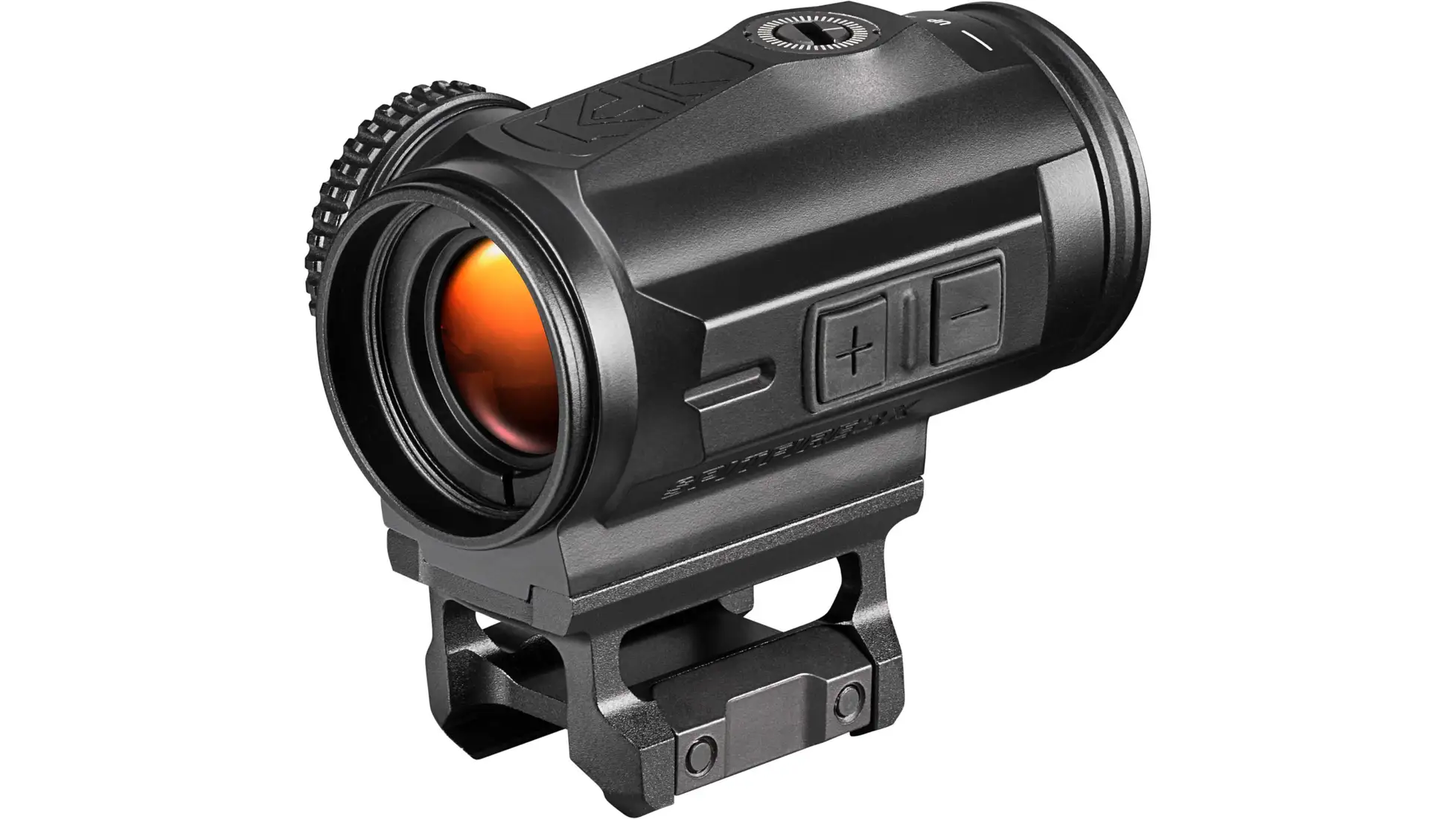
around $350 3.9/5, 17 reviews on OpticsPlanet
The 3x Spitfire is a genuinely good optic with one loud problem, and the rating tells you which. It is 9.3 ounces, gives a wide 37.9 foot field of view at 100 yards, has the same twelve-setting illumination and enclosed emitter as its 5x sibling, and owners consistently praise the glass and the Vortex VIP warranty. But eye relief is the dominant theme of its review record, and not gently: one owner with a large optics collection says the eye box is worse than a Nightforce NX8 he returned for the same reason, and another mounted it as far back as his rail allowed and still had to crawl the stock. Even owners who recommend it list eye relief as the con.
We rank it below the Primary Arms MicroPrism, which is lighter, cheaper to zero precisely and better regarded, and below the Burris on value. Its record is also thin at 16 reviews. Buy it if you specifically want Vortex glass and the VIP warranty and you can shoulder the rifle consistently. Full write-up: our Vortex Spitfire HD Gen II 3x review.
Most ACOG-like: Primary Arms SLx 5x36 Gen III
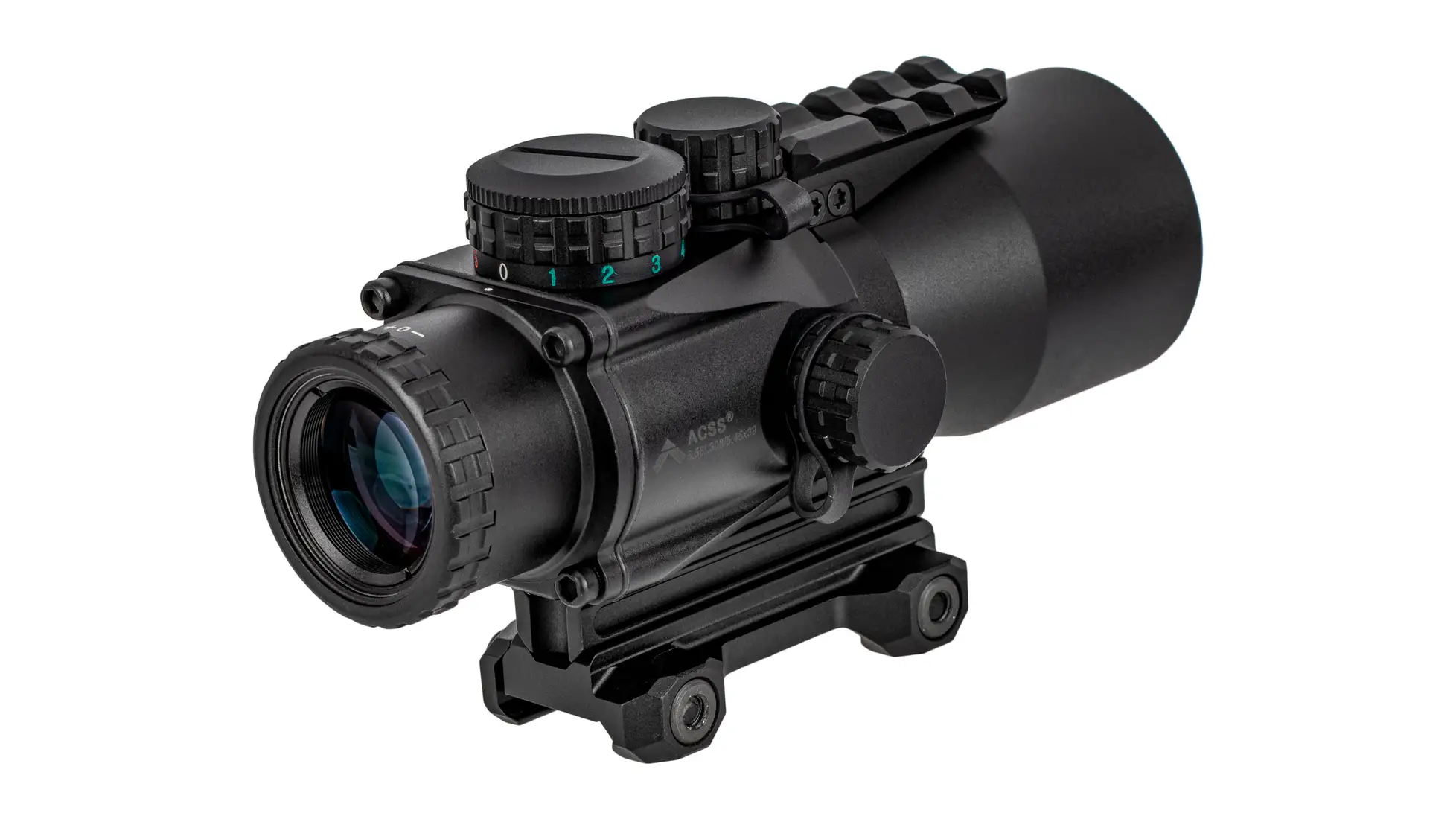
around $340 4.5/5, 101 reviews on OpticsPlanet
This is the sight people mean when they search for an affordable alternative to a Trijicon ACOG, and its own owners say so: the review the retailer ranks as most helpful positive opens by recommending it to anyone who wants an ACOG but cannot justify the four-figure price. It is a fixed 5x36 with an etched ACSS reticle in red or green, 0.333 MOA clicks, an integrated Picatinny mount and a heavy-duty feel that even critical reviewers concede. Note that the price quoted in that owner review is years old; today it is around $340.
What you trade is weight and view. At 18.4 ounces it is more than double the MicroPrism, and one owner's summary of it is simply heavy, poor eye relief, not enough magnification. Field of view is the narrowest here at 18.8 feet. And as with the Burris, a verified owner reports a reticle canted out of the box, which he points out makes the BDC useless. What this is not is an ACOG: the ACSS reticle is LED illuminated off a CR2032, not fiber optic and tritium, so there is no illumination when the battery is out, though the etched reticle remains. Full write-up: our Primary Arms SLx 5x36 Gen III review.
How to choose
- Start with eye box, not magnification. It is the complaint that repeats across all three brands here. Longer eye relief, as on the MicroPrism, and a bigger exit pupil, as on the AR-332, buy you forgiveness.
- 3x for a do-everything carbine, 5x if distance is the actual problem. The field of view numbers in the table are the trade, and they are not subtle.
- Astigmatism is the strongest reason to be here. An etched reticle does not bloom the way a projected dot does. See our best prism scope for astigmatism picks and the wider astigmatism guide.
- Do not assume a higher tier is a straight upgrade. Reading Primary Arms' own spec sheets for the GLx 1x and SLx 1x side by side, four numbers favour the cheaper SLx, including battery life and adjustment travel. Our Primary Arms GLx vs SLx decoder lays out all fourteen specifications, and shows why the GLx 1x costs less than the SLx 3x here.
- Check the reticle the day it arrives, against a level, and hold the rebate paperwork until you have.
- Budget for a mount you like. Two of these ship with mounts owners replaced. Height and setback change everything about how a prism feels.
- Want a usable drop reticle at distance instead? That is an LPVO question, and owners here say so themselves.
FAQ
What is a prism scope?
A prism scope is a compact sight that uses a glass prism instead of a set of relay lenses to deliver a fixed magnification, usually 1x, 3x or 5x. Because the reticle is etched into the glass rather than projected by an LED, you can aim with it even if the battery is dead or the illumination fails. That etched reticle is also why prism scopes suit shooters with astigmatism: there is no glowing dot to smear into a starburst. The trade for that compactness is a tighter eye box than a rifle scope, so head position matters more.
Is a prism scope better than a red dot?
Neither is better; they solve different problems. A red dot is 1x, has effectively unlimited eye relief, weighs very little and runs for months or years on a battery, which makes it the faster sight up close. A prism scope adds fixed magnification and an etched, battery-independent reticle with holdover marks, at the cost of a much tighter eye box and more weight. If you have astigmatism and a red dot looks like a comet to you, a prism is often the fix, because the reticle is physically etched rather than projected.
Prism scope or LPVO?
An LPVO gives you a variable 1x to 6x, 8x or 10x range and a large, usable reticle, which is more flexible and easier to read at distance. A prism is fixed magnification, lighter, shorter and cheaper. Owners in the review records we read went both ways: one bought a 5x prism specifically because he left his 1-6x LPVO at 4-6x anyway and wanted the weight back, while another returned a 5x prism for a 1-6x24 because he could not read the range estimator marks at that size. If you want a usable ballistic drop reticle at distance, an LPVO is the safer buy.
What magnification should you pick, 3x or 5x?
Pick 3x if the sight is your do-everything optic on a carbine: it keeps a wide field of view, around 32 to 38 feet at 100 yards on the models here, so you can still work close targets quickly. Pick 5x if your real complaint is that an unmagnified dot leaves you guessing at 100 to 200 yards. The cost of 5x is field of view, down to 18.8 feet at 100 yards on the Primary Arms 5x36 and 23.3 feet on the Vortex 5x, and on one of them a large jump in weight.
What is the catch with prism scopes?
Two things show up again and again in owner records. First, the eye box: across all three brands here, owners describe having to get their head in exactly the right place, and it is the single most common complaint about the Vortex Spitfire 3x. Second, quality control on the reticle. Multiple owners of the Burris AR-332, and one of the Primary Arms 5x36, report a reticle that arrived visibly canted, which makes a holdover reticle useless. Mount your sight the day it arrives and check the reticle against a level before you send off any rebate paperwork.
More: ACOG clones explained · best prism scope for astigmatism · prism scope vs red dot · best red dot for astigmatism · red dot vs reflex sight · best LPVO · best red dot for an AR-15 · best backup iron sights.