The best prism scope for astigmatism
Quick answer: if a red dot smears into a starburst for you, a prism scope is the fix, because its reticle is etched into the glass instead of projected as light, so it stays crisp and can even be run with the illumination off. The best value and deepest-tested pick is the Burris AR-332 (around $170), the only one here with both red and green illumination and 294 owner reviews. The Primary Arms SLx 3x MicroPrism (around $350) is the lightest and best-rated, with a green variant, and the Primary Arms SLx 5x36 Gen III (around $340) is the ACOG-like 5x, also in green. Each links to our full review.
Astigmatism distorts a small point of light, which is exactly what a red dot is, so an astigmatic eye turns that dot into a comet, comma or starburst. A prism scope sidesteps the problem entirely: the aiming reticle is physically etched into the glass and magnified by a prism, so it is sharp no matter what your eyes do to a light source, and you can dim or kill the illumination and still aim. That single design difference is why this page exists, and why our best red dot for astigmatism guide sends people here. All three picks are prisms we have reviewed in full, weighted toward those that also offer a green illumination option, which many astigmatic shooters find easier than red.
How to set up a prism for astigmatism
- Focus the reticle first. Turn the eyepiece dioptre against a blank bright background until the etched reticle is as crisp as it gets, then leave it. This alone fixes most complaints.
- Try it unlit. The etched reticle shows as a black reticle with the illumination off, and with no light source there is nothing to smear. Many astigmatic shooters run dim or off in daylight.
- If you illuminate, go dim and try green. Green is widely reported to resolve more cleanly than red for astigmatic eyes; keep it on the lowest usable setting.
- Your glasses are fine behind it. Wearing your normal corrective lenses behind the optic works; the etched reticle plus dioptre focus is what does the heavy lifting.
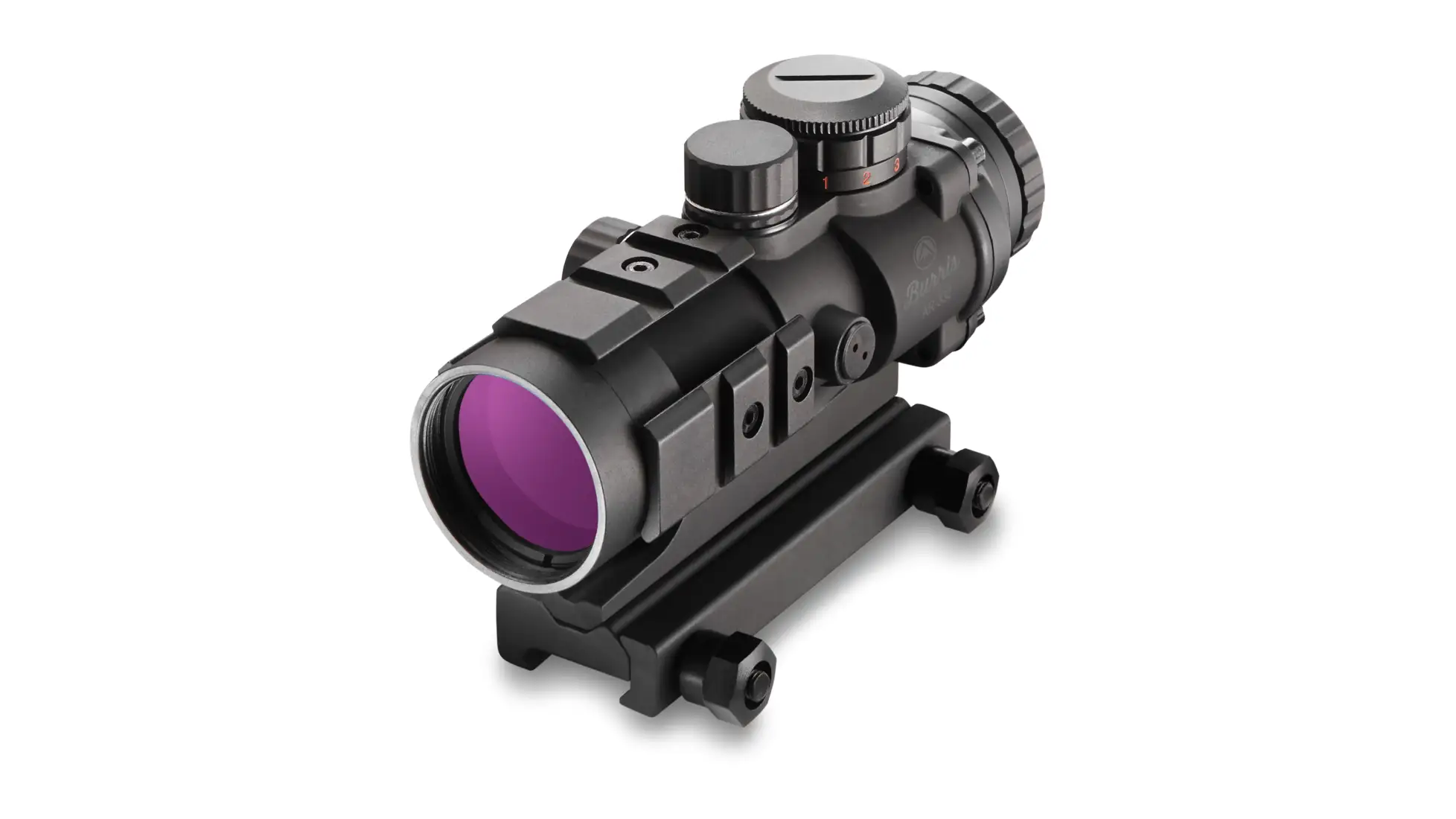
Best value and deepest-tested: Burris AR-332
around $170 4.6/5, 294 reviews on OpticsPlanet
The one to start with for astigmatism, and it happens to be the cheapest and by far the most reviewed prism we cover. The AR-332 is a fixed 3x32 with an etched Ballistic CQ reticle, and crucially it is the only pick here with both red and green illumination across ten settings, so you can dial in the green-and-dim combination that resolves cleanest for most astigmatic eyes, or run it unlit as a black etched reticle. The integrated Picatinny mount, sunshade and flip-up covers are included. The honest catch is quality control: read the low-rated reviews, because several owners report a reticle that arrived canted, so check yours against a level immediately and do not mail the rebate UPC until you have. It is also the heaviest 3x here at 14.2 oz. Price verified September 30, 2026.
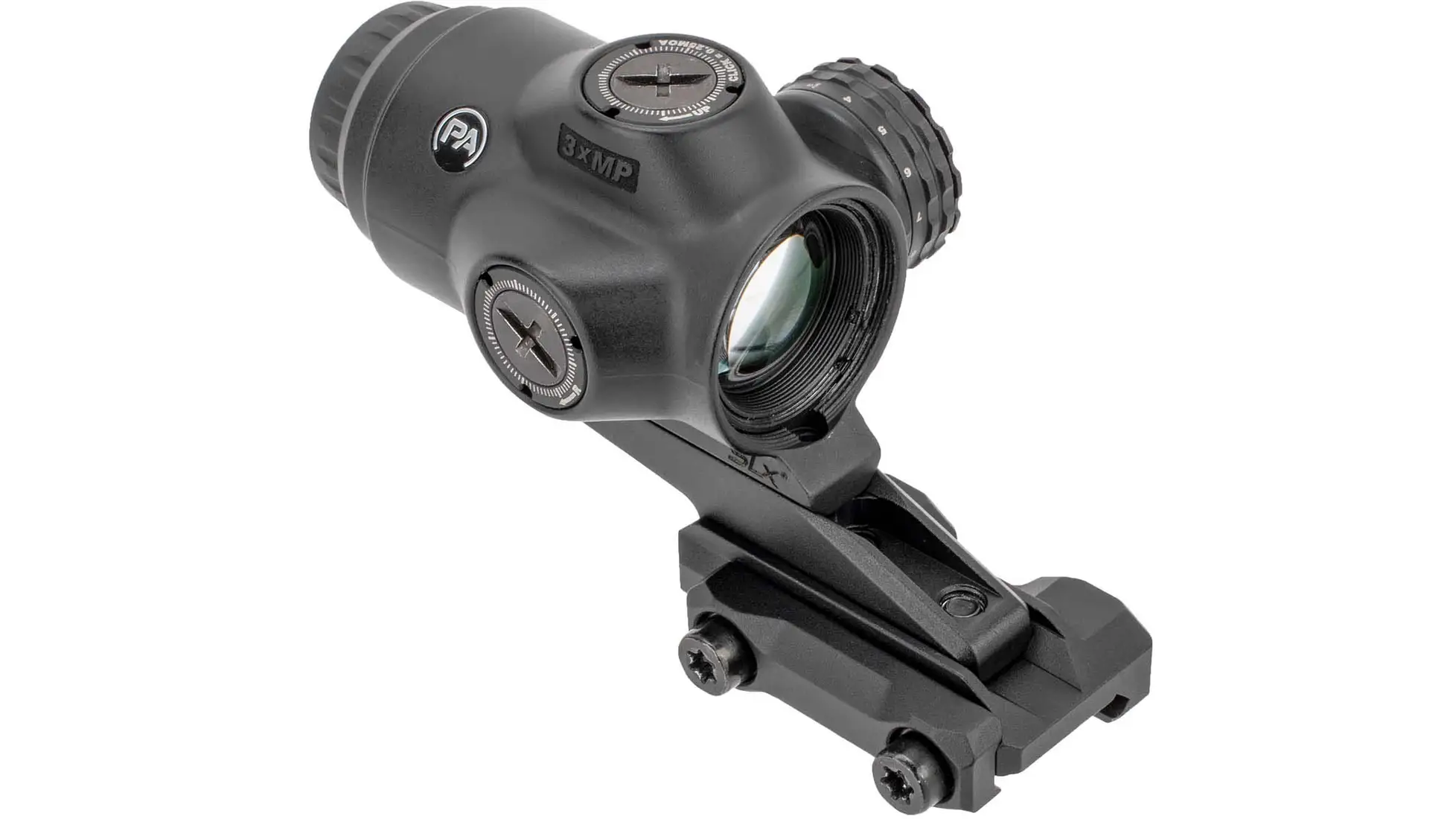
Lightest and best-rated: Primary Arms SLx 3x MicroPrism
around $350 4.7/5, 131 reviews on OpticsPlanet
If you want the most forgiving prism to live with, this is it, and it is offered in a green variant for the astigmatism buyer. At 7.95 oz it weighs less than many enclosed red dots, and it has the longest eye relief of this group at 2.7 to 3 inches, which is what makes the tight prism eye box feel easier (Primary Arms lists a 7.4 mm exit pupil), an underrated advantage when you are already fighting your eyes. The etched ACSS Raptor reticle carries 5.56 and .308 holdovers and adjusts in fine 0.25 MOA clicks. It holds the highest owner rating here at 4.7/5. The honest catch is a couple of owners who ran out of elevation adjustment on a bad unit, so bore sight early and keep the box. Price verified September 30, 2026.
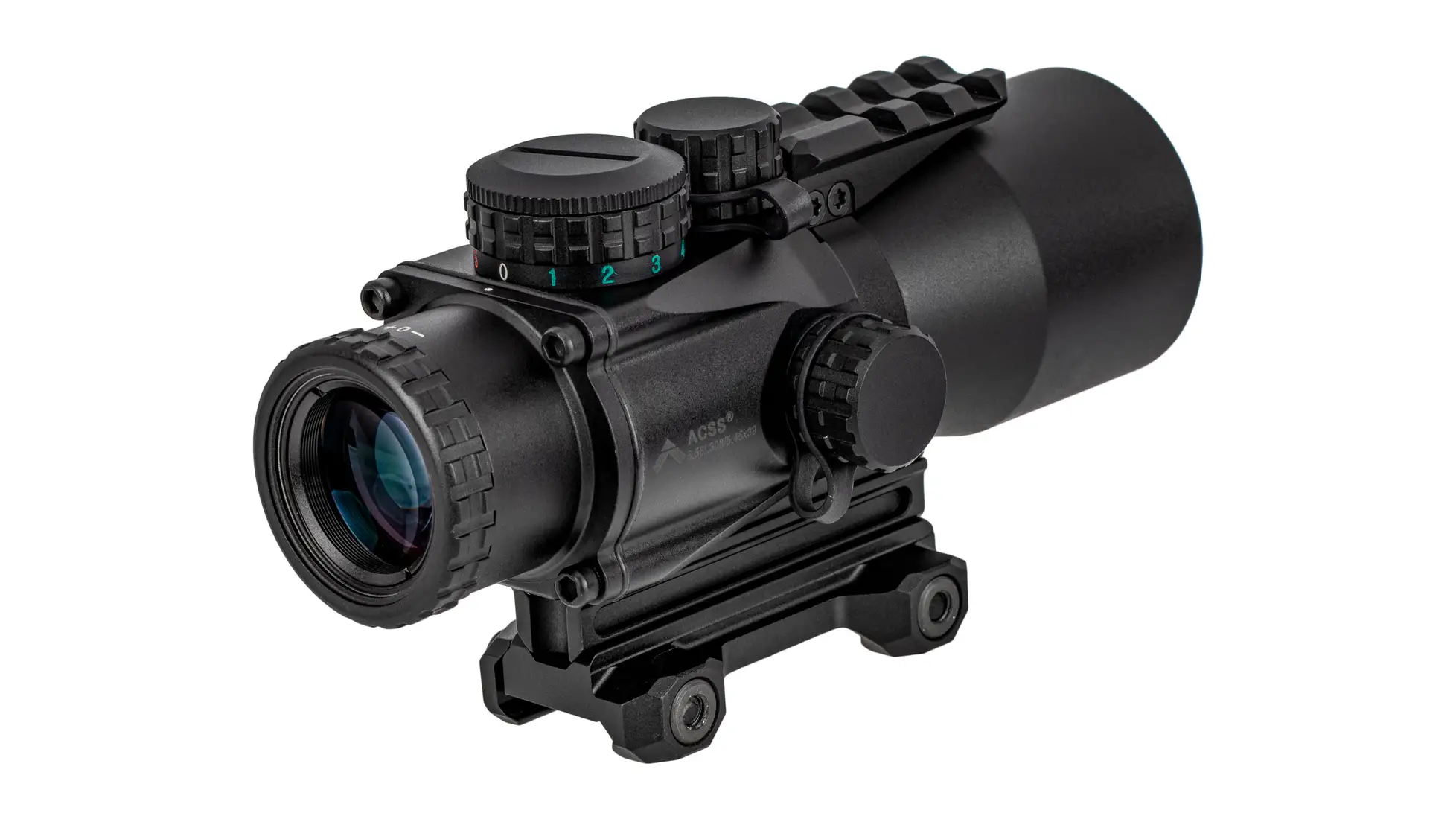
Best 5x reach: Primary Arms SLx 5x36 Gen III
around $340 4.5/5, 101 reviews on OpticsPlanet
If you want more magnification and still need the astigmatism-friendly etched reticle, this is the ACOG-like 5x, offered in red or green. It is a fixed 5x36 with an etched ACSS reticle, 0.333 MOA clicks and an integrated Picatinny mount, and even critical owners concede the heavy-duty build. Because the reticle is etched, it stays usable with the battery out, and the green option gives you the cleaner-resolving illumination when you do use it. Be clear-eyed about the trade for 5x: at 18.4 oz it is more than double the MicroPrism, the field of view is the narrowest of our prisms, and as with the Burris a verified owner reports a canted reticle out of the box, so check it on arrival. Price verified September 30, 2026.
Want the full field, including the Vortex Spitfire models and the head-to-head specs? See our best prism scopes roundup. Still deciding between a magnified prism and a 1x dot? Read prism scope vs red dot.
If you want a 1x prism rather than a magnified one, the strongest astigmatism record we have seen on a single listing belongs to the Primary Arms GLx 1x MicroPrism, where six of twenty written owner reviews raise astigmatism unprompted, one describing star patterns through ordinary red dots even while wearing corrective lenses. Our Primary Arms GLx vs SLx decoder covers it, including why the green reticle option comes up so often among astigmatic owners.
FAQ
Why is a prism scope better than a red dot for astigmatism?
Because the reticle is etched into the glass rather than projected as a point of light. Astigmatism distorts a small light source, which is why a red dot can look like a starburst, comma or smear to an astigmatic eye. A prism scope magnifies a reticle physically etched into the glass, so it stays crisp regardless of your eyes, and you can even turn the illumination off and aim with the black etched reticle. That is the fix a lot of astigmatic shooters are looking for when a dot never resolves cleanly for them.
Does turning the illumination off help with astigmatism?
Yes, and it is the simplest thing to try first. An etched prism reticle is visible as a black reticle with the illumination completely off, and with no light source there is nothing to smear, so the picture is as sharp as your prescription allows. Many astigmatic shooters run their prism dim or unlit in good light and only add a little illumination in low light. If you still want a lit reticle, keep it as dim as you can and try green.
Is green or red illumination better for astigmatism?
Many astigmatic shooters report that green resolves more cleanly than red, which is why we weight this page toward prisms that offer a green option: the Burris AR-332 has both red and green, and the Primary Arms MicroPrism and SLx 5x36 are offered in green variants. It is not a universal rule, since astigmatism differs from eye to eye, but green plus low brightness plus an etched reticle is the combination most likely to give you a clean aiming point. Try the lowest usable setting first.
Do you need a prescription to use a prism scope with astigmatism?
Not usually. A prism scope has a dioptre adjustment on the eyepiece that focuses the etched reticle for your eye, and setting it correctly is what makes the reticle sharp. Focus it on a blank, bright background until the reticle is as crisp as it will get, then leave it. That reticle-focus plus the etched design is why prisms work for many astigmatic shooters without corrective lenses, though wearing your normal glasses behind the optic is always fine.
What is the catch with prism scopes?
Two things recur in owner records across brands. First, the eye box is tight: your head has to sit in a consistent place, more so than with a red dot. Second, quality control on the etched reticle, where multiple owners of the Burris AR-332, and one of the Primary Arms 5x36, report a reticle that arrived visibly canted, which ruins a holdover reticle. Mount the sight the day it arrives, check the reticle against a level, and hold any rebate paperwork until you have.
More: best prism scopes · best red dot for astigmatism · prism scope vs red dot · ACOG clones explained · best LPVO.