The best backup iron sights
Quick answer: for most AR-15 owners the Magpul MBUS 3 kit is the one to buy, because around $80 gets you a spring-loaded front and rear pair that adjusts without tools. Step up to the steel Magpul MBUS Pro (around $95 front plus around $110 rear) for a hard-use rifle and the lowest folded profile. The FAB Defense FRBS set is the cheapest complete pair at around $70, with caveats. If a magnified scope owns your top rail you need offset sights instead: the Troy 45 Degree set (around $270) is the complete pair to buy, because it is front and rear in one product and ambidextrous, where the Magpul offset alternative is sold piece by piece and is right-hand only.
Backup iron sights answer one question: what do you aim with when the optic stops working? Modern AR-15s ship with a bare flat-top rail, so a dead battery, a fogged lens or a cracked housing leaves you with nothing. A folding set costs a fraction of the optic it backs up and stows flat until you need it. The five picks below had their prices and specifications confirmed on the retailer's own product pages on July 23, 2026.
| Sight | Material | Type | Price | Owner rating |
|---|---|---|---|---|
| Magpul MBUS 3 (kit) | Polymer | Inline flip-up | around $80 pair | 4.6/5, 70 |
| Magpul MBUS Pro | Steel | Inline flip-up | around $95 front +around $110 rear | 4.8/5, 126 |
| FAB Defense FRBS (set) | Polymer | Inline flip-up | around $70 pair | 3.8/5, 54 |
| Troy 45 Degree (set) | Aluminum + steel | 45-degree offset | around $270 pair | 4.3/5, 15 |
| Magpul MBUS Pro Offset | Steel | 45-degree offset | around $100 front only | 4.6/5, 73 |
Inline flip-up sights (for a red dot)
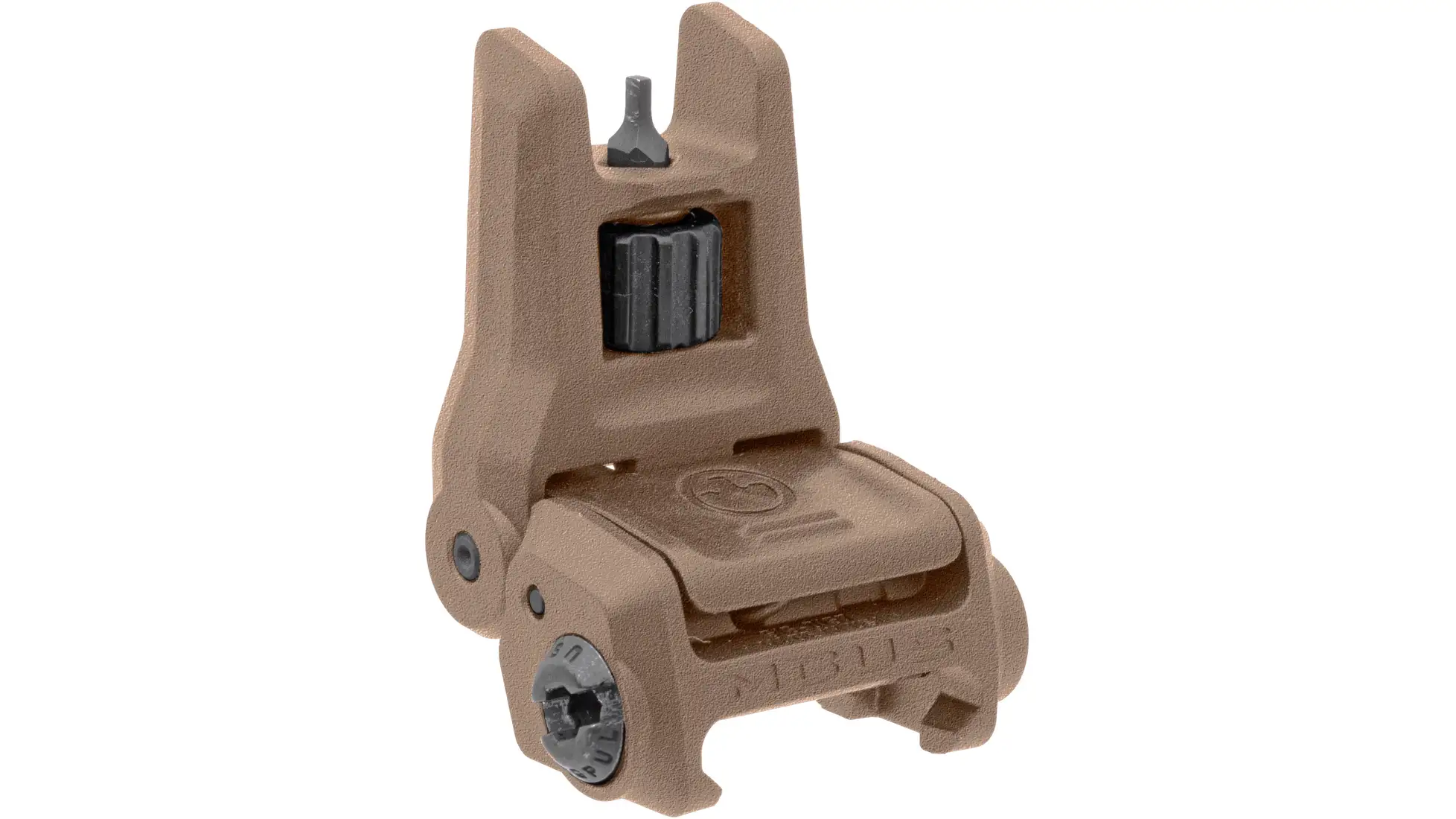
Best overall: Magpul MBUS 3
around $80 4.6/5, 70 reviews on OpticsPlanet
This is the sensible default. The MBUS 3 kit puts a front and rear sight in one box for around $80 in black, flat dark earth or olive drab, and unlike the steel MBUS Pro it is spring-loaded, so it pops up when you release it. Elevation adjusts without tools using the dual-width enhanced front post, and the rear switches between the small and large aperture by rotating 45 degrees rather than by fiddling with a flip. Folded it sits 0.44 inches high, and it clamps to any MIL-STD-1913 rail. Owners upgrading from the older Gen 2 sights single out exactly those two improvements. The catches: the front elevation wheel is stiff, and a few owners report a tight fit on specific receivers, one badly enough to need filing. Full write-up: our Magpul MBUS 3 review.
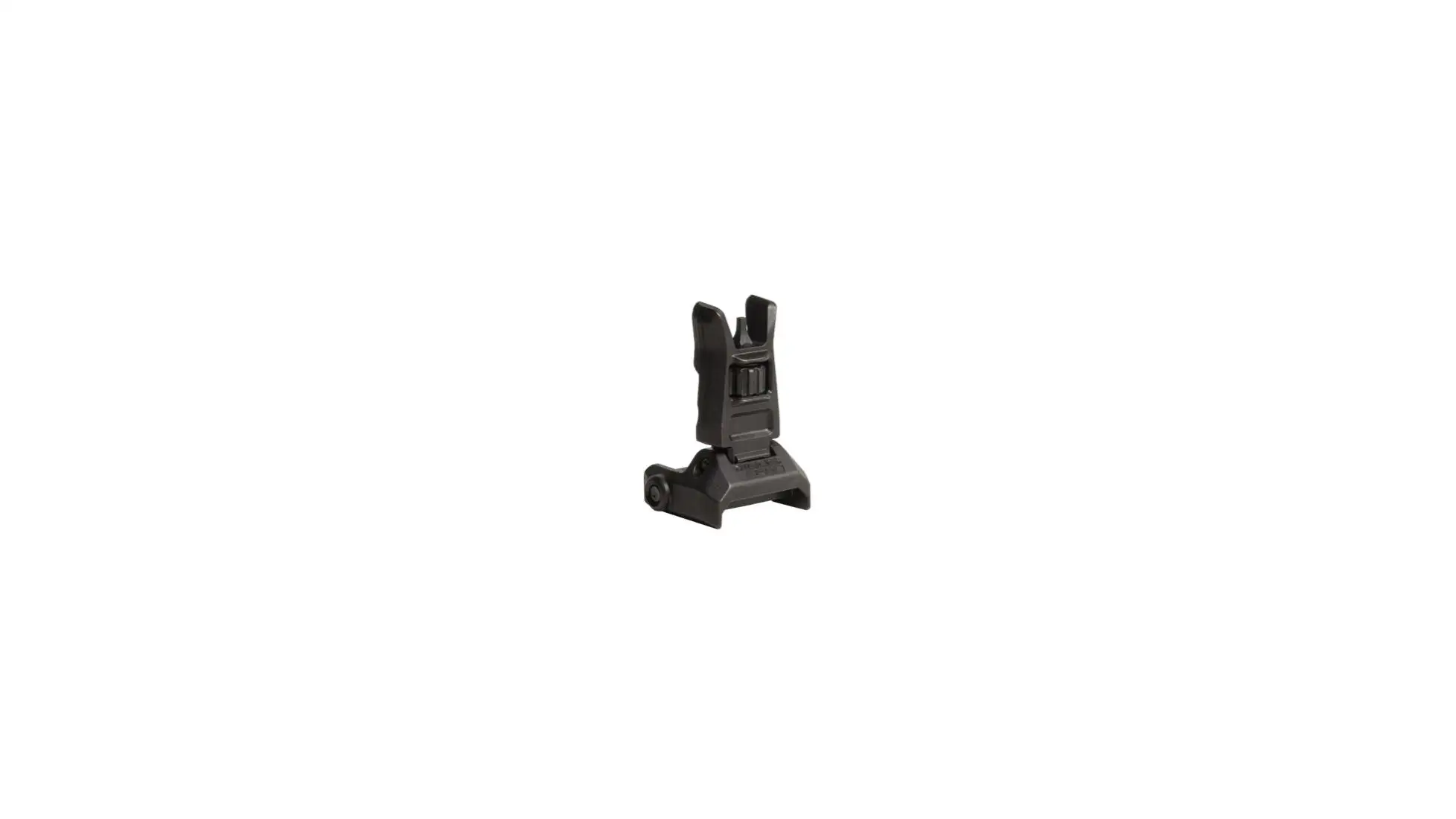
Best steel: Magpul MBUS Pro
around $95 front, plus around $110 rear 4.8/5, 126 reviews on OpticsPlanet
The MBUS Pro is all steel, case hardened and Melonite QPQ finished, and it folds to 0.38 inches at the rear and 0.43 at the front, among the lowest profiles here. It carries the strongest owner record on this page and owners repeatedly praise how it does not snag in brush and how it lives happily under a magnifier. Note the pricing carefully: OpticsPlanet sells the front (MAG275, around $95) and rear (MAG276, around $110) as separate products, so a standard pair means buying both. Do not confuse that with the MBUS Pro LR set at around $210: the LR pairs the long-range elevation-adjustable rear (MAG527) with the standard front, so it is not the standard pair at a discount, it is a different rear sight. The honest catch is the detents: several owners describe the elevation and windage knobs as very stiff, one to the point of reaching for pliers, and it is not spring-loaded, so you raise it by hand. Full write-up: our Magpul MBUS Pro review.
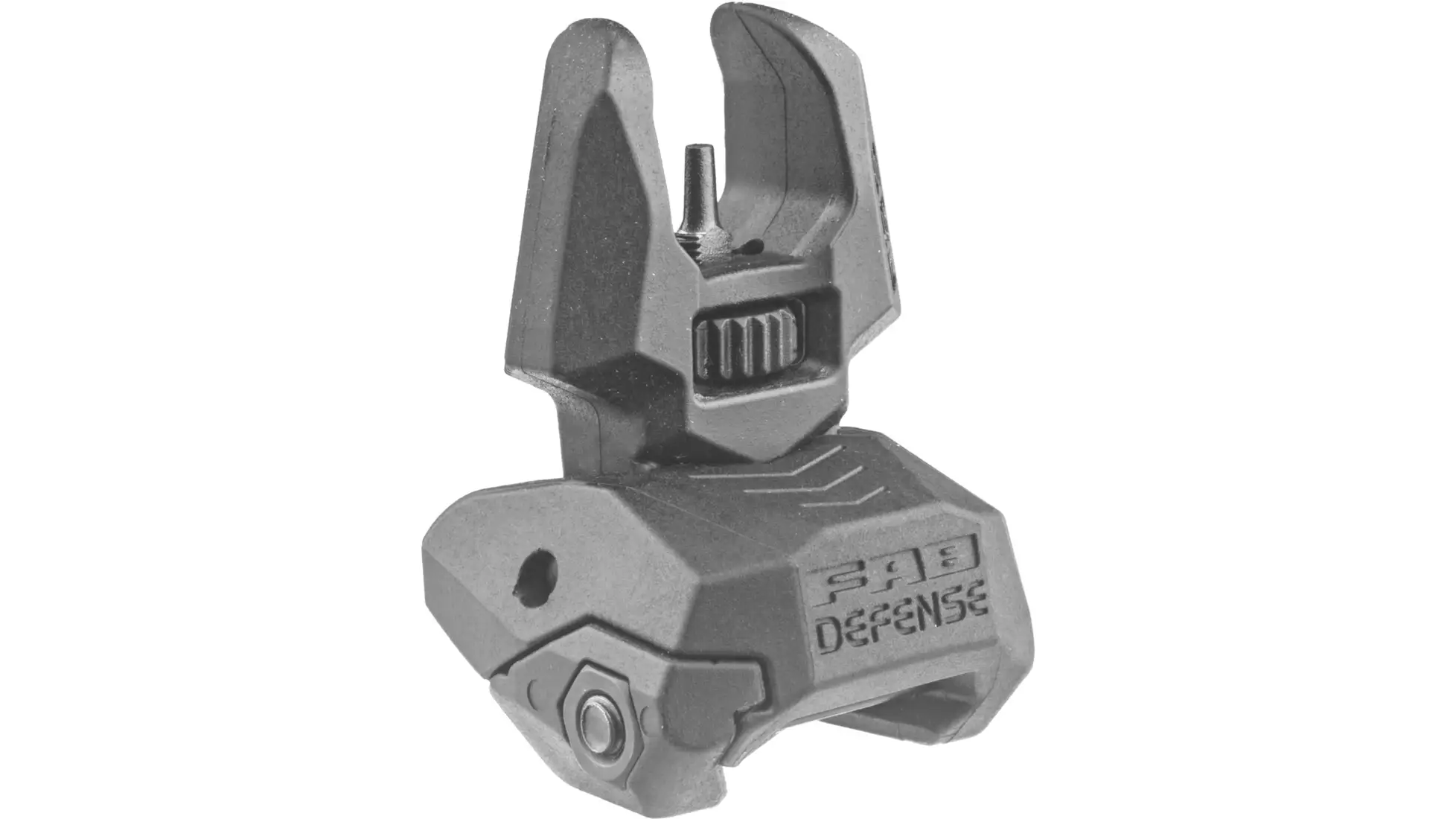
Cheapest complete pair: FAB Defense FRBS set
around $70 3.8/5, 54 reviews on OpticsPlanet
We include this because it is the cheapest complete front-and-rear set from a known brand, at around $70 in black, and it is ambidextrous, weighs only 80 grams and adjusts without tools. We are not going to oversell it. It has the lowest owner rating on this page, and the dominant complaint is the mounting hardware: the screw heads are soft enough that owners report rounding them out with the supplied Allen key under light torque, leaving a half-mounted sight. It also is not spring-loaded. Read this honestly: the Magpul MBUS 3 kit costs only a little more, is spring-loaded and has a better record, so the FAB set makes sense if the lowest price matters most or if you want the open-box unit, which is listed for less again but is a final sale with no returns.
45-degree offset sights (for a scope or LPVO)
If a magnified optic occupies your top rail, inline flip-ups have nowhere useful to go. Offset sights mount at 45 degrees on the side of the rail; you roll the rifle to use them at close range. Check handedness before you buy, and see our full offset iron sights guide for mounting and clearance detail.
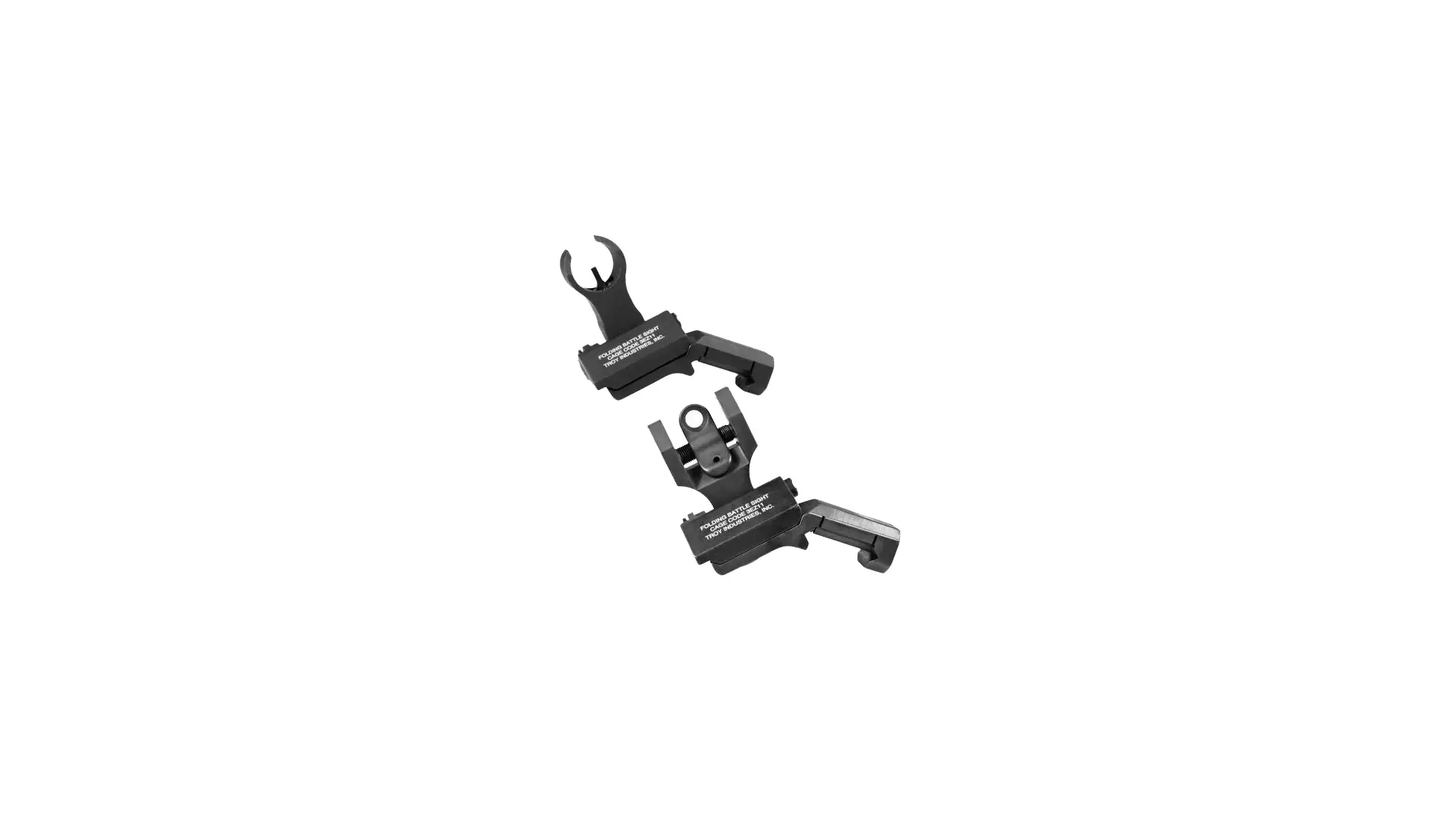
Best complete offset set: Troy 45 Degree Folding Battle Sights
around $270 4.3/5, 15 reviews on OpticsPlanet
This is the complete offset answer: front and rear in one product, hardened aircraft aluminium and stainless steel with a Mil-Spec hardcoat anodized finish, dual aperture, made in the USA, and listed as ambidextrous, which matters because the Magpul alternative is right-hand only. Owners like that they fold completely flat and deploy quickly, and make the point that a rifle wearing a thousand-dollar optic with no backup is a rifle you cannot use when that optic quits. Be aware of three owner-reported issues before buying: the release button sits on the same side as the scope, so you work your fingers in to raise it; there is play in the locked position and it is not spring-deployed; and mounted at the rearmost right-side slot they can contact the charging handle when folded. The review record is also thin at 15.
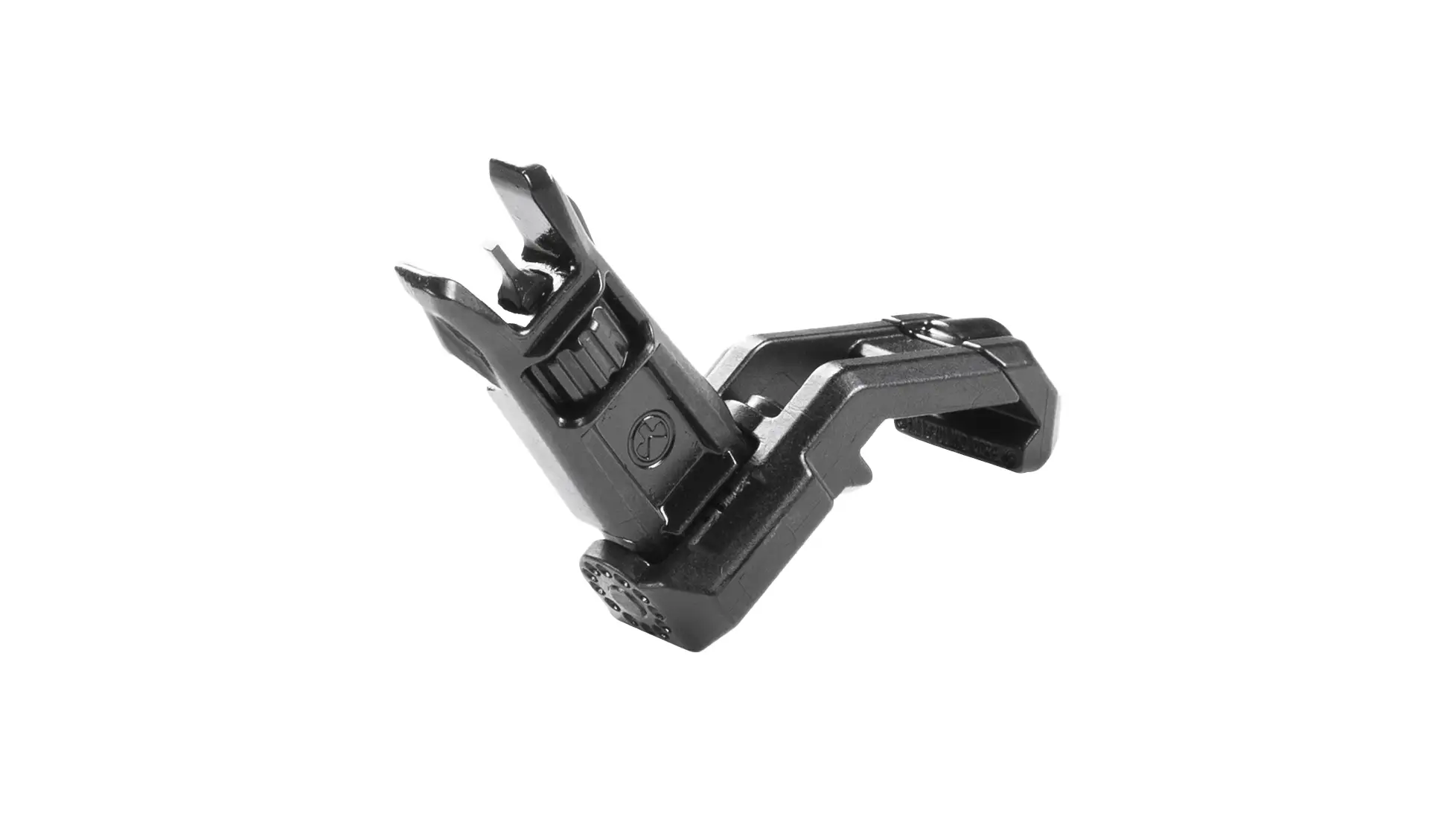
The offset benchmark, sold piece by piece: Magpul MBUS Pro Offset
around $100 front sight only 4.6/5, 73 reviews on OpticsPlanet
On specification this is the offset set most people want: melonited steel, tool-less windage, dual rear apertures, positive detents up and down, standard AR height over bore when deployed, and a stowed footprint covering 0.66 inches of rail. It also has five times the review record of the Troy set. It is not a ranked pick for two reasons, neither of them about the quality of the sight. First, it is sold piece by piece: the figure we card (MAG525, around $100) buys the front sight on its own, while the rear (MAG526) and the front-and-rear kit are separate products, each dearer than the front, so a complete pair costs a good deal more than the headline. Second, it is right-hand only, where the Troy set is ambidextrous. One more thing to weigh: the most helpful negative review describes the clamp being secured by a small screw into a tapped indexing lug that snapped on tightening, while another owner found the adjustment knobs needed pliers. If you shoot right-handed and want melonited steel, buy the pieces; if not, the Troy set is the complete ambidextrous answer.
What we did not pick, and why
The Strike Industries Sidewinder BUIS II is a tempting offset set at $130 with an inline mode as well, and we left it off deliberately. Its owner rating is 3.9 out of 5, and the reports behind that number are structural rather than cosmetic: one verified owner bent the front sight base and cracked the middle spar using the supplied L-wrench with two fingers of pressure, and another found the holding tooth on the clamp too shallow to work without 1913 risers, which then defeats co-witnessing. At this price there are better answers.
How to choose
- Match the sight to the optic. Red dot on the top rail means inline flip-ups. Scope or LPVO on the top rail means 45-degree offset.
- Polymer unless you have a reason. Spring-loaded polymer is lighter, cheaper and rustproof. Steel buys impact resistance and the lowest folded profile.
- Check handedness on offset sights. Magpul's offset is right-hand only; the Troy set is listed as ambidextrous.
- Budget for screws. Soft mounting hardware is the most common failure across budget sets. Correct-length quality screws cost little and save a sight.
- Verify the co-witness on paper. Deployed sight height is a starting point, not a promise; confirm your dot and irons agree at the same point of aim.
Running a dot over these? See best red dot sights, best red dot for an AR-15 and our guide to red dot vs iron sights. Zeroing next? How to sight in a red dot sight.
FAQ
What are backup iron sights (BUIS)?
Backup iron sights are non-electronic sights that fold flat on your rail and deploy when your primary optic fails. Most modern AR-15s ship with a flat-top receiver and no fixed sights, so if a red dot dies, a battery runs out or glass breaks, an unequipped rifle has nothing to aim with. A folding set solves that for well under the price of the optic it backs up. They also let you keep shooting while a battery is swapped, and on many rifles they co-witness through the optic window so both sighting systems line up.
Should you get flip-up or 45-degree offset iron sights?
Flip-up sights mount inline on the top rail and fold flat under or behind a red dot, which suits a 1x optic. Offset sights sit at a 45-degree angle on the side of the rail and are the answer when a magnified scope occupies the top rail, because you cannot fold anything useful under a scope tube; you roll the rifle 45 degrees and use them for close targets. If you run a red dot, buy flip-ups. If you run an LPVO or a scope, buy offset. Check which shoulder they clear: the Magpul MBUS Pro Offset is right-hand only, while the Troy 45-degree set is listed as ambidextrous.
Are polymer backup sights good enough, or do you need steel?
Polymer is genuinely good enough for most people. The Magpul MBUS 3 is spring-loaded, adjusts without tools and sells as a pair for well under the price of the steel set, and polymer resists corrosion and saves weight. Steel earns its money in two situations: hard-use rifles where sights take repeated impacts, and setups where you want the lowest folded profile, since the steel MBUS Pro folds to 0.37 inches. The honest trade is that steel costs roughly twice as much and, in the MBUS Pro case, is not spring-loaded, so you flip it up by hand.
Do backup iron sights co-witness with a red dot?
Many do. The Magpul MBUS Pro sits at a 1.4 inch centerline when deployed, which puts the sight picture inside a standard red dot window. OpticsPlanet describes that height in two ways in different expert answers, once as absolute co-witness and once as visible in the lower third of the optic window, so confirm against your own mount height rather than assuming. What matters practically is that your dot and your irons agree at the same point of aim, which you verify on paper, not on a spec sheet.
What should you check before buying backup iron sights?
Three things. First, rail fit: several owners report sights that need a firm fit or, in one case, filing to seat on a specific receiver, so buy from somewhere with easy returns. Second, mounting hardware: the single most common complaint across budget sets is soft screws that round out under an Allen key, and correct-length quality screws are a cheap insurance policy. Third, deployment: spring-loaded sights pop up when you release them, while several steel and offset sets must be raised by hand, which is a preference rather than a fault but is worth knowing before you buy.
How do you zero backup iron sights on an AR-15?
Set a mechanical zero first (rear windage centered, front post at base height), then zero at 25 yards for the classic 25/300 battlesight zero or at 50 yards. Fire a 3 to 5 shot group and adjust to the group, using the front post for elevation and the rear sight for windage. The rule is FORS, Front Opposite Rear Same: turn the front post down to raise your point of impact, and move the rear sight the same direction you want the bullet to go. Our how to zero AR-15 iron sights guide walks through it step by step.
Prices verified September 30, 2026, re-verified on the product pages the day this page was written. Prices move, so confirm the current figure on the retailer page before you buy.
More: best red dot sights · best red dot for an AR-15 · best LPVO · red dot vs iron sights · how to zero AR-15 iron sights · best scope for an AR-15.