The best binoculars for long distance
Quick answer: for maximum reach the Vortex Diamondback HD 15x56 (around $370) is the long-distance pick, with the most magnification and light-gathering in an affordable binocular and a tripod adapter in the box, because at 15x you will want one. If you glass mostly hand-held or braced, the Vortex Diamondback HD 12x50 (around $280) is the value pick that stays steadier, and the Vortex Viper HD 12x50 (around $490) is the step-up for eyeglass wearers and long sessions. All three are binoculars we have reviewed in full. The rule that matters: buy the highest power you can hold steady, not the highest number, and past 15x move to a spotting scope.
Long distance is where binocular choices get made on physics, not marketing. More magnification pulls a distant subject closer, but it also shrinks the field of view, dims the image and multiplies every tremor in your hands, so the useful window for a long-range binocular is a narrow one: 12x to 15x, with a large 50 to 56 mm objective to keep the view bright. Go higher and you are into tripod-only giants; refuse a tripod and 15x will smear the very detail you paid for. The three picks below are ones we have reviewed in full, arranged by how far you want to see and how you will hold the binocular still, and each price carries the date we verified it.
Quick comparison
| Pick | Best for | Exit pupil | Field of view | Price |
|---|---|---|---|---|
| Diamondback HD 15x56 | Maximum reach (tripod) | 3.7 mm | 230 ft at 1000 yds | around $370 |
| Diamondback HD 12x50 | Hand-held value | 4.2 mm | 271 ft at 1000 yds | around $280 |
| Viper HD 12x50 | Eyeglasses, long sessions | 4.2 mm | 288 ft at 1000 yds | around $490 |
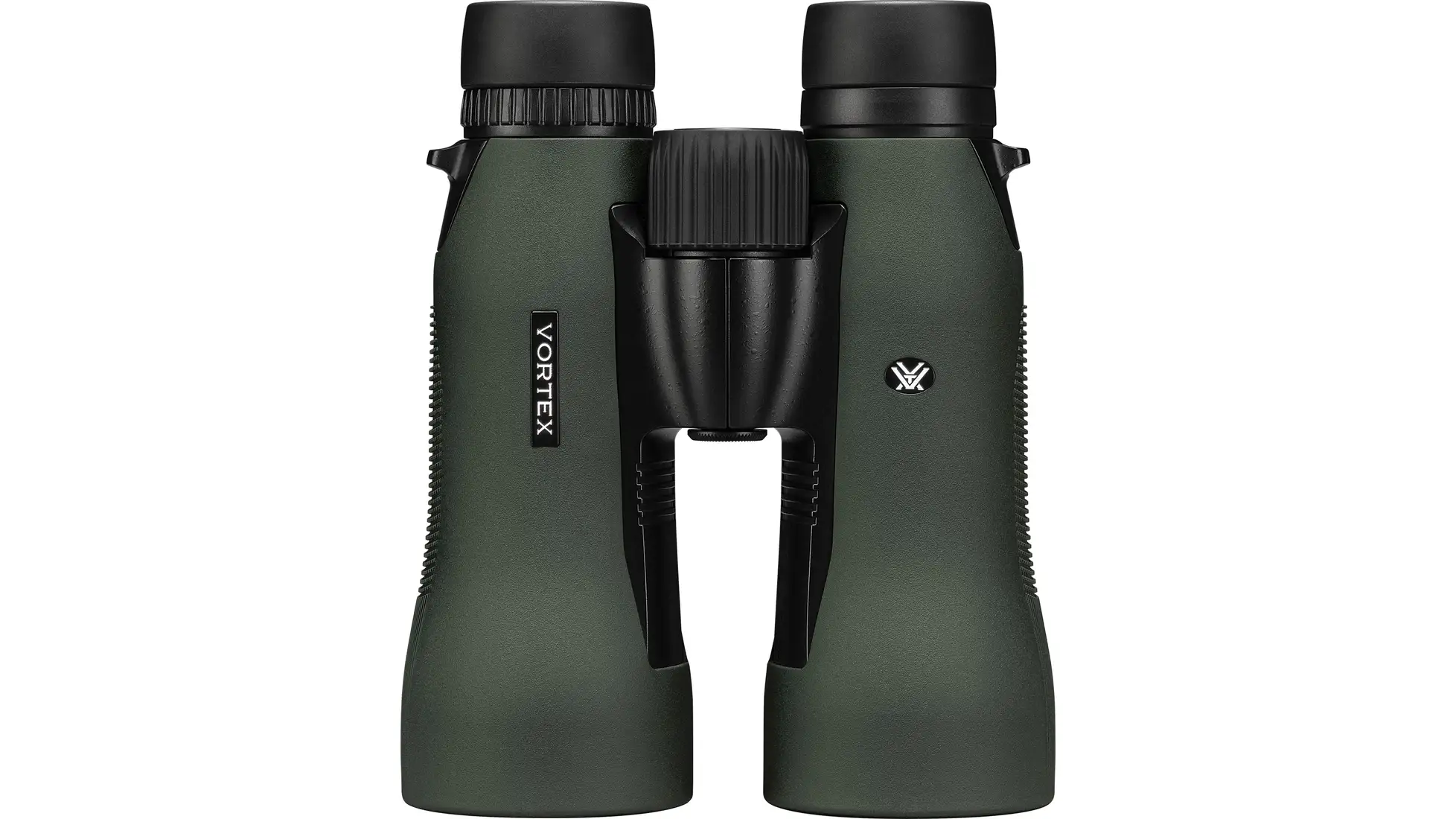
Best for maximum reach: Vortex Diamondback HD 15x56
around $370 4.8/5, 58 reviews on OpticsPlanet
When the whole point is seeing as far as possible, this is the pick. The 15x magnification resolves detail the 12x and 10x cannot, the 56 mm objectives and a high twilight factor of 29 pull in the extra light that distance and dusk demand, and Vortex includes a tripod adapter in the box, which is not a nicety at 15x but a necessity: this is a lot of magnification to hold steady, owners are split on hand-holding it, and on a tripod or a solid rest it shows its best. The trade-offs are honest ones for the power: a smaller 3.7 mm exit pupil that is dimmer in full dark than a 12x50, the narrowest 230-foot field of view here so sweeping is slower, and the heaviest body at 34.8 oz. It carries the same HD glass, dielectric phase-corrected prisms and unconditional Vortex VIP warranty as the rest. Price verified September 30, 2026.
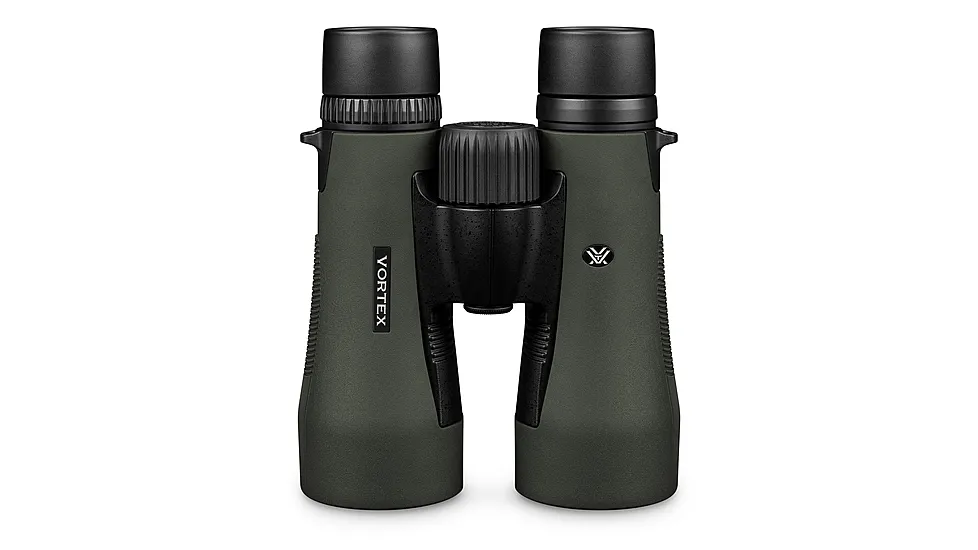
Best hand-held value: Vortex Diamondback HD 12x50
around $280 4.9/5, 81 reviews on OpticsPlanet
For most people who want distance without committing to a tripod, 12x50 is the sweet spot, and this is the one to buy on merit. At 12x the image is steadier in the hands than the 15x, the 50 mm objective keeps a brighter 4.2 mm exit pupil, and the field of view is wider at 271 feet for finding your subject. You still get genuine HD extra-low-dispersion glass, phase-corrected dielectric roof prisms, a magnesium chassis and the same VIP warranty, plus the GlassPak harness in the box. It also holds the strongest owner record of any binocular we have reviewed, 4.9/5 across 81 reviews. The one weak spot for distance is a tight 14 mm eye relief, marginal if you wear eyeglasses. Prices verified September 30, 2026; confirm the current price and availability on the retailer page.
Best for eyeglasses and long sessions: Vortex Viper HD 12x50
around $490 4.7/5, 29 reviews on OpticsPlanet
Glassing at distance is a long, patient job, and the Viper is built for the comfort that decides those sessions. Its 16 mm of eye relief against the Diamondback's 14 mm is the difference between seeing the full field with eyeglasses on and fighting for it, the field of view is wider still at 288 feet, and the diopter locks so your setting cannot drift in a pack over a long day. The glass is XR fully multi-coated HD on BAK4 phase-corrected prisms with a 24.5 twilight factor, and at 28.8 oz it weighs essentially the same as the Diamondback 12x50. You pay about $210 more for refinement and comfort rather than a different specification. Prices verified September 30, 2026; confirm the current price and availability on the retailer page.
How to pick for distance
- Match power to your support. Buy the 15x56 only if you will use a tripod or a solid rest; buy a 12x50 if you glass hand-held or braced. The highest power you can hold still beats the highest number every time.
- Keep the objective big. A 50 to 56 mm front lens is what keeps a high-power view bright, holding a usable exit pupil at 12x to 15x where a small objective would go dim.
- Respect the field-of-view cost. More magnification means a narrower view, so finding a distant subject is slower. That is the trade for reach, and a wider-field 10x42 is the better tool if you scan on the move.
- Consider image stabilization. If you want distance strictly hand-held with no tripod, an image-stabilized binocular cancels shake electronically; see our image-stabilized picks.
- Know when to switch. Past about 15x from a fixed position, a spotting scope resolves detail no binocular can. Many long-range users carry both: binoculars to find, a spotting scope to confirm.
New to the numbers? Read what binocular numbers mean. Want a specific format? See best 12x50 binoculars and best binoculars for astronomy, which cover 15x56 and up for the night sky.
FAQ
What magnification is best for long-distance binoculars?
For seeing detail at distance from a steady position, 12x to 15x is the useful range, and 15x is about as high as a binocular goes before a tripod stops being optional. Below that, 10x is easier to hold but resolves less far away; above 15x you are into giant 20x and 25x binoculars that are tripod-only and heavy. The catch is that magnification also multiplies hand shake, so past about 10x your own pulse and tremor, not the glass, become the limit on what you can see unless you brace or mount the binocular.
How far can you see with 15x56 binoculars?
Far enough to identify game, terrain features and detail well beyond a mile in clear conditions, but the honest limit is rarely the magnification. It is atmosphere and steadiness. Heat shimmer, haze and low light degrade a distant image long before the optics run out, and any hand tremor at 15x smears the fine detail you bought the power for. A 15x56 on a tripod in good air will show you a great deal at long range; the same binocular hand-held in midday heat haze will show you much less. Support and conditions decide the real distance more than the number on the barrel.
Do you need a tripod for long-distance binoculars?
For the best long-range detail, yes. At 12x most people can hold steady enough for a quick look and benefit from any bracing for a long one; at 15x the binocular really wants support to deliver its resolution, which is why our top pick includes a tripod adapter in the box. A tripod, a window mount, shooting sticks or simply bracing against a truck or tree all help. If you refuse to carry support and still want distance, image-stabilized binoculars are the alternative, since they cancel shake electronically.
When should you use a spotting scope instead of binoculars?
Switch to a spotting scope when you need magnification beyond about 15x from a fixed position, for example reading rifle targets, judging trophy antlers or picking apart terrain at very long range. A spotting scope reaches 20x to 60x and resolves detail no binocular can, but it uses one eye, always needs a tripod and is slower to find things through. Binoculars stay better for scanning, for use on the move and for comfort over long sessions. Many long-range shooters and hunters carry both: binoculars to find, a spotting scope to confirm.
Are higher-power binoculars always better for distance?
No, and this is the most common long-distance buying mistake. More magnification narrows the field of view, dims the image because the exit pupil shrinks, and amplifies every tremor, so a 15x binocular you cannot hold steady shows less usable detail than a 12x you can. Match the power to how you will support it: 12x50 if you glass mostly hand-held or braced, 15x56 if you will use a tripod or a solid rest. The right answer is the highest power you can actually hold still, not the highest number on the shelf.
More: best binoculars for hunting · best 12x50 binoculars · best binoculars for astronomy · best image-stabilized binoculars · best spotting scopes.