Best binoculars for astronomy in 2026
Our verdict for 2026: the Vortex Diamondback HD 10x50 (around $230) is the best binocular for astronomy for most people, because its 5 mm exit pupil gives a bright, wide, hand-holdable view of the night sky. Want more reach? The Diamondback HD 12x50 (around $280) adds magnification while keeping 50 mm brightness, and the Diamondback HD 15x56 (around $370) delivers the most detail on the Moon and clusters, with a tripod adapter in the box.
All three share the same HD glass, so the only real question is how much magnification you want versus how steady you can hold it. Prices verified September 30, 2026; confirm the current price and availability on the retailer page.
Good astronomy binoculars come down to aperture and exit pupil: a big objective gathers light, and an exit pupil near 5 mm keeps the night-sky image bright. A 10x50 hits that sweet spot and is easy to hold; more magnification shows more detail but needs a steadier hold. Below are three picks along that power ladder, plus how to go bigger.
How these picks were made: a research-based roundup comparing published specifications, optical math (exit pupil, twilight factor), warranty terms, owner reviews and pricing across reputable retailers. Scores are our editorial opinion, not a hands-on test of every model, and owner ratings are shown attributed to their source. Confirm current price on the retailer page. See how we evaluate.
Quick comparison
| Category | Pick | Spec | Price | |
|---|---|---|---|---|
| Best overall for astronomy | Vortex Diamondback HD 10x50 | 10x50 · 30 oz | around $230 | Check price |
| Best for more reach | Vortex Diamondback HD 12x50 | 12x50 · 28.9 oz | around $280 | Check price |
| Best for maximum detail | Vortex Diamondback HD 15x56 | 15x56 · 34.8 oz | around $370 | Check price |
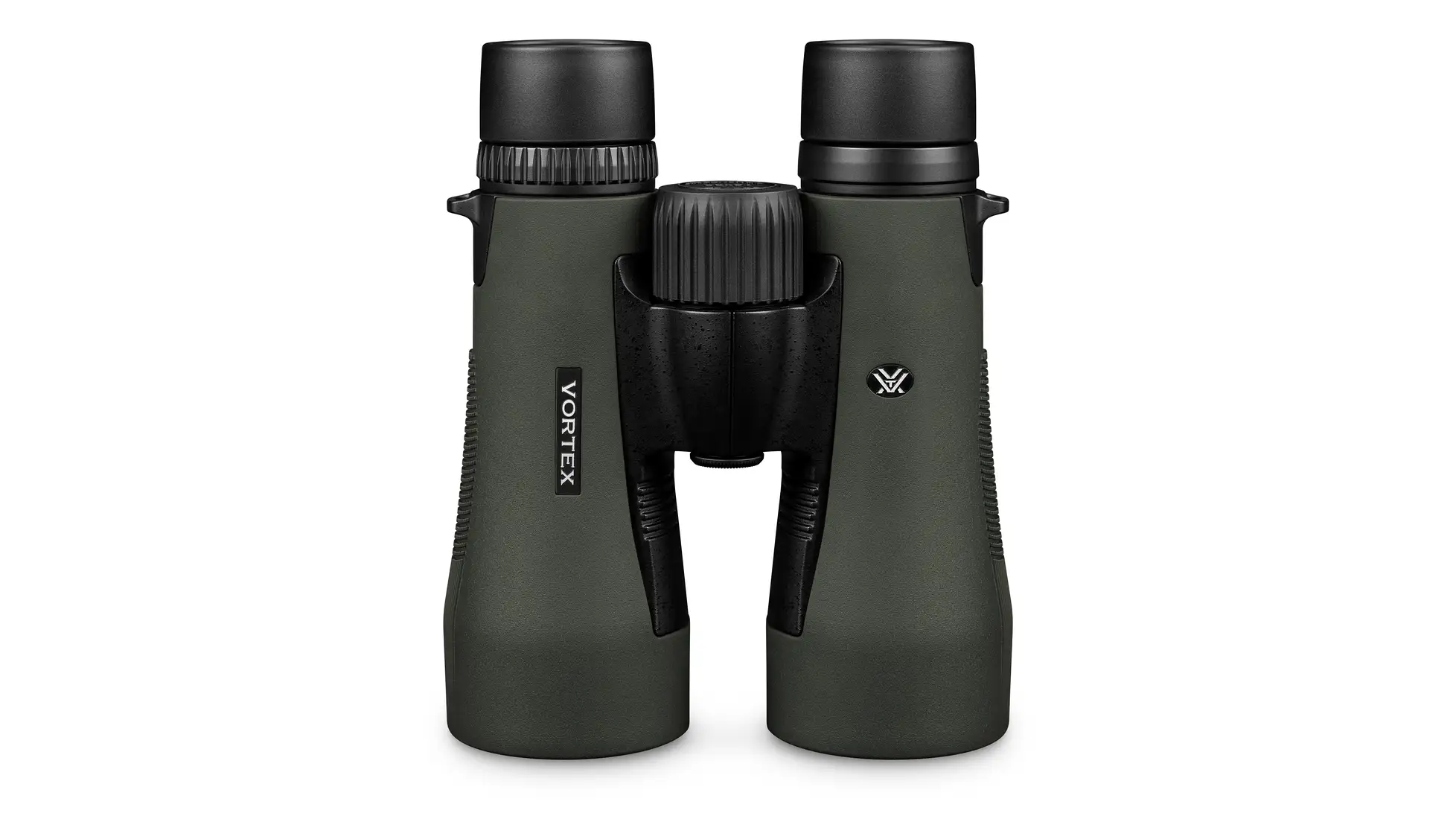
Best overall for astronomy: Vortex Diamondback HD 10x50
Roof prism · 10x50 · 5 mm exit pupil · HD glass
around $230exact price on OpticsPlanet
For stargazing, 10x50 is the classic all-round choice, and this is the one to buy. The math is simple: a 50 mm objective divided by 10x magnification gives a 5 mm exit pupil, which closely matches a dark-adapted human eye, so the image is about as bright as binoculars get at night. The 10x power is low enough to hold steady by hand for scanning the Milky Way, star fields, large clusters and the Moon, and the wide 315-foot field of view makes finding objects easy. Add HD glass, dielectric and phase-corrected prisms, a comfortable 17 mm of eye relief and the unconditional Vortex VIP warranty, and one owner sums it up: the 50 mm and 10x combination is about the best you can do for stable distant viewing.
Pros
- 5 mm exit pupil matches a dark-adapted eye: about the brightest view for night-sky use
- Low 10x power is steady enough to hold by hand for scanning the sky
- Wide 315-foot field of view makes sweeping the Milky Way and finding objects easy
- 17 mm eye relief (eyeglass-friendly) and the unlimited, unconditional lifetime Vortex VIP warranty
- Owners confirm strong light-gathering; tripod-adaptable when you want it locked down
Cons
- A narrow interpupillary distance (under 60 mm) will not close far enough because of the big 50 mm barrels
- 10x will not resolve fine detail on planets or tight clusters the way 15x will
- At 30 oz it is heavier than a compact; long overhead sessions are easier braced or on a tripod
Best for: beginners and all-round stargazers who want the brightest, widest, most hand-holdable view for the Milky Way, star fields, large clusters and the Moon. Step up in power if you mainly want lunar and planetary detail.
Key specifications
| Magnification | 10x |
|---|---|
| Objective lens | 50 mm |
| Exit pupil | 5 mm (ideal for night) |
| Prism | Roof, phase-corrected + dielectric |
| Glass | HD, fully multi-coated |
| Eye relief | 17 mm |
| Field of view | 315 ft at 1000 yds |
| Twilight factor | 22.4 |
| Weight | 30 oz |
| Sealing | Argon-purged; waterproof, fogproof |
| Tripod | Adaptable (adapter required) |
| Warranty | Vortex VIP: unlimited, unconditional, lifetime |
“The 50 mm lens and 10x is about the best combination you can do for stable distant viewing. High quality sight picture, and if you want to put it on a tripod the Kowa KB2-MT is narrow enough to go between the lenses.”
Kj, verified owner (TN) via OpticsPlanet
Best for more reach: Vortex Diamondback HD 12x50
Roof prism · 12x50 · 4.2 mm exit pupil · HD glass
around $280exact price on OpticsPlanet
If you want a little more magnification without jumping to a tripod-only pair, the 12x50 is the middle path, and it is the most-reviewed pick here. It keeps the same 50 mm aperture as the 10x50 but at 12x, so the exit pupil drops to 4.2 mm (a touch dimmer and a slightly tighter field), while pulling in more detail on the Moon and brighter clusters. Owners routinely spot game and terrain by moonlight with it, which is the same low-light performance stargazers want. It shares the Diamondback HD glass, dielectric and phase-corrected prisms and the VIP warranty. Many people can still hand-hold 12x for short looks, though bracing or a tripod helps.
Pros
- More reach than the 10x50 for the Moon and brighter clusters, same 50 mm light-gathering
- Most-reviewed pick here (81 reviews at 4.9/5): a proven all-rounder
- HD glass with dielectric and phase-corrected prisms; owners confirm bright moonlight views
- Unlimited, unconditional lifetime Vortex VIP warranty; tripod-adaptable
Cons
- Smaller 4.2 mm exit pupil is slightly dimmer at night than the 10x50 5 mm
- Narrower 271-foot field of view makes sweeping and finding objects a little harder
- 12x shows more hand shake; a tripod or brace helps for steady, extended viewing
- Tight 14 mm eye relief is marginal for eyeglass wearers
Best for: stargazers who want a bit more magnification for lunar detail and clusters while keeping 50 mm brightness, and who will brace or tripod-mount for the steadiest view. Choose the 10x50 for the brightest, widest handheld image.
Key specifications
| Magnification | 12x |
|---|---|
| Objective lens | 50 mm |
| Exit pupil | 4.2 mm |
| Prism | Roof, phase-corrected + dielectric |
| Glass | HD, fully multi-coated |
| Eye relief | 14 mm |
| Field of view | 271 ft at 1000 yds |
| Weight | 28.9 oz |
| Chassis | Magnesium |
| Sealing | Argon-purged; waterproof, fogproof |
| Tripod | Adaptable (adapter required) |
| Warranty | Vortex VIP: unlimited, unconditional, lifetime |
“Daylight viewing is exceptional, it challenges the higher priced optics in this category, and the 50 mm objective lens lets in ample light to see clearly. Add the 12 power magnification and your viewing experience is greatly enhanced.”
Maurice, verified owner (TX) via OpticsPlanet
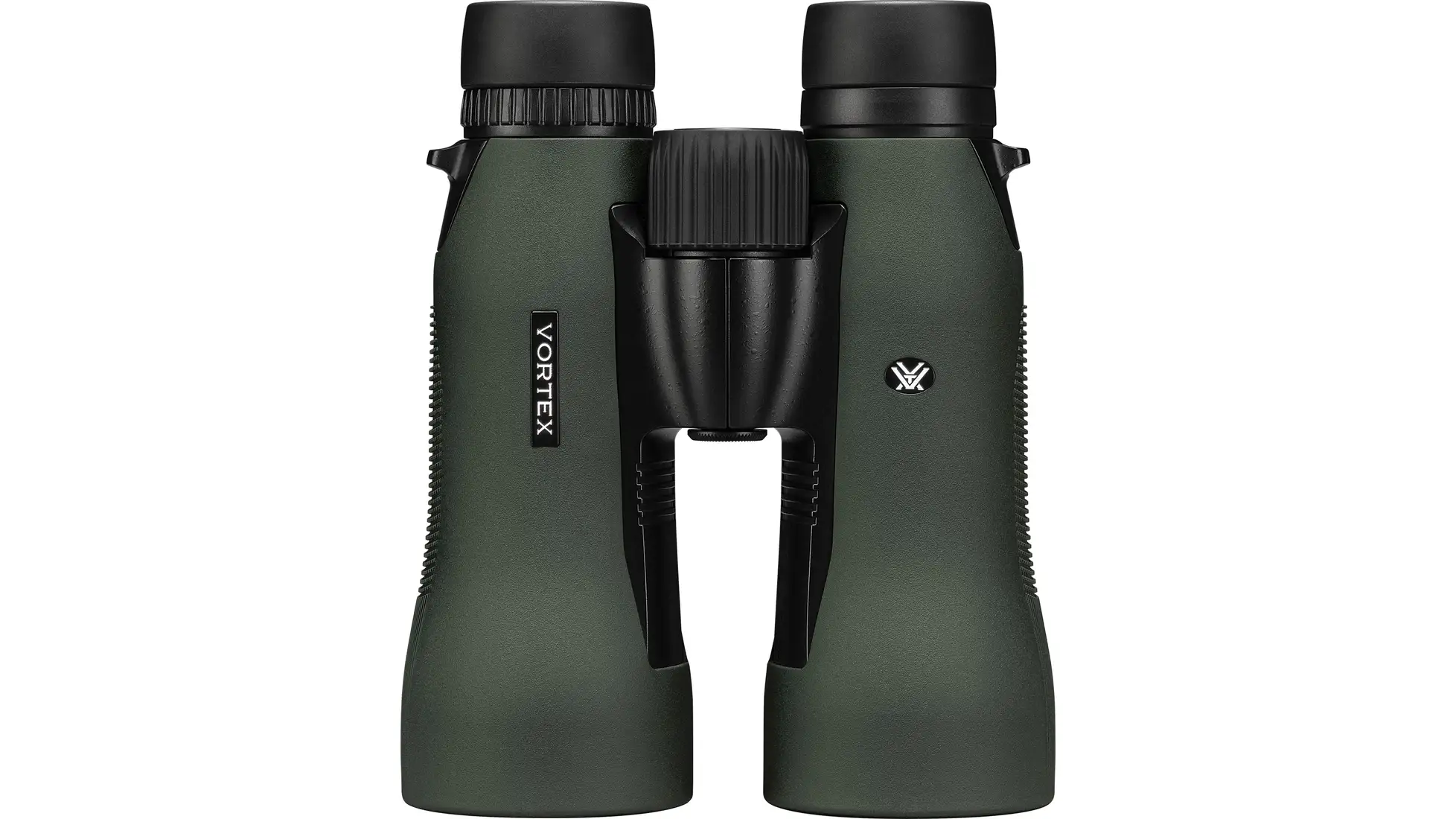
Best for maximum detail: Vortex Diamondback HD 15x56
Roof prism · 15x56 · twilight factor 29 · tripod adapter included
around $370exact price on OpticsPlanet
When you want the most magnification and light-gathering in a still-affordable binocular, this is the pick, and it is the one to reach for lunar craters, tighter star clusters and detail. The 56 mm objectives and a high twilight factor of 29 pull in more light, and 15x resolves detail the 10x and 12x cannot. The honest trade-off is that 15x is a lot to hold steady: some owners hand-hold it fine, others find it needs support, so plan to brace it or use a tripod for the best views. Vortex includes a tripod adapter in the box (along with the GlassPak harness and case), so you are ready to mount it out of the gate.
Pros
- Most magnification and aperture here: best for lunar craters, tighter clusters and detail
- High twilight factor of 29 and 56 mm objectives gather more light for dim targets
- Includes a tripod adapter in the box (plus the GlassPak harness and case)
- HD glass, dielectric and phase-corrected prisms; unconditional Vortex VIP warranty
Cons
- 15x is hard to hold steady: owners are split, and for the best views you will want a tripod or a brace
- Smaller 3.7 mm exit pupil is dimmer in full dark than the 10x50 or 12x50
- A narrow interpupillary distance (under 59 mm) will not close far enough for the big 56 mm barrels
- Heaviest pick here at 34.8 oz, and the narrowest field of view for finding objects
Best for: stargazers who mainly want lunar and detailed views and will use a tripod or brace. Choose the 10x50 or 12x50 for brighter, wider, more hand-holdable sweeping.
Key specifications
| Magnification | 15x |
|---|---|
| Objective lens | 56 mm |
| Exit pupil | 3.7 mm |
| Prism | Roof, phase-corrected + dielectric |
| Glass | HD, fully multi-coated |
| Eye relief | 15.6 mm |
| Field of view | 230 ft at 1000 yds |
| Twilight factor | 29 |
| Weight | 34.8 oz |
| Sealing | Argon-purged; waterproof, fogproof |
| In the box | Tripod adapter, GlassPak harness + case, covers |
| Warranty | Vortex VIP: unlimited, unconditional, lifetime |
“Going from 12 power to 15 power is a huge improvement... Will be using them on my tripod as well... Was amazed at the clarity.”
owners (Don D and Darren) via OpticsPlanet
Going bigger: giant astronomy binoculars
The three picks above are versatile hand-holdable-to-tripod binoculars that also work by day. If you want serious deep-sky reach and will always use a mount, the next step is a giant: 20x80 and 25x100 binoculars gather far more light for faint objects. OpticsPlanet stocks premium options like the Steiner Military 20x80 and the Barska Encounter 20-40x100, but they run well over $2,000 and must be tripod-mounted, so they are a specialist step, not a first pair.
About the classic budget giants: the Celestron SkyMaster 15x70 and 25x70 are the binoculars most often recommended to beginners on a budget. We have not ranked one here, so if you want to weigh a SkyMaster against these picks, compare the listings at the retailer yourself. Our recommendation stays the Diamondback HD 10x50 or 15x56 above.
How to choose astronomy binoculars
A few numbers decide how well a binocular performs under the stars:
- Aperture (the second number). A bigger objective (50 mm, 56 mm, 80 mm) gathers more light for fainter objects. For a versatile handheld pair, 50 mm is the sweet spot.
- Exit pupil (aperture divided by magnification). Aim for around 5 mm at night to match your dark-adapted eye: 10x50 gives 5 mm, 12x50 gives 4.2 mm, 15x56 gives 3.7 mm.
- Magnification versus steadiness. 10x is hand-holdable; 12x is borderline; 15x and up really want a tripod or brace. More power shows more detail but amplifies shake.
- Tripod-adaptability. Any binocular you plan to use at 12x or higher should take a tripod adapter; the Diamondback HD 15x56 includes one.
- Glass and coatings. HD/ED glass with dielectric, phase-corrected prisms gives brighter, sharper, higher-contrast views, which matters for faint sky objects.
- Interpupillary distance. Big 50 to 56 mm barrels may not close far enough for narrow-set eyes (under about 59 to 60 mm), so check the spec if that applies to you.
FAQ
What size binoculars are best for astronomy?
10x50 is the classic all-round astronomy size, which is why the Vortex Diamondback HD 10x50 is our top pick. A 50 mm objective at 10x gives a 5 mm exit pupil that matches a dark-adapted eye for a bright image, and 10x is low enough to hand-hold for scanning the Milky Way and star fields. Step up to 12x50 or 15x56 for more magnification on the Moon and clusters, ideally with a tripod, and only go to giant 20x80 or 25x100 binoculars if you want serious deep-sky reach on a mount.
What is exit pupil and why does it matter for stargazing?
Exit pupil is the objective diameter divided by magnification (for example 50 mm divided by 10 equals a 5 mm exit pupil), and it is the width of the beam of light leaving each eyepiece. At night your pupil dilates to roughly 5 to 7 mm, so a 5 mm exit pupil like the 10x50 delivers about the brightest usable image. A 12x50 gives 4.2 mm and a 15x56 gives 3.7 mm, both slightly dimmer, which is the trade you make for more magnification.
Do you need a tripod for astronomy binoculars?
It depends on magnification. A 10x50 like the Diamondback HD is steady enough to hand-hold for scanning, though bracing against something helps. At 12x and especially 15x, hand shake becomes noticeable and a tripod (or at least a brace) gives a much steadier, more detailed view; the Diamondback HD 15x56 even includes a tripod adapter in the box. Giant 20x80 and larger binoculars must be mounted.
Are Vortex Diamondback HD binoculars good for astronomy?
Yes, within their class. The Diamondback HD 10x50, 12x50 and 15x56 all pair 50 to 56 mm apertures with HD glass, dielectric and phase-corrected prisms for bright, sharp views of the Moon, star fields and clusters, and all are tripod-adaptable. They are not dedicated large-aperture astronomy giants, but for a versatile binocular that also works for daytime use, they are strong value. Match the power to your target: 10x50 for wide bright sweeping, 15x56 for detail on a tripod.
New to binoculars? Learn what the numbers mean and 8x42 vs 10x42, compare our two 50 mm picks in Diamondback HD 10x42 vs 12x50, or carry your glass better with our best binocular harness picks. For daytime use, see our best binoculars for long distance, best binoculars for birding and best binoculars for hunting guides.