The best 12x50 binoculars
Quick answer: the Vortex Diamondback HD 12x50 (around $280) is the best 12x50 on the specification and the owner record. If your ceiling is lower, the Vortex Crossfire HD 12x50 (around $180) is a tier below on glass and the cheapest binocular here we would actually recommend. Step up to the Vortex Viper HD 12x50 (around $490) if you wear eyeglasses or glass for hours, because its 16 mm eye relief, wider 288 ft field of view and locking diopter are what you feel over a long session. If you carry your binocular in your hands all day rather than glassing from a steady position, buy a 10x42 or 8x42 instead.
A 12x50 exists for one job: seeing detail at distance from a position you can hold. The 50 mm objective is what makes the magnification usable, because dividing it by 12 leaves a 4.2 mm exit pupil, wide enough to keep the image bright at dawn and dusk where a 12x42 goes dim. What you give up is field of view, weight and steadiness, and those costs are real. Both picks below are ones we have reviewed in full, and each price carries the date we verified it.
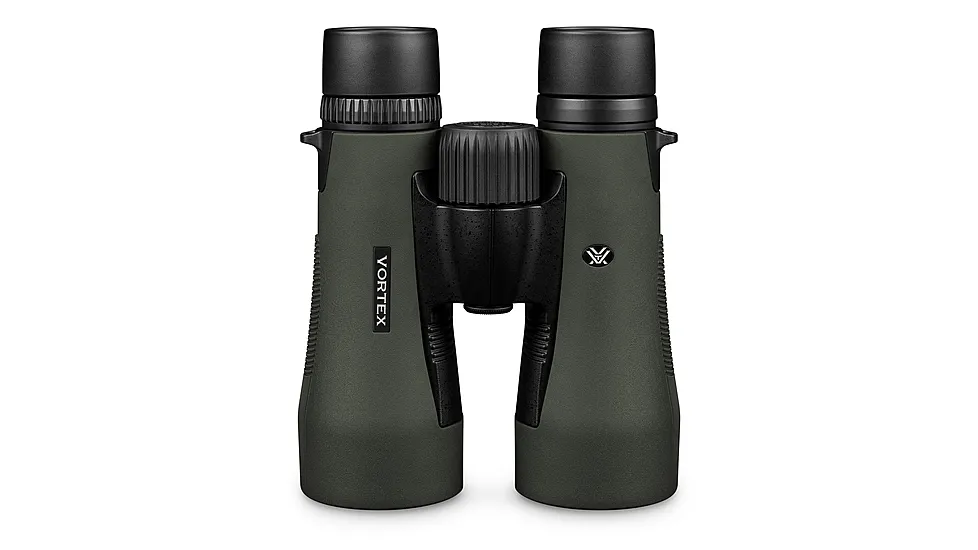
Best overall 12x50: Vortex Diamondback HD 12x50
around $280 4.9/5, 81 reviews on OpticsPlanet
This is the one to buy unless you have a specific reason not to. You get genuine HD extra-low dispersion glass, fully multi-coated, on phase-corrected roof prisms with dielectric coatings, in a magnesium alloy chassis that is argon purged and sealed against water, fog and shock. It shows 271 ft at 1000 yards with 14 mm of eye relief and a 6 ft close focus, weighs 28.9 oz, and the box includes the GlassPak harness and case rather than a bare strap. Behind it sits the Vortex VIP warranty, unlimited and unconditional for life: Vortex repairs or replaces it at no charge, no matter how it happened, whose fault it was, or where you purchased it. It also carries the strongest owner record of any binocular we have reviewed, 4.9/5 across 81 reviews. Price verified September 30, 2026, so confirm it on the retailer page before you buy.
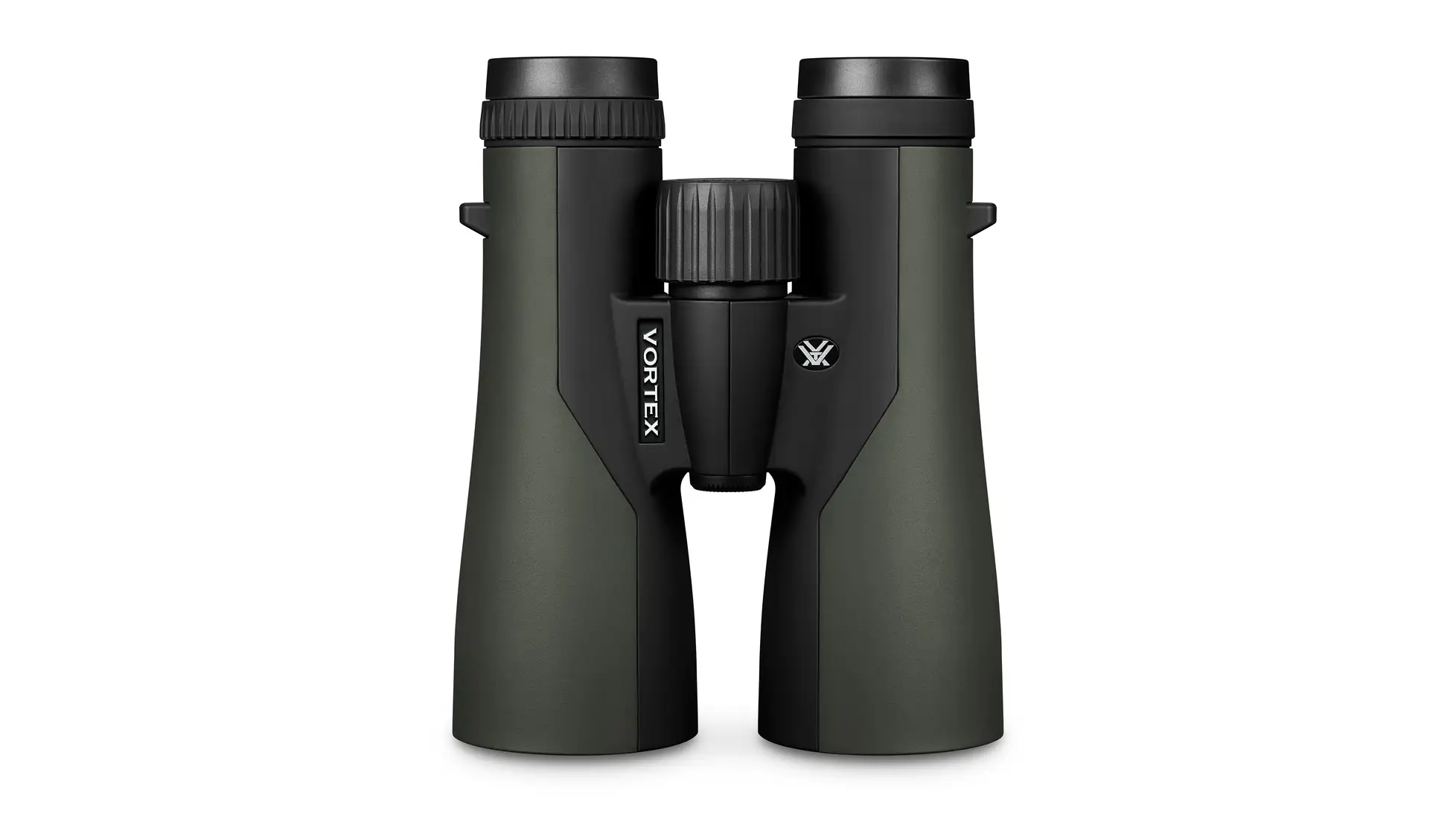
Cheapest 12x50 we would recommend: Vortex Crossfire HD 12x50
around $180 4.8/5, 26 reviews on OpticsPlanet
This is the answer to "I want to stay under $300", and the numbers make it a more serious option than its price suggests. Vortex's own list price for it is the same figure the Diamondback HD above actually sells for, so what the retailer is doing here is a real discount rather than a cheaper product being dressed up as one. From Vortex's own specification: HD optical system, fully multi-coated lenses, a 4.2 mm exit pupil like every 12x50 here, 273 ft at 1000 yards, a 6 ft close focus, a 60 to 76 mm interpupillary range and 29.5 oz, with the unconditional VIP warranty. Its 15 mm of eye relief is actually longer than the Diamondback's 14 mm, which surprised us and matters if you wear eyeglasses. The prisms are roof prisms in BaK-4 glass, a figure Vortex does not publish itself but which the independent optics database AllBinos records for this model.
Two specification notes, because the retailer's page gets both wrong and one of them we had repeated. Its listing files ArmorTek as this binocular's finish. ArmorTek is Vortex's scratch-resistant exterior lens coating, not a body finish, and Vortex's own page for this model never mentions it, while Vortex does advertise it on the Diamondback HD and up. We are no longer claiming it here. The second is quieter and more interesting: neither Vortex nor the retailer claims phase correction for the Crossfire HD. On a roof prism that coating is what restores resolution and contrast, and Vortex names it explicitly as a Diamondback HD feature. We will not tell you it is absent, because nobody publishes that either, but a specification this important going unstated on a roof prism is itself worth knowing.
Be clear about what you give up, because it is real and it is the reason this is not our overall pick. The Diamondback HD adds genuine extra-low dispersion glass, phase correction and dielectric prism coatings and a magnesium chassis, and those are the things that control colour fringing and contrast at the edge of the day, which is precisely when a 12x50 earns its keep. The owner record is also thinner here, 26 ratings against 80.
What 26 owners actually say. Clarity is the most repeated point by a distance, raised by sixteen of them, and value for the money by fifteen; nine go out of their way to praise the GlassPak harness that comes in the box, which is unusual for an included accessory. The one complaint more than two owners raise is weight, and two of those four explicitly accept it as the price of a 50 mm objective. Then there is the dissenting review, and it deserves its own line because it is the most upvoted review of the product and the retailer's own reviews listing does not show it: a verified owner who already had six Vortex scopes rated it two stars, describing a loose, laggy focus adjustment and cloudy edges with a mirage effect when compared side by side against his other binoculars, and returned it for the next model up. One owner against sixteen is not a verdict, but he is the most-agreed-with voice on that listing and you would never meet him by reading the reviews page.
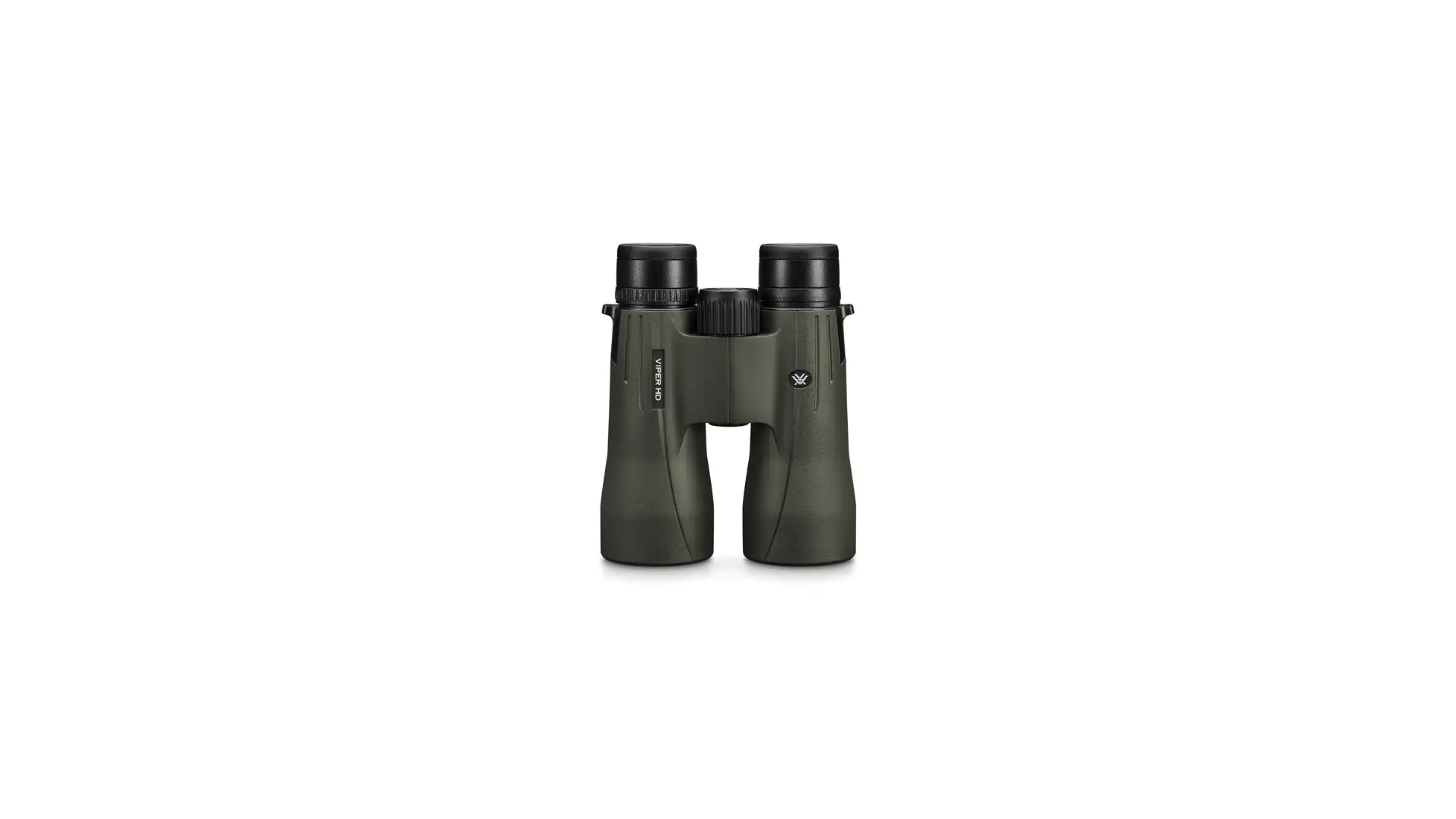
Best for eyeglasses and long sessions: Vortex Viper HD 12x50
around $490 4.7/5, 31 reviews on OpticsPlanet
The Viper is not a different specification so much as a more comfortable one, and comfort is what decides a long glassing session. Its 16 mm of eye relief against the Diamondback's 14 mm is the difference between seeing the full field with eyeglasses on and fighting for it, the field of view is wider at 288 ft at 1000 yards, and the diopter locks so your setting cannot drift in a pack. The glass is XR fully multi-coated HD on BAK4 phase-corrected prisms, the twilight factor is 24.5, and it weighs 28.8 oz, essentially the same as the Diamondback. The close focus is longer at 8 ft, which matters only if you watch things nearby. Same VIP warranty. Price verified September 30, 2026.
What else the retailer stocks in 12x50, and why it is not ranked here
We could have filled this page with products we have never examined, and we would rather tell you what we actually know. All three above are 12x50s we have now reviewed in full, from the specification sheet and the owner record. The Crossfire HD was the exception until August 17, 2026, carried here on verified price alone; its gather is done, which is where the ArmorTek correction and all 26 owner reviews above came from.
One 12x50 sits above all three of them and we have reviewed it in full: the Vortex Razor UHD 12x50, which our Vortex Razor binocular guide cards as the Razor to buy today. It is not ranked here because it answers a different question. It costs several times what the Viper costs and belongs to a premium conversation rather than a value one, so putting it at the top of this page would tell most readers the wrong thing. If that is your budget, read it there rather than assuming this page's ceiling is the category's.
So that you are not left thinking the category is three binoculars wide, here is the rest of what the same retailer lists in 12x50, checked on its own binocular category for this update: the Vortex Triumph HD below the Crossfire, the Leupold BX-5 Santiam HD, the Zeiss SFL, the SIG Sauer Zulu8 HDX, and the Leupold BX4-Range HD Gen 2 TBR, which is a rangefinding binocular rather than a plain one.
Three of those five now have an answer. The BX4-Range HD Gen 2 TBR is reviewed and ranked on our rangefinding binocular page, which is where it belongs: what you are paying for there is the laser as much as the glass, and comparing it to a plain 12x50 on optics alone would tell you nothing useful. The Zulu8 HDX we did check, and the reason it stays unranked is worth saying plainly, because you will not find it said anywhere else. SIG publishes no field of view, no eye relief and no weight for this configuration on its own product page, and its ZULU binocular manual has no 12x50 column for the Zulu8 at all. The retailer adds nothing: eight specification rows, none of them optical, and not one owner review. There is no number here we could stand behind, so we name it rather than rank it. If you see a field of view or an eye relief quoted for this model somewhere else, check which model it actually belongs to before you trust it. The Zeiss SFL 12x50 now has its own Zeiss SFL review, which covers it alongside the 10x50, 8x50 and 8x40; it stays unranked here for the same reason as the Razor UHD above, because it belongs to a premium conversation rather than the value one this page compares.
The other two we have not reviewed in 12x50, and we have not verified their prices, so there are no figures here for them and there will not be until we do the work.
Is 12x50 the right size for you?
- Buy 12x50 if you glass at distance from a steady position: a hunting vantage point, a truck window, a tripod, or braced against something solid.
- Buy 10x42 instead if you carry the binocular in your hands and cover ground; you get a wider view, less weight and a steadier image. See our hunting picks.
- Buy 8x42 instead for birding and general use, where finding a moving subject fast beats magnification. See best 8x42 binoculars.
- Go bigger for stargazing, where a tripod is assumed anyway: our astronomy guide covers 15x56 and up.
- Add support. Any bracing helps at 12x, and a harness makes the weight bearable on foot; see best binocular harness.
New to the numbers? Read what binocular numbers mean and 8x42 vs 10x42. Comparing the Vortex lines directly? See Diamondback vs Viper and Diamondback 10x42 vs 12x50.
FAQ
Are 12x50 binoculars worth it over 10x42?
They are if you glass from a steady position at distance, and they are not if you scan on foot with the binocular in your hands. A 12x50 gives you more detail and, thanks to the 50 mm objective, keeps a 4.2 mm exit pupil, so it stays usable at dawn and dusk rather than going dim the way a 12x42 does. What you pay is field of view, weight and stability: the binoculars here weigh 28.8 to 29.5 oz and show 271 to 288 ft at 1000 yards, against the wider, lighter view of a 10x42. If your hands are your only support and you move a lot, 10x42 or even 8x42 is the better tool.
What are the best 12x50 binoculars for the money?
It depends where your ceiling is, and the honest answer changes at two points. Under $200, the Vortex Crossfire HD 12x50 is the one we would actually put on a rifle-hunt or a fence post: HD optical system, fully multi-coated BAK4 roof prisms, 273 ft at 1000 yards and 15 mm of eye relief, with the unconditional VIP warranty behind it, and it sells for well under Vortex's own list price, so the discount is real rather than a cheaper product repriced. Under $300 buys the Vortex Diamondback HD 12x50, which adds extra-low dispersion glass, phase-corrected dielectric prisms and a magnesium chassis, and that is the value sweet spot on merit. Under $1000, the Vortex Viper HD 12x50 is where comfort arrives: 16 mm of eye relief, 288 ft of field and a locking diopter. Below $150 you are into binoculars we would not recommend for 12x, where the magnification outruns the glass. The pick blocks above carry the current figure for each.
Do you need a tripod for 12x50 binoculars?
Not strictly, but you will see more with one. At 12x, small hand tremors are magnified enough that fine detail smears, which is exactly what you bought the magnification for. Most people can hold a 12x50 well enough for a quick look and benefit enormously from any support for a long one, whether that is a tripod, a window mount, shooting sticks or simply bracing against a tree or truck. If you plan to glass for long sessions from one spot, budget for a tripod adapter.
Diamondback HD 12x50 or Viper HD 12x50?
The Diamondback HD is the value answer and it is genuinely good: HD glass, phase-corrected dielectric roof prisms, a magnesium chassis and the same unlimited VIP warranty. The Viper HD costs about twice as much and buys optical refinement and comfort rather than a different specification sheet: XR fully multi-coated glass, 16 mm of eye relief against the Diamondback's 14 mm, a wider 288 ft field of view and a locking diopter that will not drift. If you wear eyeglasses or glass for hours at a time, that eye relief and field of view difference is the one you will feel; otherwise the Diamondback does the same job for half the money.
What does 12x50 actually mean?
The first number is magnification: the image appears twelve times closer than to your naked eye. The second is the diameter of the front lenses in millimetres, which governs how much light the binocular gathers. Divide the objective by the magnification and you get the exit pupil, the width of the beam of light reaching your eye: 50 divided by 12 is 4.2 mm here, which is why a 12x50 stays usable in low light where a 12x42 (3.5 mm) struggles. Our guide to what binocular numbers mean covers the rest.
More: best binoculars for hunting · best 8x42 binoculars · best binoculars for long distance · best binoculars for astronomy · Diamondback HD 12x50 review · Viper HD 12x50 review.