Vortex Diamondback HD vs Viper HD: value glass or the premium step-up?
Our verdict: both are 10x42 roof-prism binoculars built on Vortex HD glass, a magnesium chassis and the same lifetime warranty, so this is a choice of glass tier, not brand support. On value the Diamondback HD 10x42 (around $220) is the pick for most hunters and general users: it delivers roughly 80 to 90 percent of the Viper experience for about half the price. Step up to the Viper HD 10x42 (around $430) only if you glass hard at dawn and dusk and want the premium XR coatings, sharper edges, a wider field of view, 17 mm eye relief and a locking diopter.
Owners rate the Diamondback 4.9/5 (47 reviews) and the Viper 5.0/5 (27 reviews) on OpticsPlanet. Prices verified September 30, 2026; confirm the current price and availability on the retailer page. See each in our best binoculars for hunting guide.
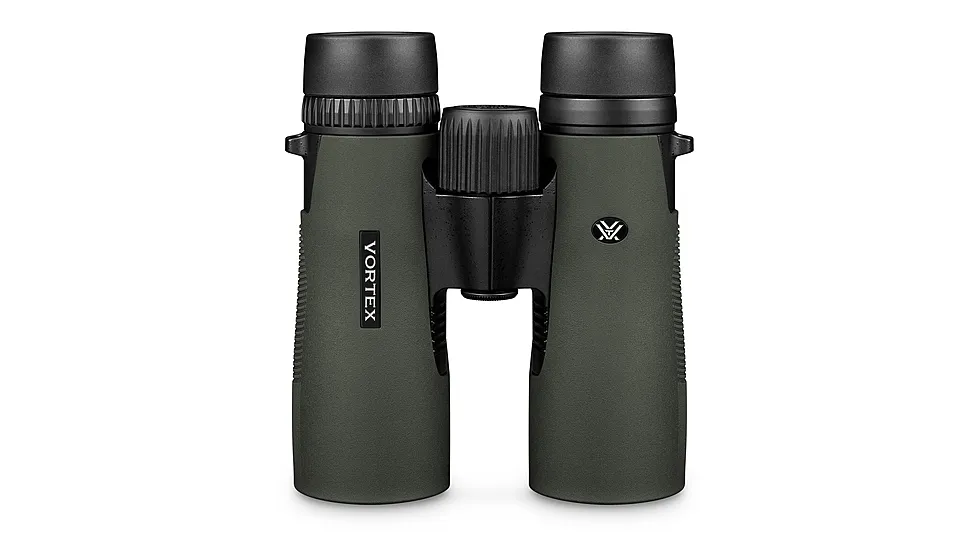
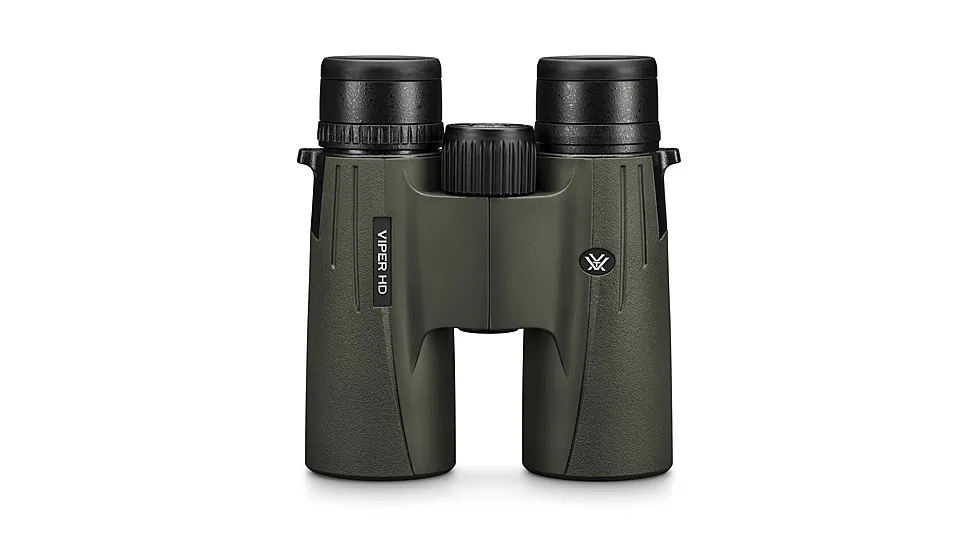
How this comparison was made: a research-based, spec-by-spec comparison drawn from our full reviews of each binocular, retailer specifications, warranty terms and owner feedback. We have not bench-tested the two side by side; scores and verdicts are our editorial opinion, and owner ratings are shown attributed to their source. See how we evaluate.
Side-by-side specifications
| Diamondback HD 10x42 | Viper HD 10x42 | |
|---|---|---|
| Street price | around $220 | around $430 |
| Owner rating | 4.9/5, 47 reviews on OpticsPlanet | 5.0/5, 27 reviews on OpticsPlanet |
| Magnification | 10x | 10x |
| Objective | 42 mm | 42 mm |
| Exit pupil | 4.2 mm | 4.2 mm |
| Glass and coatings | HD, fully multi-coated | HD, XR fully multi-coated (premium) |
| Field of view | 330 ft at 1000 yds | 341 ft at 1000 yds |
| Eye relief | 15 mm | 17 mm |
| Close focus | 5 ft | 6.5 ft |
| Weight | 21.3 oz | 24.9 oz |
| Diopter | Standard (non-locking) | Locking, +/-4 |
| Prism | Roof, phase-corrected + dielectric | Roof (BAK4), phase-corrected + dielectric |
| Chassis | Magnesium | Magnesium |
| Sealing | Argon; waterproof, fogproof, shockproof | Argon; waterproof, fogproof, shockproof |
| In the box | GlassPak harness + case, straps, covers | GlassPak harness, strap, rainguard + covers |
| Warranty | Vortex VIP: unlimited, unconditional, lifetime | Vortex VIP: unlimited, unconditional, lifetime |
| Check Diamondback price | Check Viper availability |
The glass: what the Viper's premium coatings buy
Both binoculars use HD (extra-low dispersion) glass, so the core difference is coatings, not the base optical formula. The Diamondback HD is fully multi-coated; the Viper HD adds Vortex's premium XR fully multi-coated lenses and BAK4 prisms, which transmit more light and hold color and contrast better. In practice that means the Viper stays sharper toward the edges of the view and usable slightly deeper into dusk. Owners who have compared the Viper to Leica, Swarovski and Vortex's own Razor HD consistently place it at about 80 to 90 percent of alpha performance for roughly a third of the money. The Diamondback, honestly, gets you most of the way there: its ceiling is edge softness from about 75 percent out and some color fringing in harsh, high-contrast light, both normal at its price and both improved on the Viper.
Handling: eye relief, field of view and the locking diopter
Three ergonomic details separate the two. The Viper's 17 mm of eye relief is the most generous in Vortex's value and mid tiers, so eyeglass wearers get the full field with the eyecups down, while the Diamondback's 15 mm is marginal for thick glasses. The Viper's 341-foot field of view at 1000 yards is a touch wider than the Diamondback's 330 feet, making it slightly easier to find and follow animals. And the Viper's locking diopter holds your custom focus so it will not drift during a long session, where the Diamondback uses a standard diopter. None of these are dealbreakers on the Diamondback; they are the refinements you pay up for.
Where the Diamondback wins: weight, close focus and price
The value model is not simply the lesser binocular. At 21.3 oz it is noticeably lighter than the Viper's 24.9 oz, which you feel on an all-day hike and around your neck. Its 5-foot close focus actually beats the Viper's 6.5 feet, so it is the better pick for near butterflies, feeder birds and close detail. And it costs roughly half of the Viper. For most buyers that combination, lighter, closer-focusing and far cheaper, is the whole argument.
Price, plainly
Prices on both have been steady. The Diamondback HD 10x42 sits at the figure above in its base green DB-215 finish and the Viper HD 10x42 at roughly double, genuinely mid-tier money for premium HD glass. Vortex does not sell these direct, so its own product page shows a list price and a dealer locator; the figure you actually pay is the retailer's, which is the one we re-read on every price probe.
One model over: the Diamondback HD 10x50
Two in-family options sit either side of this pair. The same Diamondback in the Mossy Oak Bottomlands finish (DB-215-OBL) is optically identical for about thirty dollars more. And one model over, the Diamondback HD 10x50 (around $230) holds the 10x power, gives a brighter 5.0 mm exit pupil against these two at 4.2 mm, and matches the Viper's 17 mm eye relief, which is the single ergonomic reason most eyeglass wearers consider the upgrade in the first place. It is heavier at 30.0 oz. Prices move, so confirm on the retailer page before you decide.
What is identical
Plenty carries over between the two. Both are 10x42 roof-prism binoculars with HD glass, dielectric and phase-corrected prisms, a magnesium chassis and argon purging for waterproof, fogproof, shockproof service. Both share the same 4.2 mm exit pupil, so neither is brighter per area, and both ship with the Vortex GlassPak chest harness that competitors charge extra for. Backing each is the unlimited, unconditional Vortex VIP lifetime warranty, repair or replace at no charge, no matter how it happened, whose fault it was, or where you purchased it. Stepping up to the Viper buys better coatings and ergonomics, not a different class of build quality or support.
Which one should you buy?
- Best value and most hunters and general users: Diamondback HD 10x42. Lighter, closer-focusing, and about half the price.
- Serious dawn and dusk glassing, hours behind the glass: Viper HD 10x42, for the XR coatings, sharper edges and low-light bite.
- Eyeglass wearers: Viper HD 10x42 for its 17 mm eye relief, or the Diamondback HD 10x50, which gives the same 17 mm for a fraction of the money.
- All-day handheld carry, hiking and travel: Diamondback HD 10x42, for the lighter weight.
- Close-range wildlife and feeder watching: Diamondback HD 10x42, for the 5-foot close focus.
Check 10x50 availability on OpticsPlanet
FAQ
Vortex Diamondback HD or Viper HD: which should I buy?
On value the Diamondback HD 10x42 (around $220) is the answer for most hunters and general users: it delivers roughly 80 to 90 percent of the Viper experience at about half the price. Step up to the Viper HD 10x42 only if you glass hard at dawn and dusk and want the premium XR coatings, better edge-to-edge sharpness, a wider field of view, longer 17 mm eye relief and a locking diopter. Both carry the same unconditional Vortex VIP lifetime warranty, so it is a choice of glass tier, not brand support.
Is the Viper HD 10x42 worth twice the Diamondback HD?
For most people, no. The Viper buys premium XR fully multi-coated glass, sharper edges, a wider 341-foot field of view, 17 mm eye relief and a locking diopter, but the Diamondback HD already has the same HD glass, magnesium chassis, argon sealing, GlassPak harness and lifetime warranty. The upgrade pays off if you spend hours behind the glass or hunt low light seriously; if you glass occasionally or want the most binocular per dollar, the Diamondback HD is the smarter buy.
Is either one meaningfully brighter in low light?
No, not per area. Both share an identical 4.2 mm exit pupil (42 divided by 10), so the size of the bright image reaching your eye is the same. The Viper looks better into dusk because its premium XR coatings transmit more light and hold contrast, not because it is a brighter optic. For a genuinely brighter low-light view you need a larger exit pupil, such as an 8x42 (5.25 mm).
Is there a Vortex 10x binocular between these two?
Yes, one model over. The Diamondback HD 10x50 (DB-216, around $230) keeps the 10x power, adds a brighter 5.0 mm exit pupil against the 4.2 mm both 42 mm models share, and gives 17 mm of eye relief, matching the Viper on the one ergonomic point people upgrade for. It is heavier at 30.0 oz. The Diamondback HD 10x42 also comes in a Mossy Oak Bottomlands finish (DB-215-OBL), optically identical to the green DB-215.
Read the full reviews of the Diamondback HD 10x42 and the Viper HD 10x42, or see both in our best binoculars for hunting guide. Want more reach? Compare 10x42 vs 12x50. New to the specs? Learn what the numbers mean and 8x42 vs 10x42.