ATN ThOR 6 review: the Elite 3-24x50 640 LRF, and when a ThOR 6 Mini is enough
Our verdict: 4.3/5. The ATN ThOR 6 Elite 3-24x50 is a smart thermal riflescope for night hunters who want a 640x512 sensor and, on the LRF version, a laser rangefinder and ballistic calculator inside the scope. The retailer lists 15 mK thermal sensitivity, a 1920x1080 display, IP67 and 1.83 lb, and ATN backs it with a five-year warranty. The longest owner review on the listing is from a verified owner who calls the image quality “remarkable” next to their old Thor 4 and lists the ballistic calculator among the pros, but who could not update the firmware and found the new controls frustrating at first. The review record is small (11 reviews, 10 of them five stars), and the sources disagree on the refresh rate. If your shots are close, a compact ThOR 6 Mini costs far less, and the retailer lists the three Minis we read at about 0.7 lb lighter. For a 1280x1024 sensor, see our ATN Thor 5 review.
OpticsPlanet shoppers rate the Elite 3-24x50 listing 4.9/5 across 11 reviews. The LRF version (TIWST6650LRF) runs around $3,000, the standard version without a rangefinder (TIWST6650A) around $2,600. The Mini 2-16x15 runs around $690, the Mini 3.5-28x25 around $800 and the Mini 2.5-20x25 around $1,300 (scope only). Check price and availability on OpticsPlanet; confirm the current price on the retailer page.
How we reviewed it: a research-based review built from four OpticsPlanet listings (the Elite 3-24x50 and three Mini sizes), their specification tables and feature lists, ATN's own pages for the 640 3-24x and two of the Minis, ATN's ThOR 6 and ThOR 6 Mini manuals, and every owner review on the four listings (36 in all). We have not field-tested these units ourselves; the score is our editorial opinion and owner ratings are shown attributed to their source. See how we evaluate.
What the ThOR 6 is, and which version you are looking at
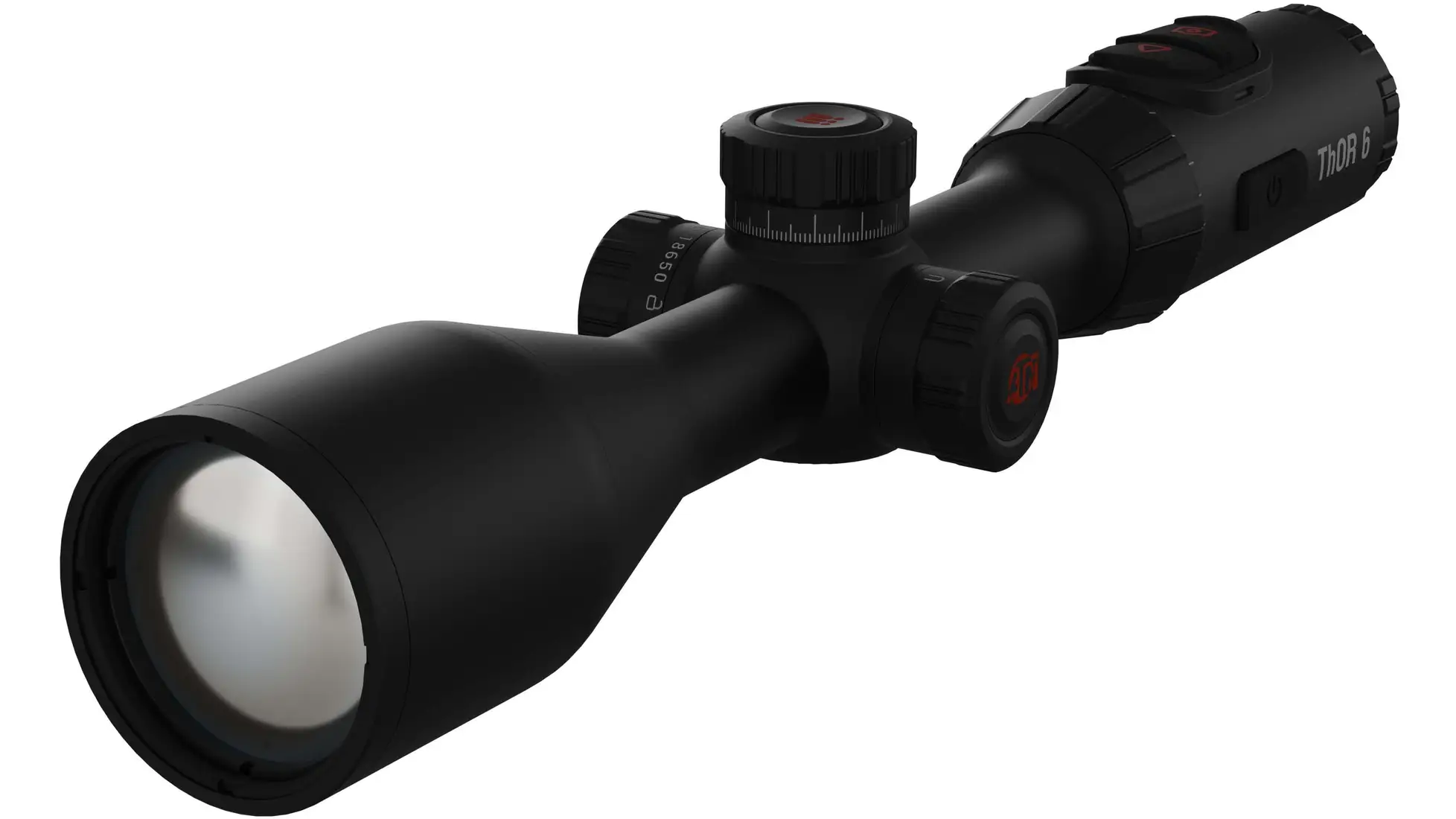
The ThOR 6 is ATN's sixth-generation smart thermal riflescope: a digital scope with its own menus, recoil-activated video, an internal gallery and a WiFi hotspot for streaming to a phone app, according to the retailer's feature lists. It comes in two lines that are different scopes, not sizes of one scope. The Elite is a 30mm-tube scope; the Mini (the listings call it Mini Compact) is a small scope on a Picatinny mount. These are the four listings we read:
| Version | Sensor | Lens | Display | Weight | OpticsPlanet rating |
|---|---|---|---|---|---|
| Elite 3-24x50 (reviewed here) | 640x512 | 50 mm | 1920x1080 | 1.83 lb | 4.9 from 11 reviews |
| Mini 2-16x15 | 256x192 | 15 mm | 800x600 | 1.1 lb | 4.8 from 9 reviews |
| Mini 2.5-20x25 | 384x288 | 25 mm | 1920x1080 | 1.16 lb | 5.0 from 8 reviews |
| Mini 3.5-28x25 | 256x192 | 25 mm | 800x600 | 1.16 lb | 5.0 from 8 reviews |
Figures are from each listing's own retailer table. OpticsPlanet carries other ThOR 6 Elite and Mini lens sizes that this review does not cover. The sensor is the biggest difference. By our arithmetic, 640x512 is about 328,000 pixels, against about 111,000 for 384x288 and about 49,000 for 256x192, so the Elite puts roughly three times the pixels of the 384 Mini, and more than six times those of a 256 Mini, on the same scene. More pixels mean more detail when you zoom in to identify an animal. ATN lists 8x digital zoom on its pages for the Mini 2-16x and 3.5-28x and on its page for the 640 3-24x without a rangefinder; the retailer's Elite listing does not split the 3-24x into optical and digital zoom, and we did not read an ATN page for the rangefinder version.
ATN's video introduces the ThOR 6 line as a whole: SharpIR image enhancement, a replaceable two-battery 18650 system and an optional built-in laser rangefinder. It is not a video of the Elite 3-24x50 LRF specifically; the only sensor resolution we saw on screen is 384x288.
The Elite 3-24x50 LRF: what you get
The retailer lists a 640x512 sensor with 15 mK NETD behind a 50 mm germanium lens, a 1920x1080 display (a 0.49 in OLED in the feature list), 50 mm of eye relief, IP67 water resistance, a magnesium alloy housing and a detection range of 3,650 m. Treat detection as seeing a warm spot on the screen; telling a coyote from a fox happens much closer, which is where the sensor resolution earns its price. The feature list adds a scope-like zoom control, a focus knob, Picture-in-Picture, Hot Point Tracking, multiple color palettes, Reticle Transparency Control and Zeroing Freeze.
The LRF row is the reason to pick this listing over a Mini. The retailer's feature list reads “Integrated Laser Rangefinder with Ballistic Calculator on LRF models”, and ATN's ThOR 6 manual lists the calculator's inputs, from ballistic coefficient and initial velocity to sight height, temperature, humidity and wind. Power is a dual system: ATN's manual describes one built-in rechargeable battery and one removable 18650, and the retailer lists 9 hours of battery life. ATN's manual gives a five-year warranty from the original date of purchase, with six months on the supplied rechargeable batteries.
The verified owner who wrote the listing's longest review moved up from a Thor 4 4x40 paired with a Bluetooth ABL 1000 range finder:
“The integrated LRF compared to the Bluetooth ABL 1000 is a very nice upgrade and improves the balance of the rifle.”
Jim (TX), Verified Owner, Elite 3-24x50 LRF, via OpticsPlanet
The same owner writes “This scope is also noticeably lighter” (the rifle's total weight dropped from 14.5 to 11.5 pounds, though the owner changed to a Ti suppressor at the same time) and describes the ballistic calculator, which they first tried with the Thor 4 and the ABL 1000: “I have made shots on coyotes at 280+ yards by just lasering the animal and placing the reticle on the animal.” The review does not say which of the two setups made those shots. Three other reviewers describe zeroing as simple; one sums it up as “You shoot, move the reticle to the bullet hole and that's it.” Two reviewers mention streaming video to a phone app over WiFi.
The honest catch: firmware, controls, a disputed spec and a small record
The firmware is the complaint to take seriously. The verified owner above rates the scope four stars and writes:
“My biggest complaint is I was not able to update the firmware.”
Jim (TX), Verified Owner, Elite 3-24x50 LRF, via OpticsPlanet
The USB cable that came with the scope would not transfer the file, and the WiFi method kept timing out. ATN's manual describes a .bin file copied to the scope's internal storage and an update offered through the mobile app, and says to make sure the battery is above 30% before you start. The same owner found the new turret controls slow to learn: “Learning what takes a long hold vs a short hold is frustrating on the turret.”
The refresh rate is disputed. The retailer lists 50 Hz for this listing. ATN's own page for the 640 3-24x without a rangefinder says 60Hz. We did not read an ATN page for the rangefinder version, so we do not state either figure as fact for the Elite LRF; confirm it with ATN or the retailer before you buy if smooth tracking matters to you.
The review record is small. The listing has 11 reviews: 10 five-star and Jim's four-star, and only Jim's carries a Verified Owner tag. One of the five-star reviews describes a ThOR 6 Mini 256 2-16x rather than the Elite, so we do not count it as Elite evidence. One five-star reviewer names the price as the only con.
Mounting: the Elite is a 30mm-tube scope, and the retailer's package-contents line for this listing names only the scope itself, and ATN's page for the standard 640 3-24x says it mounts with standard 30mm rings (not included). Confirm whether rings come in the box before you order.
Trade-offs, plainly
- One verified owner could not update the firmware by USB or WiFi; ATN asks for more than 30% battery before any update.
- The control system takes learning, especially long versus short presses on the turret, according to that owner.
- The refresh rate is disputed (50 Hz on the retailer listing, 60Hz on ATN's page for the non-LRF version), so we print neither as fact for the LRF.
- Eleven reviews, ten of them five stars, and one of them about a different model: too few to show a reliability pattern either way.
- It costs far more than a ThOR 6 Mini, and the rangefinder row costs more than the standard row.
- The retailer's package list names only the scope; check what mounting hardware is included.
Key specifications (Elite 3-24x50 LRF)
| Model | ATN ThOR 6 Elite 3-24x50mm, black, laser rangefinder row, MPN TIWST6650LRF |
|---|---|
| Sensor | 640x512 |
| Thermal sensitivity | 15 mK NETD |
| Display | 1920x1080; 0.49 in OLED (retailer feature list) |
| Magnification | 3-24x (listed as one range) |
| Objective lens | 50 mm |
| Field of view | 8.78 - 6.59 degrees, as listed |
| Eye relief | 50 mm |
| Detection range | 3,650 m (detection of a heat signature, not identification) |
| Laser rangefinder | Built in, with ballistic calculator, on the LRF row (retailer feature list) |
| Battery | Built-in rechargeable plus one removable 18650 (ATN manual); 9 hours battery life (retailer) |
| Operating temperature | -22 to 131 F |
| Water resistance | IP67 |
| Housing | Magnesium alloy |
| Weight | 1.83 lb |
| Mount | 30mm tube |
| Warranty | 5 years from original date of purchase; supplied rechargeable batteries 6 months (ATN manual) |
Specifications are from the retailer's table for the Elite 3-24x50 listing unless marked (ATN manual) or (retailer feature list). We print no refresh rate (see above), no length (the listed 16.93 in does not read as a scope's shape) and no rangefinder maximum distance (not stated on the ATN pages we read).
Which configuration should you buy?
Elite 3-24x50 with laser rangefinder (TIWST6650LRF): the one reviewed
The 640x512 sensor with the built-in rangefinder and ballistic calculator. Buy it for longer night shots where holding over by guesswork is the weak point; Jim lists the ballistic calculator among the pros, though their review does not say whether the coyote shots at 280+ yards and pig shots at 250 to 300 were made with this scope or the older Thor 4 and ABL 1000. OpticsPlanet shoppers rate the listing 4.9/5 across 11 reviews. It runs around $3,000.
Elite 3-24x50 standard (TIWST6650A): same sensor, no ranging
The same listing sells a standard row without the rangefinder. ATN's page for the standard 640 3-24x says the rangefinder and ballistic calculator are available on LRF models only. Pick it if you know your distances or carry a separate rangefinder. It runs around $2,600.
Mini 2-16x15 256x192 (TIWST6M215): the smallest
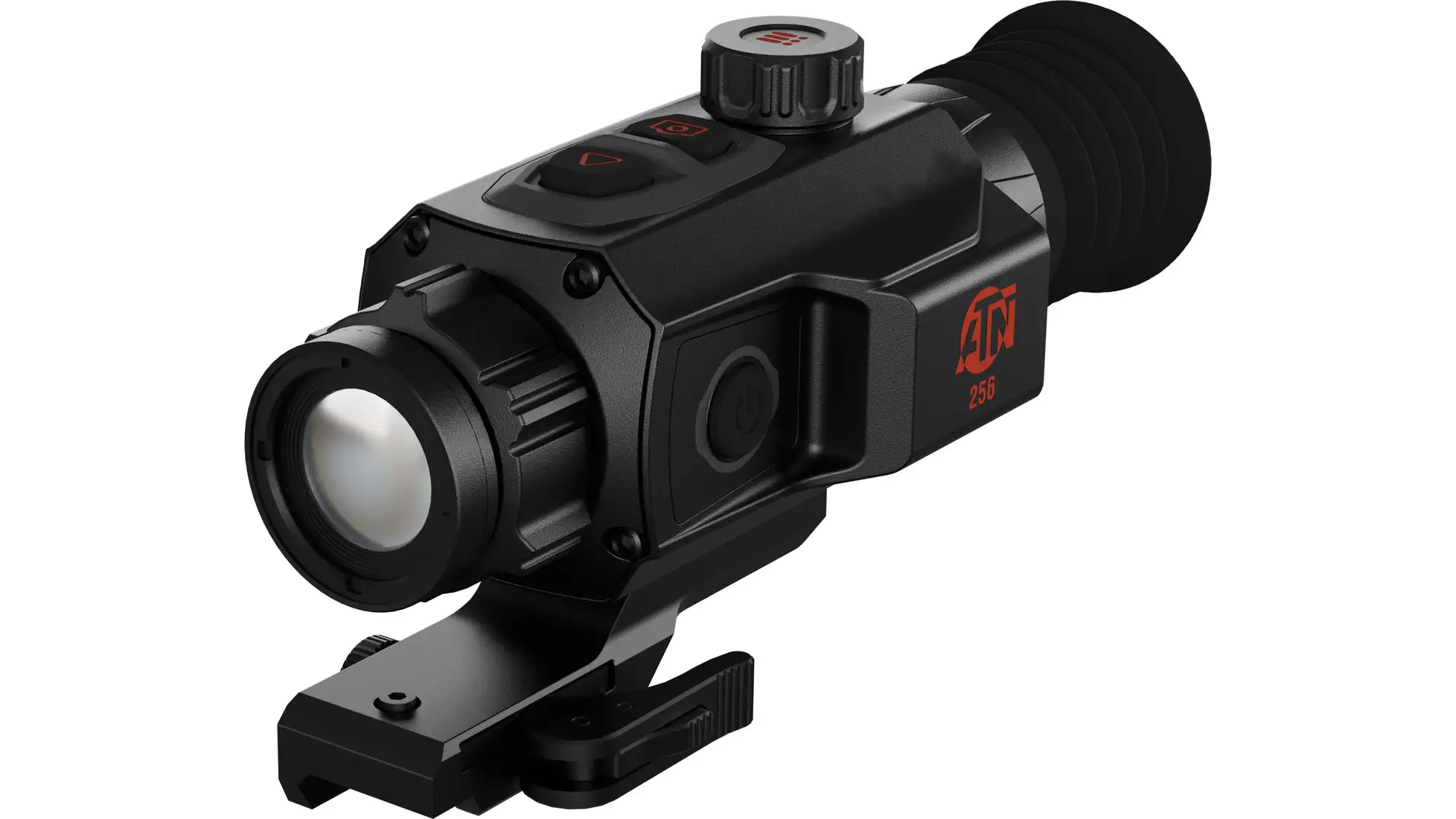
A 256x192 sensor (20 mK NETD) behind a 15 mm lens, an 800x600 display and 1.1 lb, per the retailer. ATN's page for the Mini 256 2-16x gives 50 Hz, 8x digital zoom, a 1,200 m detection range, IP67 and a 6000 Joule recoil rating. Reviewers rate it 4.8/5 across 9 OpticsPlanet reviews, eight of them five stars. A verified owner writes “Awesome size for my 300 AR Pistol.” and adds that the controls take practice; another verified owner calls it “awesome for entry level price point”. The one three-star reviewer found the image usable only to about 100 to 150 yards, “You can see an image but not clear at all.”, and is returning it because they need a clearer image out to 350 yards. Buy it for close work on a light rifle. The scope alone runs around $690; the listing also sells kits that add a thermal monocular.
Mini 2.5-20x25 384x288 (TIWST6M325): the sharper Mini
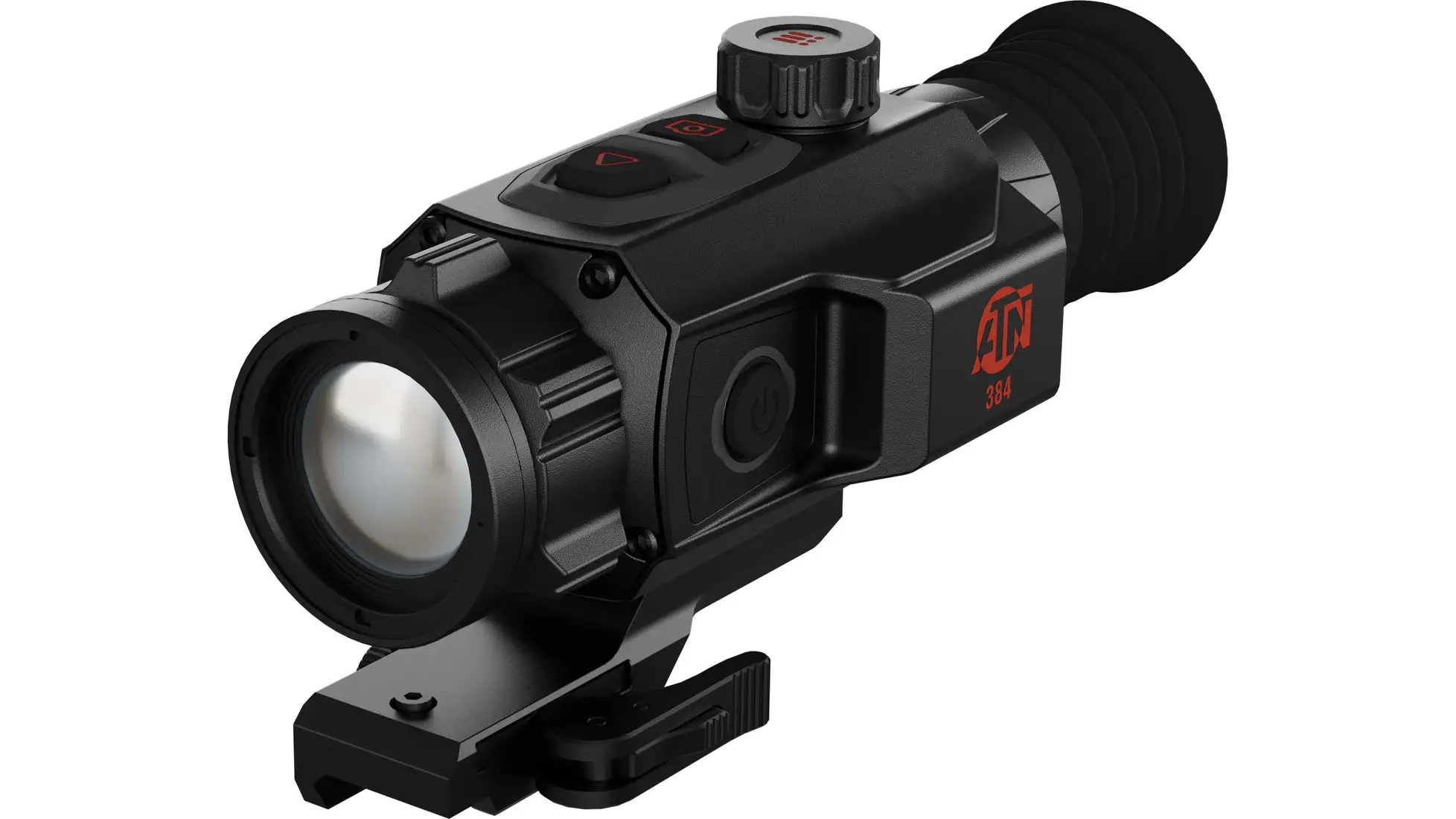
The only Mini here with the 384x288 sensor (18 mK NETD), behind a 25 mm lens, with a 1920x1080 display, a 2,300 m detection range and 1.16 lb, per the retailer. All 8 OpticsPlanet reviews are five stars and none carries a Verified Owner tag, so read them as a short, uniformly positive record. Reviewers mention the compact size and an easy-to-use scope; one says it “holds zero without issue”, another likes “how lightweight and easy it feels on the rifle”. We did not read an ATN page for this model. The price here is for the scope alone, around $1,300; the listing also sells kits that add a thermal monocular.
Mini 3.5-28x25 256x192 (TIWST6M225): more magnification on the 256 sensor
The 256x192 sensor (20 mK NETD) behind a 25 mm lens, with an 800x600 display, per the retailer. ATN's page for the Mini 256 3.5-28x gives 8x digital zoom, a 1,500 m detection range and 528 grams. All 8 OpticsPlanet reviews are five stars and none carries a Verified Owner tag. One reviewer calls the image “clear for its class”, another says it “delivers clear thermal imaging for close to mid-range shooting”. It runs around $800 for the scope alone; the listing also sells kits that add a thermal monocular.
Mini box contents and batteries: the retailer's package lists for the three Minis include a mount, one 18650 battery, a charger, a USB Type-C cable, a portable bag and a heated target for zeroing. ATN's pages for the 2-16x and 3.5-28x list two batteries in the box, and ATN's Mini manual lists 2x18650 batteries in the package while saying the scope runs on a single removable 18650. Confirm the battery count with the retailer before you order.
What else to consider
- ATN's previous generation? Our ATN Thor 5 review covers the Thor 5 LRF line.
- Want thermal for less? Our best thermal scope guide and best budget thermal scope cover other makers and price tiers.
- Hunting coyotes? See best thermal scope for coyote hunting for how field of view and resolution trade off when scanning.
- Built-in rangefinder from another maker? Read our AGM Rattler V3 review.
- Keep your day scope? A thermal clip-on mounts in front of it; see best clip-on thermal.
- Scanning without the rifle? See best thermal monoculars.
FAQ
What is the difference between the ATN ThOR 6 Elite and the ThOR 6 Mini?
The Elite 3-24x50 reviewed here is a 30mm-tube scope with a 640x512 sensor, a 50 mm lens and a 1920x1080 display, and its listing offers a version with a built-in laser rangefinder. The three ThOR 6 Mini listings we read are compact scopes on a Picatinny mount with a 256x192 or 384x288 sensor and a 15 or 25 mm lens, and none of them lists a rangefinder. The retailer lists the Elite at 1.83 lb and the three Minis at 1.1 to 1.16 lb.
What refresh rate does the ATN ThOR 6 have?
It depends on the model, and for the Elite the sources disagree. The retailer lists 50 Hz on all four listings we read. ATN's own page for the 640 3-24x without a rangefinder says 60Hz, and we did not read an ATN page for the rangefinder version, so we do not state a refresh rate as fact for the Elite LRF. For the Mini 2-16x, ATN's page and the retailer both give 50 Hz.
Does the ATN ThOR 6 Elite have a laser rangefinder?
Only one row of the listing does. The Elite 3-24x50 listing sells TIWST6650LRF with a laser rangefinder, the version priced on this page, and TIWST6650A, a standard version without one. ATN's page for the standard 640 3-24x says the rangefinder and ballistic calculator are available on LRF models only. ATN's ThOR 6 manual says the ballistic calculator takes inputs such as ballistic coefficient, initial velocity, sight height, temperature, air pressure, humidity and wind. We did not find a maximum ranging distance on the ATN pages we read.
What warranty does the ATN ThOR 6 carry?
ATN's ThOR 6 manual and its ThOR 6 Mini manual both give a warranty of five years from the original date of purchase, and a six month limited warranty on the rechargeable batteries supplied with the scope.
Is the ATN ThOR 6 hard to update or learn?
One verified owner of the Elite LRF could not update the firmware: the USB cable would not transfer the file and the WiFi method kept timing out. The same owner found the new turret controls frustrating at first. ATN's manuals say to make sure the battery is above 30% before you start an update. A verified owner of the Mini 2-16x also says the controls take practice.
Which ATN ThOR 6 should I buy?
The Elite 3-24x50 LRF if you take longer shots at night and want the rangefinder and ballistic calculator in the scope. The standard Elite row if you want the 640x512 sensor and do not need ranging. The Mini 2.5-20x25 if you want a compact scope with the 384x288 sensor. The Mini 2-16x15 or 3.5-28x25 if your shots are close and you want a lighter, less expensive ThOR 6; one 2-16x reviewer found its image unclear past about 100 to 150 yards.
More: best thermal scopes · ATN Thor 5 review · thermal scopes for coyote hunting · thermal vs night vision.