The best thermal monoculars in 2026
Our verdict for 2026: the ATN BlazeTrek 325 Gen 6 (around $950) is the best thermal monocular overall, with the largest lens of the three ATN picks (25mm) for reach and a 384x288 sensor for detail. The BlazeSeeker 207 (around $410) is the budget pick and the widest scanner, and the BlazeTrek 619 (around $1,200) has the highest resolution of the three ATN picks (640x512) when detail matters more than distance. Want the distance read out too? Our rangefinder section covers the Pulsar Oryx LRF XG35 (Pulsar has paid us for other content; disclosure in that section) and the lighter Nocpix LUMI LRF H35R.
The 3 ranked picks all run ATN's 6th Generation engine. The Gen 6 line is new, so between them the ranked picks carry 22 owner reviews. Prices verified November 15, 2026; confirm the current price on the retailer page.
A thermal monocular is a handheld heat spotter: you scan a field or treeline, find the warm bodies, and decide what to do next, all in total darkness. The 3 ranked picks below cover the real spread, from a wide-view budget scanner to a 640x512 sensor. One thing to get straight before you shop: the lens sets how far you detect, and the sensor sets how much detail you see. They are not the same axis.
How these picks were made: a research-based roundup comparing published specifications, sensor resolution and sensitivity, lens size and detection range, owner reviews and pricing on OpticsPlanet. Scores are our editorial opinion, not a hands-on test of every model, and owner ratings and editorial designations are shown attributed to their source. Confirm current price on the retailer page. See how we evaluate.
Quick comparison
| Category | Pick | Spec | Price |
|---|---|---|---|
| Best overall | ATN BlazeTrek 325 Gen 6 2.8-22x25mm | 2.8-22x · 384x288 · 158 x 57 x 50 mm, 320 g | around $950 |
| Best budget | ATN BlazeSeeker 207 Gen 6 1.2-9.6x7mm | 1.2-9.6x · 256x192 · 149 x 57 x 50 mm, 270 g | around $410 |
| Best image detail | ATN BlazeTrek 619 Gen 6 1.5-12x19mm | 1.5-12x · 640x512 · 158 x 57 x 50 mm, 320 g | around $1,200 |
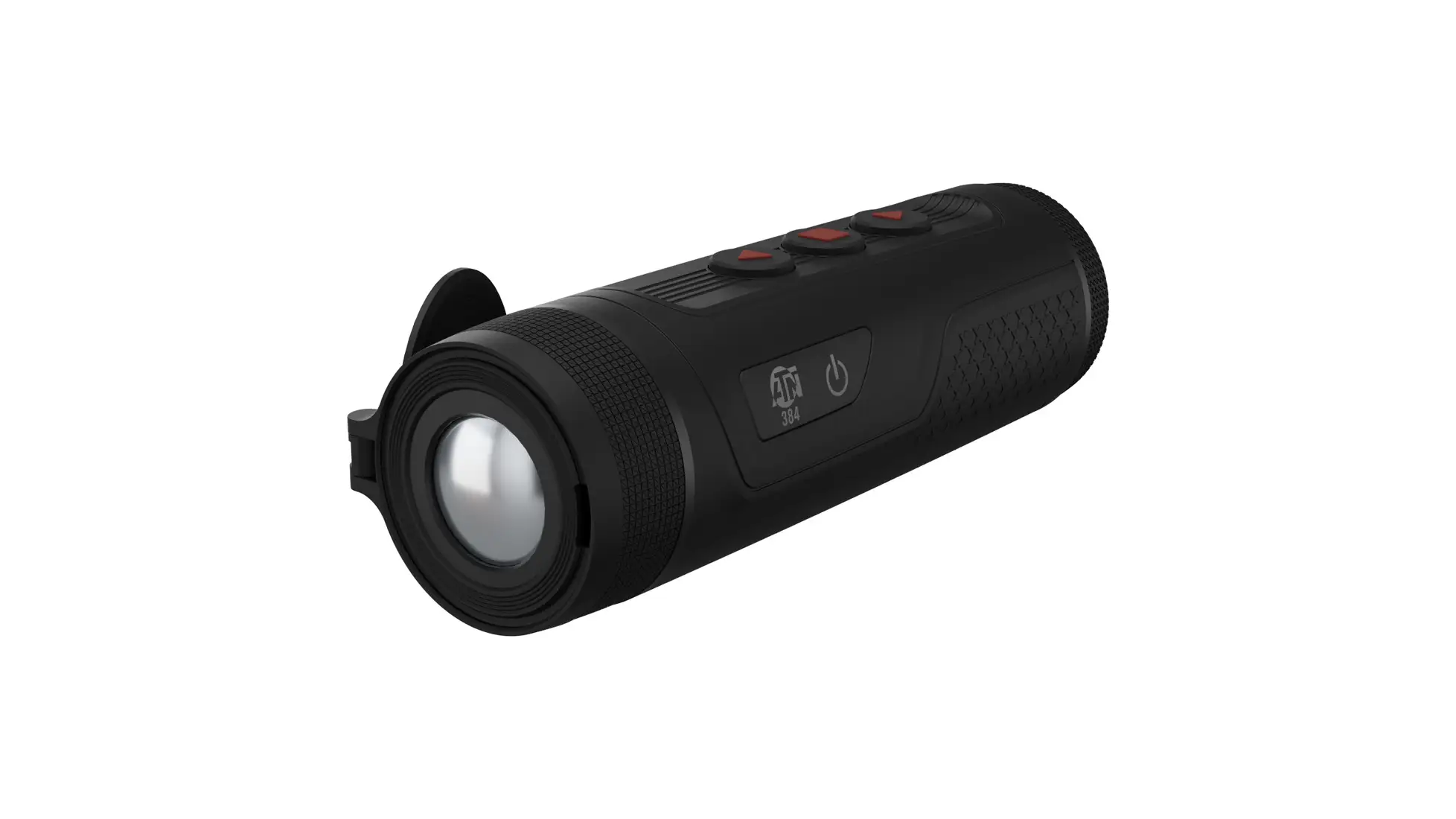
Best overall: ATN BlazeTrek 325 Gen 6 2.8-22x25mm
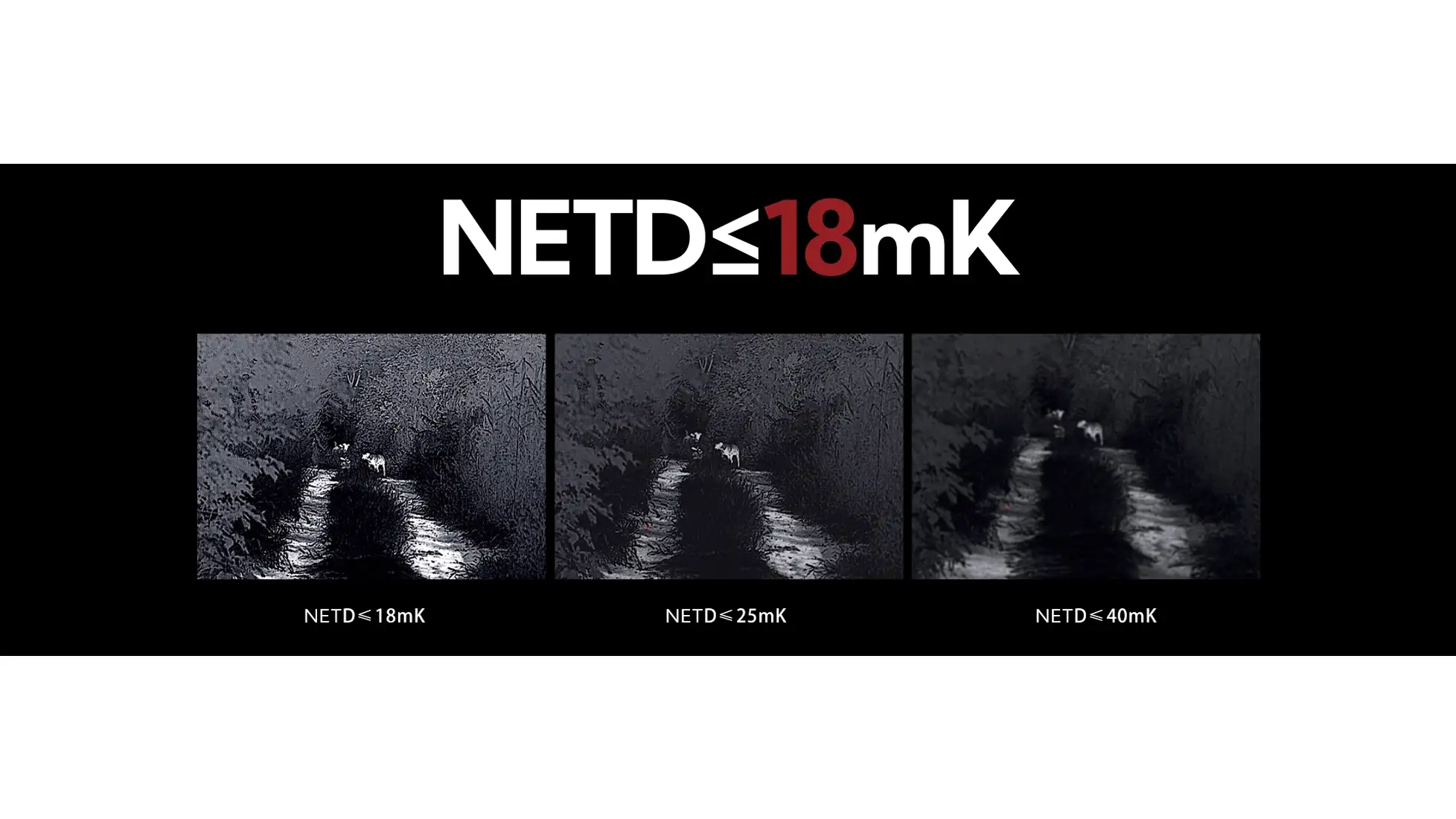
2.8-22x · 25mm germanium · 384x288 sensor · 18 mK or less NETD · 50 Hz · 800x600 OLED · 1,300 m detection · about 8 hr · IP67 · 320 g
around $950exact price on OpticsPlanet
This is the thermal monocular to buy if you want one device that both finds heat and tells you what it is. Its 25mm germanium lens is the largest of the three ATN picks, which is what buys reach: ATN rates detection to 1,300 meters, far beyond the little 207. Pair that with a 384x288 sensor at 18 mK or less and a 50 Hz refresh, and warm animals separate cleanly from cool ground at distance. ATN's 6th Generation engine adds SharpIR processing that sharpens edges in real time, an 800x600 OLED display, six color palettes, hot-point tracking that flags the warmest object in view, and manual focus from one metre to infinity. It weighs 320 grams and is IP67 sealed. ATN rates the built-in battery at about eight hours, and it takes external USB-C power for an all-night sit.
Pros
- The largest lens of the three ATN picks (25mm germanium), which is what delivers the reach: ATN rates detection to 1,300 metres
- A 384x288 sensor at 18 mK or less with a 50 Hz refresh and an 800x600 OLED, so warm animals separate cleanly at distance
- SharpIR AI processing, six colour palettes, hot-point tracking and manual focus from 1 m to infinity
- Compact and field-ready: 320 g, IP67 sealed, about 8 hours of runtime (ATN rated) and USB-C external power for long sits
Cons
- A short owner record so far, since the Gen 6 line is new, so the long-term track record is still thin
- Its 2.8x base magnification gives a narrower field of view than the 207, so it is a spotter first and a wide scanner second
- Magnification above the 2.8x base is digital zoom, which softens the image as you push it
- One owner reports getting no manual (ATN customer service took care of it)
Best for: the hunter or observer who wants one handheld that scans and then identifies what it found, at real distance, without stepping up to the 640x512 BlazeTrek 619. If you only need close-range scanning, the 207 costs less; if you want the most image detail of the three ATN picks, the 619 has a 640x512 sensor.
Key specifications
| Manufacturer | ATN |
|---|---|
| Magnification | 2.8-22x (2.8x base, digital zoom) |
| Objective | 25 mm germanium |
| Sensor resolution | 384x288 pixels |
| NETD | 18 mK or less (ATN) |
| Refresh rate | 50 Hz |
| Display | 800x600 OLED |
| Field of view | 10.9 x 8.2 degrees (retailer) |
| Detection range | Up to 1,300 m (ATN rated) |
| Battery | Built-in rechargeable lithium-ion, about 8 hr (ATN rated), USB-C external power |
| Operating temperature | -30°C to 55°C (ATN) |
| Storage and app | 32 GB, Wi-Fi, ATN Connect 6 app (ATN) |
| Sealing | IP67 |
| Size | 158 x 57 x 50 mm (ATN) |
| Weight | 0.7 lb (320 g) |
| Warranty | 5-year limited warranty (ATN's Gen 6 manual) |
“This is my first Thermo device. It is compact and has great range for the price. I had a couple of questions about it and their customer service was great. Would definitely buy an ATN again.”
Scott (IL) via OpticsPlanet
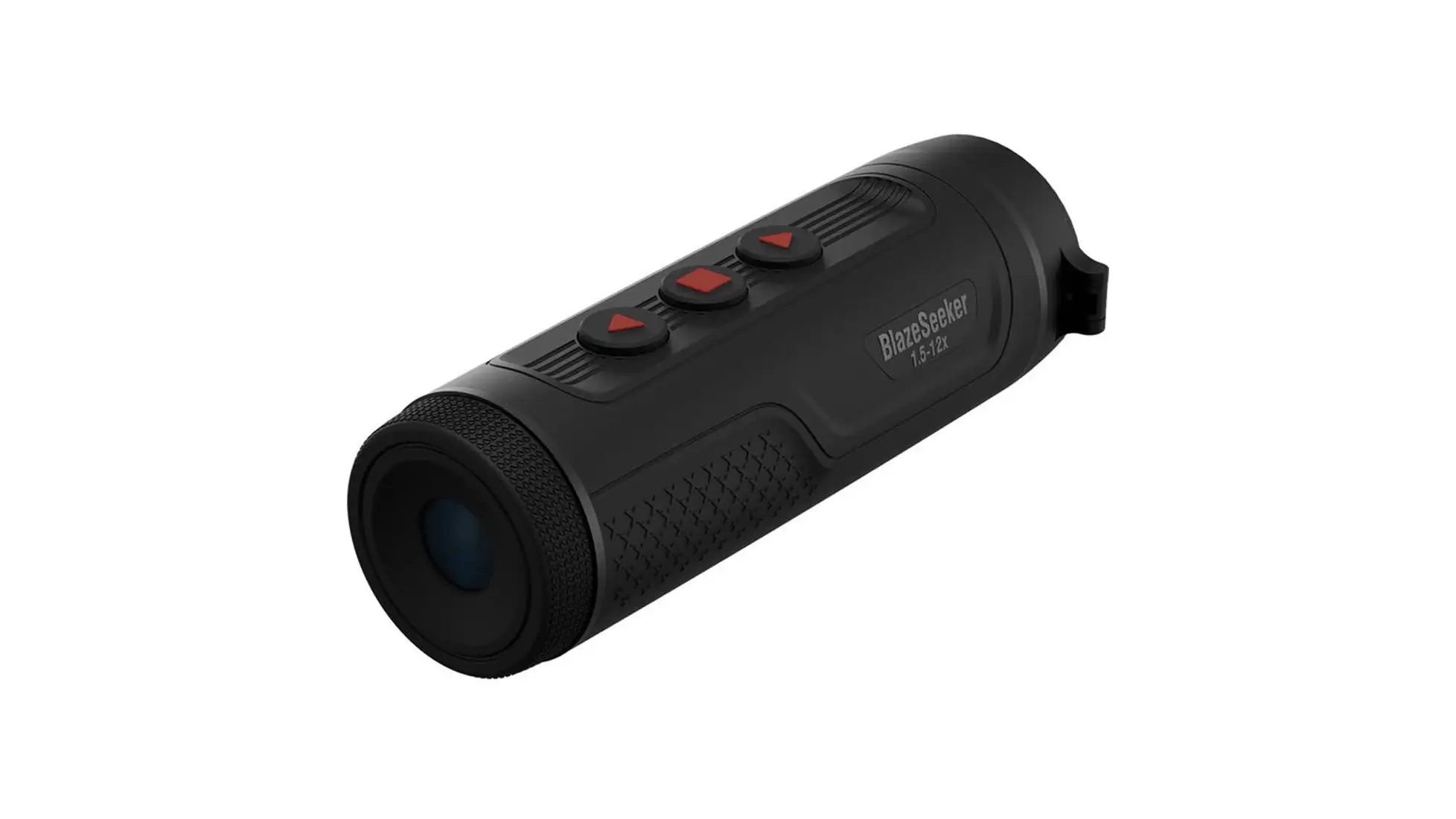
Best budget: ATN BlazeSeeker 207 Gen 6 1.2-9.6x7mm
1.2-9.6x · 7mm germanium · 256x192 sensor · 20 mK or less NETD · 50 Hz · wide 24 x 18 degree view · 345 m detection · about 8 hr · IP67 · 270 g
around $410exact price on OpticsPlanet
This is the lowest-priced honest way into thermal on this page, and the widest-view scanner on this page. The 7mm lens and low 1.2x base give it a wide 24 by 18 degree field of view, so you sweep a treeline or a back field fast, which is exactly what a handheld is for. It runs the same 6th Generation engine as the pricier ATN picks: a 256x192 sensor at 20 mK or less, a 50 Hz refresh, the same 800x600 OLED display, SharpIR processing, six palettes and hot-point tracking. At 270 grams it is the lightest here and it is IP67 sealed. ATN rates the built-in battery at about eight hours, and it charges over USB-C. Owners are refreshingly clear about it: one sums it up as "An entry into thermal at the lowest price" and praises the smooth motion, the app for pulling photos and video, and the streaming function. Know the ceiling: 345 metres of rated detection means close range.
Pros
- The lowest price here, the honest entry point into thermal
- The widest horizontal field of view of any pick (24 by 18 degrees; the 619 is close at 22.8 by 18.3) and the lowest 1.2x base, which makes it the best pure scanner
- The same 6th Gen engine as the pricier ATN picks: 50 Hz, an 800x600 OLED, SharpIR processing, six palettes and hot-point tracking
- The lightest at 270 g, IP67 sealed, about 8 hours of runtime (ATN rated) and USB-C charging; the app handles photos, video and streaming well
Cons
- A 256x192 sensor and just 345 m of rated detection, so this is a close-range tool, not a long-distance spotter; one OpticsPlanet owner, pleased with the clarity for the price, judges that "this is probably only good for a bout 200 yfds or less to see whats going"
- An owner reports the digital zoom is only really usable at the second (2.4x) step and gets very grainy past it
- Connecting to the app is fiddly (the device-generated Wi-Fi password confuses 0 and O), and the AI assistant feature did not launch for one owner
- A short owner record so far, since the Gen 6 line is new
Best for: a first thermal, a dedicated scanner or a back-of-the-truck spotter for close-range work inside a few hundred metres, at the lowest price. Step up to the BlazeTrek 325 when you need to identify what you found at distance.
Key specifications
| Manufacturer | ATN |
|---|---|
| Magnification | 1.2-9.6x (1.2x base, digital zoom) |
| Objective | 7 mm germanium |
| Sensor resolution | 256x192 pixels |
| NETD | 20 mK or less (ATN) |
| Refresh rate | 50 Hz |
| Display | 800x600 OLED |
| Field of view | 24 x 18 degrees (widest horizontal view here) |
| Detection range | Up to 345 m (ATN rated) |
| Battery | Built-in rechargeable lithium-ion, about 8 hr (ATN rated), USB-C |
| Operating temperature | -30°C to 55°C (ATN) |
| Sealing | IP67 |
| Size | 149 x 57 x 50 mm (ATN) |
| Weight | 0.6 lb (270 g) |
| Warranty | 5-year limited warranty (ATN's Gen 6 manual) |
“As someone with no thermal, I just wanted something entry-level and affordable that would be a starting point ... This was pretty much the lowest price I could find, and I like the idea of USB-C recharging ... But the app is very handy once connected and works well. ... Zoom only seems useful to me on the 2nd 2.4x level, it gets very grainy beyond that. ... An entry into thermal at the lowest price.”
LearninThermal, verified owner (OH) via OpticsPlanet
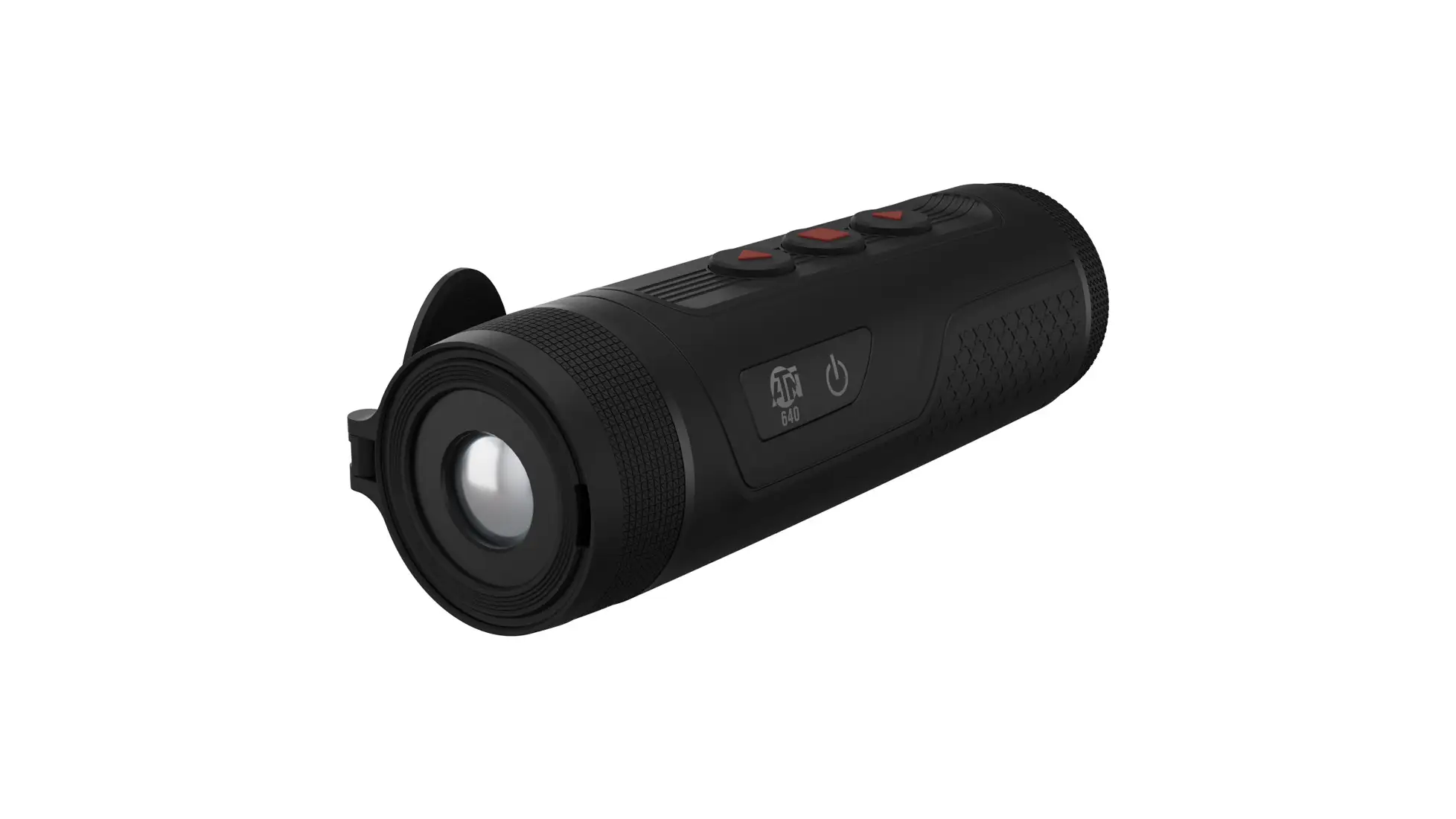
Best image detail: ATN BlazeTrek 619 Gen 6 1.5-12x19mm
1.5-12x · 19mm germanium · 640x512 sensor · 18 mK or less NETD · 50 Hz · 800x600 OLED · about 6.5 hr · IP67 · 320 g
around $1,200exact price on OpticsPlanet
This is the pick when image quality matters more than reach. Its 640x512 sensor is the highest resolution of the three ATN picks, well above the 256x192 of the 207 and the 384x288 of the 325, so the picture holds detail that the smaller sensors simply cannot resolve, at 18 mK or less and 50 Hz. Note the honest trade: it pairs that big sensor with a smaller 19mm lens and a low 1.5x base, so it is a wide, detailed scanner rather than a long-reach spotter, and the 25mm-lens BlazeTrek 325 actually sees farther (ATN rates the 619 to 1,000 m and the 325 to 1,300 m) despite its lower resolution. It shares the 6th Gen engine, the 800x600 OLED, SharpIR processing and hot-point tracking, weighs 320 grams and is IP67 sealed. One owner sums it up: impressive clarity for its size, very good in total darkness and tough weather, perfect for quick scanning and spotting at close to mid range.
Pros
- A 640x512 sensor, the highest resolution of the three ATN picks, for detail the 256 and 384 sensors cannot resolve
- 18 mK or less at 50 Hz with an 800x600 OLED, so the image stays clean and smooth while scanning
- A low 1.5x base with that big sensor makes it a wide and detailed scanner, strong in total darkness and bad weather, per one owner
- Compact and sealed: 320 g, IP67, the same 6th Gen SharpIR processing and hot-point tracking as the rest of the line
Cons
- The highest price of the three ATN picks
- Its 19mm lens is smaller than the BlazeTrek 325's 25mm, so despite the bigger sensor it does not reach as far; this is a detail tool, not a distance tool
- A short owner record so far, since the Gen 6 line is new
- Magnification above the 1.5x base is digital zoom, which softens the image as you push it
Best for: the buyer who wants the cleanest, most detailed thermal picture of the three ATN picks for scanning and identifying at close to mid range, and who is willing to pay for resolution. If you need to detect and identify farther out, the 25mm-lens BlazeTrek 325 reaches farther for less money.
Key specifications
| Manufacturer | ATN |
|---|---|
| Magnification | 1.5-12x (1.5x base, digital zoom) |
| Objective | 19 mm germanium |
| Sensor resolution | 640x512 pixels (highest of the three ATN picks) |
| NETD | 18 mK or less (ATN) |
| Refresh rate | 50 Hz |
| Display | 800x600 OLED |
| Field of view | 22.8 x 18.3 degrees (retailer) |
| Detection range | Up to 1,000 m (ATN rated) |
| Battery | Built-in rechargeable lithium-ion, about 6.5 hr (ATN rated), USB-C external power |
| Operating temperature | -30°C to 55°C (ATN) |
| Storage and app | 32 GB, Wi-Fi, ATN Connect 6 app (ATN) |
| Sealing | IP67 |
| Size | 158 x 57 x 50 mm (ATN) |
| Weight | 0.7 lb (320 g) |
| Warranty | 5-year limited warranty (ATN's Gen 6 manual) |
“The ATN BlazeTrek 619 Gen 6 is a great lightweight thermal monocular that’s easy to carry and quick to use in the field. The image clarity is impressive for its size, and it performs very well in total darkness and tough weather. The controls are simple, battery life is solid, and it’s perfect for quick scanning and spotting at close to mid-range distances.”
Alex R. (ND) via OpticsPlanet
Thermal monoculars with a rangefinder
A built-in laser rangefinder (LRF) adds an exact distance to the heat you find, so you range the animal through the same eyepiece instead of carrying a second device. It earns its weight and cost if you shoot beyond close range and want the number before you switch to the rifle; for scanning a back field it does not. Pick the Pulsar Oryx LRF XG35 if laser reach matters most: it has the longer published reach of the two, Pulsar's 1,500 m with plus or minus 1 m accuracy against Nocpix USA's 875 yards for the Lumi. Pick the Nocpix LUMI LRF H35R if you want the lighter, lower-priced unit with the 640x512 sensor and F0.9 lens.
| Spec | Pulsar Oryx LRF XG35 | Nocpix LUMI LRF H35R |
|---|---|---|
| Sensor | 640x480, 12 micron | 640x512, 12 micron |
| NETD (maker) | under 20 mK (system) | 18 mK or less |
| Lens | 35 mm F1.0 | 35 mm F0.9 |
| Laser range (maker) | up to 1,500 m, plus or minus 1 m (Pulsar) | 875 yards (Nocpix USA) |
| Battery | built-in plus removable, 12 hr rated | replaceable 18650 (Nocpix) |
| Weight (maker) | 0.5 kg (Pulsar) | 13.58 oz (Nocpix) |
| Storage | 64 GB | 32 GB |
| Warranty (maker) | 3 years, plus 2 with registration (Pulsar USA; US purchases, conditions apply) | 5 years (Nocpix) |
| Owner record | 2 OpticsPlanet reviews, plus another retailer and a forum | no OpticsPlanet reviews; Reddit and forum owners |
| Price | around $2,800 | around $2,400 |
Disclosure: Pulsar is a paying sponsor of OpticVerdict, for sponsored content about other Pulsar products. This listing is not sponsored and Pulsar did not pay for it: the Oryx LRF XG35 is here because it met our owner-record bar of at least three owners and one verbatim quote, the same bar every brand has to meet. How sponsored content works here: our affiliate and sponsored-content disclosure.

Best for ranging: Pulsar Oryx LRF XG35 2.5-20x35mm
2.5-20x · 35mm F1.0 · 640x480 sensor · under 20 mK system NETD · 50 Hz · 1024x768 AMOLED · laser rangefinder to 1,500 m · 1,800 m detection · 12 hr · IP67 · 0.5 kg
around $2,800exact price on OpticsPlanet
Pick the Oryx if the rangefinder is the reason you are shopping. Pulsar publishes the full laser specification: a maximum of 1,500 metres, accuracy of plus or minus 1 metre, a class 1 laser at 905 nm, and a scan mode alongside single measurements, read in metres or yards. Behind it sits a 640x480 sensor with 12 micron pixels, a system NETD under 20 mK, a 35mm F1.0 lens and a 1024x768 AMOLED display at 50 Hz, and Pulsar rates detection to 1,800 metres. Power comes from a built-in battery plus a removable pack, rated for 12 hours together, and it records to 64 GB of internal memory and connects over Wi-Fi to Pulsar's Stream Vision 2 app. The owner record is short but positive: both OpticsPlanet reviewers rate it 5 of 5, and a first-time owner on The Stalking Directory forum calls it "What a piece of kit." It is the heavier and the higher-priced of the two rangefinder picks.
Pros
- The laser specification is published in full: up to 1,500 m, plus or minus 1 m accuracy, scan and single-shot modes, metres or yards (Pulsar rated)
- A 640x480 sensor with 12 micron pixels, a system NETD under 20 mK, 50 Hz and a 1024x768 AMOLED display
- Two power sources: a built-in battery plus a removable 4,900 mAh pack, 12 hours together (Pulsar rated), and external power over USB-C
- 64 GB of internal memory, Wi-Fi to the Stream Vision 2 app, a magnesium alloy body, IP67 sealing and a 1/4 inch tripod socket
Cons
- The heavier and higher-priced of the two rangefinder picks: Pulsar lists 0.5 kg, against 13.58 oz in Nocpix's manual for the Lumi
- Slightly fewer sensor pixels (640x480) than the Lumi's 640x512, and an F1.0 lens against the Lumi's F0.9
- Magnification above the 2.5x base is digital (Pulsar lists 8x digital zoom), which softens the image as you push it
- A thin owner record: two short OpticsPlanet reviews, two short reviews on another retailer and one forum post, none of which reports on laser accuracy or battery life
Best for: the hunter who wants the distance from the same device that found the heat, with the longer published laser reach of the two rangefinder picks: Pulsar's 1,500 m against Nocpix USA's 875 yards for the Lumi. If weight or price matters more than reach, the Lumi below is lighter and costs less.
Key specifications
| Manufacturer | Pulsar |
|---|---|
| Magnification | 2.5-20x (2.5x base, 8x digital zoom) |
| Objective | 35 mm F1.0 |
| Sensor resolution | 640x480 pixels, 12 micron |
| NETD | Under 20 mK system, under 40 mK sensor (Pulsar rated) |
| Refresh rate | 50 Hz |
| Display | 1024x768 AMOLED |
| Field of view | 12.5 degrees, 21.9 m at 100 m |
| Detection range | Up to 1,800 m (Pulsar rated) |
| Laser rangefinder | Up to 1,500 m, plus or minus 1 m, 905 nm class 1 laser, scan and single modes (Pulsar rated) |
| Eye relief | 15 mm (Pulsar; the retailer lists 14 mm) |
| Battery | Built-in 3,200 mAh plus removable 4,900 mAh Li-ion, 12 hr together at 22 C (Pulsar rated) |
| Storage and app | 64 GB internal, Wi-Fi, Stream Vision 2 |
| Sealing | IP67, -25 to +40 C operating |
| Size and weight | 179 x 52 x 77 mm, 0.5 kg (17.64 oz) |
| Warranty | 3 years, plus 2 more with registration (Pulsar USA; US purchases, conditions apply) |
“This is my first thermal so I don't have any experience to compare it against, but I love it. The only thing I don't like is that Pulsar makes the customer print a manual.”
Bill, Verified Owner (NC) via OpticsPlanet
Lighter LRF pick: Nocpix LUMI LRF H35R 2.5-20x35mm
2.5-20x · 35mm F0.9 · 640x512 sensor · 18 mK or less NETD · 50 Hz · integrated 875 yard laser rangefinder · 1,750 yards detection · replaceable 18650 battery · 32 GB · IP67 · 147 x 47 x 74 mm
around $2,400exact price on OpticsPlanet
Pick the LUMI LRF H35R if you want the smaller, lighter rangefinder monocular with more sensor pixels and a faster F0.9 lens on paper. Nocpix lists a 640x512 sensor with 12 micron pixels, NETD of 18 mK or less, 50 Hz and a fast 35mm F0.9 lens, with a 12.5 by 9.4 degree field of view. It measures 147 by 47 by 74 mm, runs on a replaceable 18650 battery, and records photo and video with sound to 32 GB. The evidence behind it is different from the Oryx: OpticsPlanet has no reviews of it yet, so the owner record comes from five self-described owners on Reddit and The Stalking Directory forum, and four of them praise its size, handling or image. One Reddit owner, comparing it with the Hikmicro Lynx LQ35 3.0, writes that it "has more detailed image than the lynx because of the F0.9 lens." Nocpix USA lists an "Integrated 875 yard LRF" for the H35R and detection to 1,750 yards; the Oryx's published laser reach is the longer of the two.
Pros
- A 640x512 sensor with 12 micron pixels, NETD of 18 mK or less and a fast F0.9 lens (Nocpix rated); one Reddit owner credits that lens for a more detailed image than the Hikmicro Lynx
- The lighter and lower-priced of the two rangefinder picks: 13.58 oz and 147 x 47 x 74 mm (Nocpix)
- A replaceable 18650 battery, so a spare goes in a pocket instead of the whole device on a charger
- 32 GB of storage for photo and video with sound, and IP67 sealing
Cons
- A shorter published laser reach than the Oryx: Nocpix USA lists an integrated 875 yard rangefinder for the H35R, against Pulsar's 1,500 m for the Oryx
- No OpticsPlanet reviews yet: the owner record is five self-described owners on Reddit and The Stalking Directory forum, outside the retailer
- One owner says photos and video taken from the device do not do justice to the view through the eyepiece
- A push-on lens cap rather than a hinged one, the one minor gripe of a forum owner who moved over from a Pulsar XQ38F
Best for: the buyer who scans more than they range and wants the smaller, lighter device with more sensor pixels and a faster F0.9 lens on paper. If laser reach is the deciding spec, the Oryx above has the longer published figure (Pulsar's 1,500 m against Nocpix USA's 875 yards).
Key specifications
| Manufacturer | Nocpix |
|---|---|
| Magnification | 2.5-20x |
| Objective | 35 mm F0.9 |
| Sensor resolution | 640x512 pixels, 12 micron |
| NETD | 18 mK or less (Nocpix rated) |
| Refresh rate | 50 Hz |
| Field of view | 12.5 x 9.4 degrees, 22 x 16 m at 100 m |
| Detection range | 1,750 yards (Nocpix USA) |
| Laser rangefinder | Integrated 875 yard LRF (Nocpix USA) |
| Exit pupil | 10 mm (Nocpix) |
| Battery | Replaceable 18650 (Nocpix) |
| Storage | 32 GB, photo and video with microphone |
| Sealing | IP67 |
| Size and weight | 147 x 47 x 74 mm, 13.58 oz (Nocpix) |
| Warranty | 5 years (Nocpix manual and Nocpix USA's 5x5 warranty) |
“I decided to go with the Nocpix Lumi H35R and am very impressed with the clarity, size, weight, features etc.”
rspangler371, self-described owner, via Reddit
How to choose a thermal monocular
Two specs decide almost everything, and they are easy to confuse:
- Lens size sets detection range. ATN's specs give all 3 ranked picks the same 12 micron sensor pitch, and ATN's detection ratings rise with the lens: 7 mm rated to 345 m, 19 mm to 1,000 m, 25 mm to 1,300 m. This is the distance axis. Detection is not identification: ATN's blog defines detection range as the distance at which the optic "registers a heat signature" and says identification happens "at a fraction of it". ATN, Pulsar and Nocpix publish no recognition or identification distance for these models in the specs and manuals we read, and only Pulsar's manual names the target behind its figure ("Deer-Sized Objects").
- Sensor resolution sets detail. Higher sensor resolution shows more detail at the same distance. This is the clarity axis, and it is why the 640x512 BlazeTrek 619 does not out-range the 325 despite the bigger sensor.
- Base magnification and field of view. A low base (the 207's 1.2x) gives a wide view and finds heat fastest. Anything above the base is digital zoom, which always softens the image, so do not buy on the top zoom number.
- Sensitivity (NETD). A lower mK figure separates small temperature differences better. ATN rates the 325 and 619 at 18 mK or less and the 207 at 20 mK or less; all are good enough to make a warm animal pop from cool ground.
- Refresh rate. Every monocular here runs at 50 Hz by its maker's spec, so refresh rate does not separate them; ATN's blog sums it up: "50 Hz is smooth."
- Battery and warranty. ATN's batteries are built in, while the Nocpix LUMI takes a replaceable 18650. Warranty terms differ by maker: ATN's Gen 6 manuals and Nocpix's LUMI manual print 5 years, while Pulsar USA's 3 years grow by 2 more only if you register the device (US purchases; Pulsar's conditions apply).
- Glass blocks thermal. You cannot scan through a window: Pulsar's Oryx manual and Nocpix's LUMI manual both list glass as a reason a target disappears, and ATN's blog says thermal cannot see through glass.
Size and weight, as each maker prints them:
| Model | Size (mm) | Weight | Source |
|---|---|---|---|
| ATN BlazeSeeker 207 Gen 6 | 149 x 57 x 50 | 270 g with battery | ATN |
| ATN BlazeTrek 325 Gen 6 | 158 x 57 x 50 | 320 g with battery | ATN |
| ATN BlazeTrek 619 Gen 6 | 158 x 57 x 50 | 320 g with battery | ATN |
| Pulsar Oryx LRF XG35 | 179 x 52 x 77 | 0.5 kg with battery | Pulsar manual |
| Nocpix LUMI LRF H35R | 147 x 47 x 74 | 13.58 oz | Nocpix site (size), manual (weight) |
The BlazeSeeker 207 is the lightest of these and the LUMI the shortest.
Need a scope to shoot with rather than a handheld? See our best thermal scopes, the best budget thermal scope picks at every price tier and the best thermal scope for coyote hunting. Weighing the technology? Read thermal vs night vision. Want one thermal that scans by hand and also clips in front of your day scope? Read our NiteHog Viper 35 review. Want a helmet-mounted thermal, or a 1x thermal you can walk with, rather than a magnified handheld? Read our Armasight Sidekick 320 review. Looking at AGM's handheld line? Our AGM Taipan V2 review compares the 19-320, 10-256, 15-384 and 19-384. Want a 640x480 handheld that also ranges the animal and gives you a hold for your own scope? Read our RIX Titan T6 review. Want a 640x512 handheld with the rangefinder built into the objective lens? Read our Nocpix Vista H35R review.
FAQ
What is the best thermal monocular?
The ATN BlazeTrek 325 Gen 6 is the best thermal monocular for most buyers: its 25mm lens and 384x288 sensor give the best mix of reach (ATN rates detection to 1,300 metres) and detail. The BlazeSeeker 207, under $500, is the lowest-priced way in and the widest scanner, and the BlazeTrek 619 has the highest resolution of the three ATN picks (640x512) if image detail matters more than distance. The pick blocks above carry the current figure for each.
What is a good cheap thermal monocular?
The ATN BlazeSeeker 207 Gen 6, under $500, is the lowest-priced thermal monocular here. It runs the same 6th Generation engine as ATN's pricier models (a 50 Hz refresh, an 800x600 OLED display, SharpIR processing and hot-point tracking) with a 256x192 sensor and a wide 24 by 18 degree field of view for scanning. Its ceiling is range: ATN rates detection to 345 metres, so treat it as a close-range scanner rather than a long-distance spotter.
Does a bigger sensor mean it sees farther?
No, and this trips people up. In this lineup, ATN's detection ratings follow the lens, while sensor resolution drives how much detail you see. The BlazeTrek 619 has a 640x512 sensor but a 19mm lens, so it shows a more detailed picture; the BlazeTrek 325 has a lower 384x288 sensor but a larger 25mm lens, so it detects farther (1,300 m rated). Choose the lens for distance and the sensor for detail.
What is a thermal monocular used for?
A thermal monocular is a handheld thermal spotter. Hunters scan fields and treelines with it for hogs, coyotes and deer before shouldering a rifle, which is faster and safer than scanning with a weapon-mounted optic. It also serves property checks, search work and wildlife observation, and the Oryx LRF XG35 mounts on a tripod through its 1/4 inch socket. Many night hunters pair one for scanning with a thermal scope for the shot; see our best thermal scopes guide.
Is a thermal monocular the same as a thermal imaging camera?
Not quite: makers build them for different jobs. HIKMICRO's LYNX manual says its thermal monocular is mainly applied to scenarios such as hunting, searching and rescuing, hiking and travel. Thermal inspection cameras are built to measure temperature: HIKMICRO says its B10S handheld camera is designed for temperature measurement to find invisible faults, and FLIR aims its Exx-Series at predictive maintenance, electrical and building inspection. FLIR's smartphone models connect to an iOS or Android device, wirelessly or through a direct port.
Can you use a thermal monocular during the day?
Yes. Pulsar's manual says the Oryx LRF monoculars are designed for use both at night-time and during the day, and Nocpix's thermal monocular FAQ calls thermal imaging safe and effective for daytime use. What to avoid is the sun: ATN's Gen 6 manuals say "Never aim the lens at the sun or intense light sources, as this can permanently damage the sensor." Nocpix's LUMI manual likewise warns against pointing the objective lens at the sun.
Is it legal to hunt with a thermal monocular?
It depends on the state. The Missouri Department of Conservation's furbearer page says you may not possess night vision or thermal imagery equipment while carrying a firearm, bow or other implement used to take wildlife, except landowners killing feral swine on their property and coyote hunting from Jan 1 through Sept 30, outside the spring turkey season. Pennsylvania's 2025-26 digest lets furbearer hunters use handheld and sporting-arm mounted night-vision and infrared (thermal) optics. Check your state wildlife agency's current rules.
How far does the rangefinder on a thermal monocular reach?
It depends on the model. Pulsar rates the Oryx LRF XG35's laser to a maximum of 1,500 metres with plus or minus 1 metre accuracy, a class 1 laser at 905 nm, with a scan mode and single measurements in metres or yards. Nocpix USA lists an "Integrated 875 yard LRF" for the LUMI LRF H35R. (Pulsar is a paying sponsor of ours for content about other Pulsar products; the Oryx listing here is not sponsored.)
What do owners say about the Pulsar Oryx LRF XG35 and the Nocpix LUMI LRF H35R?
Both owner records are positive and short. The Oryx has two 5 of 5 reviews on OpticsPlanet, two on another retailer and a forum post; none reports on laser accuracy or battery life. The Lumi has no OpticsPlanet reviews; of five self-described owners on Reddit and The Stalking Directory forum, four praise its size, handling or image. One Reddit owner whose rangefinder seemed to stop later called it user error: they had not known it had single and continuous modes.
Related: best thermal scopes · best thermal binoculars · thermal vs night vision · best hunting binoculars.