ATN Thor 5 review: the 1280 XD LRF, and when the 640 is enough
Our verdict: 4.2/5. The ATN Thor 5 XD LRF 4-40x is a high-resolution smart thermal scope for hunters who need to identify an animal far out in open country. Its 1280x1024 sensor carries a little over four times the pixels of a 640x480 scope, and ATN builds a laser rangefinder (rated by ATN up to 1,000 yards), a ballistic calculator, One Shot Zero, recoil-activated video and a battery ATN rates at 10 hours into the same body. The costs are real: a price in the thousands, a listed weight of 2.5 lb, a learning curve that reviewers describe, and scattered reliability reports, including one 2-20x reviewer who sent it for warranty repair twice. If your shots are close, the 640 LRF 3-24x keeps the same core smart features for much less. For ATN's sixth generation, see our ATN ThOR 6 review.
OpticsPlanet shoppers rate the 4-40x 4.8/5 across 96 reviews, but most of those reviews thank ATN's customer service rather than describe the scope (see below). It runs around $5,000. The XD 3-30x runs around $4,700, the XD 2-20x around $4,100, and the 640 LRF 3-24x around $3,100. Check price and availability on OpticsPlanet; confirm the current price on the retailer page.
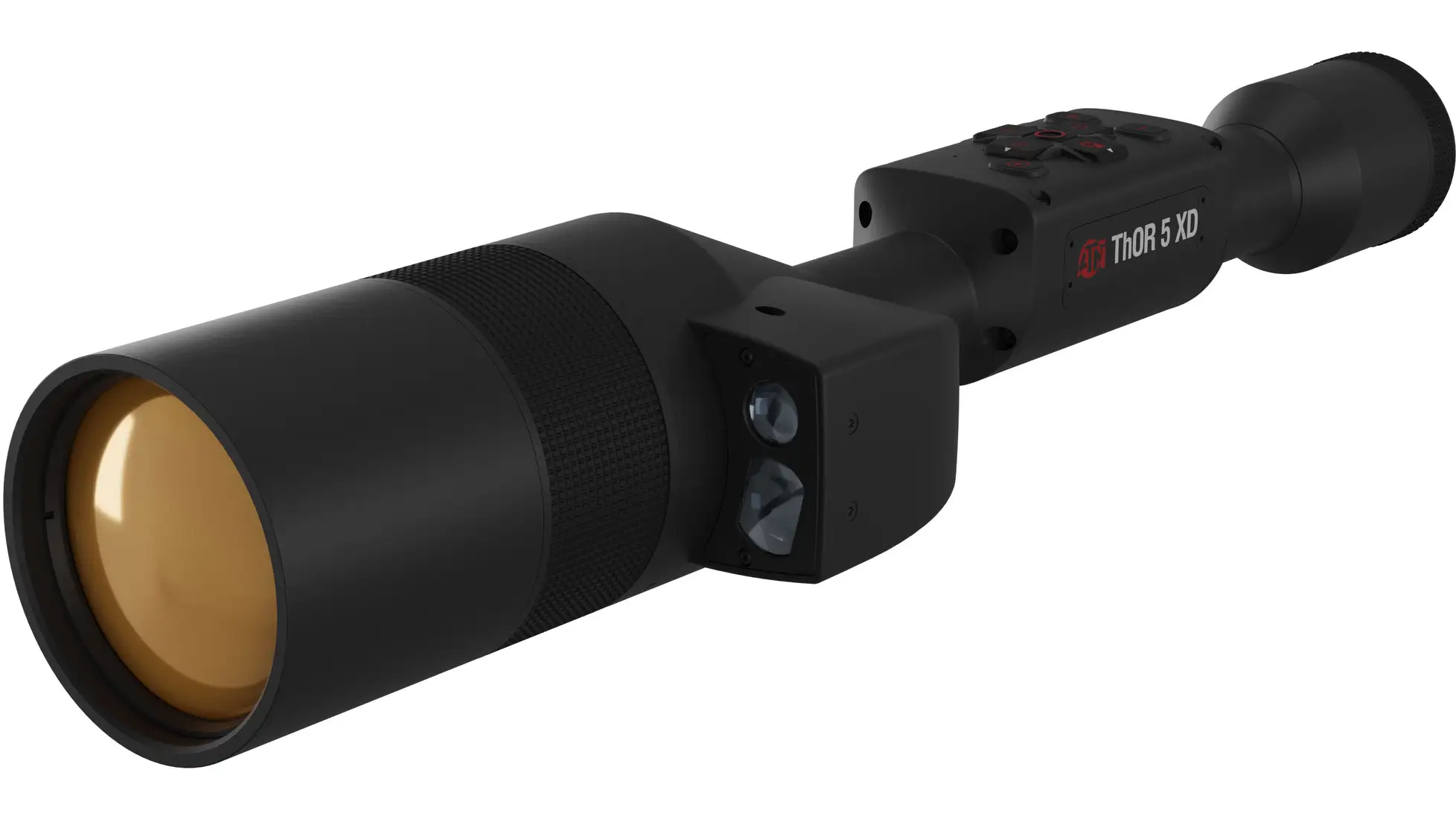
How we reviewed it: a research-based review built from the retailer listings and specification tables for all four Thor 5 LRF versions, ATN's own product pages and Thor 5 manual, and the owner-review record on each listing, including every low rating (on the 4-40x, the low ratings plus a text scan of all 96 reviews). We have not field-tested these units ourselves; the score is our editorial opinion and owner ratings are shown attributed to their source. See how we evaluate.
What the Thor 5 LRF is, and which version you are buying
The Thor 5 is ATN's smart thermal riflescope: a digital scope with its own menus, video recording and WiFi streaming to an app, mounted in standard 30mm rings. The LRF models add a built-in laser rangefinder. The four versions OpticsPlanet carries here come in two sensor tiers. The XD ("Xtreme Definition") LRF models use a 1280x1024 sensor, in three lens sizes; the regular Thor 5 LRF uses a 640x480 sensor:
| Version | Sensor | Lens | Field of view | OpticsPlanet rating |
|---|---|---|---|---|
| XD LRF 4-40x (reviewed here) | 1280x1024 | 100 mm | 8.8 degrees | 4.8 from 96 reviews |
| XD LRF 3-30x | 1280x1024 | 75 mm | 11.8 degrees | 5.0 from 6 reviews |
| XD LRF 2-20x | 1280x1024 | 50 mm | 17.6 degrees | 4.5 from 13 reviews |
| LRF 3-24x (640) | 640x480 | 35 mm | 12.6 degrees | 5.0 from 6 reviews |
The lens sets the trade between reach and view. The 100 mm lens on the 4-40x gives the narrowest field of the four, built for looking a long way across open ground; the 50 mm 2-20x gives twice that width for closer, busier cover. All four share a 1024x768 display, a 60 Hz refresh rate, 90 mm of eye relief and a 30mm mount in the box, according to the retailer tables. ATN rates detection at 4,000 yards for the 4-40x, 3,600 for the 3-30x and 3,400 for the 2-20x. Treat those as detection of a warm spot on the screen; telling a coyote from a fox happens much closer, which is where sensor resolution matters.
OpticsPlanet marks the 4-40x, 3-30x and 640 listings as ITAR products, and on the 3-30x and 640 listings asks you to acknowledge that when you add one to the cart.
ATN's promotional video for the Thor 5 XD 1280x1024. Its on-screen titles cover the larger sensor, the built-in laser rangefinder and the ballistic calculator, with thermal footage of hogs. The "LRF 4-40x" model name is not shown as text in the video.
Why buy the XD: pixels where you need them
The case for the XD is detail at distance. Digital zoom enlarges part of the sensor image, so the more pixels the sensor has, the further you can zoom before an animal turns into blocks. One reviewer on the 2-20x listing, upgrading from an older 320-sensor scope, puts the benefit plainly:
“With 1280x1024 sensor you no longer have to see how an animal walks to figure out what it is.”
Jack (PA), reviewer, XD LRF 2-20x, via OpticsPlanet
A reviewer on the 3-30x is blunter: “The 1280 sensor combined with SharpIR is just NUTS. Predators do not stand a chance of hiding from this scope”. The rangefinder is the other feature reviewers single out. One 3-30x reviewer calls it “incredibly accurate”; on the 2-20x, reviewers use it for hunting and for watching farm animals at night. ATN's manual describes how it fits together: the rangefinder measures to 1,000 yards and feeds the ballistic calculator, One Shot Zero lets you take a shot and adjust the reticle to zero, and Recoil Activated Video records footage from just before the shot, the moment of it and some time after, when you fire. One 3-30x reviewer calls setup and zeroing easy; another charged it, calibrated the compass and zeroed with one shot at 100 yards.
One caveat on the specifications, and it is our reading of them rather than a published test. The retailer lists a 1280x1024 sensor but a 1024x768 display, which is about 786,000 pixels against 1.31 million. At the widest setting the eyepiece cannot show every sensor pixel at once; the extra resolution pays off as you zoom in, and in recorded video, which the listing gives as 1280x960. Neither the listing nor the ATN pages we read split the 4-40x range into optical and digital zoom.
The honest catch: price, weight, complexity and a thin review record
Start with the review record, because the 4.8 from 96 reviews on the 4-40x is weaker evidence than it looks. In a text scan of those 96 reviews, 72 name the same ATN customer-service representative in full, only 16 mention the Thor at all, and 14 mention ATN's X-Sight day/night scope. Many are thank-you notes for customer service, some after a unit did not work out of the box. That tells you ATN's support answers the phone; it does not tell you how the 4-40x performs. The scope-specific evidence comes from the smaller listings and a handful of 4-40x reviews.
What that evidence flags is reliability and complexity. On the 2-20x listing, one three-star reviewer reports the scope “needed to be sent in for warranty repair 2X” in five months, and a two-star reviewer wrote that the “Scope has issues that should have been addressed prior to release” without giving details. On the 4-40x listing, a two-star reviewer could not get a micro SD card back out after formatting it, and a three-star reviewer calls the unit great but complicated, suggesting new users need about 45 minutes of instruction. A 640 reviewer also says new users should read the manual. ATN's manual adds one warning worth taking seriously: a power failure during a firmware update may crash the device, so charge it fully before you update.
Weight is the physical trade-off. The retailer lists 2.5 lb for each of the three XD sizes, and one 2-20x reviewer calls it “a tad bit heavy if weight is a concern”. That suits a stand, a tripod or a bench better than a long walk. Another 2-20x reviewer found the accessories squeezed into a second box, with a rubber eyecup permanently deformed.
Trade-offs, plainly
- The review record on the 4-40x is mostly customer-service thanks: 72 of its 96 reviews name the same ATN rep, so the 4.8 says little about the scope itself.
- Reliability reports exist on the XD line: one 2-20x reviewer sent it for warranty repair twice in five months, another rated it two stars for unspecified issues.
- It is a computer on a rifle: reviewers describe a learning curve, and ATN warns a power loss during a firmware update may crash it.
- The XD sizes are each listed at 2.5 lb, heavy for carrying all night.
- The 1024x768 display has fewer pixels than the 1280x1024 sensor, so the XD's extra detail shows most when zoomed in (our reading of the listed specs).
- It is expensive, and the 640 LRF offers the same core listed features for much less.
Key specifications (XD LRF 4-40x)
| Model | ATN Thor 5 XD LRF 4-40x, black, MPN TIWST51210LRF |
|---|---|
| Sensor | 1280x1024, 12 micron pixels |
| Display | 1024x768 |
| Refresh rate | 60 Hz |
| Magnification | 4-40x (listed as one range; the listing does not split optical from digital zoom) |
| Objective lens | 100 mm |
| Field of view | 8.8 degrees |
| Eye relief | 90 mm |
| Laser rangefinder | Built in, up to 1,000 yards (ATN manual) |
| Detection range | 4,000 yd (ATN; detection of a heat signature, not identification) |
| Video recording | 1280x960 |
| Battery | Lithium ion; 10 hours per charge, 7 hours to charge with a 2 A USB charger, USB-C (ATN manual) |
| Operating temperature | -20 to 120 F |
| Weight | 2.5 lb |
| Mount | 30mm tube; 30mm mount included |
| Warranty | 5 years from date of purchase (ATN manual) |
Specifications are from the retailer's table unless marked (ATN) or (ATN manual). ATN does not publish a thermal sensitivity (NETD) figure on the 4-40x page we read, so we print none. We also print no length or height: the retailer table's figures for them do not read as a scope's shape.
Which configuration should you buy?
XD LRF 4-40x (TIWST51210LRF): maximum reach
The version reviewed above: the 100 mm lens, the narrowest 8.8 degree view and ATN's longest rated detection of the four. Buy it for open fields and long looks from a fixed position. Remember that its 4.8 from 96 reviews is mostly about customer service. It runs around $5,000.
XD LRF 3-30x (TIWST51275LRF): the middle lens
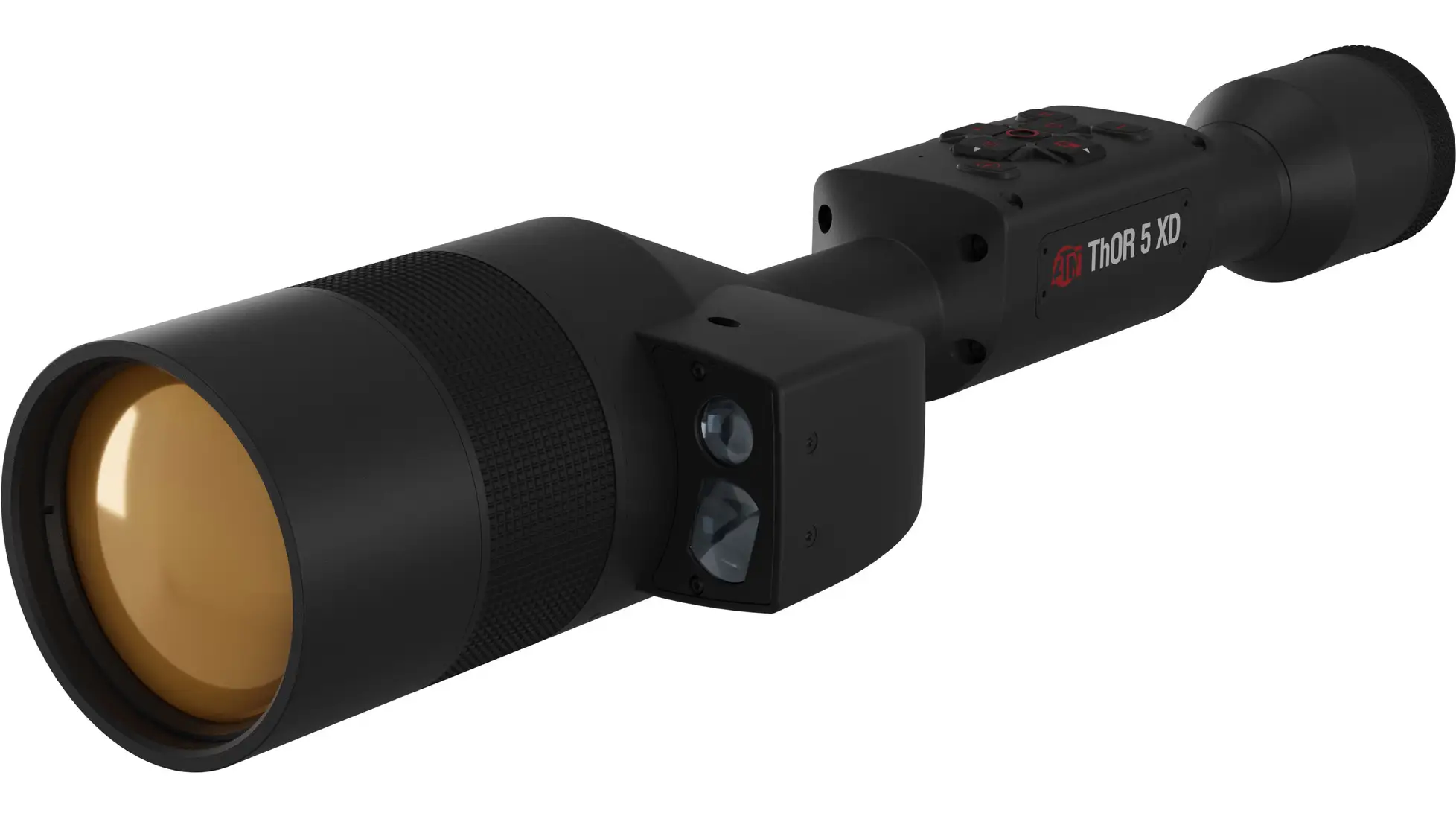
The same 1280x1024 sensor behind a 75 mm lens, with an 11.8 degree field of view and ATN's 3,600-yard detection rating. Reviewers rate it 5.0/5 across 6 OpticsPlanet reviews; one of them says outright that the scope belongs to a friend. Praise is for the sensor, the rangefinder and an easy setup and zero; the non-owner describes the friend's scope on coyotes. Too few reviews to show a weakness. It runs around $4,700.
XD LRF 2-20x (TIWST51250LRF): the widest XD view
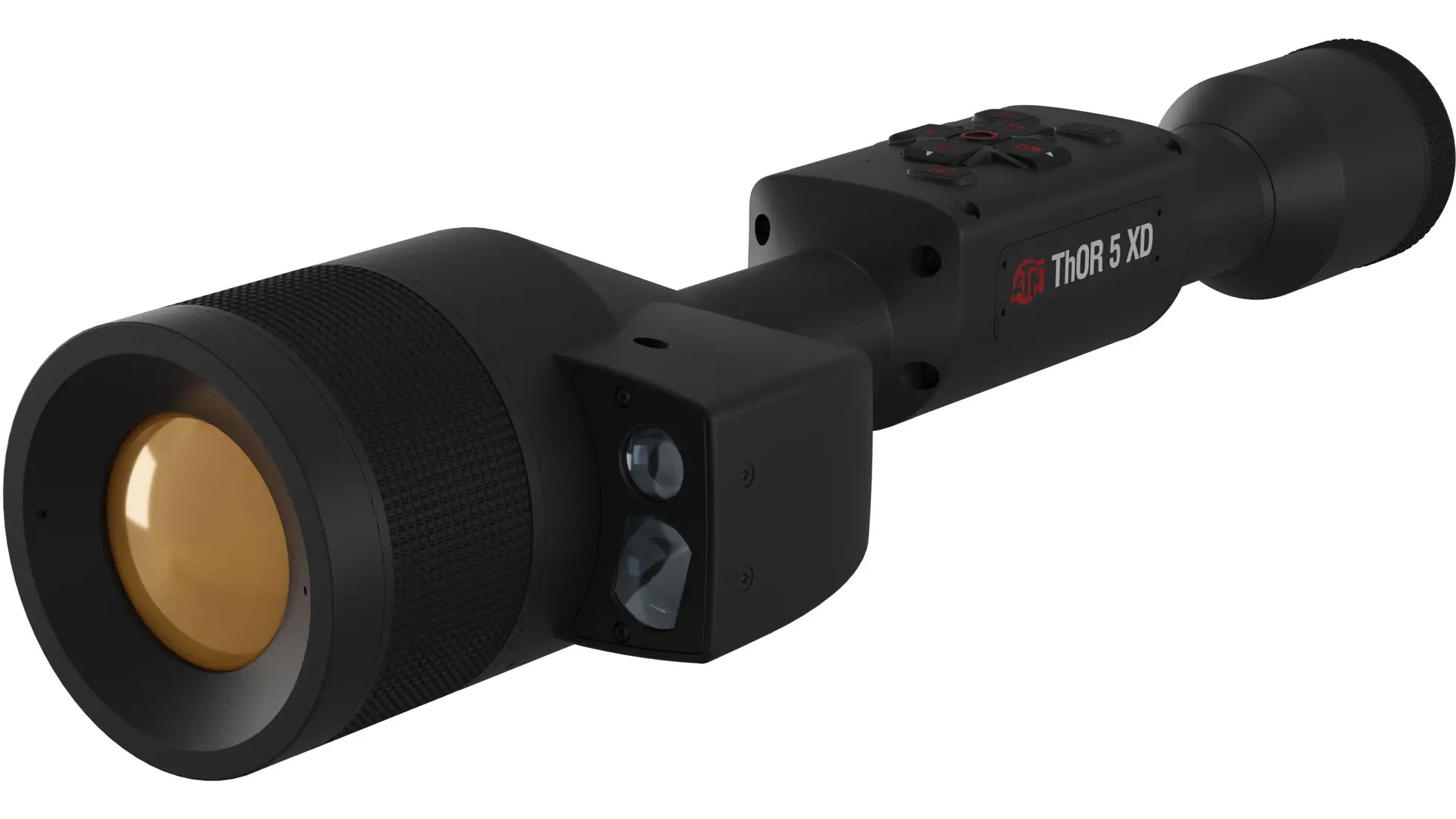
The 50 mm lens gives the XD sensor its widest field of view, 17.6 degrees, for woods and closer ground; ATN rates its detection at 3,400 yards. This listing has the most informative review record of the four: 4.5/5 across 13 OpticsPlanet reviews, nine of them five stars. Reviewers praise the image, the rangefinder and watching over farm animals at night; one mounted it on a Remington 700. The same listing holds the reliability reports above (two warranty repairs for one reviewer, a two-star "issues" review), the weight comment and the deformed eyecup. It runs around $4,100.
LRF 3-24x 640x480 (TIWST5635LRF): the value route
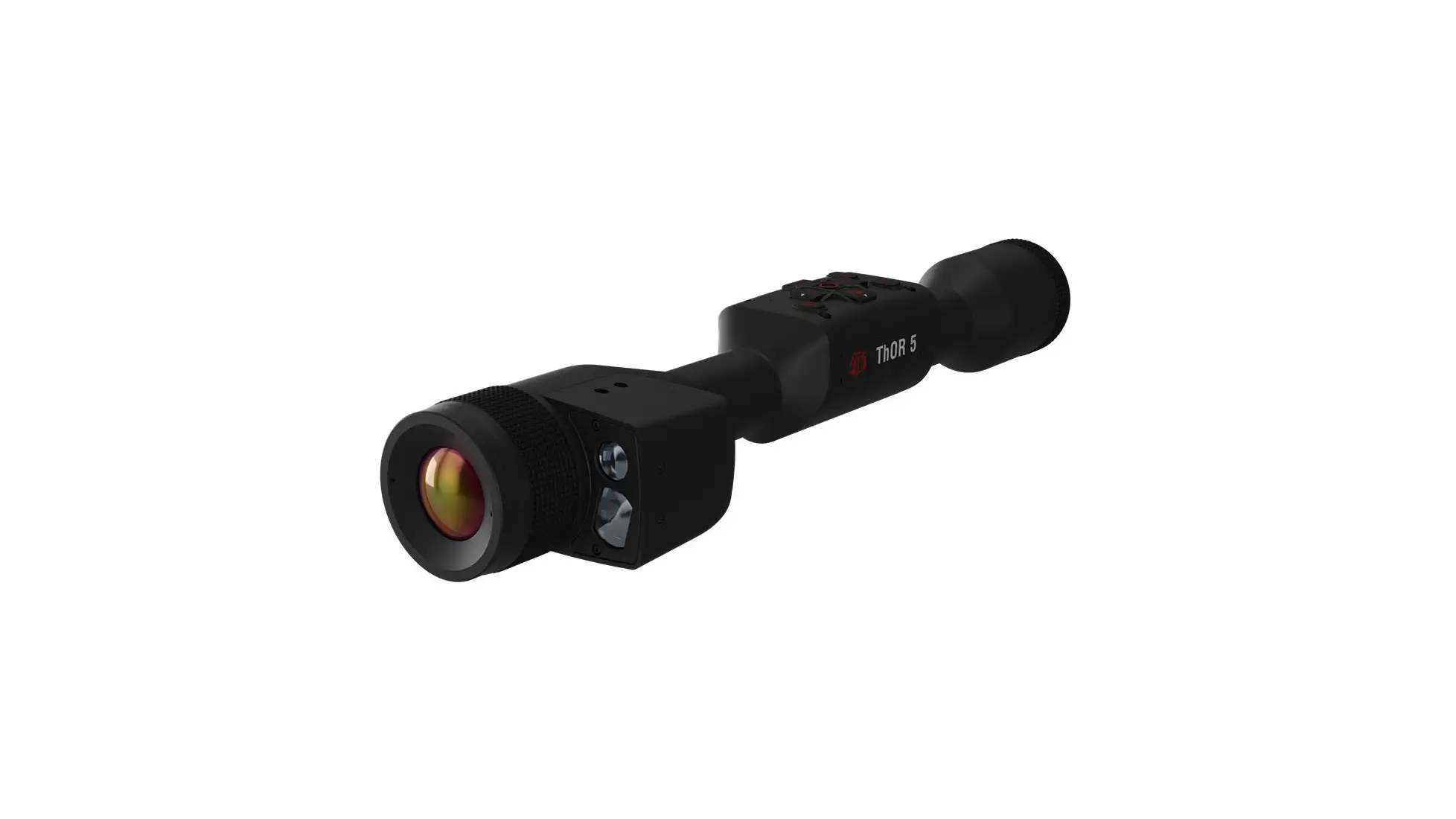
Not an XD: a 640x480 sensor, 12 micron pixels, behind a 35 mm lens with a 12.6 degree field of view. The retailer lists the same 1024x768 display, 60 Hz refresh and core smart features as on the XD listings, and its table also gives a 10-hour battery life, a "Water Resistant" rating and a lighter 1.93 lb. Reviewers rate it 5.0/5 across 6 OpticsPlanet reviews. One spotted two rabbits at 200 yards and calls it one of the best scopes for its price range; one comparing it with an older Thor calls the difference large and the rangefinder essential; one runs it on an AR-15 for coyotes. One says new users should read the manual. Buy it if your shots are close and you want the Thor 5's features without paying for the 1280 sensor. It runs around $3,100.
What else to consider
- Looking at the newer generation? Our ATN ThOR 6 review covers the ThOR 6 Elite 3-24x50 with a 640x512 sensor and three compact ThOR 6 Mini sizes.
- Want thermal for less? Our best thermal scope guide ranks the AGM RattlerV2 line and the ATN Thor LTV, and best budget thermal scope covers the cheaper tiers.
- Hunting coyotes? See best thermal scope for coyote hunting for how field of view and resolution trade off when scanning.
- Considering AGM instead? Our AGM Rattler V2 guide decodes that lineup.
- Keep your day scope? A thermal clip-on mounts in front of it; see best clip-on thermal.
- Thermal or night vision? Read thermal vs night vision, and see ATN's digital day/night X-Sight 5 in our best night vision scope picks.
FAQ
What is the difference between the Thor 5 XD and the regular Thor 5 LRF?
The sensor. The XD models use a 1280x1024 thermal sensor with 12 micron pixels, about 1.31 million pixels. The regular Thor 5 LRF 3-24x uses a 640x480 sensor, about 307,000 pixels, so the XD has a little over four times as many. More pixels on the target means more detail when you zoom in to identify an animal. The retailer lists the same 1024x768 display, 60 Hz refresh rate, 90mm eye relief and 30mm mount for both, and both feature lists include the ballistic calculator, One Shot Zero, Recoil Activated Video, dual stream video over WiFi and an e-compass.
How far does the Thor 5 laser rangefinder reach?
ATN's Thor 5 manual says the integrated laser rangefinder measures distance to target up to 1,000 yards. The range feeds the ballistic calculator, which adjusts the aiming point for the distance.
How long does the Thor 5 battery last?
ATN's manual rates the battery at 10 hours on a single charge and says a full charge takes 7 hours with a 2 A USB charger. The charging port is USB-C, under the rubber cap on the right side. On the 2-20x listing ATN answered a shopper that an external battery can be plugged into the USB-C port, which is how its own extended battery pack works.
What SD card does the Thor 5 need?
ATN's manual asks for a micro SD card that is Class 10 (10 Mb/sec) or faster, with a capacity from 4 to 64 GB, of the HC type. Get the right card before your first trip; one reviewer on the 4-40x listing could not get the card back out after formatting it.
What warranty does the ATN Thor 5 carry?
ATN's Thor 5 manual gives a warranty period of 5 years from the date of purchase. Read the terms in the manual before you buy; one reviewer on the 2-20x listing reports sending the scope in for warranty repair twice in five months.
More: best thermal scopes · thermal scopes for coyote hunting · best thermal monoculars · thermal vs night vision.