Vortex Razor HD Gen III review: long-range glass that owners rarely fault
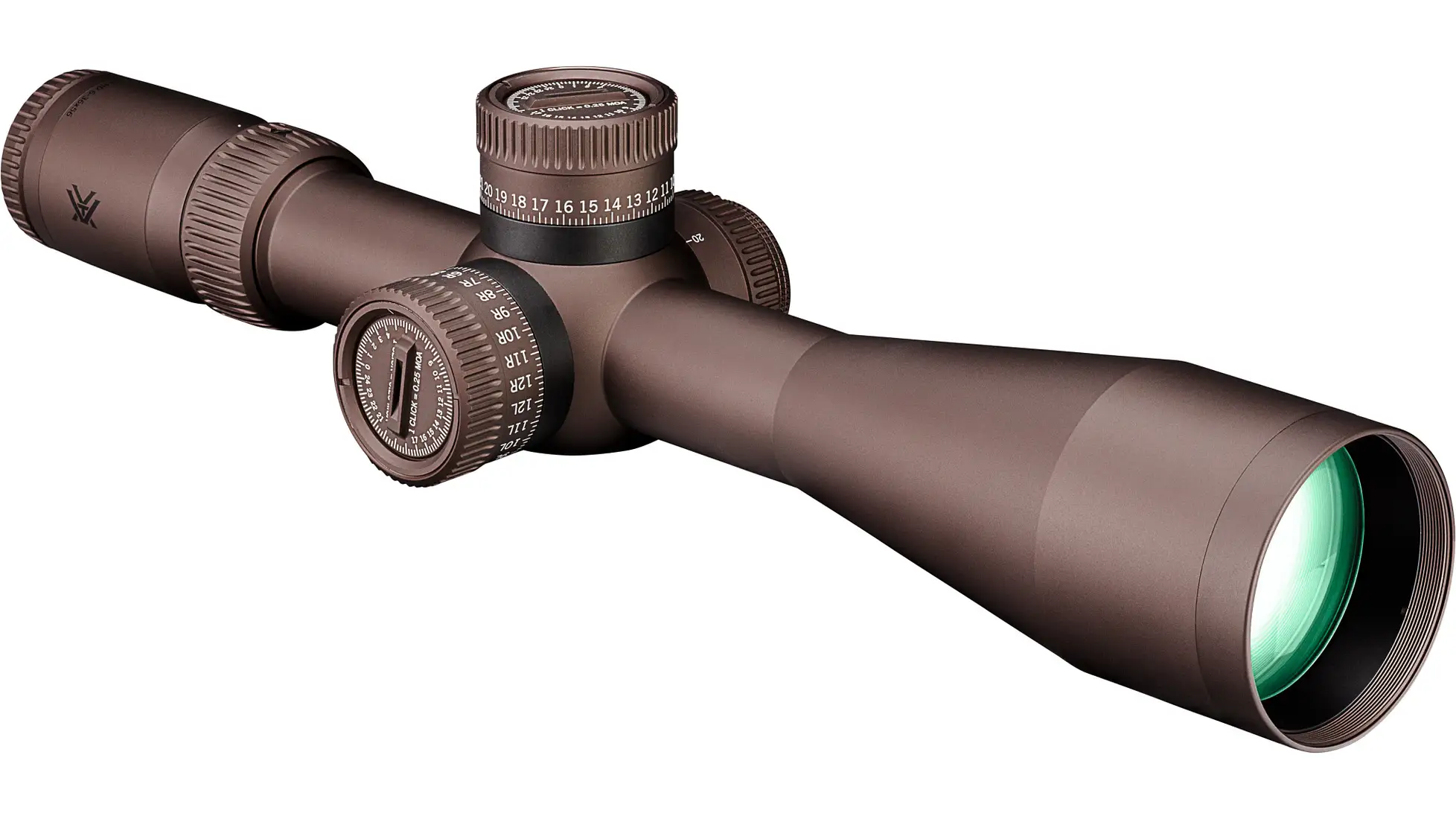
Our verdict: 4.6/5. The Vortex Razor HD Gen III 6-36x56 is a serious long-range and competition scope, and the owner record backs that up. It pairs a first focal plane EBR-7D reticle with a 34mm tube, 6-36x magnification, parallax that focuses down to 10 yards, and the L-Tec+ zero system that reviewers keep calling easy to set. Clarity is the praise that turns up in most reviews, followed by crisp, trackable turrets. It loses points for three honest reasons: it is heavy at a listed 45.1 oz, the eye box gets tight at the very top of the zoom range, and price is the con reviewers list most often. If you shoot PRS, long-range steel or benchrest from a heavy rifle, those trade-offs barely matter. If you carry your rifle up a mountain, look at the lighter 4-24x44 below or a different scope, such as the Vortex Razor HD LHT, Vortex's lighter Razor. Our best long range rifle scope guide compares the wider field.
OpticsPlanet shoppers rate the 6-36x56 4.9/5 across 48 reviews. The EBR-7D MOA row we review here (RZR-63601) sells for around $3,000. Check price and availability on OpticsPlanet; confirm the current price on the retailer page.
How we reviewed it: a research-based review built from the retailer's specification table, all 46 owner reviews the retailer's review page shows for the 6-36x56 (and the six 4-24x44 reviews we could read: five on its review page and one shown only on its product page), and Vortex's own product page for the manufacturer figures. Third-party research leads we could not confirm on Vortex's site were left out. We have not bench-tested this scope; the score is our editorial opinion and owner ratings are shown attributed to their source. See how we evaluate.
What the Razor HD Gen III is
The Razor HD Gen III is Vortex's Razor riflescope in its third generation. Vortex lists the 6-36x56 for precision long-range shooting, competition and military or law enforcement use. It is a first focal plane scope, which means the reticle grows and shrinks with the image, so the holdover and ranging marks stay accurate at every magnification rather than only at one setting (our FFP vs SFP guide explains the difference). The retailer listing describes the optical package as Vortex's HD system with an apochromatic (APO) design and XR Plus coatings on the air-to-glass surfaces, and lists a glass-etched reticle with red LED illumination for the listing (it does not say which reticle rows are lit).
The 6-36x56 listing sells four reticle rows: the EBR-7D and the VMR-5, each in MOA or MRAD. MOA rows use 1/4 MOA clicks with 52.5 / 120 MOA of W/E travel as the retailer lists it; MRAD rows use 0.1 mil clicks with 15.5 / 36.1 MRAD. Pick the unit that matches how you think about holds and corrections; our MOA vs MRAD guide covers the choice, and the MOA and MRAD calculator converts between them.
It ships with a fairly complete kit: per the retailer listing, a 3 inch sunshade, a throw lever, Defender flip caps, a lens cloth, a CR2032 battery and two small tools for the throw lever and turrets.
Why owners rate it: glass, turrets and the zero system
Of the 46 reviews on the retailer's review page, 42 are five stars and four are four stars. Glass clarity is the theme most reviewers repeat, and many put it next to the scopes they already own: reviewers compare it with Nightforce and Leupold Mark V scopes they or their friends own, and one asks why anyone would spend more. One benchrest reviewer says a small target at 75 that was hard to see through a previous Athlon scope was on a different level of clarity through the Razor.
The turrets come next: reviewers describe crisp, audible clicks that are easy to track, and several say the zero holds and returns cleanly. The L-Tec+ zero system gets specific praise from an owner upgrading from the Gen II, who no longer has to take turret caps off to set zero, and the retailer listing describes it as using captive parts and a single set screw.
“I like being able to set zero without removing turret caps like on my gen2”
DP (CA), via OpticsPlanet
The 10 yard parallax floor is worth noting for rimfire shooters. Two reviewers run the 6-36x56 on rimfire PRS rifles, where targets sit much closer than in centerfire matches. See our guide to parallax in a rifle scope for why that adjustment matters at short range.
“It's crystal clear, returns to zero perfectly.”
Die4toys (VA), running it on a PRS .22, via OpticsPlanet
The honest catches: weight, eye box and price
Weight. The retailer lists 45.1 oz, and nine reviewers among the 46 we could read call it heavy. How they feel about it depends on the rifle: one PRS reviewer calls the weight a plus for balancing a chassis rifle but would not recommend the scope for a carry rifle, while others simply list it as a con.
Eye box at full zoom. This is the most specific criticism in the record. The review the retailer features as its most helpful negative one says the glass is superb but the eye box is unforgiving, and compares it unfavorably with a Nightforce ATACR. A five-star reviewer who owns three of these describes the same thing more mildly. The cause is arithmetic: exit pupil is objective diameter divided by magnification, so 56mm at 36x is about 1.6 mm, against about 9.3 mm at 6x (our calculation from the listed specs, not a measurement). A small exit pupil leaves little room for head position.
“Eyebox is tight at highest magnification, but at slightly lower from top mag, it is very useable.”
JustReacher (NH), via OpticsPlanet
Price. Ten reviewers put price or cost in their cons, including owners who gave it five stars. Several reviewers mention buying it on sale.
Turret feel when unlocked. One four-star reviewer, otherwise delighted, reports a little wobble in the turrets when they are unlocked. It is a single report, not a pattern, but it is the only mechanical complaint in the list.
“One thing I don't like about the scope is that the turrets have a little wobble to them when unlocked.”
Matt (NH), via OpticsPlanet
Trade-offs, plainly
- Heavy: a listed 45.1 oz and 15.3 inches long, which suits a chassis or bench rifle better than a hunting rifle you carry all day.
- The eye box tightens at the top of the zoom range; reviewers who hit it dial back a little and find it very usable.
- Price is the most listed con, even among five-star reviewers.
- A 34mm tube needs 34mm rings or a 34mm mount; your existing 30mm rings will not fit (see our scope rings guide).
- One reviewer reports slight turret wobble when the turrets are unlocked.
Which configuration: 6-36x56 or 4-24x44
We cover two Gen III sizes that OpticsPlanet sells as separate listings. Each row below is described only from its own listing.
| Spec | 6-36x56 (RZR-63601) | 4-24x44 (RZR-42402) |
|---|---|---|
| Reticle (carded row) | EBR-7D MOA | EBR-7D MRAD |
| Tube / focal plane | 34 mm / FFP | 34 mm / FFP |
| Parallax | 10 yds to infinity | 15 yds to infinity |
| Eye relief | 3.5 in | 3.3 in |
| Length | 15.3 in | 12.5 in |
| Weight | 45.1 oz | 32.3 oz |
| Exit pupil at top zoom (our arithmetic) | about 1.6 mm at 36x | about 1.8 mm at 24x |
| OpticsPlanet rating | 4.9/5 from 48 reviews | 5.0/5 from 6 reviews |
| Price | around $3,000 | around $2,800 |
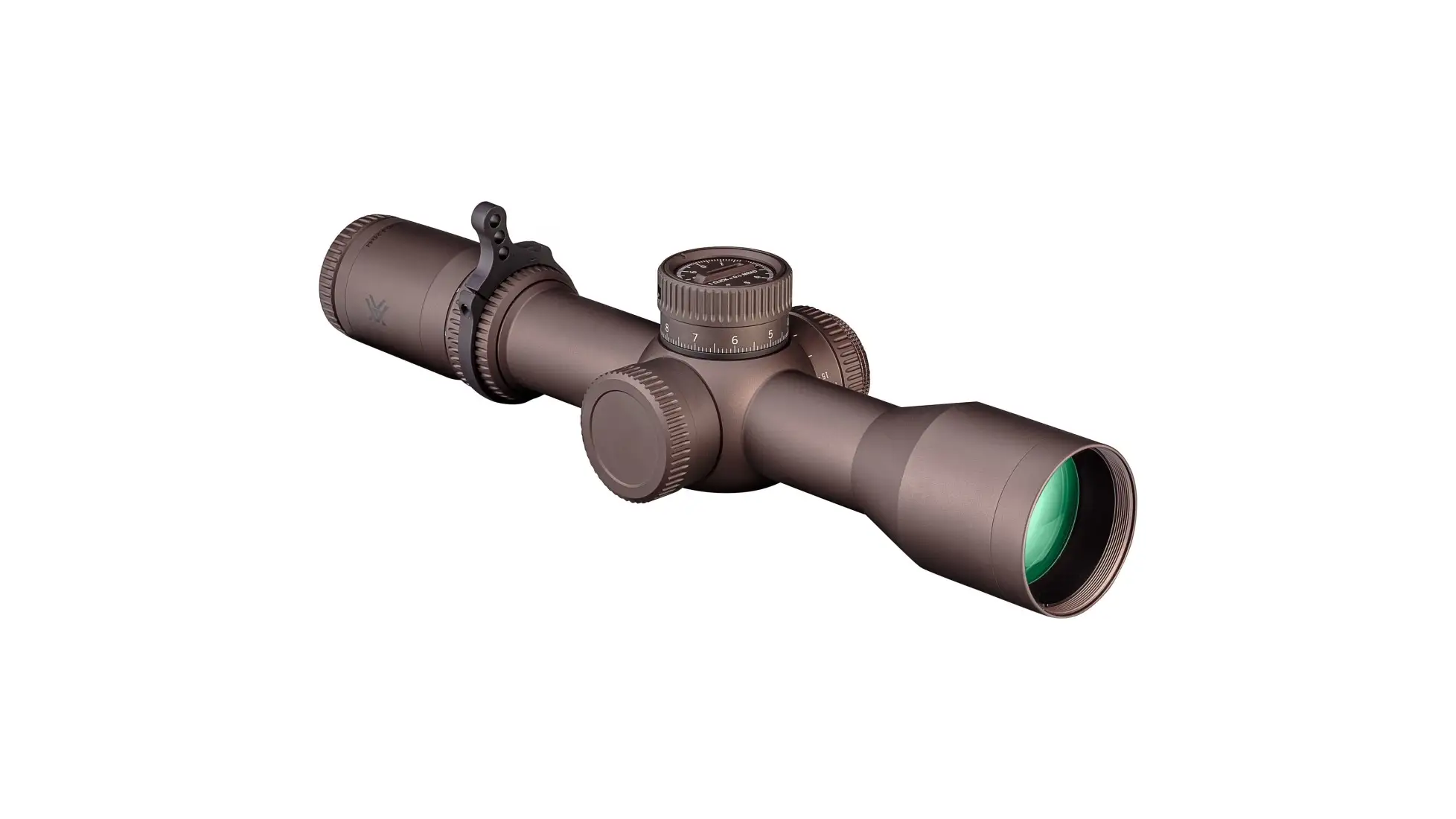
The 4-24x44 is the shorter, lighter Gen III. The retailer describes it as compact and lightweight, and the listed 32.3 oz makes it the one to consider for a mid-range AR, a DMR-style rifle or a hunting rifle. Its listing sells the EBR-7D reticle in MRAD (the row we card, RZR-42402) or MOA. We do not print a click value or travel figure for it: the retailer's specification table gives MOA adjustment values for the whole listing while the row we card is the MRAD reticle, so we cannot tie those numbers to it.
Its owner record is thin, six reviews, all positive, so treat the 5.0 as early feedback rather than a settled verdict. Reviewers praise the size-to-performance balance, clear glass, tactile turrets and bright illumination. One owner notes it is not light, and the trade-off named most specifically mirrors the bigger model: the eye box tightens near the top of the zoom range, about 1.8 mm of exit pupil at 24x by our arithmetic.
“great eye box up to about 20x, gets a little tight after that but nothing that can't be overcome with a good cheek weld.”
Alex N. (CA), via OpticsPlanet
“If you're looking to shoot distance but don't want a huge chunk of scope on your setup this is the real deal.”
d adams (LA), via OpticsPlanet
Key specifications: 6-36x56
| Magnification | 6-36x |
|---|---|
| Objective | 56 mm |
| Tube | 34 mm, aircraft grade aluminum, anodized Stealth Shadow finish |
| Focal plane | First focal plane (FFP) |
| Reticle (carded row) | EBR-7D MOA, glass-etched |
| Illumination (listing-wide) | Red LED, locking side illumination (the retailer does not say which reticle rows are lit) |
| Click value (MOA rows) | 1/4 MOA |
| W/E travel at 100 yds (MOA rows) | 52.5 / 120 MOA, as the retailer lists it |
| Parallax | 10 yds to infinity |
| Field of view | 3.5 to 20.5 ft at 100 yds |
| Eye relief | 3.5 in |
| Length | 15.3 in (Vortex lists 15.25 in) |
| Weight | 45.1 oz (retailer spec table; Vortex's page does not state one) |
| Coatings | XR Plus, APO system |
| Zero system | L-Tec+ with micro-adjust zero setting |
| Battery | One CR2032 |
| Sealing | Waterproof, fogproof, shockproof, argon gas purged |
| Warranty | Vortex VIP: unlimited, unconditional, lifetime (Vortex product page) |
Figures are from the retailer's specification table unless marked. Vortex's own product page confirms the 34mm tube, 6-36x magnification, 56mm objective, first focal plane design, a 15.25 inch length and the VIP warranty, but does not state weight, eye relief, field of view, travel or illumination details. On awards: OpticsPlanet's "Best Rated Product" label is a store rating, not an editorial award, so we claim none. The retailer does not state which of the two travel figures is windage and which is elevation beyond its W/E label, so we print them as listed.
Should you buy it, and what else to consider
- Buy the 6-36x56 if you shoot PRS, long-range steel, ELR or benchrest from a rifle heavy enough that 45 oz of scope helps rather than hurts, and you want top-tier glass with a zero system owners call easy.
- Buy the 4-24x44 if you want the same Gen III design in a body you can carry, on a mid-range AR or a hunting rifle.
- Want a Razor you can carry all day? Our Vortex Razor HD LHT review covers Vortex's lighter Razor, with a 21.7 oz 4.5-22x50 FFP.
- Want long-range FFP for far less? The Vortex Venom 5-25x56 and the Vortex Strike Eagle 5-25x56 cost a fraction of the Razor.
- Comparing the field? Start at our best long range rifle scope guide, or pick by cartridge with the best scope for 6.5 Creedmoor and best scope for 300 Win Mag.
FAQ
Is the Vortex Razor HD Gen III worth it?
For a precision or long-range shooter who wants one scope for competition, load development and distance work, the owner record says yes: the 6-36x56 holds 4.9 out of 5 across 48 OpticsPlanet reviews, and all 46 reviews on the retailer's review list are four or five stars (the one negative review the retailer features separately is about the eye box and price). The praise is about glass clarity, crisp turrets and an easy zero system. The honest reasons to skip it are its weight, a tight eye box at the very top of the zoom range, and the price, which is the con reviewers list most often.
How heavy is the Razor HD Gen III 6-36x56?
The retailer specification table lists 45.1 oz and a length of 15.3 inches for the 6-36x56. Nine reviewers among the 46 reviews we could read describe it as heavy, some as a drawback and some as a plus for balancing a heavy chassis rifle. Vortex's own product page does not state a weight, so the figure here is the retailer's. If you want the same family in a lighter body, the 4-24x44 is listed at 32.3 oz.
Why is the eye box tight at 36x?
It follows from the optics. Exit pupil is the objective diameter divided by the magnification, so a 56mm objective at 36x gives roughly 1.6 mm, a small beam of light your eye has to sit squarely behind. At 6x the same arithmetic gives about 9.3 mm. That is our calculation from the listed specs, not a measured figure. Reviewers describe the same thing in practice: the eye box is tight at the highest setting and very usable a little below it.
What is the difference between the 6-36x56 and the 4-24x44 Gen III?
Both are first focal plane Razor HD Gen III scopes on a 34mm tube. The 6-36x56 is the long-range model: more magnification, a 56mm objective, parallax down to 10 yards and a listed 45.1 oz. The 4-24x44 trades top-end magnification for a shorter, lighter body: a listed 12.5 inches and 32.3 oz, parallax from 15 yards and a lower 4x bottom end. Its owner record is much thinner, six reviews at the time of writing.
What warranty does the Razor HD Gen III have?
Vortex's own product page covers it with the VIP warranty, which it describes as unlimited, unconditional and lifetime. Several reviewers list the warranty among its strengths.
More rifle scopes: best rifle scopes · best long range rifle scopes · Vortex Venom 5-25x56 review · Vortex Viper HD 3-15x44 review · Vortex Diamondback Tactical 6-24x50 review.