The best night vision monoculars in 2026
Our verdict for 2026: the ATN PVS14-3 Gen 3 (around $3,700) is the best night vision monocular overall, a genuine USA Gen 3 tube on the military PVS-14 platform. Want a real tube for a third of that? The AGM Wolf-14 NW1 (around $2,300) is Gen 2+ and the cheapest way onto passive night vision. The Night Owl iGen (around $460) is the pick if you want to record photos and video. The Barska NVX700 (around $230) is the cheapest honest way to start.
Between them these picks carry owner reviews on OpticsPlanet. Prices verified September 30, 2026; confirm the current price on the retailer page. These are picks from our night vision guide.
A night vision monocular is the most versatile way to see in the dark: hold it to scan, wear it on a helmet to walk hands-free, or run it behind a red dot on a rifle. The single biggest choice is digital versus a real image-intensifier tube. Digital picks are cheap, record video and some work by day, but lean on an IR light in the dark; a Gen 2+ or Gen 3 tube amplifies starlight passively for a genuine dark image, at a much higher price. The 4 picks below run that whole ladder, from $230 to $3,700.
How these picks were made: a research-based roundup comparing published specifications, tube generation and resolution, IR illumination, recording, mounting and batteries, owner reviews and pricing on OpticsPlanet, plus a deep-research pass on the anchor pick. Scores are our editorial opinion, not a hands-on test of every model, and owner ratings are shown attributed to their source. Confirm current price on the retailer page. See how we evaluate.
Quick comparison
| Category | Pick | Spec | Price | |
|---|---|---|---|---|
| Best overall | ATN PVS14-3 Gen 3 | 1x · Gen 3 tube | around $3,700 | Check price |
| Best analog value | AGM Wolf-14 NW1 Gen 2+ | 1x · Gen 2+ tube | around $2,300 | Check price |
| Best for photo capture | Night Owl iGen 2.6x41 | 2.6x · records to SD | around $460 | Check price |
| Best budget | Barska NVX700 9x Digital | 9x · digital | around $230 | Check price |
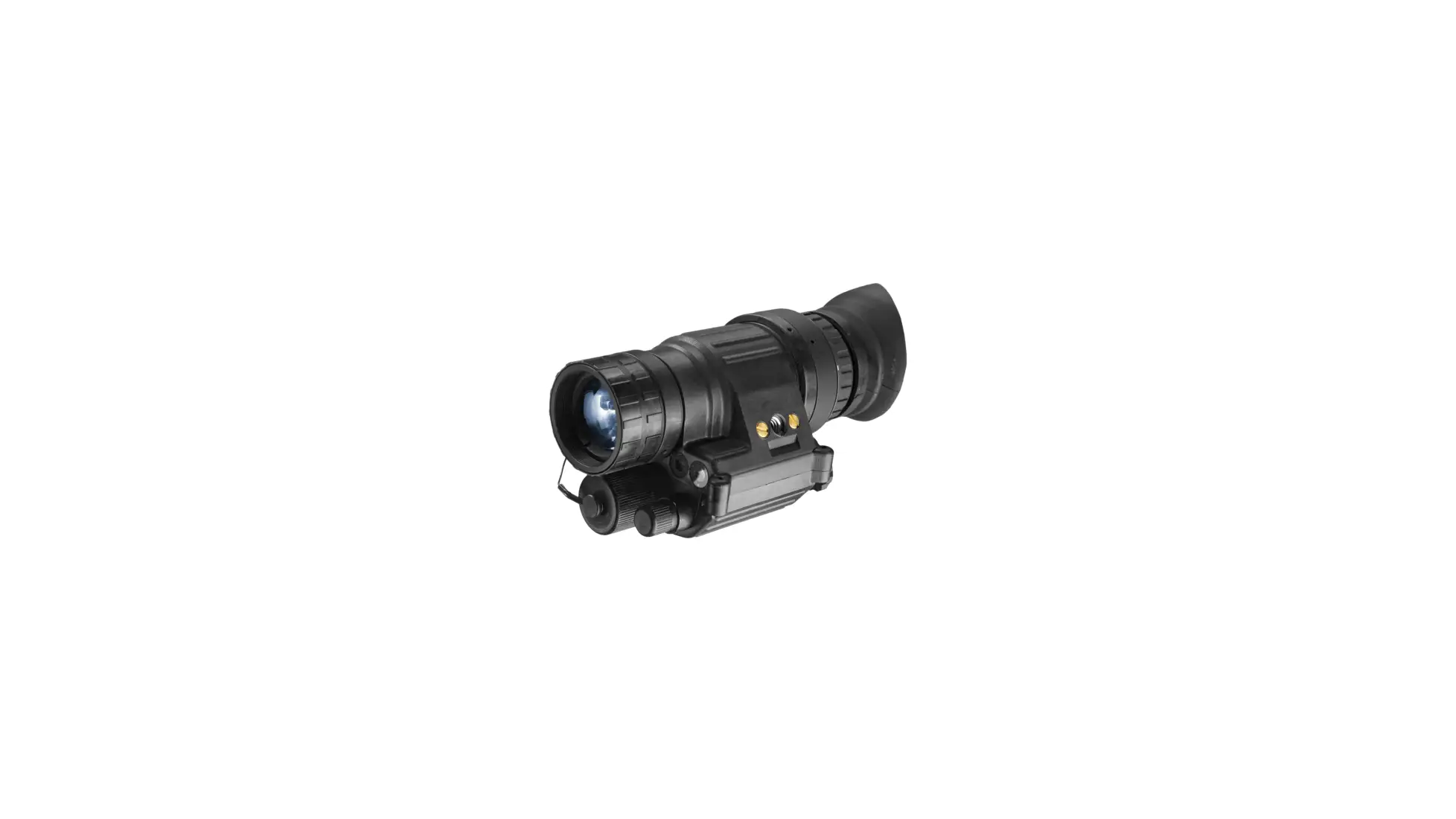
Best overall: ATN PVS14-3 Gen 3
1x27mm · USA Gen 3 auto-gated tube · 64-72 lp/mm · green phosphor · 40° FOV · MIL-STD-810 · manual gain · 50 hr on one AA · handheld / helmet / behind a red dot
around $3,700exact price on OpticsPlanet
This is the night vision monocular to buy if you want the real thing, and it is the most-reviewed pick here. The PVS-14 is the platform the US military standardized on, and this ATN build runs a factory-new USA Gen 3 auto-gated image intensifier tube (64-72 lp/mm) that amplifies ambient starlight and moonlight passively, so unlike a digital device it shows a bright, sharp image in the dark with no IR light giving your position away. At true 1x it keeps its place in the whole PVS-14 ecosystem: run it handheld, mount it to a helmet as a single-eye goggle so your other eye keeps its natural night vision, or put it behind a night-vision-compatible red dot on an AR for medium-range hog and predator shots. It adds manual gain control to tame bright lights, runs up to 50 hours on one AA, is MIL-STD-810 waterproof, and Target Tamers calls it a Best Value Gen 3 monocular. Know the trade-offs going in: it cannot be used in daylight, records nothing, and on a rifle it is recoil-limited to 5.56 or .223.
Pros
- A factory-new USA Gen 3 auto-gated tube (64-72 lp/mm) that amplifies starlight passively, so it shows a bright image in the dark with no telltale IR beam
- True 1x on the full PVS-14 platform: handheld, helmet-mounted as a single-eye goggle, or behind a red dot on an AR
- Manual gain control to tame bright lights, up to 50 hours on a single AA battery, and MIL-STD-810 waterproofing
- The most-reviewed pick here (4.5/5, 23 owners); Target Tamers names it a Best Value Gen 3 monocular
Cons
- No daytime use at all: bright light will permanently damage the analog tube, and it records no photo or video
- On a rifle it is recoil-limited to 5.56 or .223; mounting it on a .308 or 12-gauge can destroy the tube and void the warranty
- The included factory head strap is poor; plan on a helmet mount for extended hands-free use
- A Gen 3 tube can show small dark cosmetic spots (a normal MIL-SPEC artifact, not a defect), and ITAR paperwork can delay shipping
Best for: the buyer who wants a genuine Gen 3 tube for passive, stealthy dark performance: predator and hog hunting behind a red dot, property security, and helmet-mounted navigation. Only need a scope for one rifle? See our night vision scopes. Want to spend far less? A digital pick does day and night for a fraction of the cost.
Key specifications
| Manufacturer | ATN |
|---|---|
| Type | Analog Gen 3 (image intensifier tube) |
| Tube | USA Gen 3, thin-filmed, auto-gated, green phosphor |
| Resolution | 64-72 lp/mm |
| Magnification | 1x (true unity) |
| Objective | 27 mm (f/1.2) |
| Field of view | 40 degrees |
| Gain | Manual gain control |
| Battery | One AA, up to 50 hr |
| Mounting | Handheld / helmet / weapon (behind a red dot) |
| Rating | MIL-STD-810, waterproof |
| Weight | 0.78 lb |
“I took the leap and purchased the Pvs 14-3. I am pleasantly surprised at the Image Intensifier Tube quality, no blemishes at all. I have used these devices for countless hours in the middle east and Europe and I can say it is like having the issued nods on my head again.”
NV Man, verified owner (NV) via OpticsPlanet
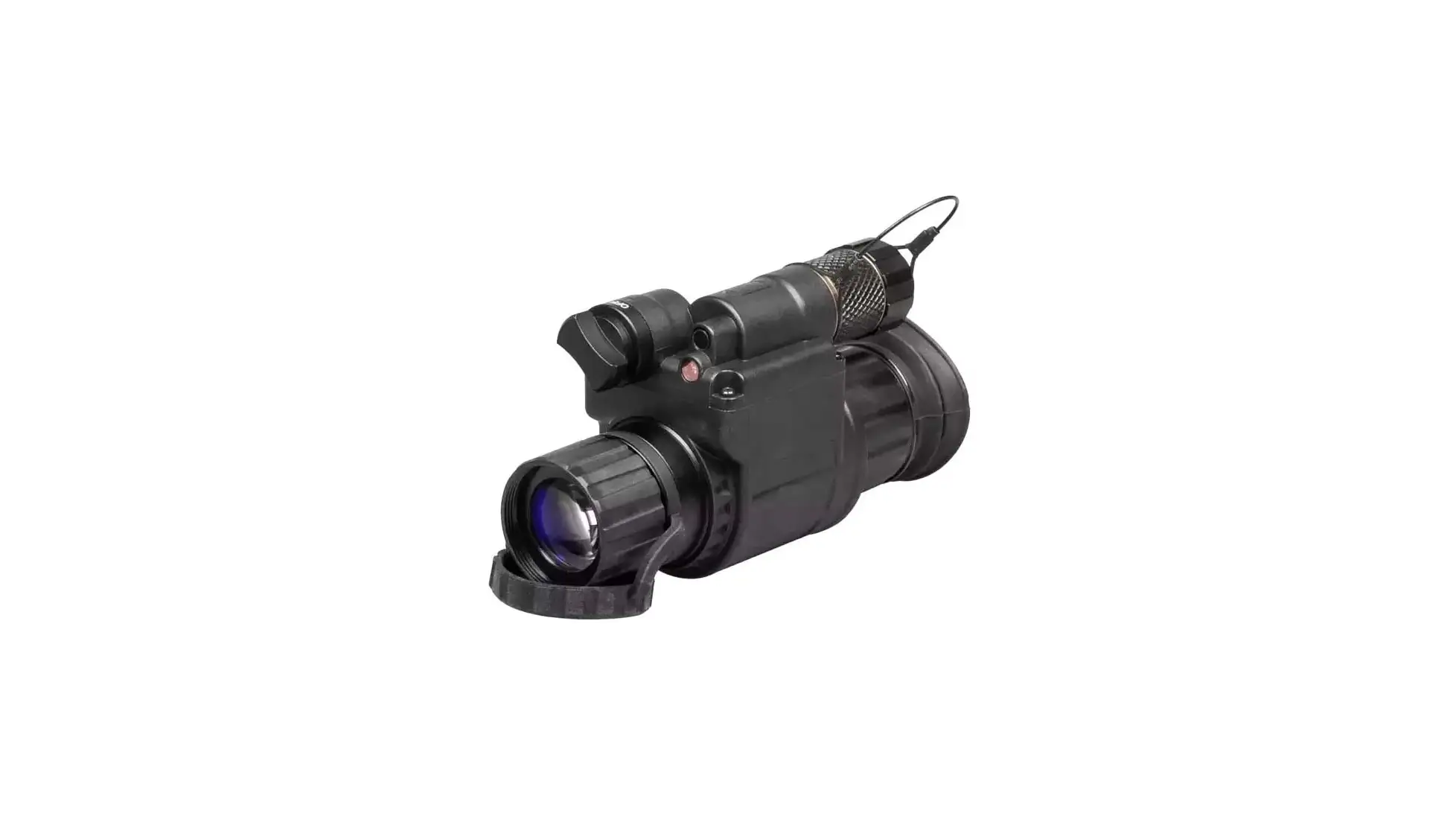
Best analog value: AGM Wolf-14 NW1 Gen 2+
1x25mm · Gen 2+ white phosphor tube · 42° FOV · built-in IR illuminator · bright-light cut-off · AA or CR123A · 0.64 lb · handheld / head / helmet · 3-year warranty
around $2,300exact price on OpticsPlanet
This is the cheapest way onto a real image-intensifier tube, and it is the pick that reopens the gap between a digital unit and Gen 3. Like the ATN above it, the Wolf-14 amplifies ambient starlight passively rather than lighting the scene with IR, so it sees in genuine darkness without announcing where you are. What you give up against Gen 3 is tube quality, not the principle. The NW1 runs a white-phosphor Gen 2+ tube, which renders the scene in grey rather than green, and owners who have used better kit are clear-eyed about where it lands: one calls it "by no means a top shelf unit" but rates it 8/10 and says the tube came through clear with no visible blemishes. The body is the useful part of the deal: it hand-holds, it takes a head or helmet mount so your other eye keeps its natural night vision, it has a bright-light cut-off circuit, and it runs on an AA or a CR123A, which matters at 2am in the field. It is also the direct successor to the Wolf-14 NL1 we used to rank here, which AGM discontinued in 2026; same body, same 42-degree field, white tube instead of green.
Pros
- A genuine Gen 2+ image-intensifier tube that amplifies starlight passively, at roughly a third of what the Gen 3 pick costs
- White phosphor renders the image in grey rather than green, which many owners find easier to read for longer sessions
- Runs on either an AA or a CR123A, and ships with the AA adapter, a head/helmet mount and a hard case
- Bright-light cut-off protects the tube, and AGM backs it with a 3-year warranty
Cons
- No manual gain control, which the Gen 3 pick has: an owner names this as the main thing he misses
- Gen 2+ resolves less detail than Gen 3, and AGM publishes no lp/mm or FOM figure for this tube, so you cannot compare it on paper
- Only 2 owner reviews so far, so the long-term reliability picture is thin next to the 23-review Gen 3 pick
- Like any analog tube it cannot be used in daylight and records nothing
Best for: the buyer who wants passive, no-IR night vision on a real tube and cannot justify Gen 3 money: property checks, walking ground after dark, and helmet-mounted navigation. If you need to record what you see, or want to spend a fraction of this, the digital picks below do both.
Key specifications
| Manufacturer | AGM Global Vision |
|---|---|
| Type | Analog Gen 2+ (image intensifier tube) |
| Tube | Gen 2+, white phosphor |
| Resolution | Not published by the retailer or AGM |
| Magnification | 1x (true unity) |
| Objective | 25 mm |
| Field of view | 42 degrees |
| Gain | No manual gain control |
| Battery | One AA or CR123A (AA adapter included) |
| Mounting | Handheld / head / helmet |
| Illuminator | Built-in IR, plus bright-light cut-off |
| Weight | 0.64 lb |
| Warranty | 3 years |
“Man i gotta say, I was really impressed with it. It’s by no means a top shelf unit, but it was a lot better than i was expecting. The Gen 2+ white phosphor tube is actually really clear and i have no visible blemishes in the lens. I plan on buying a second one soon so i can have a dual tube set up.”
Tim (TX) via OpticsPlanet
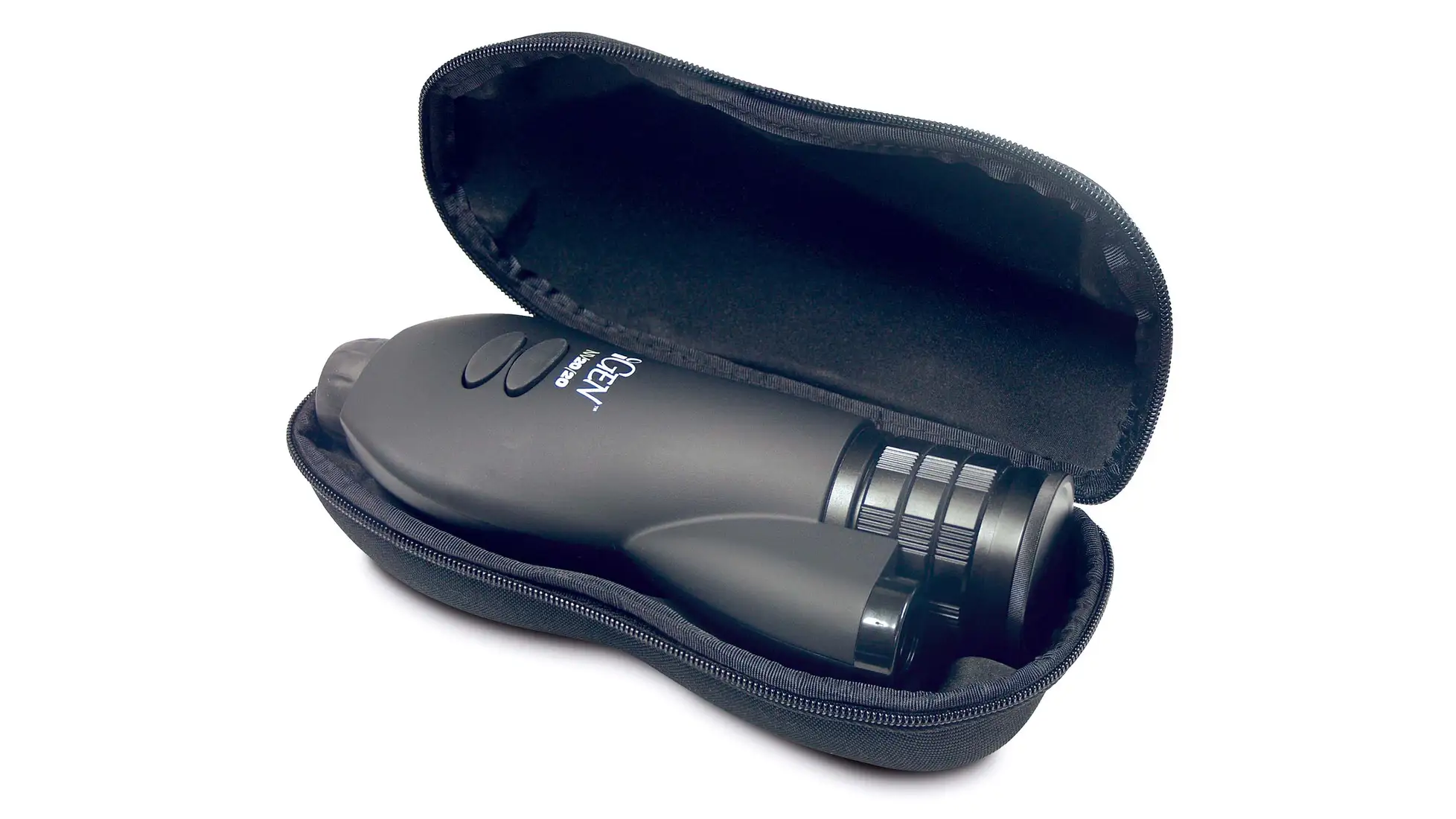
Best for photo capture: Night Owl iGen 2.6x41
2.6x · 41mm · records stills and video to an SD card · 650x light amplification · enhanced IR sensitivity · color output options · runs on four AA batteries
around $460exact price on OpticsPlanet
This is the pick if capturing what you see matters, and it is the highest-rated monocular here at 4.8 stars. The iGen's signature feature is on-board photo and video capture straight to an SD card, unusual at this price, so you can save evidence of what turned over the crawfish traps or crossed the property line. It uses an enhanced-sensitivity image system with 650x light amplification and a user-adjustable frame rate to pull more light in dim conditions, works day or night, and stays light in the hand. Owners who had tried older Gen 1 and Gen 2 units call it the first one that actually did what they wanted, and one reports seeing over 200 yards under moonlight. The honest limits: the four AA batteries only last a few hours with the IR on, the fixed 2.6x magnification and older display are modest next to a Gen 3 tube, and it leans on active IR in true darkness.
Pros
- Records stills and video straight to an SD card, unusual in this price class, so you can capture what you observe
- Enhanced-sensitivity system with 650x light amplification and an adjustable frame rate to gather more light in dim conditions
- The highest owner rating here (4.8/5); owners report seeing over 200 yards under moonlight and prefer it to older Gen 1 and 2 units
- Light in the hand and works day or night, running on common AA batteries
Cons
- The four AA batteries only last a few hours with the IR illuminator on, so you carry spares
- A fixed 2.6x magnification and an older display resolution are modest next to a Gen 3 tube
- It relies on active IR in true darkness, which a passive tube does not
- A first-generation image-capture design rather than the latest sensor
Best for: the buyer who wants night vision that also takes photos and video to an SD card, day or night, at a mid budget. If you do not need capture, a passive tube sees better in the dark; if you want the cheapest entry, the Barska costs less.
Key specifications
| Manufacturer | Night Owl Optics |
|---|---|
| Type | Image-capture night vision |
| Magnification | 2.6x (fixed) |
| Objective | 41 mm |
| Recording | Stills and video to SD card (up to 32 GB) |
| Light amplification | 650x |
| IR illuminator | Built-in, adjustable |
| Battery | Four AA (2.3-4.5 hr) |
| Field of view | 12 degrees |
| Focus | 16 in to infinity |
| Weight | 19.1 oz |
“Been around the block with other night vision Gen 1 and 2. No matter what I spent for one of those, they were not what I wanted. This product is. It works well, yes you can see at night. You can take photos with this of what you are viewing. One other thing, it's light to hold, not heavy like the other units.”
SE Texas, owner via OpticsPlanet
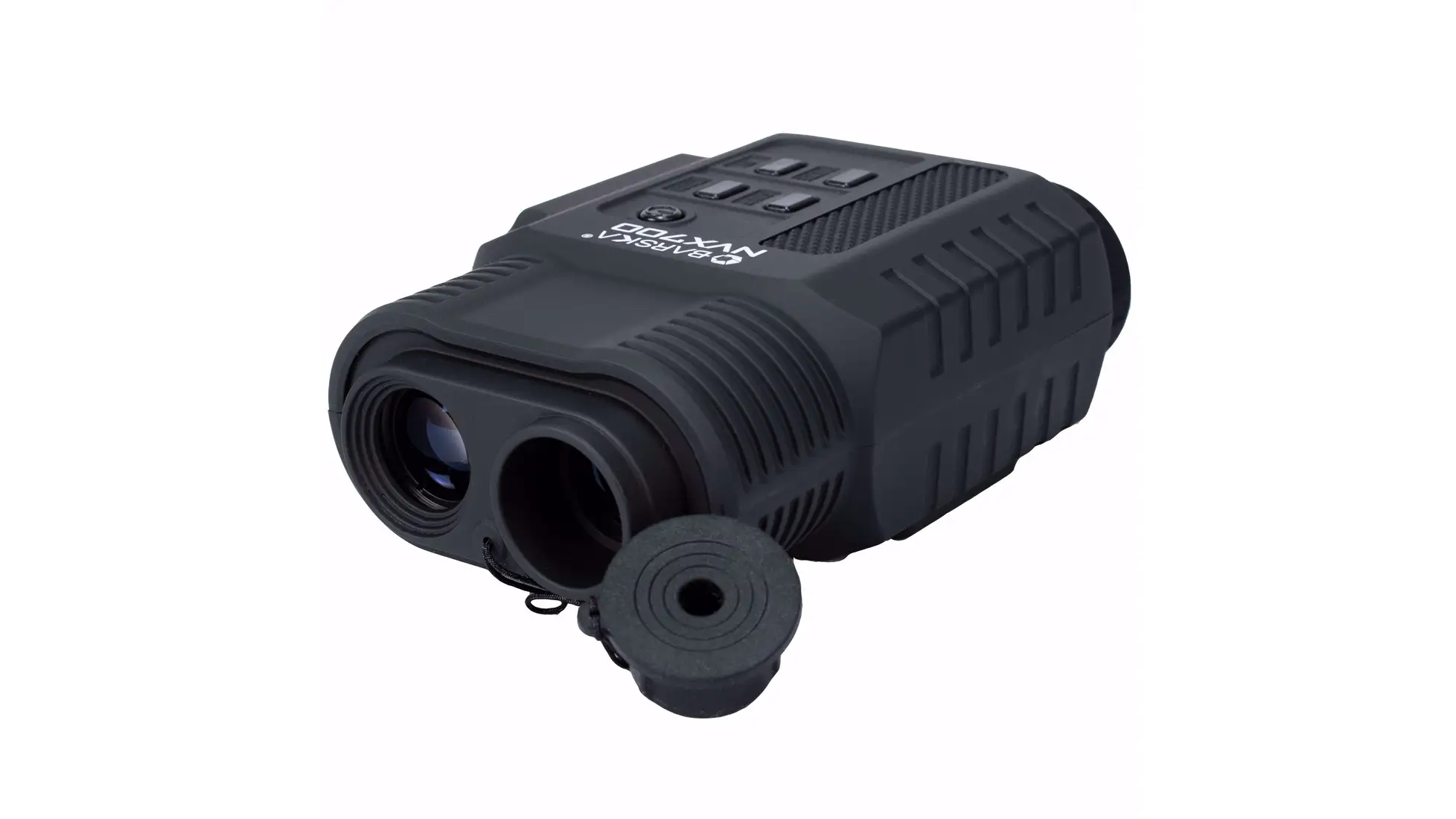
Best budget: Barska NVX700 9x Digital
9x + 2.6x digital zoom · 640x480 digital sensor · records color by day and black-and-white by night · 850nm IR to 200m · runs on four AA batteries
around $230exact price on OpticsPlanet
This is the cheapest honest way to try night vision here, and the pick for a first-time buyer who wants to see in the dark without spending four figures. The NVX700 is a fully digital monocular: it records in color by day and black-and-white at night, has 9x magnification plus a 2.6x digital zoom, and includes a dual IR illuminator rated to light a scene out to about 200 meters. It runs on common AA batteries and files transfer to a computer over USB. Owners are pleasantly surprised by the clarity for the price and appreciate the grippy rubberized body. Be clear-eyed about the class: a digital sensor at this price is a general nighttime observation tool, not a precision optic, so the image gets grainy at distance and it leans entirely on its IR light in true darkness. For casual scouting, wildlife watching and seeing what is moving around the property, it is a lot of capability for the money.
Pros
- The lowest price here by a wide margin, the cheapest honest entry into night vision
- Records in color by day and black-and-white at night, and transfers files to a computer over USB
- 9x magnification plus a 2.6x digital zoom and a dual IR illuminator rated to about 200 meters
- Runs on common AA batteries in a grippy rubberized body; owners call the clarity good for the price
Cons
- A $200 digital sensor gets grainy at distance; owners note it struggles to identify small targets far off
- It relies entirely on its IR illuminator in true darkness, with no passive light amplification
- A general observation tool, not a precision or long-range optic
- Only a 1-year warranty and a thin owner-review base
Best for: a first-time buyer or casual user who wants affordable night vision for property watching, wildlife and general nighttime observation at close to medium range. Want to record to an SD card? See the Night Owl iGen. Want a real passive tube for the dark? Step up to the AGM or ATN.
Key specifications
| Manufacturer | Barska |
|---|---|
| Type | Digital day/night |
| Sensor | 640x480 pixels |
| Magnification | 9x + 2.6x digital zoom |
| IR illuminator | 850nm dual, to about 200 m |
| Recording | Color (day) / black-and-white (night), USB transfer |
| Battery | Four AA |
| Weight | 0.65 lb |
| Close focus | 1 m |
| Warranty | 1-year limited |
“Definitely works better than I expected. Once you learn how all of the functions work, it's pretty easy to navigate. Great clarity for the price point.”
Bart, verified owner (IN) via OpticsPlanet
How to choose a night vision monocular
A few things decide most of it:
- Digital vs a real tube. Digital (Barska, Night Owl) is cheap, records and can work by day, but needs IR and shows less in the dark. A Gen 2+ or Gen 3 tube (AGM, ATN) amplifies starlight passively for a genuine dark image, at a much higher price.
- How you will use it. Handheld scanning, hands-free helmet navigation, or behind a red dot on a rifle. All four work handheld; the tube picks shine helmet-mounted, and only a light-recoil rifle (5.56/.223) is safe for a tube. For hands-free use you will also need a helmet mount; see our Wilcox G24 review for what a dovetail mount needs to work with a PVS-14.
- Do you need to record? Only the digital picks capture photo and video; a tube records nothing without an aftermarket adapter. For a helmet-mounted digital monocular that records in color, with GPS and a compass, see our SiOnyx Opsin review.
- Budget honestly. $200 buys a capable digital scanner; a real Gen 3 tube is a $3,000-plus investment. Decide how far into the dark you actually need to see.
Want a weapon-dedicated optic instead? See our best night vision scopes. Prefer heat detection over a light-amplified image? See our best thermal monoculars and read thermal vs night vision.
FAQ
What is the difference between digital and Gen 3 night vision?
Digital monoculars (like the Barska and Night Owl) use a light sensor, so they are cheap, can record photos and video, and some work in daylight, but they need an IR illuminator in true darkness and show less detail. A Gen 3 tube (the ATN PVS14-3) amplifies ambient starlight and moonlight passively, so it shows a bright, sharp image in the dark with no telltale IR beam and no recording, at a much higher price. Gen 2+ (the AGM Wolf-14 NW1) sits between them: a real tube that works passively like Gen 3, for a third of the price, but it resolves less detail and has no manual gain.
Is a night vision monocular better than a night vision scope?
They do different jobs. A monocular is the versatile choice: use it handheld to scan, mount it to a helmet as a single-eye goggle so your other eye keeps its natural night vision, or put it behind a red dot on a rifle. A scope is dedicated to one rifle. If you want one device that scouts, navigates and can go on a gun, a monocular wins; if you only need to aim one rifle in the dark, a scope is simpler. See our best night vision scopes.
Can you mount a night vision monocular on a rifle?
Yes, but carefully. A tube monocular like the PVS14-3 mounts behind a night-vision-compatible red dot for close to medium-range shooting, but the delicate image-intensifier tube is recoil-limited to about 5.56 NATO or .223; heavier calibers such as .308 can shatter the tube and void the warranty. Digital monoculars are more recoil-tolerant but are usually used handheld. For a heavy rifle, choose a dedicated night vision or thermal scope instead.
How much does a good night vision monocular cost?
A digital monocular is the cheap way in: the Barska NVX700 here stays under $250, and a recording-capable digital unit like the Night Owl iGen stays under $500. A genuine image-intensifier tube costs far more. The cheapest real tube on this page is the Gen 2+ AGM Wolf-14 NW1, under $2,500, and a Gen 3 tube like the ATN PVS14-3 runs under $4,000. You are paying for passive light amplification, the ability to see in the dark without an IR beam, which digital devices cannot match. Each pick above shows its current price band.
Why does a Gen 3 monocular have small black spots?
Small dark cosmetic spots in the image are normal on a Gen 3 tube, not a defect. They are chemical artifacts from the gallium-arsenide tube manufacturing process, and MIL-SPEC standards explicitly allow a limited number and size, especially toward the edges, as long as they do not impede use. Many tubes have none, but a few small spots away from the center are within spec and do not affect performance.
Related: best night vision scopes · best night vision goggles · best thermal monoculars · thermal vs night vision.