The best night vision goggles in 2026
Our verdict for 2026: the AGM PVS-7 3AL1 (around $4,000) is the best night vision goggle overall, a genuine Gen 3 tube in the proven PVS-7 housing. The RIX RNV-31 (around $4,000) is the pick for true depth perception, the only real dual-tube binocular here. The ATN NVG7-2W (around $2,400) is the best value entry, and the AGM PVS-7 NL1 (around $3,000) is the rugged green-phosphor PVS-7 at a mid price.
Between them the four picks carry 10 owner reviews on OpticsPlanet. Prices verified September 30, 2026; confirm the current price on the retailer page. These are picks from our night vision guide.
Night vision goggles free both hands so you can walk, drive, work or stand watch in the dark, and their images come from real light-amplifying tubes rather than a digital sensor. Before price, one design choice matters most: a biocular goggle (the PVS-7 style) splits one tube to both eyes for two-eye comfort but no true depth, while a true dual-tube binocular gives real depth perception at a higher cost. These are premium, low-volume, duty-tier devices, so the picks below are chosen on tube generation, design and honest trade-offs, from around $2,400 to around $4,000.
How these picks were made: a research-based roundup comparing tube generation and grade, lp/mm resolution, biocular versus true-binocular design, IR illumination, mounting and batteries, owner reviews and pricing on OpticsPlanet, plus a deep-research pass on the anchor pick. These are premium devices with thin review counts, so treat owner ratings as early signals. Scores are our editorial opinion, not a hands-on test, and owner ratings are shown attributed. Confirm current price on the retailer page. See how we evaluate.
Quick comparison
| Category | Pick | Spec | Price | |
|---|---|---|---|---|
| Best overall | AGM PVS-7 3AL1 Gen 3 | Gen 3 · biocular | around $4,000 | Check price |
| Best for depth perception | RIX RNV-31 Dual-Tube Binocular | Dual tube · binocular | around $4,000 | Check price |
| Best value | ATN NVG7-2W Gen 2+ | Gen 2+ · biocular | around $2,400 | Check price |
| Best green-phosphor PVS-7 | AGM PVS-7 NL1 Gen 2+ | Gen 2+ · biocular | around $3,000 | Check price |
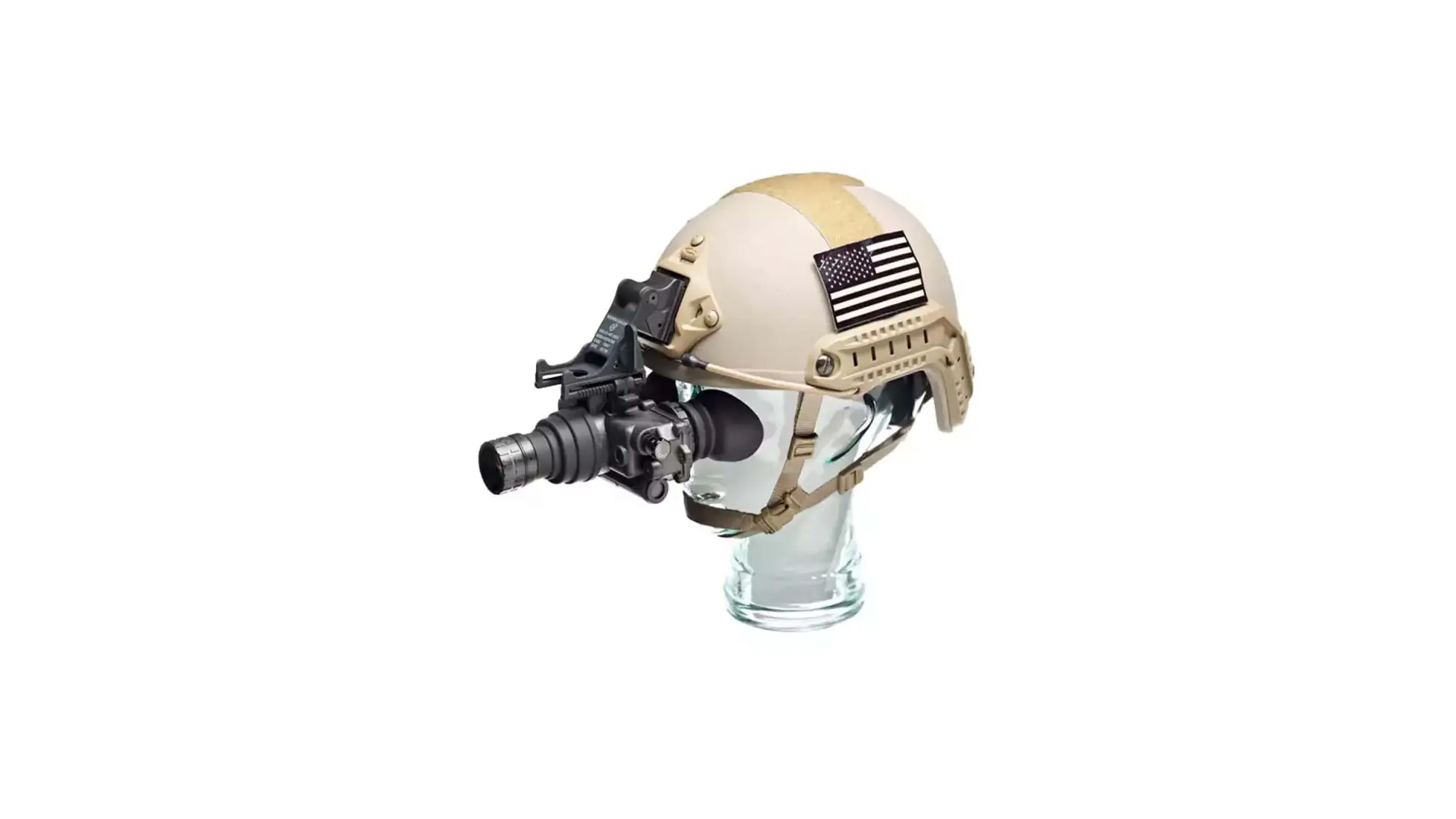
Best overall: AGM PVS-7 3AL1 Gen 3
1x27mm · USA Gen 3 auto-gated "Level 1" tube · 64-72 lp/mm · green phosphor · 40° FOV · biocular · IP67 · dual-fuel AA/CR123A · up to 60 hr
around $4,000exact price on OpticsPlanet
This is the best-performing goggle here in the dark, because it puts a genuine Gen 3 tube in the legendary PVS-7 housing. The "3AL1" name decodes to Generation 3, Autogated, green phosphor (L), Level 1 cosmetic grade, so you get roughly 50,000x light amplification that works down to near-total darkness where a Gen 2+ tube would need its IR on, plus a Level 1 tube that is certified practically spotless in the center of the view. It is a biocular design (one tube feeding both eyes), so you get the neurological comfort of two-eye viewing over long observation without the cost of two separate tubes. It runs 60 hours on common AA or CR123A cells, is IP67 waterproof, and mounts to a head strap or helmet. Be clear about what biocular means, though: it gives two-eye comfort but not true depth perception, and its central lens makes aiming through a rifle optic impractical. It is best for static observation, security and stargazing rather than dynamic shooting.
Pros
- A genuine USA Gen 3 auto-gated tube (64-72 lp/mm) with roughly 50,000x amplification, the best low-light performance here, usable in near-total darkness
- A Level 1 tube, AGM's strictest cosmetic grade, certified practically spotless in the center of the field of view
- Biocular two-eye viewing for real comfort on long observation, at a fraction of the cost of a true dual-tube Gen 3 binocular
- Runs up to 60 hours on AA or CR123A, is IP67 waterproof, and mounts to a head strap or helmet
Cons
- Biocular, not binocular: one tube feeds both eyes, so it gives two-eye comfort but no true depth perception
- Its central objective lens sits in front of your face, so aiming through a rifle optic (passive aiming) is impractical
- An analog tube: no daytime use (bright light destroys it) and no recording, and at 1.5 lb it is heavier than a monocular
- A Gen 3 tube is ITAR-restricted: US persons only, and it cannot be taken or shipped out of the country
Best for: static observation and property security, stargazing, and hands-free navigation where you want the best Gen 3 low-light image with two-eye comfort. Need to aim through a rifle optic or want real depth perception? See the RIX true binocular below, or a monocular in our night vision monocular guide.
Key specifications
| Manufacturer | AGM Global Vision |
|---|---|
| Type | Analog Gen 3, biocular (one tube, two eyepieces) |
| Tube | Gen 3, auto-gated, Level 1, green phosphor |
| Resolution | 64-72 lp/mm |
| Magnification | 1x |
| Objective | 27 mm (f/1.2) |
| Field of view | 40 degrees |
| Battery | Two AA or one CR123A, up to 60 hr |
| IR illuminator | Built-in 850nm, with flood lens |
| Rating | IP67 waterproof |
| Weight | 1.5 lb |
| Warranty | AGM 3-year |
“It's absolutely crazy what you can see at night. Not sure why the pvs7 gets so much hate for. I'd buy it again. Can see everything clear without an ir light. Have to use the ir light when going into pitch black barn but that's acceptable.”
Jo Rice, verified owner (IN) via OpticsPlanet
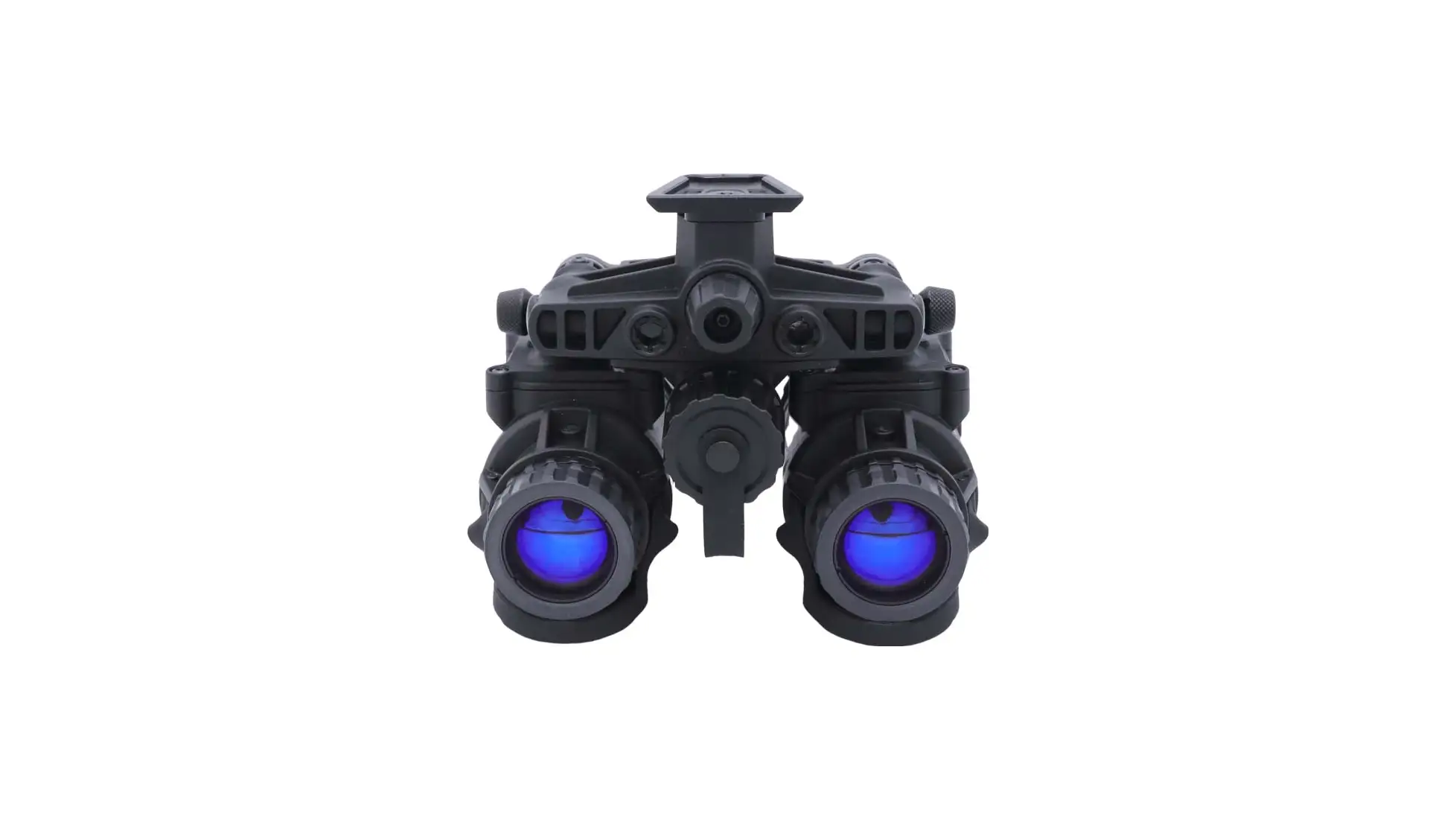
Best for depth perception: RIX RNV-31 Dual-Tube Binocular
1x25mm · TRUE dual-tube binocular · white-phosphor tubes, 1400 FOM · 64 lp/mm · 40° FOV · 500 g (lightest) · gain-adjustable · J-arm · up to 20 hr
around $4,000exact price on OpticsPlanet
This is the pick when you want real depth perception, because unlike the PVS-7 goggles it is a true dual-tube binocular: two separate tubes, one per eye, so your brain gets the parallax it needs to judge distance and navigate terrain naturally. That also frees you to passively aim through a night-vision-compatible red dot, which the center-lens PVS-7 cannot do. It runs white-phosphor tubes rated to a 1400 figure of merit and 64 lp/mm, which owners find easy on the eyes, and at just 500 grams it is by far the lightest device here, a real advantage cantilevered off a helmet. A gain-adjustable power knob and a J-arm mount round it out. Owners who have used military PVS-31s are candid that these are not on that level, but rate them a great product for the price. The trade is cost: real dual-tube depth perception is why it is the most expensive pick here.
Pros
- A true dual-tube binocular (one tube per eye), so it delivers real stereoscopic depth perception, unlike the single-tube PVS-7 goggles
- The dual-tube layout allows passive aiming through a red dot, which a center-lens PVS-7 cannot do
- The lightest device here at just 500 grams, a real comfort advantage on a helmet over long sessions
- White-phosphor tubes (1400 FOM, 64 lp/mm) owners find easy on the eyes, with a gain-adjustable knob and J-arm mount
Cons
- The most expensive pick here, the price of true dual-tube depth perception
- Owners who have used military PVS-31s note it is a step below that tier, as expected at this price
- An analog tube device: no daytime use and no recording
- A thin owner-review base (3 reviews) at this early stage
Best for: the buyer who wants genuine depth perception for moving on foot and the ability to passive-aim through a rifle optic, in the lightest package here. If you mostly observe from a fixed position and want the best Gen 3 low-light image for less, the AGM PVS-7 3AL1 is the value.
Key specifications
| Manufacturer | RIX |
|---|---|
| Type | Analog dual-tube binocular (true two-tube) |
| Tubes | White phosphor, 1400 FOM |
| Resolution | 64 lp/mm |
| Magnification | 1x |
| Objective | 25 mm |
| Field of view | 40 degrees |
| Weight | 500 g (lightest here) |
| Battery | AA, up to 20 hr |
| Mount | J-arm, left/right eye selectable |
| Focus | 0.25 m to infinity |
“For the price, these are really good. I have looked through pvs 31's when I was in the army and these are obviously not on par with those but are still really good quality. Like I said, for the price, you get a great product.”
Jay, verified owner (IA) via OpticsPlanet
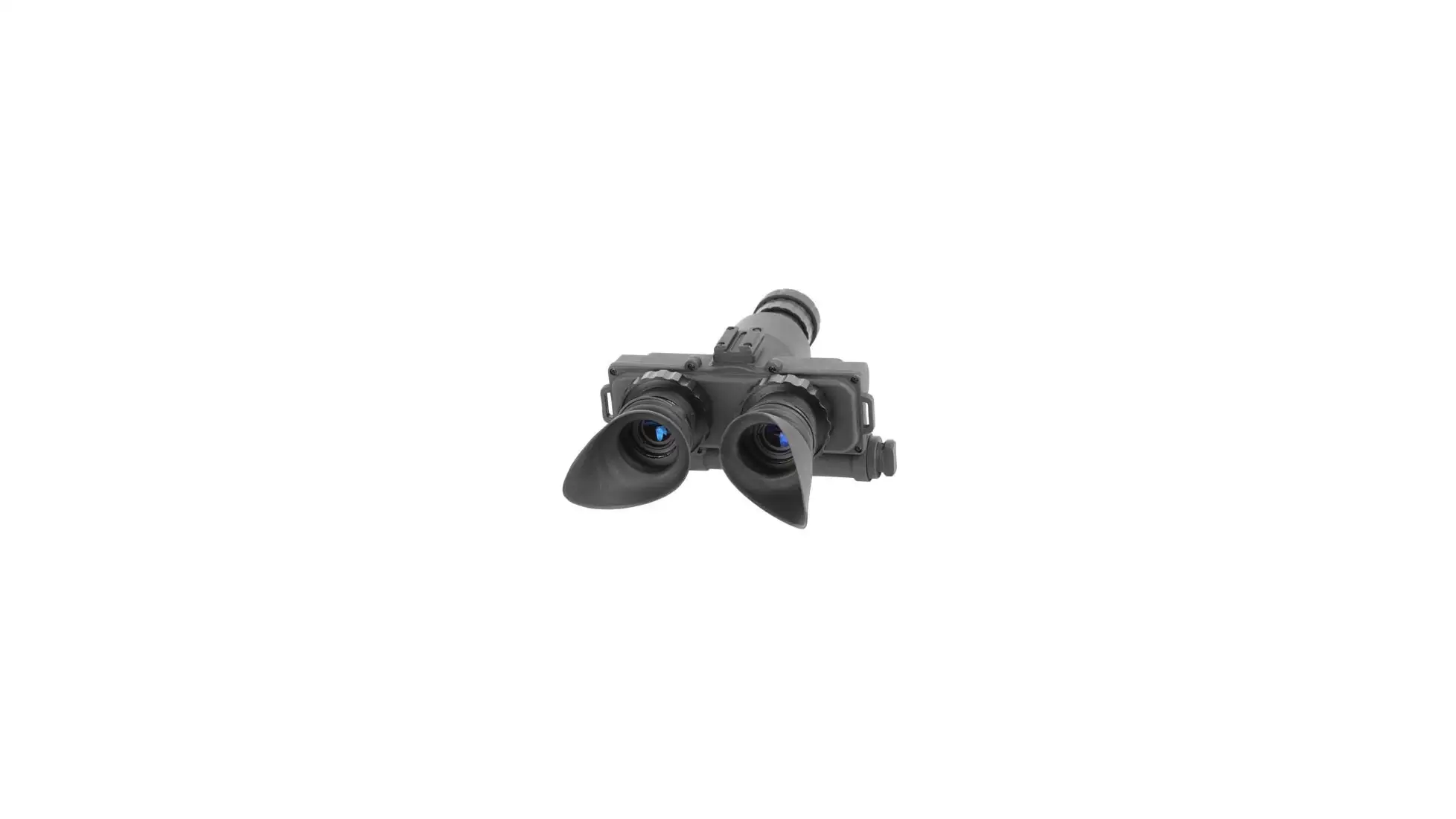
Best value: ATN NVG7-2W Gen 2+
1x26mm · Gen 2+ white-phosphor tube · biocular · 40° FOV · built-in wide-angle IR · flip-up helmet mount · runs on AA or CR123A · waterproof
around $2,400exact price on OpticsPlanet
This is the most affordable way into a helmet-mountable goggle, and the entry point if a Gen 3 tube is out of budget. The NVG7-2W is a biocular goggle on the classic form factor, running a Gen 2+ white-phosphor tube that owners describe as clear and well-built, in a lightweight 1.1 lb housing with a flip-up head mount included. It runs on common AA or CR123A batteries and has a wide-angle built-in IR illuminator for total darkness. Owners call it a steal for the image quality, with one noting the white-phosphor tube is easy on the eyes and the build is solid, and rate the battery life phenomenal. The honest position: a Gen 2+ tube gathers less light and resolves less than the Gen 3 AGM, and like all PVS-7-style goggles it is biocular, so it trades depth perception for two-eye comfort. A wide interpupillary head may find the eye spacing tight. For a budget, hands-free Gen 2+ goggle, it delivers.
Pros
- The lowest price here for a helmet-mountable goggle, the value entry when Gen 3 is out of budget
- A Gen 2+ white-phosphor tube owners call clear and easy on the eyes, in a light 1.1 lb housing
- Runs on common AA or CR123A batteries with phenomenal battery life, and includes a flip-up head mount
- A wide-angle built-in IR illuminator for total-darkness use
Cons
- A Gen 2+ tube gathers less light and resolves less than the Gen 3 AGM PVS-7 3AL1
- Biocular like the other PVS-7-style goggles: two-eye comfort but no true depth perception
- The eye spacing may be tight for a wide interpupillary distance (one owner at 72.5 mm noted it)
- An analog tube: no daytime use and no recording
Best for: the budget-minded buyer who wants a real hands-free night vision goggle without paying Gen 3 prices, for observation and navigation. Step up to the AGM PVS-7 3AL1 for Gen 3 low-light performance, or the RIX for true depth perception.
Key specifications
| Manufacturer | ATN |
|---|---|
| Type | Analog Gen 2+, biocular |
| Tube | Gen 2+, white phosphor |
| Magnification | 1x |
| Objective | 26 mm |
| Battery | AA or CR123A |
| IR illuminator | Built-in wide-angle |
| Mounting | Handheld / head / helmet (flip-up) |
| Rating | Waterproof, fog-resistant |
| Weight | 1.1 lb |
“Astonishingly good quality, image is clear, housing is built well, no weird lens issues. As long as you have a normal sized head these are a steal. People who complain about biocular nvgs need to use them before they make their assessment.”
Dylan, verified owner (MI) via OpticsPlanet
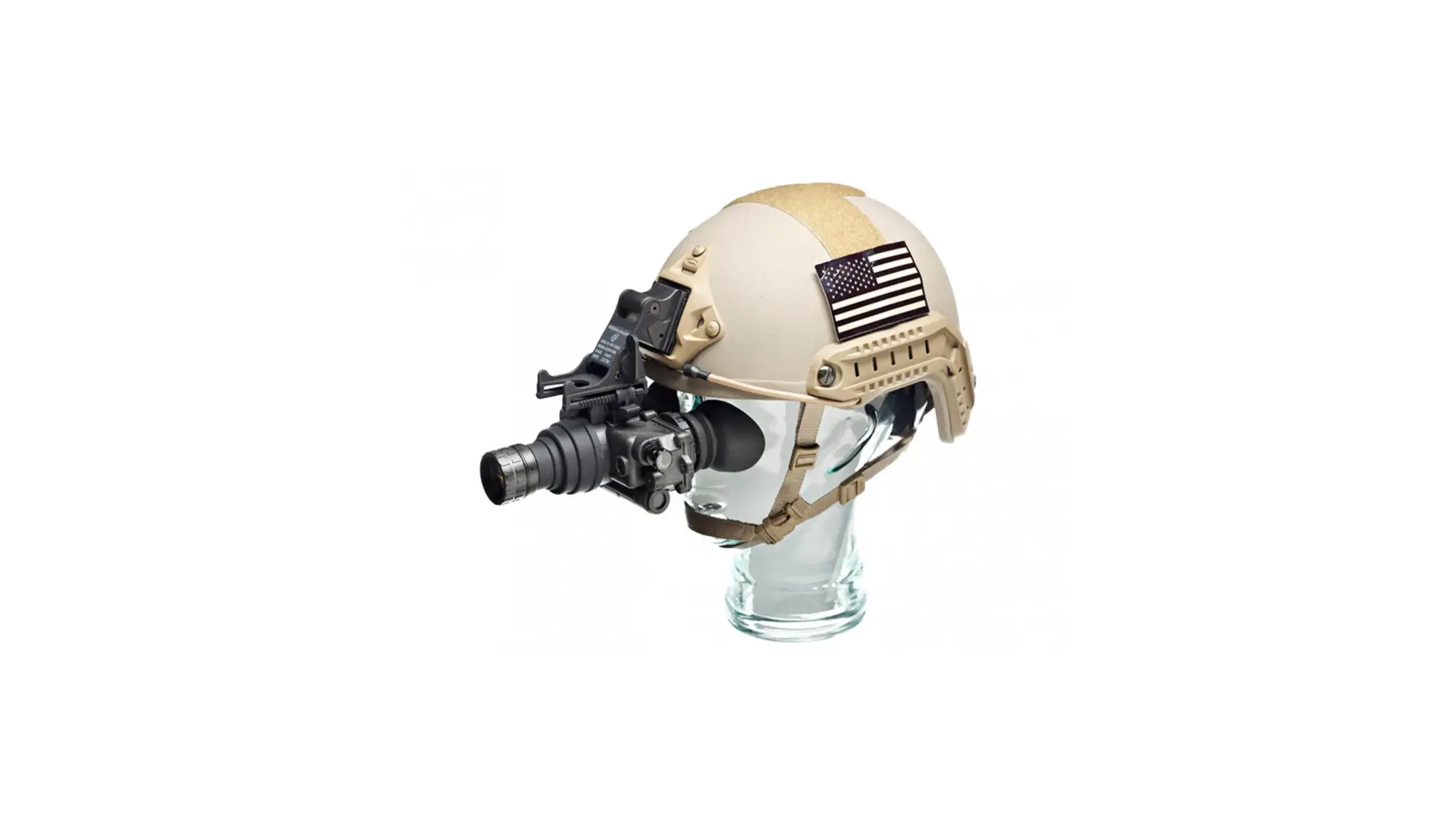
Best green-phosphor PVS-7: AGM PVS-7 NL1 Gen 2+
1x27mm · Gen 2+ green-phosphor tube · biocular PVS-7 platform · 45-51 lp/mm · 40° FOV · built-in IR · IP67 · head or helmet mount · 3-year warranty
around $3,000exact price on OpticsPlanet
This is the pick if you want AGM's combat-proven PVS-7 build and prefer a green-phosphor image, without stepping up to the Gen 3 price. It uses a Gen 2+ green-phosphor tube in the same rugged IP67 PVS-7 housing as the 3AL1, mounts to a head strap or helmet, and runs the same simple single-knob controls. Owners point out a real reason to choose green over the currently-hyped white phosphor: one who tried white first found green worked better for him in low-light wooded country, while white can have the edge in a lit city. So this is less a compromise than a deliberate choice of phosphor and generation. The honest trade versus the 3AL1: a Gen 2+ tube at 45-51 lp/mm gathers less light and resolves less than the Gen 3 Level 1, and it is biocular, so no true depth perception. For a rugged green-phosphor PVS-7 at a mid price, it is a solid pick.
Pros
- The combat-proven AGM PVS-7 housing (IP67, simple single-knob controls) with a green-phosphor Gen 2+ tube at a mid price
- Green phosphor can outperform white in dark wooded country, per an owner who compared both, so it is a deliberate choice, not just a downgrade
- Head or helmet mountable, with a built-in IR illuminator and a 3-year warranty
- Owners praise the picture quality, light weight and the military-proven platform
Cons
- A Gen 2+ tube at 45-51 lp/mm gathers less light and resolves less than the Gen 3 AGM PVS-7 3AL1
- Biocular like the other PVS-7 goggles: two-eye comfort but no true depth perception
- Priced above the Gen 2+ ATN NVG7 while staying below the Gen 3 3AL1, so it is a middle option
- An analog tube: no daytime use and no recording
Best for: the buyer who specifically wants the rugged AGM PVS-7 platform with a green-phosphor image at a mid price. Choose the 3AL1 for Gen 3 low-light performance, the ATN NVG7 to save money, or the RIX for true depth perception.
Key specifications
| Manufacturer | AGM Global Vision |
|---|---|
| Type | Analog Gen 2+, biocular |
| Tube | Gen 2+ NL1, green phosphor |
| Resolution | 45-51 lp/mm |
| Magnification | 1x |
| Objective | 27 mm |
| Field of view | 40 degrees |
| Battery | Lithium, one cell |
| IR illuminator | Built-in, with flood lens |
| Rating | IP67 waterproof |
| Weight | 1.5 lb |
| Warranty | AGM 3-year |
“First I had purchased the white phosphor tube pvs7 because of all the hype. Then I found out the white phosphor works better in the city. Well I live in the country so the green would work out much better in low light wooded areas. You won't go wrong with this pvs7.”
Guzzi Fabrication, verified owner (TX) via OpticsPlanet
How to choose night vision goggles
A few things decide most of it:
- Biocular vs true binocular. A PVS-7-style biocular (AGM, ATN) gives two-eye comfort but no depth perception and cannot passive-aim; a true dual-tube binocular (RIX) gives real depth and can aim through a red dot, for more money.
- Tube generation. Gen 3 (the AGM 3AL1) gathers far more light and works in near-total darkness; Gen 2+ (ATN NVG7, AGM NL1) is cheaper but dimmer and lower resolution.
- Green vs white phosphor. A real choice, not a ranking. White is popular for contrast and low fatigue; green can win in dark wooded country. Pick by use and eye preference.
- Know the limits. Analog tubes have no daytime use and no recording, bright light can destroy them, and Gen 3 is ITAR-restricted to US persons. At 1x, positive ID is within roughly 100 to 150 yards.
Want to aim one rifle in the dark instead? See our best night vision scopes. Prefer a handheld or single-eye device? See our best night vision monoculars. Prefer heat detection? Read thermal vs night vision.
FAQ
What is the difference between biocular and binocular night vision goggles?
A biocular goggle, like the PVS-7 style (the AGM and ATN picks here), uses one image-intensifier tube optically split to both eyepieces. You get the comfort of two-eye viewing, but because both eyes see the exact same flat image, there is no true depth perception. A true binocular, like the RIX RNV-31, uses two separate tubes, one per eye, so your brain gets real stereoscopic depth to judge distance and move on foot. That extra tube is why true binoculars cost more.
Can you use night vision goggles for hunting?
Yes, mainly for hands-free scanning, navigation and spotting game in the dark, then you shoot with a separate weapon optic. Note that PVS-7-style biocular goggles cannot be used to passively aim through a rifle scope, because the center lens blocks a cheek weld; a dual-tube binocular like the RIX can. All are 1x with no magnification, so positive identification is realistically within about 100 to 150 yards. Always confirm night-hunting regulations for your state and species.
How much do night vision goggles cost?
Real image-intensifier goggles are a premium purchase, and nothing on this page comes in under $2,000. The tiers stack in a predictable order: a Gen 2+ goggle like the ATN NVG7 is the cheapest way in, a green-phosphor Gen 2+ PVS-7 like the AGM NL1 sits above it, a Gen 3 PVS-7 like the AGM 3AL1 costs more again, and a true dual-tube binocular like the RIX RNV-31 is the dearest of the four picks here. You are paying for the tube: Gen 3 gathers far more light than Gen 2+, and a second tube adds depth perception. The current figure for each is on its card above.
Green or white phosphor: which is better?
It is a genuine choice, not just newer-is-better. White phosphor is currently popular for perceived contrast and reduced eye fatigue and can have the edge in lit or urban settings. Green is the classic image, and one owner here found it actually worked better in dark wooded country. Both are offered on several of these tubes. Pick by where you use it and what your eyes prefer; performance depends far more on the tube generation and grade than on the color.
Can I take night vision goggles out of the US?
A Gen 3 device like the AGM PVS-7 3AL1 is classified as a defense article under ITAR: it can only be sold to US persons, and taking or shipping it out of the country without State Department authorization is a federal offense, with licensing that runs weeks and is often denied. Gen 2+ units are less restricted but still export-controlled. If you travel internationally, do not assume you can bring night vision along; check the current rules first.
Related: best night vision scopes · best night vision monoculars · thermal vs night vision.