The best shotgun scope
Quick answer: the best shotgun scope is the Leupold VX-Freedom 3-9x40 UltimateSlam (around $300), because it is the only scope here whose maker describes its reticle as designed specifically for muzzleloaders and shotguns, with aiming points out to 300 yards from a 100 yard zero, and at 12.2 oz it is also the lightest. The runner-up for close timber is the Sig Tango MSR 1-6x24 (around $270), the only scope here that starts at a true 1x, for less money, but it has no shotgun reticle and weighs 18.5 oz. On a budget, the Vortex Crossfire II 3-9x40 (around $130), the cheapest of these picks. The Burris Fullfield Shotgun is named but not ranked: its parallax is set at 50 yards, but its "E1" name promises a reticle it does not have and its owner record is thin. For turkey or buckshot, a red dot is the better tool than any of them.
A slug gun needs three things from a scope: low power, long and forgiving eye relief, and a build that holds zero under 12-gauge recoil. Shots come in timber or fields inside about 150 yards from a hard-kicking gun, so a high-magnification optic is the wrong tool. What separates a true shotgun scope from a hunting scope that tolerates a shotgun is the reticle: a slug drops steeply and unpredictably compared with a rifle bullet, and a reticle calibrated for that drop is the difference between a mark and a guess. One ranked pick here has that reticle; the other two are honest general-purpose scopes that fit the recoil and the range.
How we reviewed them: a research-based roundup built from the retailer specification sheets, the makers' own specifications and the owner-review record on OpticsPlanet. We have not bench-tested these scopes; scores are our editorial opinion, and owner ratings are shown attributed to their source. See how we evaluate.
Shotgun scopes side by side
| Scope | Magnification | Focal plane | Reticle | Parallax | Eye relief | Weight | Owner rating | Price |
|---|---|---|---|---|---|---|---|---|
| Leupold VX-Freedom 3-9x40 UltimateSlam | 3-9x40 | Second (SFP) | UltimateSlam, for muzzleloaders and shotguns | Fixed | 4.2 - 3.7 in | 12.2 oz | 4.7/5, 97 reviews on OpticsPlanet | around $300 |
| Sig Sauer Tango MSR 1-6x24 SFP | 1-6x24 | Second (SFP) | Illuminated BDC6, 11 brightness levels | Fixed | 3.74 - 3.93 in | 18.5 oz | 4.6/5 from 285 reviews on OpticsPlanet | around $270 |
| Vortex Crossfire II 3-9x40 | 3-9x40 | Second (SFP) | V-Plex or Dead-Hold BDC, non-illuminated | Fixed at 100 yds | 3.8 in (Vortex; the retailer lists 3.8 - 4.4 in) | 14.8 oz (Vortex) | 4.7/5 from 237 reviews on OpticsPlanet | around $130 |
| Burris Fullfield 3-9x40 Ballistic Plex Shotgun | 3-9x40 | Second (SFP) | Ballistic Plex, non-illuminated (not the E1) | Fixed at 50 yds | 3.1 - 3.4 in | 13 oz | 4.9/5 from 7 reviews on OpticsPlanet | around $170 |
Specs are for the model on each card: the VX-Freedom in its UltimateSlam version, the black Sig Tango MSR with the BDC6 reticle, the Crossfire II in its V-Plex version and the Burris 200346, whose reticle, parallax and length are Burris's own figures where the retailer's differ. The Leupold owner rating covers all seven reticle versions on its listing. Prices verified November 15, 2026; check price and availability on OpticsPlanet.
Our picks for a slug gun
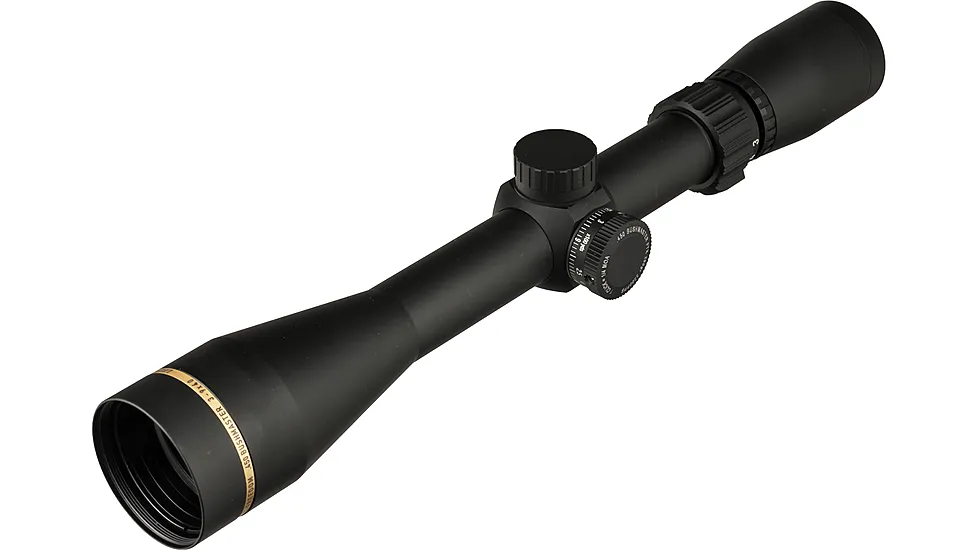
Best shotgun scope overall: Leupold VX-Freedom 3-9x40 UltimateSlam
Second focal plane · 3-9x40 · 1-inch tube · UltimateSlam reticle for muzzleloaders and shotguns · 100 yd zero, aiming points to 300 yds
around $300exact price on OpticsPlanet
🏆 Named an American Rifleman Editors’ Pick (2018) for its Twilight Light Management System (source: American Rifleman)
This is the pick that is actually a shotgun scope. The VX-Freedom 3-9x40 ships in seven reticle versions on one listing, and one of them, the UltimateSlam (Leupold Part 174184), is described by Leupold as designed specifically for muzzleloaders and shotguns: it builds on the classic Duplex, uses a 100 yard zero and gives aiming points out to 300 yards, with marks on the power selector ring so you can tune those points to your own load. It is second focal plane, so the holds are only true at maximum magnification, and Leupold states the reticle is not caliber specific. The rest is why this line survives on hard-kicking guns: it is built to pass Leupold's Punisher test at three times .308 recoil, owners run the line on .450 Bushmaster and .45-70 without a zero shift, and at 12.2 oz it is the lightest scope on this page. Choose the UltimateSlam reticle on the product page; the Duplex, Hunt-Plex and rimfire versions sit beside it.
Pros
- UltimateSlam reticle, which Leupold describes as designed specifically for muzzleloaders and shotguns, with aiming points out to 300 yards from a 100 yard zero
- Marks on the power selector ring let you tune the aiming points to your own load; Leupold states the reticle is not caliber specific
- Built to pass Leupold's Punisher test at three times .308 recoil, and owners run the line on .450 Bushmaster and .45-70 without a zero shift
- The lightest scope on this page at 12.2 oz, with long 4.2 to 3.7 inch eye relief
- Made in the USA (Beaverton, Oregon) and backed by Leupold's lifetime guarantee, which Leupold says covers any owner with no proof of ownership or warranty card
Cons
- Second focal plane, so the UltimateSlam holds are only true at maximum magnification
- Fixed parallax with no side focus
- Capped finger-click turrets made to zero and forget, not to dial in the field
- Non-illuminated reticle
- The listing sells seven reticle versions, so you have to pick the UltimateSlam row yourself
Best for: a rifled slug barrel or a muzzleloader on deer, where you want drop marks its maker designed for the job. Take the Sig Tango MSR for close timber, where a true 1x matters more.
Key specifications
| Magnification | 3-9x |
|---|---|
| Objective lens | 40 mm |
| Reticle | UltimateSlam (non-illuminated), for muzzleloaders and shotguns |
| Focal plane | Second focal plane (SFP) |
| Tube diameter | 1 in |
| Field of view | 33.1 - 13.6 ft at 100 yds |
| Eye relief | 4.2 - 3.7 in |
| Adjustment click | 1/4 MOA (capped, finger click) |
| Parallax | Fixed (no adjustment) |
| Weight | 12.2 oz |
| Made in | USA (Beaverton, Oregon) |
| Version priced | UltimateSlam, MPN 174184 (one of seven reticle versions on the listing) |
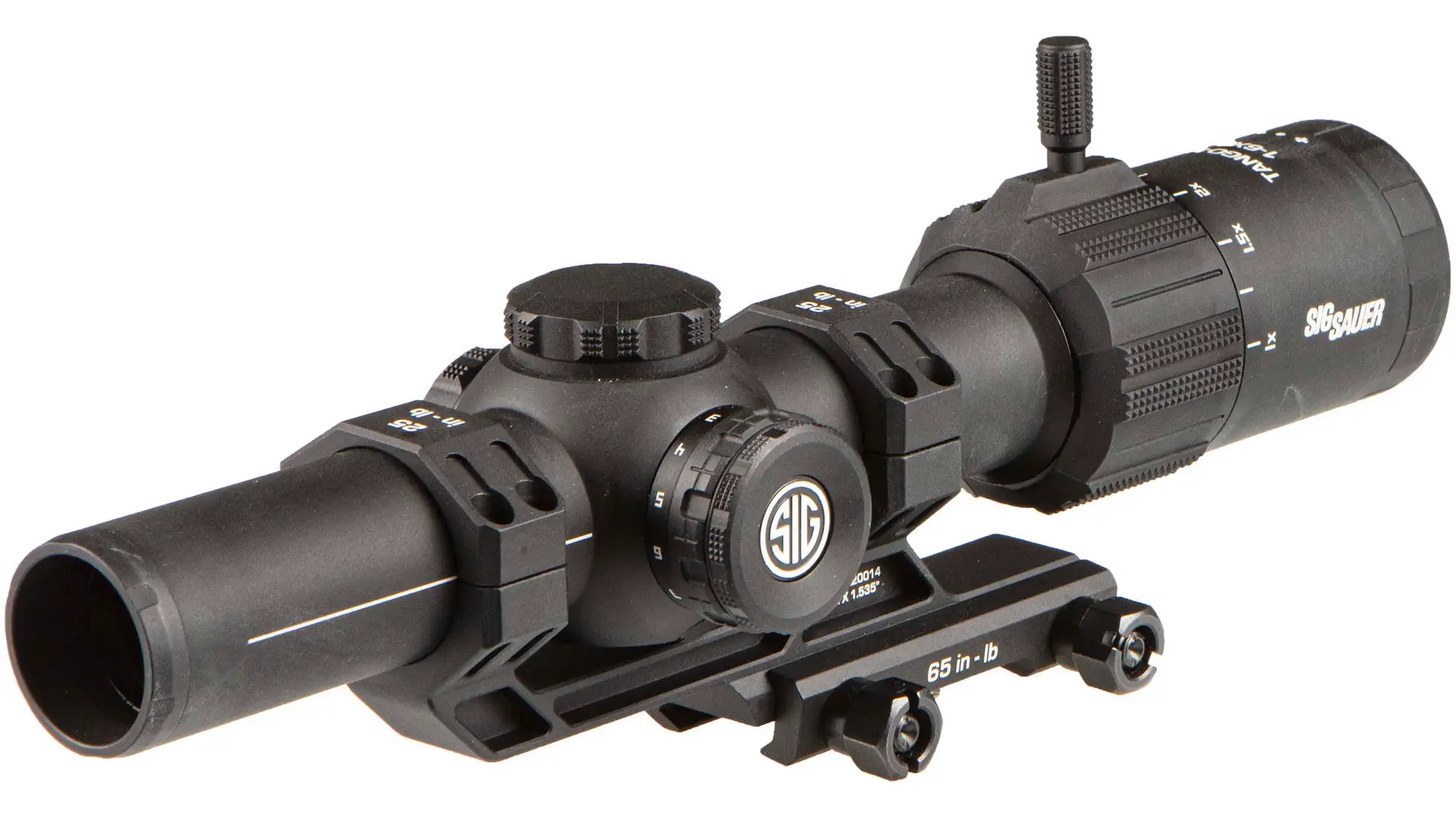
Best for close timber: Sig Sauer Tango MSR 1-6x24 SFP
1-6x · 24mm · 30mm tube · second focal plane · illuminated BDC6 reticle · ALPHA-MSR mount included (per Sig) · Sig Infinite Guarantee
around $270exact price on OpticsPlanet
For deer in thick timber, where most slug guns live, a true 1x is the ideal, and this is the only scope on this page that starts at 1x. It runs like a red dot at 1x for fast, both-eyes-open shots, then zooms to 6x if a field opens up. The illuminated BDC6 reticle has 11 brightness levels, and eye relief runs 3.74 to 3.93 inches. Check the variant list before ordering: the listing also sells an FL-6 Hellfire version and a grey version, and Sig lists its ALPHA-MSR mount, throw lever and flip caps as included with this version. The trade against the Leupold is honest: no shotgun reticle, so your slug holds are yours to work out, and 18.5 oz against 12.2 oz. Confirm it clears your own shotgun's mounting before you order.
Pros
- The most-reviewed pick here (4.6/5 across 285 reviews), a strong signal of real-world satisfaction
- The most LPVO for the money at this end of the market, and the listing gives you a Hellfire-reticle option and a grey option beside it if either suits you better
- Clear 1-6x glass with an 11-brightness illuminated BDC6 reticle; owners zero it in a few rounds, and three reviews report more than 1,000 rounds through it, one an 8,200-round update
- Backed by the Sig Sauer Infinite Guarantee, which is transferable and does not ask for a receipt
Cons
- Second focal plane, so the BDC holds are only exact at 6x, unlike the FFP Strike Eagle
- Two reviewers say the anodized finish marks and scratches easily
- The illumination is usable but not the brightest, and can wash out in direct sun
- Sig prints the BDC6 drawing in MOA at 6x but, in the product page and manuals we read, no zero distance or hold distances, so you confirm the holds with live fire
Best for: a slug gun used on deer in thick timber, where shots come fast and close. Take the Leupold if you want drop marks its maker designed for shotguns.
Key specifications
| Manufacturer | Sig Sauer |
|---|---|
| Magnification | 1-6x |
| Objective | 24 mm |
| Tube | 30 mm |
| Focal plane | Second (SFP) |
| Reticle | Illuminated BDC6 (11 brightness levels) |
| Adjustment click | 0.5 MOA (retailer listing; Sig prints none) |
| W/E travel | 100 MOA |
| Eye relief | 3.93 in (low) / 3.74 in (high), Sig |
| Weight | 18.5 oz |
| Sealing | Waterproof, fogproof, shockproof (Sig); IPX-7 (retailer listing) |
| Included | ALPHA-MSR cantilever mount, throw lever, flip caps (per Sig; the retailer's field reads "Standard") |
| Warranty | Sig Sauer Infinite Guarantee |
“IMHO this is the very best LPVO for the price on the market. This optic outperforms optics costing hundreds of dollars more. Great for the new shooter, anyone who is on a budget, anyone who wants a very good optic for their MSR... If any shooter is at all uncertain as to what optic to buy for their MSR, I recommend you buy it - you won't regret it.”
Bulldog, verified owner (RI) via OpticsPlanet
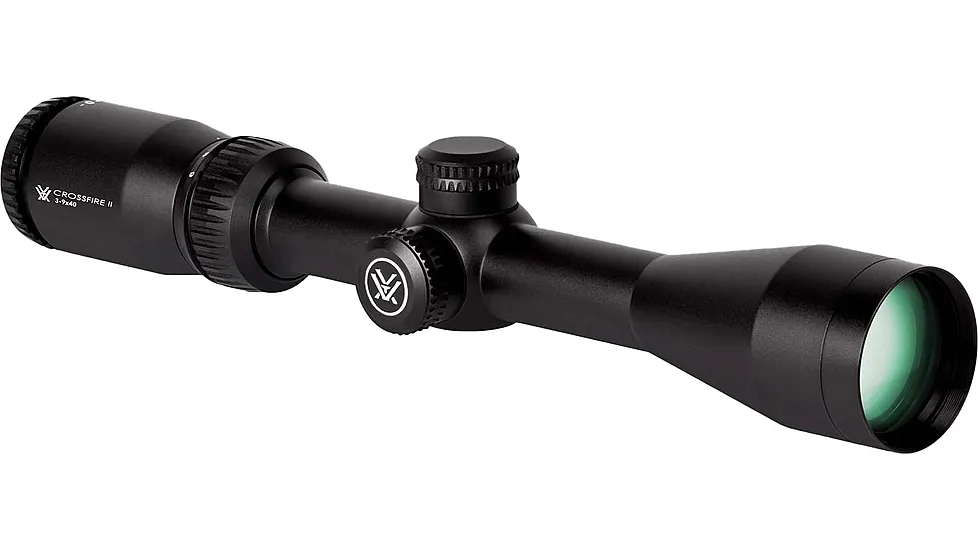
Best budget: Vortex Crossfire II 3-9x40
Second focal plane · 3-9x40 · 1-inch tube · Dead-Hold BDC or V-Plex reticle
around $130exact price on OpticsPlanet
The honest budget answer for a slug gun, and the cheapest scope of these picks. It gives bright, usable glass from 3x to about 6x, a forgiving 3.8 inch eye relief (Vortex's figure), and a single-piece tube that owners run on .308 and .30-06 without losing zero, backed by the unlimited, unconditional Vortex VIP warranty. Its parallax is fixed at 100 yards. The listing sells two reticles: the plain V-Plex crosshair, which is the one priced here, and the Dead-Hold BDC, which carries holdover hashes. If you want a reticle built for slug drop rather than one you work out yourself, that is what the Leupold above is for.
Pros
- Bright, clear glass from 3x to about 6x that punches well above its price (owners rank it near scopes costing far more)
- Forgiving 3.8 in eye relief (Vortex's figure) and a large low-power eye box for fast, comfortable target acquisition
- Single-piece aircraft-grade aluminum tube holds zero under heavy recoil; nitrogen-purged, waterproof and fogproof
- Unlimited, unconditional Vortex VIP lifetime warranty (covers damage however it happened and whoever was at fault, per Vortex)
- Light and simple to run, with a fast-focus eyepiece and capped set-and-forget turrets
Cons
- Glass softens at the edges toward maximum 9x, with some color fringing in high-contrast light (typical budget-glass limits)
- Fixed 100-yard parallax: fine for centerfire hunting, but not ideal for precision rimfire at 25 to 50 yards
- Capped, soft-clicking turrets are made to set and forget, not to dial in the field; the SFP holdovers only track true at 9x
- Non-illuminated, and the 1-inch tube with 60 MOA of travel limits serious long-range dialing
Best for: a slug gun on a tight budget, where you will work out your own holdovers on paper. Take the Leupold if you want a reticle designed for shotguns.
Key specifications
| Magnification | 3-9x |
|---|---|
| Objective lens | 40 mm |
| Reticle | Dead-Hold BDC or V-Plex (non-illuminated) |
| Focal plane | Second focal plane (SFP) |
| Tube diameter | 1 in |
| Field of view | 34.1 - 12.6 ft at 100 yds |
| Eye relief | 3.8 in (Vortex; the retailer lists 3.8 - 4.4 in) |
| Adjustment click | 1/4 MOA (capped, resettable) |
| Parallax | Fixed at 100 yds |
| Elevation/windage travel | 60 MOA |
| Weight | 14.8 oz (Vortex) |
| Sealing | Waterproof, fogproof, shockproof |
| Warranty | Vortex VIP: unlimited, unconditional, lifetime |
“Great scope, regardless of the price, but very good value. Clarity and eye relief are fantastic.”
jpfadden, verified owner (NH) via OpticsPlanet
What a slug-gun scope actually needs
- A reticle meant for slugs. This is the one thing a general-purpose hunting scope cannot give you. A shotgun reticle like Leupold's UltimateSlam is zeroed at 100 yards and marks the drop out to 300, and it is tuned to your load with the power ring rather than assuming a caliber. Everything else on this list is a specification; this is the actual difference.
- Low power. Slug and buckshot ranges are short, so 1x to 9x is plenty. A true 1x (the Sig) is best in timber; a 3-9x (the Leupold or Vortex) suits open-country deer.
- Long, forgiving eye relief. A 12-gauge slug recoils hard toward your face; roughly 3.5 inches or more of eye relief with a generous eye box avoids scope bite.
- A recoil-proven build. The scope has to hold zero through slug recoil. The VX-Freedom's proven use on .450 Bushmaster and .45-70 is the clearest evidence of that here.
- Turkey instead of slugs? For a shotgun used on turkey or close buckshot, a red dot is lighter and faster; see best red dot for a shotgun.
One more dedicated shotgun scope, and why its name is misleading
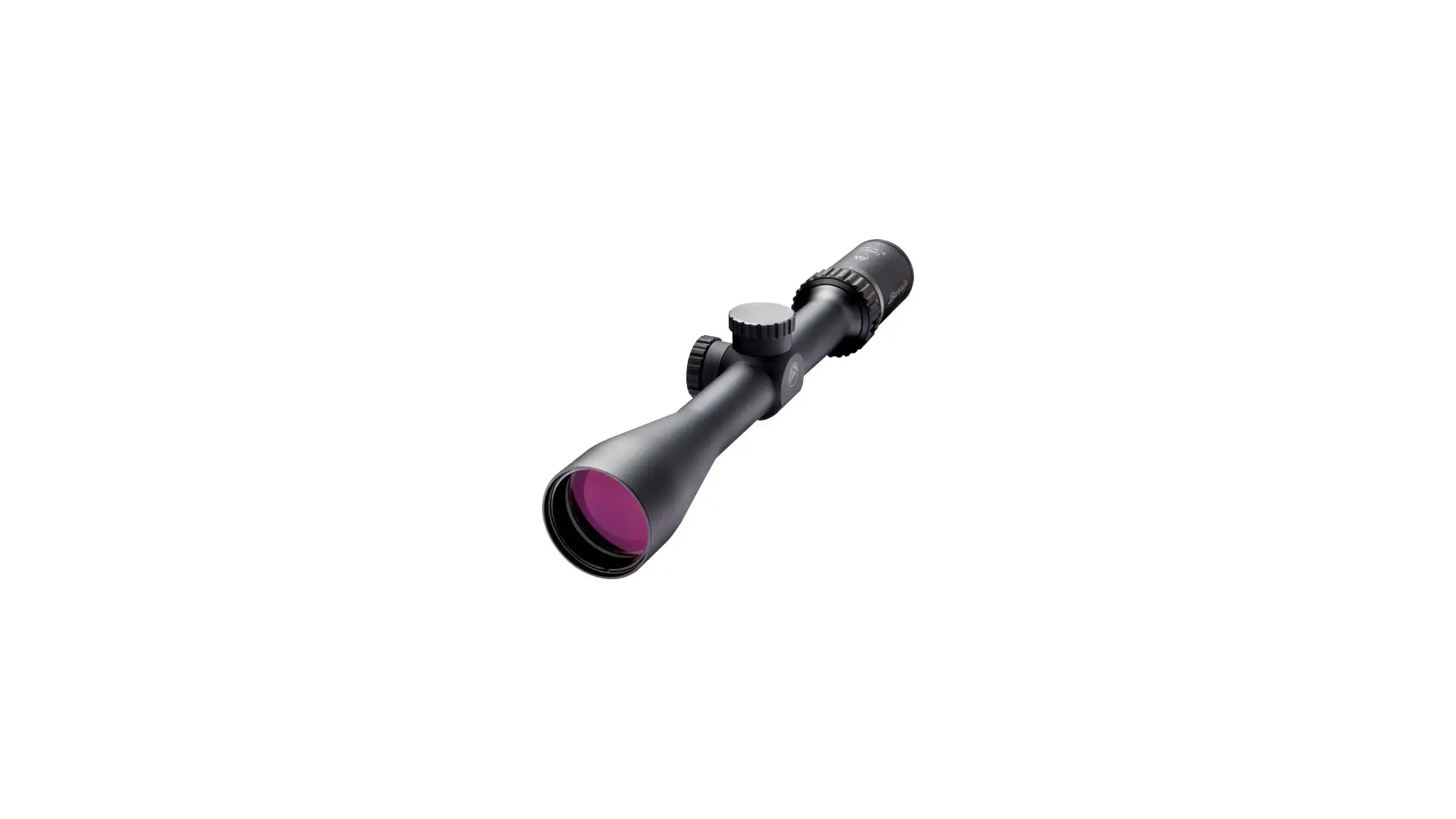
Named, not ranked: Burris Fullfield 3-9x40 Ballistic Plex Shotgun
3-9x40 · 1-inch tube · second focal plane · Ballistic Plex reticle (not the E1) · parallax fixed at 50 yds · non-illuminated
around $170exact price on OpticsPlanet
This one is genuinely set up for a shotgun rather than merely named for one: Burris fixes its parallax at 50 yards, where the rifle version of the same scope is fixed at 100, a real optical difference at slug distances. Now the part the listing gets wrong. It is sold as a Fullfield "E1" and the retailer's specification table calls the reticle a Ballistic Plex E1, but Burris's own specification for part 200346 gives it the plain Ballistic Plex, and Burris lists the Ballistic Plex E1 on part 200320, a model it now marks discontinued. So the E1 reticle the name promises is not in this scope, and Burris publishes no slug or sabot calibration for the plain Ballistic Plex either. Burris also gives the length as 12.2 inches where the retailer says 14.85, which matters on a short receiver. We name it rather than rank it because of the owner record: of seven reviews, only two describe this scope on a shotgun, both on a Savage 220. Both are positive; one says it was easy to sight in and holds a zero, the other rates the drop reticle an advantage at longer range while finding its dots a little small.
Pros
- Parallax fixed at 50 yards, where the rifle version of the same scope is fixed at 100
- A trajectory-compensating Ballistic Plex reticle at a lower price than the Leupold or the Sig on this page
- The two owners who run it on a shotgun are positive: one says it was easy to sight in and holds a zero
Cons
- Sold as an "E1", but Burris gives part 200346 the plain Ballistic Plex; Burris lists the E1 reticle on discontinued part 200320
- Burris publishes no slug or sabot calibration for the reticle, so confirm the drop marks on paper with your own load
- Ships with no lens covers: the retailer's package contents list only the scope, a manual, a lens cloth and tools
- The shortest eye relief on this page, 3.1 to 3.4 inches, on a hard-recoiling gun
- A thin owner record: of seven reviews, only two describe it on a shotgun, both on a Savage 220
Best for: a slug-gun shooter who wants a scope set up for shotgun distances for less than the Leupold and will confirm its drop marks on paper. Take the Leupold for a reticle its maker designed for shotguns.
Key specifications
| Magnification | 3-9x |
|---|---|
| Objective lens | 40 mm |
| Reticle | Ballistic Plex, non-illuminated (Burris; the retailer lists Ballistic Plex E1) |
| Focal plane | Second focal plane (SFP) |
| Tube diameter | 1 in |
| Parallax | Fixed 50 yds (Burris; the rifle version is fixed at 100 yds) |
| Eye relief | 3.1 - 3.4 in |
| Adjustment click | 1/4 MOA |
| Weight | 13 oz |
| Length | 12.2 in (Burris; the retailer lists 14.85 in) |
| Warranty | Burris Signature Warranty (the retailer still prints Forever Warranty) |
| In the box | Scope, manual, lens cloth, tools (no lens covers) |
New to the basics? See how to mount a rifle scope and how to sight in a rifle scope before you zero for slugs.
FAQ
What scope is best for a slug gun?
The one built for the job: the Leupold VX-Freedom 3-9x40 in the UltimateSlam configuration, Part 174184, whose reticle Leupold designed specifically for muzzleloaders and shotguns with aiming points out to 300 yards. Failing that, any low-power scope with long eye relief and a recoil-proof build works, because slug guns kick hard and are usually shot in timber or fields inside about 150 yards. Prioritize generous eye relief so the ocular never meets your brow under 12-gauge recoil, and a scope proven to hold zero on hard-kicking guns.
Is it worth putting a scope on a shotgun?
It depends entirely on what the gun is doing. On a rifled slug barrel, yes: slugs shoot flat enough to matter out to 150 or 200 yards, the sights that come on most shotguns cannot use that range, and a scope with a shotgun reticle turns holdover from a guess into a mark. On a smoothbore shooting buckshot at 40 yards, or on a turkey gun, a scope is mostly weight and a narrower field of view, and a red dot or the factory bead is the better answer. The honest test is whether your barrel and load can group tighter than your sights can aim.
What magnification do you need for a shotgun?
Not much. Slug and buckshot ranges are short, so 1x to 6x covers almost every shot, and a true 1x is ideal for fast, both-eyes-open shooting on deer in thick timber. A 3-9x hunting scope works well for open-country slug deer where you might reach past 100 yards. Anything more powerful than 9x is wasted on a smoothbore or rifled slug barrel and only narrows your field of view.
How much eye relief does a shotgun scope need?
As much as you can get, because 12-gauge recoil drives the scope back toward your face. Look for roughly 3.5 inches or more with a forgiving eye box. The Leupold VX-Freedom here gives 4.2 to 3.7 inches and is recoil-tested to three times .308 recoil, and the Sig Tango MSR gives about 3.7 to 3.9 inches, both enough to avoid scope bite from a slug gun when mounted correctly. The Burris Fullfield Shotgun gives 3.1 to 3.4 inches, the shortest here, so mount it with care.
Is a red dot or a scope better on a shotgun?
It depends on the game. For turkey and close buckshot work, a red dot is lighter, faster and lets you shoot with both eyes open, so it is often the better shotgun optic; see our best red dot for a shotgun. For slug-gun deer hunting where you want to place a precise shot and reach a bit farther, a low-power scope with a defined reticle is the better tool.
More: best scope for deer hunting · best scope for an AR-15 · best red dot for a shotgun · best 12 gauge ammo for home defense.