Leupold VX-Freedom 3-9x40 review: the low-light hunting scope to beat
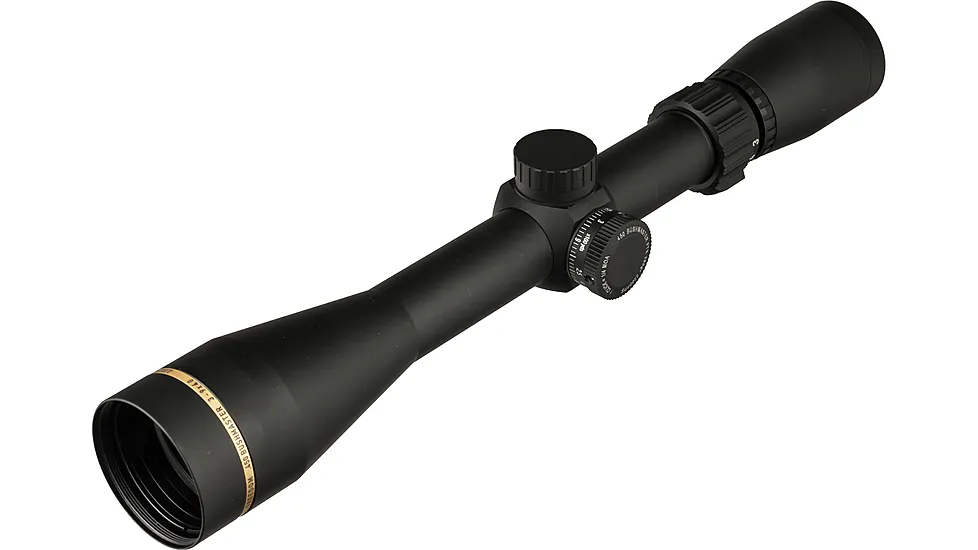
Our verdict: 4.5/5. The VX-Freedom 3-9x40 is our premium hunting pick: Twilight low-light glass, a light 12.2 oz, magnum-safe eye relief and US manufacture, at around $400. American Rifleman selected this exact model as an Editors' Pick in 2018 (source: American Rifleman, Editors' Picks 2018). It is deliberately a set-and-forget hunting scope: capped turrets, fixed parallax, no illumination.
Owners rate it 4.7/5 across 93 reviews on OpticsPlanet. Price verified October 14, 2026; confirm the current price on the retailer page.
How we reviewed it: a research-based review built from retailer specifications, independent field tests, expert coverage and the owner-review record. We have not bench-tested this unit ourselves; the score is our editorial opinion. See how we evaluate.
What it is
The VX-Freedom is Leupold's entry line, machined in Beaverton, Oregon, which makes it one of very few US-made scopes under $500. When it launched in 2018 the line swept the trade shows, taking Optic of the Year at the Big Rock Sports East Show and New Product of the Year in optics at the Worldwide Spring Show. The design brief is unapologetically traditional: a light, tough, optically excellent 3-9x40 that you zero once and hunt with for decades. Everything it lacks, it lacks on purpose.
The VX-Freedom line, and where the 3-9x40 fits
Leupold sells the VX-Freedom as a broad hunting line: from a 1.5-4x20 for brush and lever guns, through the 2-7x33 and this 3-9x40, up to 3-9x50 and 4-12x40 configurations for more reach and low light, plus dedicated rimfire, muzzleloader and CDS ballistic-dial variants. The 3-9x40 is the heart of the line, the classic all-round deer configuration, which is why it is the most popular and the one American Rifleman singled out. Want a bigger objective for last light? The 3-9x50 is the natural step; for a .22 or muzzleloader, Leupold makes a purpose-built VX-Freedom. This review covers the 3-9x40.
Glass: where your money actually goes
The Twilight Light Management System, Leupold's index-matched coating package, is the headline. It buys up to about 10 extra minutes of usable shooting light at dawn and dusk, exactly when deer move. In side-by-side low-light testing, reviewers report counting individual antler tines in deep timber while competing budget scopes show a washed-out, tinted image, and expert coverage rates the clarity clearly above the Vortex Crossfire II and Bushnell Prime. Long-time Leupold owners call it an optical upgrade over the discontinued VX-2, a scope that cost more in real terms.
Weight and eye relief: built for carrying and magnums
At 12.2 oz the VX-Freedom is light: nearly 3 oz under a Crossfire II and 2.3 oz under the Vortex Diamondback. On a backcountry rifle that matters. Eye relief runs a generous 4.2 inches at 3x, tapering to 3.7 at 9x, and the eye box is forgiving enough to find a full image fast with a winter jacket and gloves on. Owners run it on .450 Bushmaster and .45-70 platforms without scope bite; by comparison, the same-priced Vortex Diamondback gives you 3.3 inches.
Durability: the Punisher test, and an honest physics note
The VX-Freedom is built to pass Leupold's factory Punisher protocol, thousands of machine-driven impacts simulating three times the recoil force of a .308, the same test the $2,000-class Mark 5HD must pass. The tube is purged with an argon/krypton blend against fogging, and the unconditional lifetime guarantee transfers to any future owner with no receipt. One honest caveat from enthusiast forums: in severe drop tests onto hard surfaces, ultralight scopes can lose zero, because a 12.2 oz tube cannot absorb what a 35 oz tactical scope absorbs. That is the portability trade, not a defect.
Reticles and variants: match the SKU to the rifle
The 3-9x40 comes in seven configurations at our retailer, six of them at around $400: the bolder Hunt-Plex and a Duplex with the Custom Dial System for centerfire hunting, purpose-built Duplex variants for .450 Bushmaster and .350 Legend rifles, a Rimfire MOA model with close-focus parallax for .22 rifles, and the UltimateSlam reticle for muzzleloaders. The CDS models add the Custom Dial System: Leupold laser-etches one free elevation dial to your exact load and conditions, roughly an $80 value, so you range, dial the yardage and hold dead on.
Two configuration facts are worth more than the reticle diagrams, and both were read from Leupold's own catalogue for this update. The plain Duplex 3-9x40, the simplest version and the one most buyers picture when they picture this scope, has been discontinued: what survives, and what our retailer stocks, are the specialised configurations. And the seventh SKU, the CDS Tri-MOA, the one configuration that costs more than the other six, has also been discontinued by Leupold. The lifetime guarantee covers it either way, but paying the most for the one version the maker has stopped making is a decision worth taking deliberately rather than by accident.
What owners say (93 reviews, 4.7/5 on OpticsPlanet)
“I don't have the best eyes, but while zeroing the rifle in, I was able to see the holes at 100 yrds. The VX is much clearer and sharper than any of the scopes I own.”
gdb, verified owner (TX)
“I put this in my .270, shoots very well. Clear glass. Adjustments are smooth. Plus they are made in the U.S. Warranty is great as is customer service. I have 3. Will buy another.”
m, owner review (AZ)
“I was able to take down 4 deer from 100Yrd. to 145Yrd. with no adjustments. I was able to shoot in low light conditions with on problem.”
oldpooch, verified owner (IA), on a Henry .360 Buckhammer
Price: this scope sells at list, and that is the whole story
Leupold enforces strict minimum advertised pricing, so the VX-Freedom does not see the deep promo swings Vortex scopes do, and the current numbers make that concrete. Our retailer sells the live 3-9x40 configurations at around $400, which is that listing's own list price exactly, not a dollar under. There is no discount here to wait for, and any listing well below that figure is worth a second look at what it actually is, an older configuration, an open-box unit or a different scope in the same family. That is a genuinely different buying situation from the budget end of the market, where the sticker and the street price are rarely the same number.
The line launched in 2018 with MSRPs from $230, so the honest summary is that inflation has walked this scope up into a bracket where it now competes on merit rather than on price. It still holds our premium hunting pick because of the glass, the weight and the guarantee, not because it is a bargain.
Trade-offs, plainly
- Capped 1/4 MOA turrets click softly and there is no zero stop: this is a zero-and-forget hunting scope, not a dialing instrument.
- Fixed parallax (no side focus): fine for centerfire hunting distances, wrong for precision rimfire at mixed close ranges.
- Non-illuminated across the 3-9x40 range.
- Field of view (33.1 ft at 3x) is noticeably narrower than the Vortex Diamondback's 44.6 ft, the price of that long eye relief.
- About three times the price of a Crossfire II at current selling prices: the premium buys glass, weight and US manufacture, not extra features.
Key specifications
| Magnification | 3-9x |
|---|---|
| Objective lens | 40 mm |
| Tube | 1 in, 6061-T6 aircraft-quality aluminum |
| Focal plane | Second focal plane (SFP) |
| Configurations sold | Seven, all non-illuminated: Hunt-Plex, Duplex (CDS), Duplex (.350 Legend), Duplex (.450 Bushmaster), Rimfire MOA, UltimateSlam, Tri-MOA (CDS) |
| Adjustment travel | 60 MOA elevation and windage; 15 MOA per rotation |
| Eye relief | 4.2 - 3.7 in |
| Field of view | 33.1 - 13.6 ft at 100 yds |
| Adjustments | 1/4 MOA finger clicks, capped; 60 MOA travel |
| Parallax | Fixed (no adjustment) |
| Weight | 12.2 oz |
| Length | 12.39 in |
| Sealing | Argon/krypton purged; waterproof, fogproof, shockproof |
| Made in | Beaverton, Oregon, USA |
| Warranty | Leupold lifetime guarantee: unconditional, transferable, no receipt |
Should you buy it, and what else to consider
- Buy it for traditional whitetail and big-game hunting inside about 400 yards, magnum and heavy-recoil rifles, and any hunt where you carry the rifle far and shoot at first or last light.
- Save money with the Vortex Crossfire II 3-9x40 if you shoot mostly in daylight; our budget vs premium comparison draws the line precisely.
- Skip it if you want to dial distance or shoot precision rimfire: the Vortex Diamondback Tactical 6-24x50 brings FFP, tracking turrets and 10-yard parallax for about $120 less.
FAQ
Is the Leupold VX-Freedom a good scope?
Yes, and it is one of very few US-made scopes under $500. The line is built on Leupold’s Twilight low-light glass, light weight and the unconditional lifetime guarantee; this 3-9x40 rates 4.7/5 across 93 reviews on OpticsPlanet and won an American Rifleman Editors’ Pick. Match the configuration to the hunt: the 3-9x40 for general big game, the 3-9x50 for more low-light reach, or a purpose-built rimfire or muzzleloader variant for those guns.
Is the Leupold VX-Freedom worth it over the Vortex Crossfire II?
If you hunt the first and last half hour of legal light, yes. The VX-Freedom costs about three times what the Crossfire II does at current selling prices, and that gap buys measurably better low-light glass, a scope that is 2.8 ounces lighter, longer eye relief at low power and US manufacture. If you mostly shoot in full daylight inside 200 yards, the Vortex Crossfire II 3-9x40 does the same core job for well under $150 and the upgrade money is better spent on ammunition and practice. Worth knowing: at list price the two are only about $210 apart, because this scope sells at its list and the Crossfire II sells well under its own.
What does the Twilight Light Management System actually do?
It is Leupold’s package of index-matched lens coatings that manages light transmission and glare. In practical terms it adds up to about 10 extra minutes of usable shooting light at dawn and dusk and keeps colors true instead of washed out. In side-by-side low-light tests, reviewers report being able to count antler tines in deep timber where budget glass shows a gray smear.
Which VX-Freedom 3-9x40 reticle should I choose?
Duplex is the classic fine crosshair and the default for centerfire hunting; Hunt-Plex is a slightly bolder take on the same idea. The Tri-MOA model adds hash marks and the Custom Dial System, which includes one free laser-etched elevation dial matched to your load, roughly an $80 value. Rimfire MOA and UltimateSlam variants exist specifically for .22 rifles and muzzleloaders.
Does the VX-Freedom hold zero?
Under recoil, emphatically yes: it is built to pass Leupold’s factory Punisher test, thousands of impacts simulating three times .308 recoil, the same protocol as the premium Mark 5HD line. Owners run it on .450 Bushmaster and .45-70 without zero shift. The honest caveat is hard drops: a 12.2 ounce tube cannot absorb impacts like a 35 ounce tactical scope, which is physics, not a defect.
The four rifle scopes we reviewed
Each pick is the best at one job. Here is where the one you just read fits, and the others worth comparing.
Best on a budget
Vortex Crossfire II 3-9x40
3-9x40 SFP
The bright, forgiving budget benchmark for daylight hunting.
Read the full review →Best value for long range
Vortex Diamondback Tactical 6-24x50
6-24x50 FFP
True FFP tracking and a 10-yard parallax for under $300.
Read the full review →Best premium hunting
Leupold VX-Freedom 3-9x40
3-9x40 SFP
US-made, class-leading low-light glass, lightest at 12.2 oz.
Best for long range
Vortex Strike Eagle 5-25x56
5-25x56 FFP
Illuminated FFP with 110 MOA and measured ~1% tracking.
Read the full review →