The best rifle scope for deer hunting
Quick answer: the Leupold VX-Freedom 3-9x40 (around $400) is the best rifle scope for deer hunting of our four picks. It beats the Crossfire II on the two things deer hunting rewards most: Leupold’s Twilight Light Management System coatings, built for the dawn-and-dusk light deer move in, and weight, at 12.2 oz the lightest of the four and more than 2 oz under the Crossfire II. Its eye relief runs 4.2 inches at 3x to 3.7 at 9x. On a budget, the Vortex Crossfire II 3-9x40 (around $130) costs about a third as much for the same 3-9x40 layout and 60 MOA of travel, a slightly wider field of view than the VX-Freedom at 3x, a .308 box-test record with no zero shift, and the unconditional Vortex VIP warranty. The step up in Leupold’s range, the Leupold VX-3HD 3.5-10x40 (around $500), brings DiamondCoat 2 coatings and the Xtended Twilight Lens System, a CDS-ZL custom elevation dial and 12.6 oz. For an illuminated reticle, the Trijicon Credo 3-9x40 (around $680) is the only pick here with one, 11 LED settings, at 17.02 oz, the heaviest of the four. The VX-Freedom and the Crossfire II are also in our best rifle scopes guide.
Deer hunting does not ask for magnification; it asks for light and speed. Most deer are shot inside 300 yards, often in the last few minutes of legal light, so the scope that wins is the one with a 3-9x range, a forgiving eye box for a fast shot, glass that holds the image as the woods go gray, and enough low weight to carry all day.
How we reviewed them: a research-based roundup built from the makers’ published specifications, the retailer listings and the OpticsPlanet owner-review record. We have not used these scopes ourselves; scores are our editorial opinion, and owner ratings are shown attributed to their source. See how we evaluate.
The four deer scopes side by side
| Pick | Magnification | Field of view | Eye relief | Elevation travel | Reticles on the listing | Illuminated reticle | Weight | Owner rating (OpticsPlanet) | Price |
|---|---|---|---|---|---|---|---|---|---|
| Leupold VX-Freedom 3-9x40 | 3-9x, 40 mm | 33.1 - 13.6 ft at 100 yds | 4.2 - 3.7 in | 60 MOA | Duplex (the model we card), Hunt-Plex, Tri-MOA (CDS), UltimateSlam, Rimfire MOA | No | 12.2 oz | 4.7/5 from 93 | around $400 |
| Vortex Crossfire II 3-9x40 | 3-9x, 40 mm | 34.1 - 12.6 ft at 100 yds | 3.8 in (Vortex; the retailer lists 3.8 - 4.4 in) | 60 MOA | V-Plex (the model we card), Dead-Hold BDC | No | 15 oz | 4.7/5 from 234 | around $130 |
| Leupold VX-3HD 3.5-10x40 | 3.5-10x, 40 mm | 29.8 - 11 ft at 100 yds | 3.6 - 4.4 in | 52 MOA | CDS-ZL Duplex (the model we card) | No | 12.6 oz | 4.8/5 from 28 | around $500 |
| Trijicon Credo 3-9x40 | 3-9x, 40 mm | 35.5 - 11.8 ft at 100 yds | 3.5 - 3.7 in | 12 MIL total (about 41 MOA) | Green MIL-Square Crosshair (the model we card), red MIL-Square, MOA Precision Hunter, Standard Duplex | Yes, 11 settings | 17.02 oz (Trijicon) | 5.0/5 from 10 | around $680 |
Specifications are the makers’ as published on the retailer listings, except where a cell names its source. Prices verified October 14, 2026; confirm the current price and availability on the retailer page before you buy.
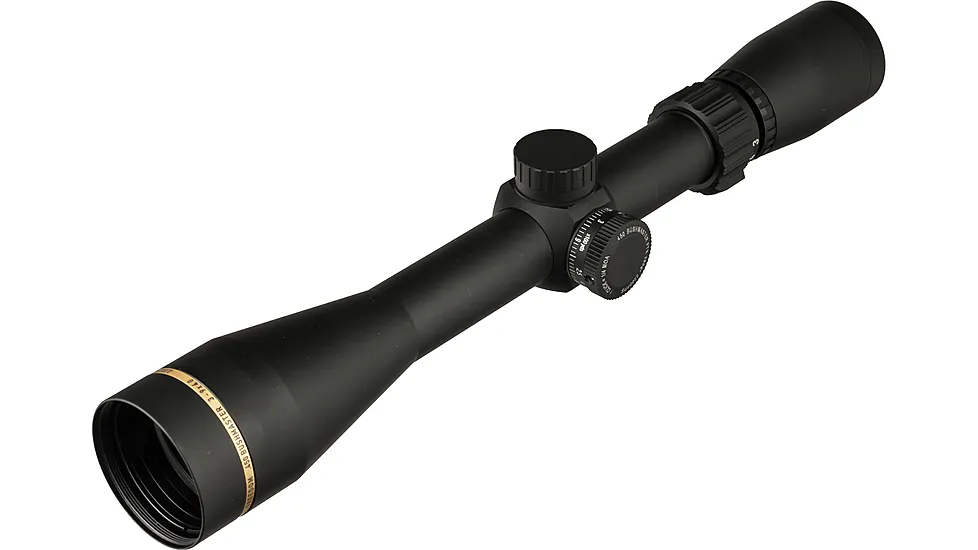
Best overall: Leupold VX-Freedom 3-9x40
Second focal plane · 3-9x40 · 1-inch tube · Duplex, Hunt-Plex, CDS and specialty reticles
around $400exact price on OpticsPlanet
🏆 Named an American Rifleman Editors’ Pick (2018) for its Twilight Light Management System (source: American Rifleman)
This is the deer scope to buy once. Leupold’s Twilight Light Management System coatings are built for the dawn and dusk light when deer actually move, the single most valuable thing a hunting scope can do. At 12.2 oz it is more than 2 oz lighter than the Crossfire II: enough to notice on a rifle you carry all day, not enough to choose a scope on by itself. Eye relief runs 4.2 inches at 3x and 3.7 at 9x, which keeps the ocular off your brow on hard-kicking deer cartridges, and at 9x its field of view is wider than the Crossfire II’s or the Credo’s. Leupold designs, machines and assembles it in Beaverton, Oregon, and the CDS versions on the same listing add one free custom laser-etched elevation dial matched to your load.
Pros
- Twilight Light Management System coatings add up to about 10 extra minutes of usable shooting light at dawn and dusk and control glare
- Light at 12.2 oz (a Crossfire II weighs 15 oz on its retailer spec table), ideal for mountain and backcountry rifles
- Long 4.2 to 3.7 in eye relief with a forgiving eye box: no scope bite on magnums, fast target acquisition in awkward positions
- Made in the USA (Beaverton, Oregon) and recoil-tested on the same factory protocol as Leupold’s high-end tactical scopes
- Unconditional, fully transferable Leupold lifetime guarantee: no receipt, no registration, any owner
Cons
- Capped turrets have a soft, muted click feel and there is no zero stop: this is a zero-and-forget hunting scope, not one to dial in the field
- Fixed parallax (no side focus), so precision rimfire at mixed close distances is not its game
- Non-illuminated reticle
- About three times the price of a Crossfire II: the money goes to glass, weight and US manufacture, not to extra features
Best for: deer hunters who sit the first and last minutes of legal light, carry the rifle far, or shoot a hard-kicking cartridge. Skip it if you want to dial for distance: the turrets are capped and there is no zero stop.
Key specifications
| Magnification | 3-9x |
|---|---|
| Objective lens | 40 mm |
| Reticle | Duplex, Hunt-Plex, Tri-MOA (CDS), UltimateSlam or Rimfire MOA (non-illuminated) |
| Focal plane | Second focal plane (SFP) |
| Tube diameter | 1 in |
| Field of view | 33.1 - 13.6 ft at 100 yds |
| Eye relief | 4.2 - 3.7 in |
| Adjustment click | 1/4 MOA (capped, finger click) |
| Parallax | Fixed (no adjustment) |
| Elevation/windage travel | 60 MOA |
| Weight | 12.2 oz |
| Made in | USA (Beaverton, Oregon) |
| Sealing | Waterproof, fogproof, shockproof |
| Warranty | Leupold full lifetime, transferable |
“I put the VX-Freedom 3-9×40 scope on my new Savage Axis2 22-250. I don’t have the best eyes, but while zeroing the rifle in, I was able to see the holes at 100 yrds. The VX is much clearer and sharper than any of the scopes I own.”
gdb, verified owner (TX) via OpticsPlanet
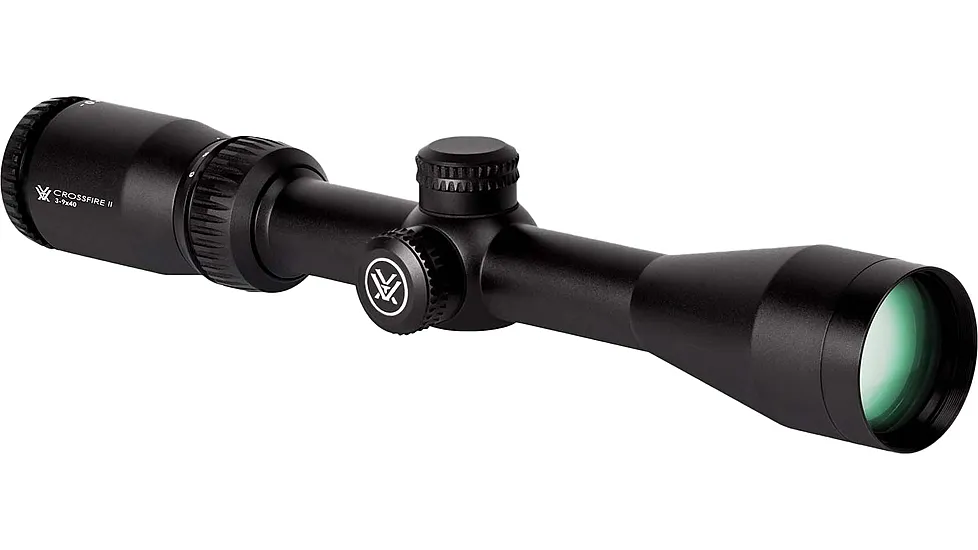
Best budget: Vortex Crossfire II 3-9x40
Second focal plane · 3-9x40 · 1-inch tube · Dead-Hold BDC or V-Plex reticle
around $130exact price on OpticsPlanet
If you want a deer rifle shooting without spending much, this is the honest budget answer at about a third of the VX-Freedom’s price. You get bright, usable glass from 3x to about 6x, a wider field of view than the VX-Freedom at 3x, a forgiving low-power eye box that finds a deer fast, and a record of holding zero: an independent review logged 150 rounds of .308 with no zero shift, plus a season on a .30-06. Buy the V-Plex reticle we card, a plain crosshair with no holdover marks: it is the faster reticle in poor light, and the Dead-Hold BDC model on the same listing costs about the same if you want holdover references. Glass softens near 9x and it is non-illuminated, the fair trade-offs at the price.
Pros
- Bright, clear glass from 3x to about 6x that punches well above its price (owners rank it near scopes costing far more)
- Forgiving 3.8 in eye relief (Vortex's figure) and a large low-power eye box for fast, comfortable target acquisition
- Single-piece aircraft-grade aluminum tube holds zero under heavy recoil; nitrogen-purged, waterproof and fogproof
- Unlimited, unconditional Vortex VIP lifetime warranty (covers accidental damage, whoever was at fault)
- Light and simple to run, with a fast-focus eyepiece and capped set-and-forget turrets
Cons
- Glass softens at the edges toward maximum 9x, with some color fringing in high-contrast light (typical budget-glass limits)
- Fixed 100-yard parallax: fine for centerfire hunting, but not ideal for precision rimfire at 25 to 50 yards
- Capped, soft-clicking turrets are made to set and forget, not to dial in the field; the SFP holdovers only track true at 9x
- Non-illuminated, and the 1-inch tube with 60 MOA of travel limits serious long-range dialing
Best for: a first deer rifle on a tight budget, shot inside a few hundred yards. Skip it if you hunt the very edges of legal light, where the VX-Freedom’s coatings pull ahead.
Key specifications
| Magnification | 3-9x |
|---|---|
| Objective lens | 40 mm |
| Reticle | Dead-Hold BDC or V-Plex (non-illuminated) |
| Focal plane | Second focal plane (SFP) |
| Tube diameter | 1 in |
| Field of view | 34.1 - 12.6 ft at 100 yds |
| Eye relief | 3.8 in (Vortex; the retailer lists 3.8 - 4.4 in) |
| Adjustment click | 1/4 MOA (capped, resettable) |
| Parallax | Fixed at 100 yds |
| Elevation/windage travel | 60 MOA |
| Weight | 15 oz |
| Sealing | Waterproof, fogproof, shockproof |
| Warranty | Vortex VIP: unlimited, unconditional, lifetime |
“Great scope, regardless of the price, but very good value. Clarity and eye relief are fantastic.”
jpfadden, verified owner (NH) via OpticsPlanet
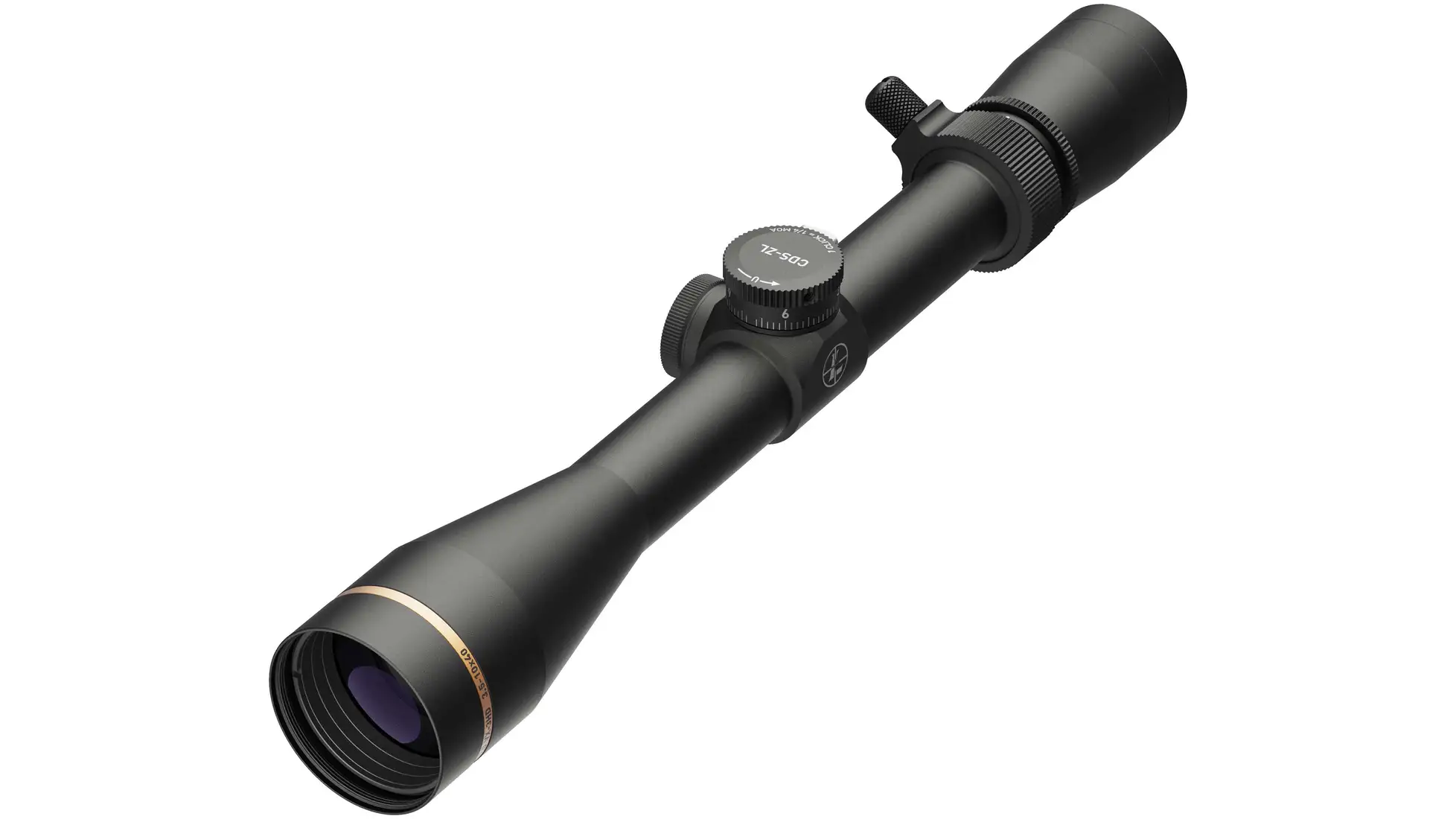
Best step-up: Leupold VX-3HD 3.5-10x40
Second focal plane · 3.5-10x40 · 1-inch tube · CDS-ZL Duplex reticle (non-illuminated)
around $500exact price on OpticsPlanet
The step up from the VX-Freedom in Leupold’s range. The 3.5-10x40 on a 1-inch tube is the line’s classic configuration, the traditional deer, elk and all-round big-game magnification, and its glass is aimed at the light deer move in: DiamondCoat 2 coatings, the Xtended Twilight Lens System and blackened lens edges, all tuned to push more usable light to your eye at dawn and dusk. It weighs 12.6 oz, 0.4 oz more than the VX-Freedom and 2.4 oz under the Crossfire II, with 3.6 to 4.4 inches of eye relief. The CDS-ZL dial is the other reason to pay more: Leupold laser-etches a free custom elevation dial for your load, so you range the deer, turn the dial to the yardage and hold dead on, and ZeroLock keeps the dial from moving. Plan your rings: on some rifles the 40mm objective and the internal travel want correct ring height or a 20-MOA base to zero.
Pros
- DiamondCoat 2 coatings, the Xtended Twilight Lens System and blackened lens edges, tuned to push more usable light to your eye at dawn and dusk
- Light at 12.6 oz, with 3.6 to 4.4 in of eye relief and a generous eyebox
- CDS-ZL: a free custom laser-etched elevation dial matched to your load, with ZeroLock against accidental turns
- Made in the USA and backed by the Leupold Lifetime Guarantee (no receipt or registration)
Cons
- Ring-height sensitive: some rifle and ring combinations run out of elevation to zero. Use correct rings or a 20-MOA base
- General-purpose, not long range: SFP Duplex, fixed parallax and a 3:1 zoom mean it is best inside about 400 yards
- Non-illuminated reticle
- Premium price for the tier: you pay for the Leupold name, US build and glass
- Sparse box: a bikini lens cover only
Best for: deer hunters who want Leupold’s low-light glass and a dial-to-range elevation turret in a 12.6 oz scope. Skip it if you want an illuminated reticle or plan to shoot past about 400 yards: it is non-illuminated, with fixed parallax.
Key specifications
| Magnification | 3.5-10x |
|---|---|
| Zoom ratio | 3:1 |
| Objective lens | 40 mm |
| Reticle | CDS-ZL Duplex, non-illuminated |
| Focal plane | Second focal plane (SFP) |
| Tube diameter | 1 in |
| Field of view | 29.8 - 11 ft at 100 yds |
| Eye relief | 3.6 - 4.4 in |
| Adjustment click | 0.25 MOA (CDS custom dial, free) |
| Parallax | Fixed |
| Elevation/windage travel | 52 MOA |
| Weight | 12.6 oz |
| Length | 12.6 in |
| Glass | DiamondCoat 2, Xtended Twilight Lens System, blackened lens edges |
| Sealing | 2nd-gen Argon/Krypton; waterproof, fogproof, shockproof |
| In the box | Bikini-style lens cover |
| Made in | USA |
| Warranty | Leupold Lifetime Guarantee (no receipt or registration) |
“This thing is literally crystal clear and the CDS turrets are easy to use and spot on for my rifle.”
David Hunn, verified owner (FL)
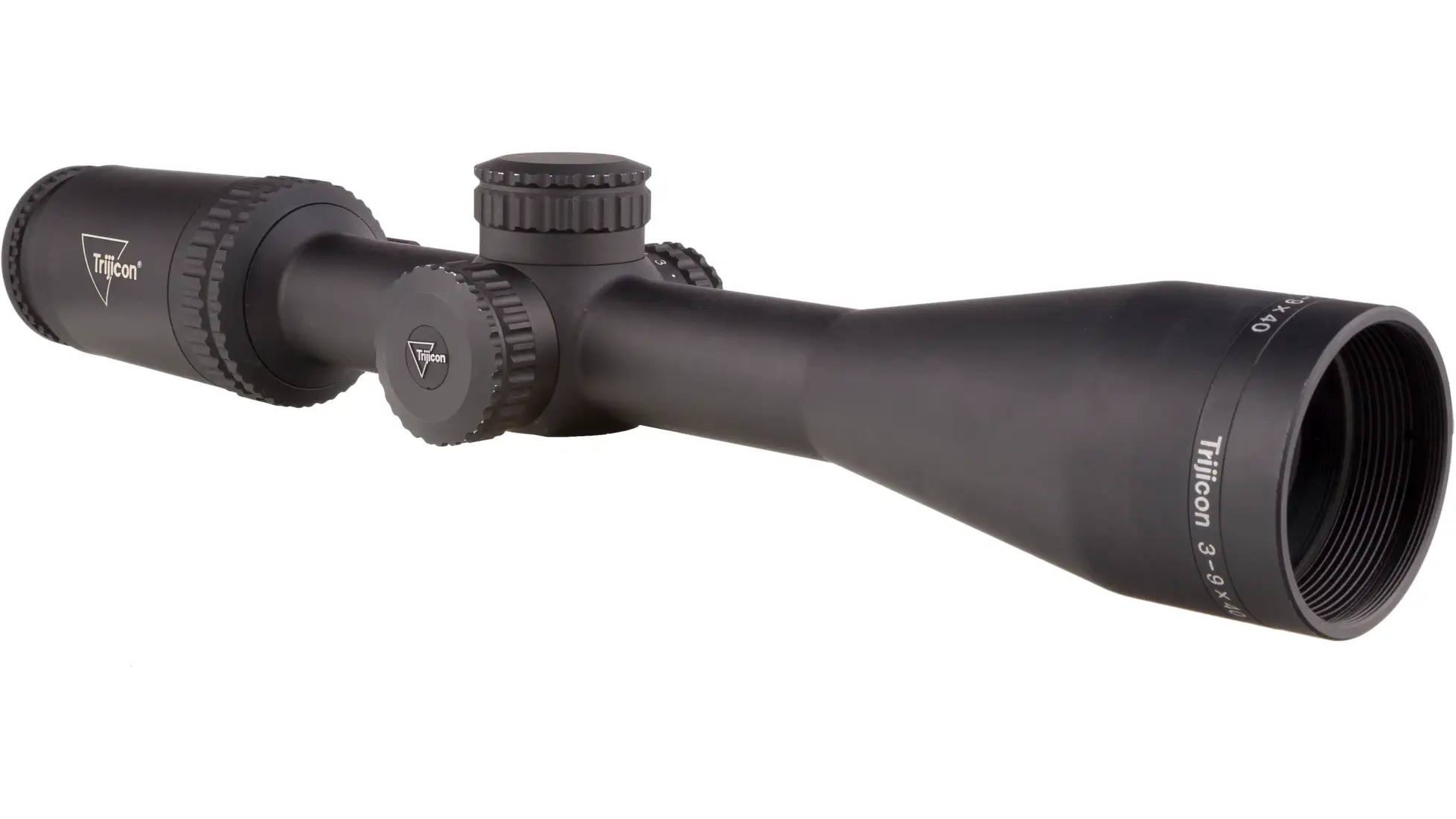
Best illuminated 3-9x40: Trijicon Credo 3-9x40
Second focal plane · 3-9x40 · 1-inch tube · illuminated green MIL-Square Crosshair · 0.1 MIL clicks
around $680exact price on OpticsPlanet
The Credo is the only pick here with an illuminated reticle: the green MIL-Square Crosshair has 11 LED settings and a listed battery life of 198 hours on one CR2032, per Trijicon. It keeps the classic 3-9x40 layout on a 1-inch tube, and at 3x its field of view, 35.5 ft at 100 yards, is the widest of our four picks. Our Credo review sums it up as a traditional hunting magnification range with an illuminated reticle on a 1 inch tube. The trade-offs come from the spec: at 17.02 oz it is the heaviest of the four, its 12 MIL of total travel (about 41 MOA) is the least, and the retailer table lists fixed parallax. All 10 reviews on its listing are five stars, and the only negatives reviewers mention are about price.
Pros
- Illuminated MIL-Square Crosshair with 11 LED settings and a listed 198-hour battery life on one CR2032 (Trijicon)
- 35.5 ft field of view at 100 yds at 3x, the widest low-power view of these four picks
- 0.1 MIL clicks matched to a mil-based reticle
- All 10 OpticsPlanet reviews are five stars; reviewers praise clarity, the eye relief and the lighted reticle
Cons
- Heaviest of these four picks at 17.02 oz (Trijicon)
- 12 MIL of total travel, about 41 MOA, the least of these four picks
- Fixed parallax per the retailer table
- The only negatives reviewers mention are about price
Best for: a hunter who wants an illuminated crosshair on a classic 3-9x40 and does not mind the weight. Skip it if you dial for distance or count every ounce: it has the least travel and the most weight of these four.
Key specifications
| Magnification | 3-9x |
|---|---|
| Objective lens | 40 mm |
| Reticle | MIL-Square Crosshair, green, illuminated (11 LED settings) |
| Focal plane | Second focal plane (SFP) |
| Tube diameter | 1 in |
| Field of view | 35.5 - 11.8 ft at 100 yds |
| Eye relief | 3.5 - 3.7 in |
| Adjustment click | 0.1 MIL |
| Elevation/windage travel | 12 MIL total (Trijicon) |
| Parallax | Fixed (retailer table) |
| Battery | CR2032, 198 h listed (Trijicon) |
| Weight | 17.02 oz (Trijicon) |
| Length | 12.3 in |
| Sealing | Waterproof to 10 ft, fogproof (retailer table) |
“The illuminated crosshair shows up great on a black target.”
Khighpower (NC), Verified Owner, via OpticsPlanet
What a deer hunting scope actually needs
- Low-light glass. Deer move at first and last light, so lens coatings that buy extra minutes of usable light (the VX-Freedom’s strength) matter more than headline magnification.
- A 3-9x range. Wide at 3x for close timber and moving deer, enough at 9x for a few hundred yards. It is the classic deer magnification for good reason.
- Light weight and a forgiving eye box. You carry the rifle all day and often take the shot fast from an odd position; low weight and generous eye relief make both easier.
- A simple reticle that holds zero. A Duplex or BDC reticle you can aim with quickly, on a tube that keeps its zero through recoil. All four picks use a second focal plane crosshair-style reticle; only the Credo’s is illuminated.
The VX-3HD and the Credo each have a full write-up: our VX-3HD 3.5-10x40 review and our Trijicon Credo review, which covers the 3-9x40 beside the line's LPVOs. If you hunt open country at longer range and want a first focal plane reticle and a dialing turret in a light package, see our Vortex Razor HD LHT review. Comparing the VX-Freedom and the Crossfire II directly? See Crossfire II vs VX-Freedom. New to setup? Read how to sight in a rifle scope and how to mount a rifle scope.
FAQ
What magnification is best for deer hunting?
A 3-9x variable is the classic deer-hunting magnification and it covers almost everything, which is why three of our four picks use it and the fourth, the Leupold VX-3HD, is a close 3.5-10x. Three power gives a wide field of view for close timber and moving deer, and nine power is plenty to place a shot out to a few hundred yards. Very high magnification narrows your view and slows you down, so it is unnecessary for typical deer ranges.
How important is low-light performance for a deer scope?
It is one of the most important things, because deer move most at dawn and dusk, right at the edges of legal shooting light. Better lens coatings gather more usable light and buy real extra minutes at first and last light. That low-light edge, from the Leupold VX-Freedom’s Twilight Light Management coatings or the VX-3HD’s Xtended Twilight Lens System, often matters more than one extra power of magnification.
How many yards is a 3-9x40 scope good for?
Out to about 300 yards on deer, and the limit is you rather than the optic. At 9x a deer-sized target at 300 yards fills the view comfortably enough to place a shot, and the 40mm objective passes enough light to do it at dawn or dusk. Past roughly 400 yards two things run out at once: 9x stops resolving enough detail to aim precisely, and the drop gets large enough that you need a dial or calibrated holdovers rather than a guess. That is why 3-9x40 remains the standard deer setup, since the overwhelming majority of deer are shot well inside 200 yards.
Is Vortex or Leupold better for hunting?
They win on different things, and this page cards both makers on purpose: two Leupolds, the VX-Freedom and the VX-3HD, and one Vortex, the Crossfire II, beside a Trijicon. Leupold builds the better hunting glass at the VX-Freedom’s price and says so plainly in its specifications: the VX-Freedom is designed, machined and assembled in the USA, guaranteed for life, and its Twilight coatings are what buy you the last few minutes of legal light. Vortex builds the better promise. The VIP warranty is unlimited, unconditional and lifetime, and Vortex states outright that it does not matter how the damage happened, whose fault it was, or where you bought it; the exclusions are loss, theft, deliberate damage and cosmetic marks. So, between the VX-Freedom and the Crossfire II: Leupold if you hunt the edges of light and want the lighter, better-glassed scope, Vortex if you want to spend less than half as much and never worry about breaking it. Both are honest answers and neither is a mistake.
What is a good budget scope for deer hunting?
The Vortex Crossfire II 3-9x40, at under $150, is the honest budget deer scope. It gives bright, usable glass at hunting powers, a forgiving eye box for fast target acquisition, and a single-piece tube that holds zero under recoil from cartridges like the .308 and .30-06. The unconditional Vortex VIP lifetime warranty means it outlasts the rifle. It carries 4.7/5 from 234 reviews on OpticsPlanet. The V-Plex reticle, a plain crosshair, is the one most deer hunters should order; the Dead-Hold BDC costs about the same if you want holdover marks.
What reticle is best for deer hunting?
A simple reticle you can aim with fast in low light: a standard Duplex crosshair, or a BDC (bullet-drop) reticle if you want holdover marks for longer shots. Inside 200 yards, which is where most deer are shot, a plain Duplex is all you need and it is faster to use in poor light. The VX-Freedom comes in Duplex, Hunt-Plex and other hunting reticles, and its CDS versions replace holdovers with a custom elevation dial matched to your load. The Crossfire II offers a Dead-Hold BDC and a plain V-Plex at about the same price, and for most deer distances the V-Plex is the faster of the two. The VX-3HD we card uses a CDS-ZL Duplex with a custom dial, and the Trijicon Credo’s MIL-Square Crosshair is the only illuminated reticle of our four picks. Avoid busy target reticles for deer; they clutter the view when the light is poor and the shot is quick.
More: best scope for a .300 Win Mag · best budget rifle scope · best rifle scopes overall.