Primary Arms SLx 1-6x24 Gen IV review
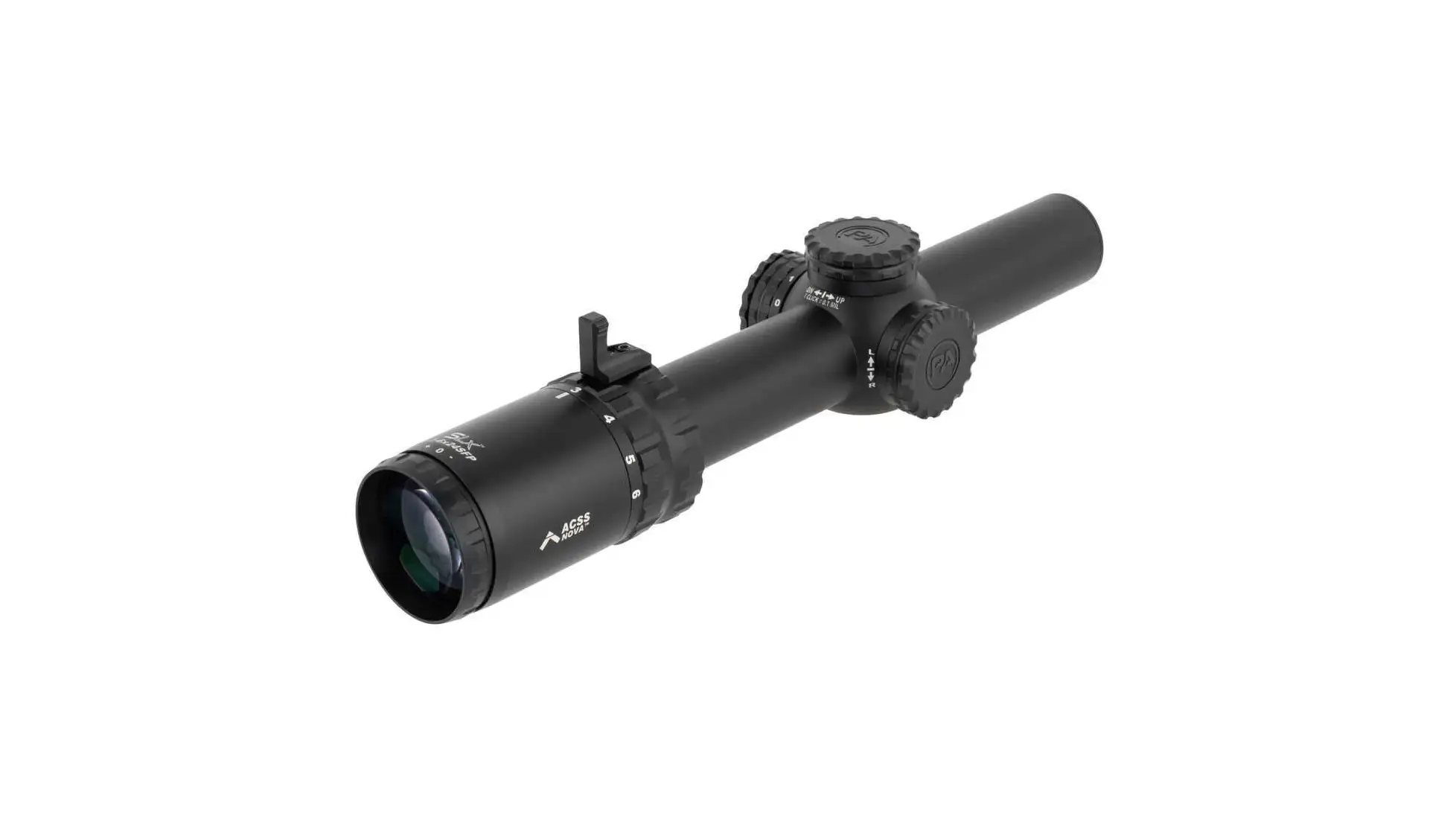
Our verdict: 4.2/5. The SLx 1-6x24 Gen IV is a genuinely good value LPVO whose strongest card is the one budget optics usually lose on: illumination. Owners who have owned a stack of cheap 1-6x scopes say this is the one whose reticle stays visible in full sun, bright enough to use as a red dot at 1x, and the ACSS reticle system gives you real holdovers rather than a plain cross. At around $350 with a second focal plane and a 30 mm tube it is a lot of usable optic. The honest limit is the eye box: at 5x and 6x it is unforgiving, and a small head-position error shades or blacks out the image. Add a mount to your budget, because none is included. Our best LPVO guide names it as another option worth knowing about beside its ranked picks, and the EOTech Vudu 1-6x24 is the premium first focal plane version of the idea.
Owners rate it 4.6/5 across 52 reviews on OpticsPlanet. All three ACSS reticle options are listed at around $350. Prices verified September 30, 2026; confirm the current price on the retailer page.
How we reviewed it: a research-based review built from the retailer specification sheet and the owner-review record, read lowest rating first so the criticism is not filtered out. We have not bench-tested this unit ourselves; the score is our editorial opinion and owner ratings are shown attributed to their source. See how we evaluate.
Check the part number first
Before anything else: OpticsPlanet lists at least five different scopes called SLx 1-6x24. This review is the Gen IV, part numbers 610181, 610182 and 610183, at around $350. The others are the older Gen III, an SLx 1-6x24 IV Tube model, a separate 30 mm Tube listing and the cheaper Classic Series, and each carries its own price and its own review record. That matters when you are reading reviews anywhere, because the Gen III has more than three times as many as the Gen IV, and those are not evidence about this scope.
What it is
The SLx line is Primary Arms' value tier, and the 1-6x24 Gen IV is its low-power variable optic for an AR-15: a 30 mm tube, a 24 mm objective and a second focal plane reticle, which keeps the reticle the same apparent size at every magnification so it stays fast at 1x and readable at 6x. The reticle is the point of the scope. ACSS Aurora builds bullet drop compensation in 50-metre steps out to 800 metres, moving target leads for speeds to 40 mph, and 5 to 10 mph wind holds from 400 to 800 metres into one system, and the alternative ACSS Nova Fiber Wire strips that back to plain mil or MOA ticks that work with any load.
Why owners rate it: the illumination and the 1x
The recurring praise is unusually specific. An owner who lists Burris, Cabela's, Swampfox, Vortex, TruGlo, SIG and other Primary Arms LPVOs among his previous scopes says illumination was the biggest failing of all of them and that this is the one that fixed it. Another describes the Nova dot as bright enough to use in full sun on snow, so the scope genuinely works as a red dot at 1x, which is the whole promise of an LPVO and the thing budget models usually fail. Beyond brightness, owners report good eye relief, positive clicks, a light weight for the class and clarity that is very good in the centre. One competitor running two of them on a 14.5 inch Daniel Defense carbine reports no failures through desert and mountain use including drops onto rock, and says that inside 100 yards his target acquisition time with this scope is almost the same as with an Aimpoint T-2, while being clear that it is not built to ACOG or Specter DR standards. That is an owner's assessment, not our test, but it is a considered one.
“NOVA dot? Wonderfully bright! You can actually use this on 1x as a red dot. Full sun on snow and you can still see the dot… Image is super clear in spite of the edge distortion.”
Yeah thats me (ME), via OpticsPlanet
The honest catch: the eye box at 6x
The clearest limit, and the reason we hold this at 4.2, is the eye box at the top of the magnification range. Multiple owners describe the same thing in different words: at 5x and 6x, if your head is not exactly where it was last time, the picture shades heavily or goes black. One owner puts the tolerance at about a millimetre of movement, calls it workable for deliberate precision shooting and unsuitable for fast acquisition, and wonders whether he received a bad unit since his other Primary Arms optics are excellent. Alongside that come smaller honest complaints: the reticle is a little thick at 6x and can cover small targets, there is visible distortion at the edges of the image, the magnification throw lever is stiff out of the box, and two owners describe the illuminated dot as not perfectly round, appearing as a cluster of small dots to one and simply too bright for an owner with heavy astigmatism who prefers low settings. None of these are hidden by the 4.6 average; they are what you accept at this price.
“The reticle is a little thick at 6x and can obscure small targets, the eye box is not very good at 5-6x and causes a fair amount of shading in the glass if your eye is not perfectly aligned.”
Blue Max (AL), verified owner, via OpticsPlanet
Trade-offs, plainly
- The eye box is unforgiving at 5x and 6x, so shading and blackout punish an inconsistent cheek weld.
- The reticle is thick enough at 6x to obscure small targets.
- Owners report visible distortion toward the edges of the image and glass at 6x that is decent rather than excellent.
- The magnification throw lever is stiff out of the box.
- No mount is included, so add a 30 mm cantilever mount to the real cost.
- It is a full-size 1-6x, and one owner found it too large for an 8 inch barrelled 300 Blackout SBR.
Key specifications
| Magnification | 1-6x |
|---|---|
| Objective | 24 mm |
| Tube | 30 mm |
| Focal plane | Second focal plane, so the reticle stays the same size at every magnification |
| Reticles | ACSS Aurora, ACSS Aurora 7.62-Yard or ACSS Nova Fiber Wire |
| Aurora holdovers | 50-metre drop gradients to 800 m, moving target leads to 40 mph, 5-10 mph wind holds from 400 to 800 m |
| Illumination | Daylight-bright illuminated reticle, battery powered |
| Battery | CR2032 |
| In the box | Scope only, no mount |
A note on what is missing from that table. The retailer's specification sheet for this scope does not publish a weight, length, eye relief, click value, adjustment range, waterproof rating or illumination-setting count, so we do not print any of them rather than fill the gaps from memory; the one eye relief figure in the owner record, about three and a half to four inches, is a single owner's measurement and is treated as such. On awards: this scope carries no editorial award. "Best budget LPVO on the market" is the headline a customer put on his own review, not a prize and not our claim, and OpticsPlanet's "Best Rated Product" badge is a store rating.
Should you buy it, and what else to consider
- Buy it if you want a daylight-bright illuminated LPVO with a real holdover system for an AR-15 at around $350, you shoot mostly inside 300 metres, and you can build a consistent cheek weld.
- Want a mount included? The Sig Tango-MSR picks in our best LPVO guide ship with a cantilever mount, which changes the real price comparison.
- Want a first focal plane reticle? The Vortex Strike Eagle family holds true at any magnification; see also FFP vs SFP explained.
- Want the premium version of this idea? The EOTech Vudu 1-6x24 FFP is the four-figure first-focal-plane 1-6x, with a more forgiving reputation at 1x and its own honest catches around daylight illumination and weight.
- Comparing 1-6x Vortex options? Read our Vortex Venom 1-6x24 review.
- Not sure an LPVO is right? See LPVO vs red dot.
FAQ
Which Primary Arms SLx 1-6x24 is this, and how do the versions differ?
This review covers the Gen IV, the current 30 mm tube second-focal-plane model sold under part numbers 610181, 610182 and 610183. Watch the name, because OpticsPlanet lists at least five products called SLx 1-6x24: the Gen IV here, the older Gen III, an SLx 1-6x24 IV Tube model, a separate 30 mm Tube listing, and the cheaper Classic Series. They carry separate review records and separate prices, so a review count you see quoted for one is not evidence about another. Check the part number before you order.
Which ACSS reticle should you choose?
The Gen IV ships in three orderable reticles at the same price. ACSS Aurora is the full system with 50-metre bullet drop gradients out to 800 metres, moving target leads to 40 mph and wind holds; ACSS Aurora 7.62-Yard is the same idea calibrated in yards for .308 class cartridges; ACSS Nova Fiber Wire is the simpler option with plain mil or MOA ticks and no caliber-specific drop compensation. Owners are split by preference rather than quality: one prefers Nova precisely because caliber-specific drop marks only match the load they were designed around, while another returned a busier Predator reticle because it was too fine to read with his eyeglass prescription. If in doubt, the simpler Nova reticle is the safer first LPVO.
What is the eye box like on the SLx 1-6x24 Gen IV?
This is the most repeated criticism in the owner record. Several owners report that the eye box is unforgiving at 5x and 6x, so if your cheek weld is not perfectly repeatable the image shades or blacks out. One owner describes losing the sight picture with about a millimetre of head movement and says it is fine for deliberate precision shooting but not for fast target acquisition, while another says the shading at high magnification is noticeable but the scope is still competitively priced and light. At 1x, which is where an LPVO earns its keep, no one complains.
Does the SLx 1-6x24 come with a mount?
No. The scope ships as the optic only, confirmed by a verified owner answering that question on the retailer page, so budget for a 30 mm cantilever mount on top of the scope price. That matters when you compare it with LPVOs that include one, because a mount can add $80 or more to the real cost of getting the scope on your rifle.
More: best LPVO · best scope for an AR-15 · Vortex Venom 1-6x24 review · LPVO vs red dot · best rifle scopes · Primary Arms PLxC 1-8x24 review.