Kenetrek Lineman Extreme review: an Italian-made steel-toe work boot
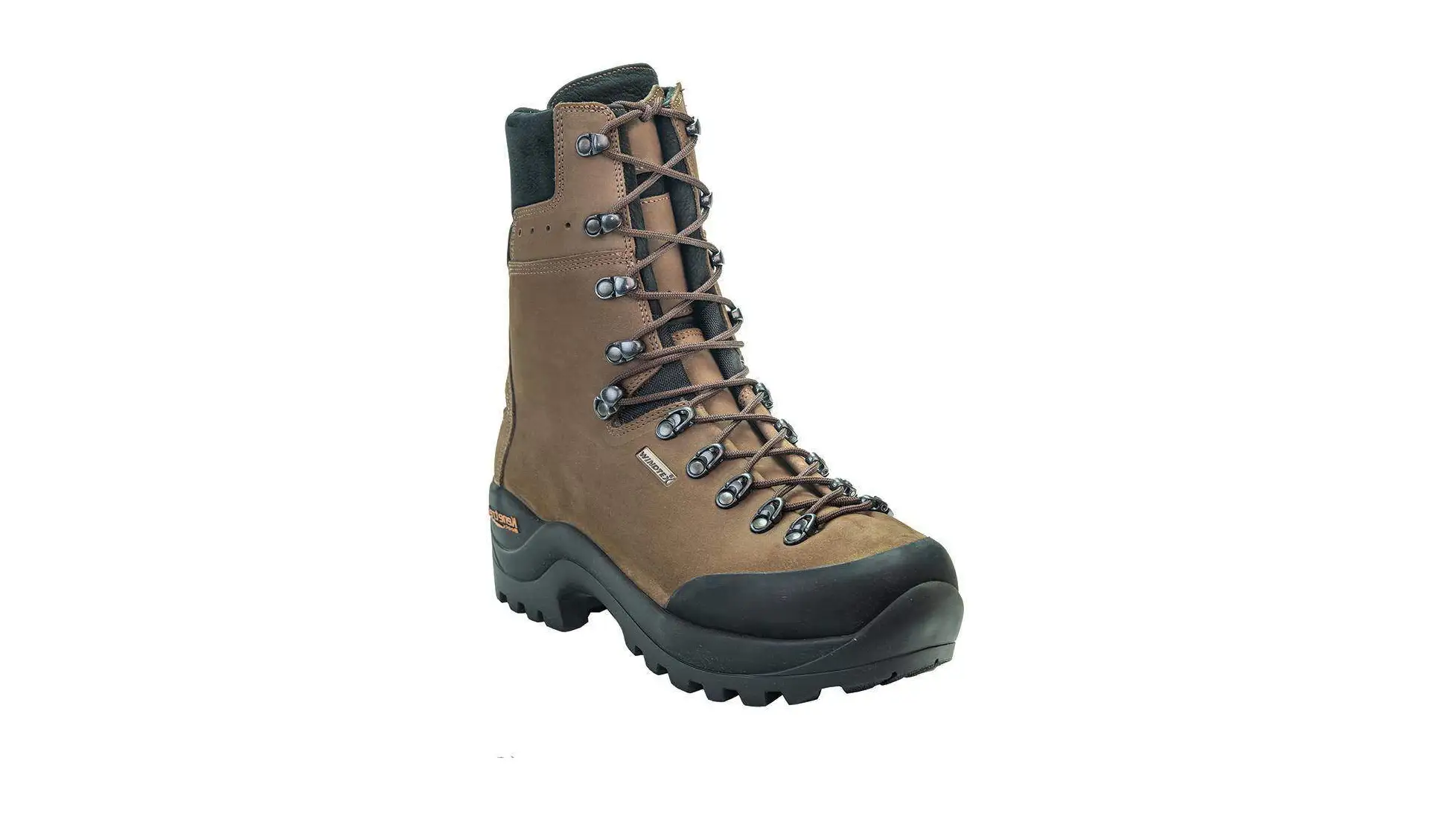
Our verdict: 4.0/5. The Kenetrek Lineman Extreme NI ST is a 10-inch, non-insulated leather work boot made in Italy, and Kenetrek names linemen, cable installers, arborists and tree service workers as the people it designed it for. Its strengths are on Kenetrek's own spec sheet: a steel safety toe that Kenetrek says meets ASTM F2412-18a and ASTM F2413-18 for impact, compression and electrical hazard, 2.8mm premium leather in a seamless one piece vamp, a 7mm nylon midsole, a Windtex waterproof membrane and Kenetrek's own K-73 outsole. All five OpticsPlanet reviews are five stars. The catches: it is a premium-priced boot, the owner record on the listing is only five reviews, and Kenetrek's product page publishes no shank, climbing heel or pole-climbing spec. If you want Kenetrek's hunting boot instead, read our Kenetrek Mountain Extreme review.
OpticsPlanet shoppers rate the listing 5.0/5 across 5 reviews. The Lineman Extreme NI ST row we card (KE-410-LNI 10.5 Medium) sells for around $550, and the listing charges the same for every size and width row. Check price and availability on OpticsPlanet.
How we reviewed it: a research-based review built from Kenetrek's own product, warranty, repair and company story pages, the ASTM F2413 summary on astm.org, one industry article on electrical hazard footwear, the OpticsPlanet listing and all five owner reviews on it. We have not worn these boots ourselves; the score is our editorial opinion and owner ratings are shown attributed to their source. Where a retailer spec table and Kenetrek's own page disagree, we follow Kenetrek. See how we evaluate.
What the Lineman Extreme is
Kenetrek's company story says its boots were born out of a passion for sheep hunting, and that customers then asked for the same lightweight comfort and durability in their work boots: "So we answered with the Lineman Extreme, an ASTM approved safety-toe boot." Kenetrek sells it in its Work Boots collection under the page title 10" Steel-Toe Work Boots, and names linemen, cable installers, arborists and tree service workers as the workers it had in mind.
Kenetrek's product page lists 10-inch uppers of 2.8mm thick premium leather in a seamless, one piece vamp construction, reinforced double and triple stitching in high wear areas, 7mm nylon midsoles for extra support in difficult terrain, Kenetrek Supportive Footbeds with arch support and a pronounced heel pocket, a steel safety toe, boot hardware that swivels instead of breaking, a protected rubber toe cap for extra abrasion resistance, and a Windtex waterproof, breathable, flexible membrane that, in Kenetrek's words, "keeps water out but allows perspiration vapor to escape." The outsole is Kenetrek's Custom K-73, which its company story describes as a one-piece, vulcanized rubber sole. Kenetrek lists the weight as 4.8 lbs and says Made in Italy.
The NI ST version is non-insulated, and Kenetrek positions it "for better comfort in warmer seasons." Kenetrek's cold-weather version is the 1000 ST, covered below. If you read the Kenetrek Mountain Extreme page as well, you will see several of the same phrases (2.8mm premium leather, 7mm nylon midsoles, Windtex, Supportive Footbeds) on both product pages, but the outsoles differ (K-73 here, K-Talon on the Mountain Extreme), and this review makes no claim that the two boots share an upper or a last.
Safety toe and electrical hazard: what Kenetrek states
Kenetrek's wording is specific: "Steel safety toe meets ASTM F2412-18a and ASTM F2413-18 impact, compression, and electrical hazard safety standards." On astm.org, F2413 is the specification covering minimum performance requirements for protective footwear, and its active edition is now F2413-24, with F2413-18 listed among the earlier versions. Kenetrek's page names the 2018 editions, and we print only what Kenetrek states. Kenetrek's product page lists no impact or compression class codes, no voltage figure for the electrical hazard test and no other rating beyond that sentence, so this page prints none.
It helps to know what an electrical hazard (EH) boot is and is not. An industry article in Occupational Health & Safety magazine (Hugh Hoagland, "Using Dielectric and Electrical Hazard Shoes," April 2011, written when the 2005 edition of ASTM F2413 was current, not the 2018 edition Kenetrek names) describes the EH outsole as "secondary electrical shock resistance protection" against incidental contact with energized circuits, and says the insulating protection may be compromised if the shoes become wet, the soles are worn through, metal particles become embedded in the sole or heel, or the wearer touches conductive, grounded items. The same article treats dielectric footwear as a separate standard, ASTM F1117, which it calls quite stringent. Kenetrek's page describes the Lineman Extreme against the electrical hazard standard only and does not mention dielectric footwear.
What Kenetrek does not publish. The name says lineman, but Kenetrek's product page says nothing about a shank, a climbing heel, pole climbing with gaffs or a slip-resistance test. That is a gap in what Kenetrek publishes, not evidence of what the boot has or lacks: Kenetrek's Mountain Extreme product page names no shank either. We print no climbing claim for that reason. If your work involves climbing, check the label inside the boot and your employer's PPE rules before you buy.
What owners say: five reviews, all five stars
The OpticsPlanet listing carries five reviews, all five stars, and all five reviewers say they would recommend the boots. That is a small record, so read it as a handful of voices rather than a consensus. Two of the five describe wearing the boots at work; a third had tried them on and rates them for the ground where they elk hunt. A fourth bought them as a gift for a son who works as a lineman and had not worn them yet when the review was written; the fifth is a short general note.
“I work as an electrician at a surface coal mine and put my boots through very rough conditions.”
Ed (ND), most helpful positive review, via OpticsPlanet
That reviewer came to the work boot after wearing Kenetrek hunting boots for years, and wrote after about two weeks of wear that these would be their only work boots from then on. They promised an update after a year; no update appears among the five reviews. A second reviewer, whose employer bought the boots for its workers, works in the mountains, hikes steep terrain for days at a time and reports no foot fatigue, and wears the boots outside work every day as well.
“the ankle support is simply amazing.”
brandon (MT), via OpticsPlanet
Comfort comes up in three of the five reviews, and ankle support in two. The one reviewer with a Verified Owner tag names hunting rather than work as the best use, writes after trying them on that they are very comfortable, and lists ankle support among the pros and price as the only con.
Kenetrek's own product page shows a much larger pool in Kenetrek's own review system: 4.8 from 99 reviews for the NI ST when we read it on 2026-10-11, with 87 five-star and 3 two-star ratings. That is the maker's site and its own moderation, not an OpticsPlanet record and not our rating.
The honest catches
A thin, ageing owner record. Five reviews is not much evidence for a boot at this price. The four reviews in the listing's main list are dated January 2020 to February 2023, and none of the five reports long-term wear: the only stated length of use is the electrician's two weeks. Nobody reports on how the soles or leather hold up over a year of work.
Price. Two of the five reviewers raise the cost, both in five-star reviews that call the boots worth it.
“They do cost more money than other boots, but the quality of these boots are worth the price.”
Ed (ND), most helpful positive review, via OpticsPlanet
Weight. Kenetrek lists the Lineman Extreme NI ST at 4.8 lbs, against 3.9 lbs for its Mountain Extreme Non-Insulated hunting boot. Neither Kenetrek page says whether the figure is for one boot or a pair, or for which size, so read it as Kenetrek's two published figures rather than a weighed comparison.
Unpublished climbing specs. As above, Kenetrek's product page lists no shank, climbing heel, class codes or slip-resistance figure. That is missing information, not a known defect, but for workers who climb it is a gap you have to close with the boot label and your employer, not with this page.
Fit range. Kenetrek makes the Lineman Extreme in Medium and Wide widths only, with no Narrow, and its size grid stops at 14 in Medium and 13 in Wide, with no half sizes above 12.
NI ST or 1000 ST: which Lineman Extreme?
Kenetrek sells two versions. This review covers the Lineman Extreme NI ST, the non-insulated version on the OpticsPlanet listing we card. Kenetrek also sells a Lineman Extreme 1000 ST with 1000 gram Thinsulate insulation "for extreme cold," and lists it at 5.3 lbs against 4.8 lbs for the NI ST. The rest of Kenetrek's description, from the leather and midsole to the toe, standards and outsole, reads the same on both product pages. Pick the NI ST for warm-season work and the 1000 ST if you work through winter.
Key specifications
| Spec (Kenetrek) | Lineman Extreme NI ST |
|---|---|
| Height | 10 in |
| Upper | 2.8mm thick premium leather; seamless, one piece vamp construction |
| Stitching | Reinforced double and triple stitching in high wear areas |
| Safety toe | Steel safety toe |
| Standards (Kenetrek wording) | ASTM F2412-18a and ASTM F2413-18 impact, compression, and electrical hazard |
| Toe cap | Protected rubber toe cap for extra abrasion resistance |
| Membrane | Windtex waterproof, breathable, flexible membrane |
| Insulation | Non-insulated, for better comfort in warmer seasons |
| Midsole | 7mm nylon |
| Footbed | Kenetrek Supportive Footbeds |
| Hardware | Boot hardware that swivels instead of breaking |
| Outsole | Custom K-73 (Kenetrek: a one-piece, vulcanized rubber sole) |
| Weight | 4.8 lbs (one boot or pair not stated) |
| Sizes (men's) | Medium 5-12 whole and half, 13, 14 · Wide 8-12 whole and half, 13 |
| Made in | Italy |
| Shank, climbing heel, ASTM class codes | Not stated on Kenetrek's product page |
| Carded row | KE-410-LNI 10.5 Medium |
| OpticsPlanet rating | 5.0/5, 5 reviews |
| Price (every size and width row) | around $550 |
Specifications are Kenetrek's, from its NI ST product page and its company story page (for the K-73 description); the carded row, rating and price are the retailer's. The listing sells many size and width rows at one price, so confirm the row in your cart.
Care, resoling and warranty
Kenetrek runs a repair service, and its repair page says the department will "rebuild them from the insoles up." Its standard price list names a Mountain Boot Resole Package and a Pac Boot Resole Package and does not name the Lineman Extreme, so ask Kenetrek what applies to this boot before you send it in.
On a safety-toe boot there is a second question. The scope of the current edition, ASTM F2413-24, says that replacing or adding after-market footbeds or inserts, or resoling the footwear, "could cause failure to meet this standard rendering the ASTM marking invalid." If your employer requires ASTM-marked footwear, ask Kenetrek and your safety officer before you resole the boots or swap the footbeds for an after-market insert.
Kenetrek's warranty covers any Kenetrek product that fails from defective materials or poor workmanship within 12 months of purchase and before the soles are worn 75 percent, repaired or replaced by Kenetrek. Damage from improper care, alterations, accidents or natural wear and tear is not covered. The warranty text has no separate clause for work boots.
Trade-offs, plainly
- Premium price; two of the five reviewers mention the cost, while calling the boots worth it.
- A five-review owner record on the listing, with no long-term wear reports.
- Kenetrek's product page publishes no shank, climbing heel, class code or slip-resistance spec.
- Non-insulated: Kenetrek positions it for warmer seasons; winter work calls for the 1000 ST.
- Medium and Wide widths only, sizes up to 14 Medium and 13 Wide.
- Resoling or after-market inserts could void the ASTM marking, per the scope of the current F2413-24 edition.
Should you buy it, and what else to consider
- Buy the NI ST if you work outdoors through the warmer seasons, need a steel safety toe that Kenetrek says meets the ASTM electrical hazard standard, and want a leather boot from a maker that runs its own repair service.
- Look at the 1000 ST if you work through winter; Kenetrek adds 1000 gram Thinsulate for extreme cold.
- Skip it if you need a published climbing or shank spec, a Narrow width or a size above 14, or a large owner record on the retailer listing.
What else to consider:
- A Kenetrek for hunting instead of work: our Kenetrek Mountain Extreme review covers Kenetrek's 10-inch mountain hunting boot built for steep ground and heavy packs.
- Work pants to go with them: our 5.11 Stryke pant review collects durability reports that come largely from people who wear them for work.
- A work pocket knife: our best pocket knife guide includes a partially serrated Spyderco Tenacious it suggests as a work or glovebox knife.
FAQ
Is the Kenetrek Lineman Extreme steel toe or composite toe?
Steel. Kenetrek's product page says the Lineman Extreme NI ST has a steel safety toe that meets ASTM F2412-18a and ASTM F2413-18 impact, compression, and electrical hazard safety standards. Where a retailer spec table differs from Kenetrek's own page on the toe, the outsole or the standard years, this review follows Kenetrek.
Is the Kenetrek Lineman Extreme EH rated?
Kenetrek lists electrical hazard among the safety standards its steel toe meets, and gives no voltage or test figure of its own. An industry article in Occupational Health & Safety (Hugh Hoagland, April 2011, written when the 2005 edition of ASTM F2413 was current) describes EH footwear as secondary protection against incidental contact, and says that protection may be compromised if the shoes become wet, the soles are worn through, metal particles become embedded in the sole or heel, or the wearer touches conductive, grounded items. The same article treats dielectric footwear as a separate standard, ASTM F1117. Check the label in the boot and your employer's PPE rules.
Is the Lineman Extreme a pole climbing boot?
Kenetrek names linemen, cable installers, arborists and tree service workers as the workers it designed the boot for, but its product page says nothing about pole climbing, a shank or a climbing heel. That is a gap in what Kenetrek publishes, not evidence of what the boot has or lacks, and we print no climbing claim either way. If you climb with gaffs, confirm the boot against your employer's PPE rules and your climbing gear before you buy.
Is the Lineman Extreme NI ST insulated?
No. Kenetrek describes it as non-insulated for better comfort in warmer seasons. For cold work Kenetrek sells a Lineman Extreme 1000 ST with 1000 gram Thinsulate insulation for extreme cold, which Kenetrek lists at 5.3 lbs against 4.8 lbs for the NI ST. This review covers the NI ST only.
Can the Kenetrek Lineman Extreme be resoled, and what is the warranty?
Kenetrek runs a repair service that says it will rebuild boots from the insoles up, but its standard price list names Mountain Boot and Pac Boot resole packages and does not name the Lineman Extreme, so ask Kenetrek first. Keep the safety standard in mind: the scope of the current edition, ASTM F2413-24, says that resoling, or replacing or adding after-market footbeds or inserts, could cause safety toe footwear to fail the standard and make the ASTM marking invalid. Kenetrek's warranty covers defective materials or poor workmanship within 12 months of purchase and before the soles are worn 75 percent; improper care, alterations, accidents and natural wear and tear are not covered.
How much does the Lineman Extreme weigh and where is it made?
Kenetrek lists 4.8 lbs and says Made in Italy. Kenetrek does not say whether the weight is for one boot or a pair, or for which size. Kenetrek makes it in men's Medium sizes 5 to 12 in whole and half sizes plus 13 and 14, and in Wide sizes 8 to 12 plus 13.
More gear: Kenetrek Mountain Extreme review · 5.11 Stryke pant · best pocket knife.